

Choosing the right roofing material for a property in San Jose involves more than simply selecting something that looks good or fits a budget. The local climate plays a major role in how well a roofing system performs over time, and not every material is built to handle the region’s unique weather conditions.
Property owners throughout San Jose often deal with long periods of sun exposure, fluctuating temperatures, seasonal rain, and increasing energy costs. Because of this, durability, energy efficiency, and weather resistance have become essential factors when evaluating roofing systems.
Among the many commercial and residential roofing options available today, TPO roofing continues to gain attention for its ability to perform well in warm climates while offering long-term reliability. Property owners looking for modern roofing solutions often turn to professional providers of TPO roofing services in San Jose San Jose because the material offers a practical balance between performance, efficiency, and cost-effectiveness.
At Apollo Roofing Company, we understand how important it is to install roofing systems that are specifically suited for San Jose’s environmental conditions. A roof is one of the most important protective components of any property, and choosing the right material can directly impact comfort, maintenance needs, energy consumption, and long-term property value.
As a trusted TPO roofing Company in San Jose, we help property owners make informed decisions backed by professional expertise and quality workmanship.
Understanding San Jose’s Climate and Its Impact on Roofing
San Jose is known for its Mediterranean-style climate, which includes warm, dry summers and relatively mild, wet winters. While many people appreciate the comfortable weather conditions, these seasonal patterns can create long-term stress on roofing systems.
During the summer months, rooftop surfaces are exposed to intense sunlight and prolonged UV radiation. Roof temperatures can climb significantly higher than outdoor air temperatures, especially on darker roofing materials that absorb heat. Over time, constant heat exposure can accelerate aging in many traditional roofing systems, causing cracking, fading, blistering, or material deterioration.
Winter weather in San Jose introduces a different set of challenges. Although snowfall is not typically a concern, periods of rain can expose weaknesses in roofing systems. Poor drainage, damaged seams, or aging materials can allow water infiltration that leads to leaks, mold growth, insulation damage, and even structural issues if left untreated.
Temperature fluctuations between hot daytime conditions and cooler evenings can also place stress on roofing materials as they repeatedly expand and contract. Roofing systems that lack flexibility may eventually crack or separate under this pressure.
Because roofing systems face year-round environmental exposure, selecting materials that can handle both heat and moisture effectively is essential for long-term performance.
What Makes TPO Roofing Different?
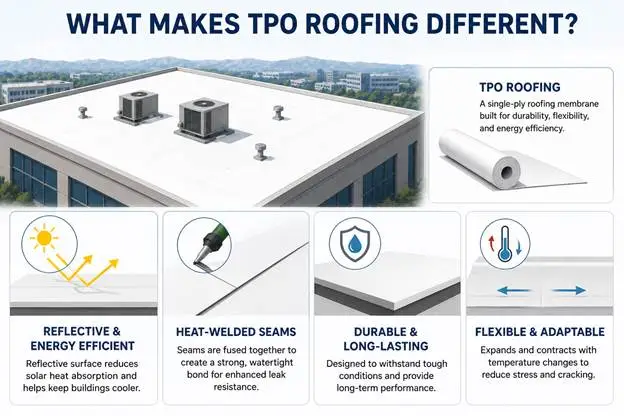
TPO, or Thermoplastic Polyolefin roofing, is a single-ply membrane roofing system commonly used on commercial and low-slope roofs. It has become one of the fastest-growing roofing materials in the industry because it combines durability, flexibility, and energy efficiency in one system.
Unlike some traditional roofing materials that absorb large amounts of heat, TPO membranes are designed with reflective surfaces that help reduce solar heat absorption. This reflective capability is especially valuable in climates like San Jose, where buildings experience extended sun exposure throughout much of the year.
TPO roofing systems are also known for their heat-welded seams. During installation, seams are fused together using specialized equipment to create a watertight bond. This process helps improve leak resistance while strengthening the overall roofing system.
Another advantage of TPO roofing is its flexibility. The material can expand and contract with changing temperatures, helping reduce the risk of cracking and material stress over time. This flexibility is particularly important in climates where roofs experience regular thermal movement due to changing weather conditions.
Why TPO Roofing Performs Well in San Jose
One of the main reasons TPO roofing continues to grow in popularity throughout San Jose is its ability to manage heat effectively. Traditional roofing materials often absorb sunlight, causing rooftop temperatures to rise dramatically during the summer. This additional heat can place strain on cooling systems and increase indoor temperatures.
TPO roofing helps address this issue through its reflective surface, which reflects a significant portion of the sun’s rays away from the building. By reducing heat absorption, TPO roofing systems can help maintain more stable indoor temperatures and potentially lower cooling costs.
This energy efficiency is especially important for commercial properties with large flat roofs, where excessive heat buildup can increase operational expenses during warmer months.
TPO roofing also provides strong resistance against UV radiation. Constant UV exposure can break down many roofing materials over time, but TPO membranes are designed to withstand prolonged sun exposure while maintaining structural integrity.
In addition to heat resistance, TPO performs well during rainy periods because of its welded seams and moisture-resistant design. Properly installed systems create a durable barrier against water infiltration, helping protect insulation layers and interior spaces from moisture damage.
These combined advantages make TPO roofing an excellent fit for San Jose’s environmental conditions.
The Energy Efficiency Benefits of TPO Roofing
Energy efficiency has become an increasingly important consideration for property owners across California. Rising utility costs have led many businesses and homeowners to explore roofing systems that can contribute to lower energy consumption.
Reflective roofing systems like TPO can play a meaningful role in improving building efficiency. By reducing rooftop heat absorption, TPO roofing helps limit the amount of heat transferred into the building interior.
For commercial buildings, this can help reduce cooling demands during peak summer temperatures. Lower cooling strain may contribute to energy savings while helping HVAC systems operate more efficiently.
Improved energy performance can also create more comfortable indoor environments for employees, customers, tenants, or residents. Buildings with lower heat transfer often experience more stable indoor temperatures throughout the day.
Additionally, reflective roofing systems can help reduce the urban heat island effect, which occurs when dense urban areas retain excess heat due to widespread heat-absorbing surfaces. TPO roofing contributes to a cooler rooftop environment, making it a more environmentally responsible roofing option.
Durability and Long-Term Performance
One of the biggest concerns for property owners investing in a roofing system is longevity. Frequent roof repairs or premature replacements can become expensive and disruptive over time.
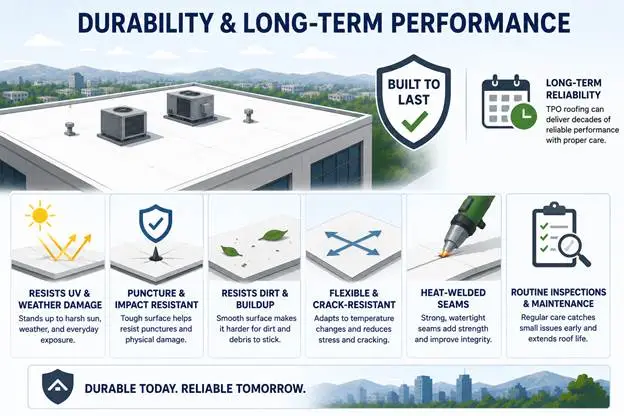
TPO roofing is widely recognized for its durability and long service life when properly installed and maintained. The material is resistant to many common roofing problems, including UV damage, punctures, dirt accumulation, and weather-related wear.
Because TPO membranes are flexible, they can better accommodate movement caused by changing temperatures. This flexibility helps reduce stress on the roofing system and minimizes the likelihood of cracking.
The heat-welded seams also provide added strength compared to some adhesive-based roofing systems. Proper seam welding creates a highly durable bond that improves water resistance and overall roof integrity.
Routine inspections and preventative maintenance further extend the lifespan of TPO roofing systems. Identifying small issues early allows property owners to address concerns before they develop into major repairs or water damage.
For many properties in San Jose, TPO roofing can provide reliable performance for decades with proper care and professional installation.
Why Professional Installation Matters
Even the best roofing materials require proper installation to deliver long-term performance. Roofing systems are complex, and installation quality directly affects durability, weather resistance, and energy efficiency.
Professional roofing contractors begin by evaluating the roof structure, drainage systems, insulation conditions, and overall building requirements before installation begins.
Surface preparation is one of the most critical parts of the process. Moisture, uneven surfaces, or damaged substrates can compromise roofing performance if not addressed properly.
Experienced contractors also ensure seams are welded correctly and flashing components are installed securely around penetrations, drains, and rooftop equipment.
Improper installation can lead to leaks, membrane separation, poor drainage, and reduced roof lifespan. This is why working with experienced professionals is essential for maximizing the benefits of TPO roofing systems.
At Apollo Roofing Company, our team focuses on precision, quality workmanship, and detailed project planning to ensure every roofing system performs as intended. Businesses searching for dependable TPO roofing services in San Jose San Jose benefit from working with experienced professionals who understand the local climate and roofing requirements.
Unlock the Best TPO Roofing Services in San Jose – Reach Out To Apollo Roofing Company Now!
Choosing the right roofing system is one of the most important decisions property owners can make for long-term building protection and energy efficiency. San Jose’s climate creates unique challenges that require durable, weather-resistant roofing materials capable of performing reliably year after year.
TPO roofing continues to stand out as a smart solution because of its reflective performance, moisture resistance, flexibility, and long-term durability. Whether you are planning a new installation, roof replacement, or preventative maintenance program, working with experienced roofing professionals helps ensure the best possible results.
As a leading TPO roofing Company in San Jose, Apollo Roofing Company is committed to providing dependable roofing solutions tailored to the needs of local property owners. Our team focuses on quality workmanship, honest recommendations, and long-lasting roofing systems designed to protect your investment.
Contact Apollo Roofing Company today to schedule a professional roof assessment and learn how TPO roofing can improve the performance, efficiency, and durability of your property.
Frequently Asked Questions About TPO Roofing Services in San Jose
How long does TPO roofing typically last?
TPO roofing systems can often last 20 to 30 years when professionally installed and properly maintained. Lifespan depends on factors such as installation quality, weather exposure, roof traffic, and routine maintenance practices.
Is TPO roofing suitable for both residential and commercial buildings?
Yes. TPO roofing is commonly used for commercial properties, but it can also be installed on residential structures with flat or low-slope roof designs.
Can TPO roofing help reduce energy costs?
TPO roofing’s reflective surface helps reduce heat absorption, which may lower cooling demands and improve overall building energy efficiency.
Does TPO roofing require regular maintenance?
Yes. Regular inspections and maintenance help identify developing issues early and extend the lifespan of the roofing system.
Can TPO roofing be installed over an existing roof?
In some cases, TPO roofing may be installed over an existing roofing system depending on the condition of the current roof and local building code requirements. A professional inspection is necessary to determine suitability.
