

Flat roofing systems continue to grow in popularity across San Jose commercial properties, and TPO has become one of the most requested materials among building owners looking for durability, energy efficiency, and long-term value. Whether you manage an office building, retail center, warehouse, or industrial facility, understanding roofing costs before starting a project helps you make smarter financial decisions.
Many property owners begin their research by asking about TPO roofing cost in San Jose because pricing can vary significantly depending on roof size, insulation requirements, installation complexity, and material quality. While there is no one-size-fits-all answer, understanding what contributes to the final investment makes it easier to plan your project with confidence.
At Apollo Roofing Company, we help commercial property owners throughout San Jose understand their roofing options clearly and realistically. A roofing system is a major investment, and knowing how pricing works allows you to focus on long-term performance rather than just the lowest upfront quote.
Why TPO Roofing Is Popular in San Jose
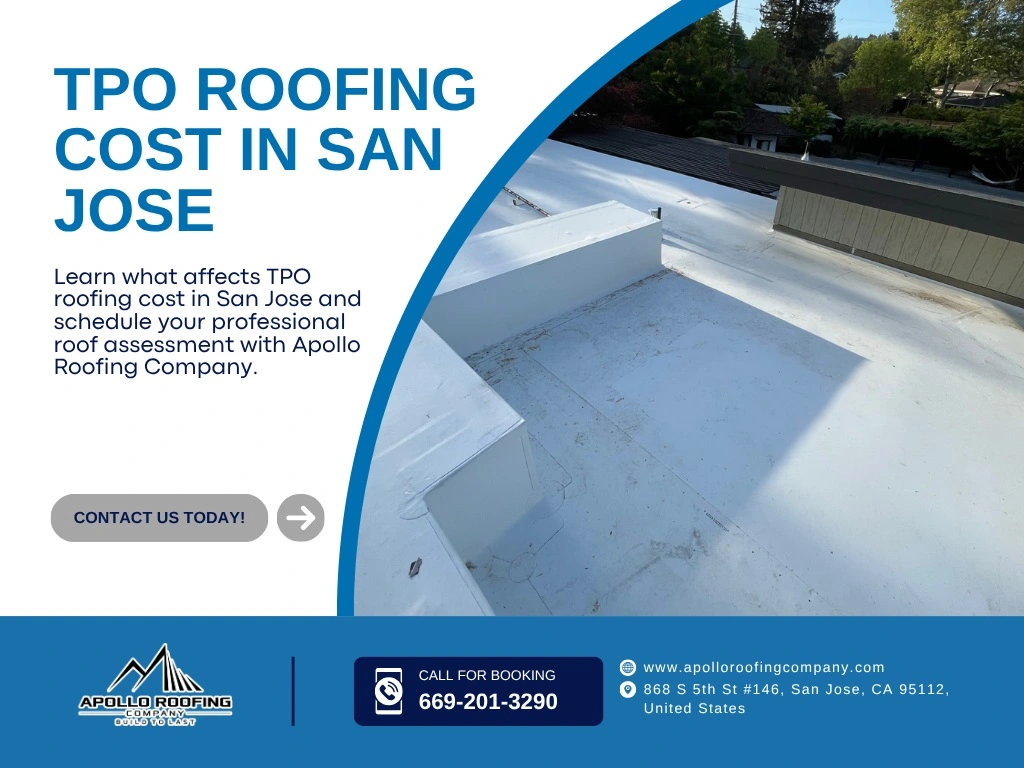
Thermoplastic Polyolefin, commonly called TPO, is a single-ply roofing membrane commonly installed on flat and low-slope commercial roofs. It is known for its reflective surface, heat resistance, and strong performance in warmer climates like San Jose.
One reason TPO roofing continues to gain attention is its energy efficiency. San Jose experiences long periods of sun exposure throughout the year, and reflective roofing materials can help reduce indoor heat buildup. This may improve indoor comfort while lowering cooling demands for commercial buildings.
TPO also appeals to building owners because it offers a balance between affordability and durability. Compared to some premium commercial roofing systems, TPO often provides strong weather protection at a more manageable price point.
Another advantage is flexibility. TPO roofing can accommodate a variety of building sizes and layouts, making it suitable for everything from small retail spaces to large industrial facilities.
Understanding Roofing Costs Per Square Foot
When discussing commercial roofing, contractors typically calculate pricing based on square footage. This approach allows property owners to compare materials and installation methods more accurately.
The phrase TPO roofing cost per square foot usually refers to the total installed price, which includes labor, materials, insulation, removal of old roofing if needed, and project-specific requirements.
In San Jose, commercial roofing costs can vary because every roof presents different challenges. A simple flat roof with easy access may cost less to install than a roof with multiple HVAC units, drainage systems, skylights, or structural limitations.
Material thickness also affects pricing. TPO membranes commonly come in different thickness levels, with thicker membranes generally offering increased durability and longer performance life. Building owners focused on long-term protection often choose upgraded membrane options despite the higher initial investment.
Roof insulation is another important factor. Commercial roofing systems frequently require insulation layers beneath the membrane to improve energy efficiency and meet building code requirements. Higher insulation performance can increase upfront costs while potentially lowering energy expenses over time.
What Influences Commercial Roofing Prices in San Jose
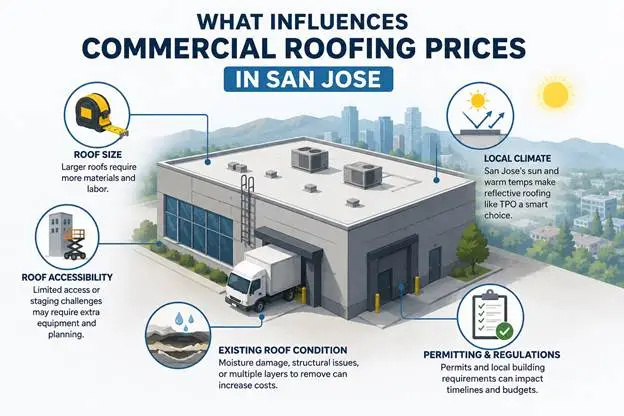
Commercial roofing projects are rarely identical, which is why accurate estimates require a full roof inspection. Several important factors influence pricing throughout the San Jose market.
Roof size naturally plays a major role. Larger roofs require more materials and labor hours, although larger projects may sometimes benefit from lower pricing per square foot due to installation efficiency.
Roof accessibility also affects labor costs. Buildings with limited access, restricted loading areas, or complicated staging conditions may require additional equipment or safety planning.
Existing roof conditions are equally important. If the current roofing system has moisture damage, structural issues, or multiple layers that need removal, project costs can increase significantly.
Local climate conditions influence material recommendations as well. San Jose’s warm temperatures and sun exposure make reflective roofing systems highly desirable, which is one reason TPO remains a strong option for many commercial buildings.
Permitting requirements and local building regulations may also affect project timelines and budgets. Experienced commercial roofing contractors understand how to navigate these requirements efficiently while maintaining compliance.
The Importance of Quality Installation
Choosing quality materials is only part of building a reliable commercial roofing system. Proper installation has an enormous impact on roof performance and longevity.
Even premium roofing materials can fail prematurely if seams are poorly welded or drainage systems are improperly designed. Water intrusion, membrane separation, and insulation issues often result from installation errors rather than material defects.
At Apollo Roofing Company, we emphasize detailed preparation and professional installation practices because long-term roofing performance depends on precision. Proper seam welding, drainage planning, flashing installation, and insulation placement all contribute to the overall durability of the system.
Experienced contractors also understand how environmental conditions affect installation quality. Temperature, moisture levels, and weather conditions can influence membrane performance during installation, which is why proper scheduling and project oversight matter.
Energy Efficiency and Long-Term Savings
Commercial property owners often evaluate roofing systems based not only on installation costs but also on long-term operating expenses.
Reflective TPO roofing surfaces help reduce heat absorption, which can lower rooftop temperatures during warm San Jose summers. Buildings with energy-efficient roofing systems may experience reduced cooling strain, particularly in larger commercial facilities.
This long-term value is one reason many businesses consider TPO roofing an investment rather than simply an expense. Reduced maintenance needs, improved energy efficiency, and strong weather resistance can contribute to lower overall ownership costs over time.
Maintenance also plays a critical role in protecting roofing investments. Routine inspections allow contractors to identify small issues before they become major repairs. Simple preventative maintenance can significantly extend the lifespan of a commercial roof.
Comparing TPO to Other Commercial Roofing Options
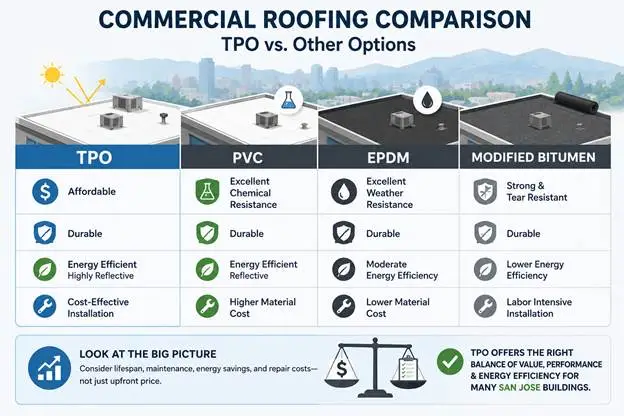
Commercial property owners often compare TPO with PVC, EPDM, and modified bitumen roofing systems when planning roof replacements.
TPO is often selected because it offers a strong combination of affordability, durability, and energy efficiency. PVC roofing may offer enhanced chemical resistance for certain industrial applications, while EPDM remains popular for specific low-slope installations.
However, TPO continues to stand out for many San Jose buildings because of its reflective performance and relatively cost-effective installation process.
Building owners should avoid focusing solely on upfront pricing when comparing systems. Long-term maintenance requirements, expected lifespan, energy efficiency, and repair costs all contribute to the true value of a roofing system.
Planning for Commercial Roof Replacement
Every commercial roof eventually reaches the point where repairs are no longer the most cost-effective solution. Understanding replacement planning helps businesses avoid emergency situations that disrupt operations.
Age is one major indicator. As roofing systems age, membrane deterioration, seam issues, and insulation problems become more common. Frequent leaks or recurring repairs may indicate that replacement is the more practical option.
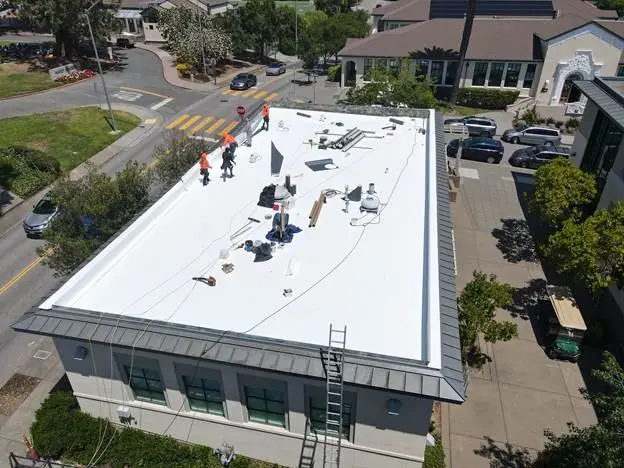
Business owners researching commercial TPO roof replacement cost in San Jose should understand that pricing depends heavily on project scope and existing roof conditions. Roof replacement projects often involve tear-off work, insulation upgrades, drainage improvements, and code compliance updates.
Scheduling also matters. Proactive replacement planning allows property owners to choose optimal installation timing rather than reacting during a roofing emergency. Planned projects generally reduce business disruption and improve overall project efficiency.
Working with experienced roofing professionals ensures accurate inspections and realistic project recommendations. Honest assessments help building owners understand whether repair or replacement makes better financial sense.
Why Professional Roof Inspections Matter
Commercial roofing problems are not always visible from the ground. Water intrusion can spread beneath roofing materials long before interior leaks become obvious.
Professional inspections help identify issues early, including seam separation, moisture infiltration, punctures, drainage problems, and insulation deterioration.
Routine inspections become especially important after severe weather events or periods of heavy rooftop activity. HVAC maintenance, equipment installations, and foot traffic can all impact roofing systems over time.
Property owners researching TPO roofing cost per square foot should also understand that roof condition directly influences installation pricing. Addressing structural or moisture issues before installation creates a stronger foundation for long-term performance.
An experienced roofing contractor can provide a detailed evaluation that outlines current conditions, repair recommendations, and replacement considerations when necessary.
What Drives TPO Roofing Cost in San Jose? Apollo Roofing Company Breaks It Down
Understanding commercial roofing costs requires more than simply comparing numbers online. Roof size, insulation needs, installation complexity, material quality, and existing roof conditions all influence the final investment. Building owners researching TPO roofing cost San Jose should focus on long-term performance, not just the lowest bid.
At Apollo Roofing Company, we help San Jose property owners make informed roofing decisions through detailed inspections, transparent recommendations, and quality workmanship. Whether you are exploring repair options or evaluating a full replacement, our team is here to guide you through every step of the process.
Contact Apollo Roofing Company today to schedule a professional commercial roof assessment and learn more about your options for a durable, energy-efficient TPO roofing system.
FAQs for TPO Roofing Cost in San Jose
How long does a TPO roof typically last?
A professionally installed TPO roof can last 20 to 30 years with proper maintenance and regular inspections. Lifespan depends on installation quality, weather exposure, roof traffic, and how quickly minor issues are addressed over time.
Is TPO roofing good for San Jose weather?
Yes. TPO roofing performs well in San Jose because its reflective surface helps reduce heat absorption during warm weather. It is a durable and energy-efficient option for many commercial buildings in the area.
Does roof size affect pricing?
Yes. Larger commercial roofs require more materials, labor, and installation time, which increases overall project costs. Roof layout, accessibility, and added features may also impact the final roofing price.
Can a TPO roof improve energy efficiency?
TPO roofing systems reflect sunlight and help reduce rooftop heat buildup, which may lower cooling demands inside commercial buildings. This can improve indoor comfort and support better energy efficiency over time.
When should a commercial roof be replaced instead of repaired?
A commercial roof may need replacement when leaks become frequent, damage is widespread, or the system has reached the end of its lifespan. A professional inspection can determine the most cost-effective solution.
