

A large roofing project carries more moving parts than a routine repair. Property owners may be coordinating work across broad roof areas, multiple building sections, active businesses, tenant spaces, equipment zones, access points, and areas that still need to function while the project is underway.
That is why large-scale roofing projects in Milpitas require more than selecting a roofing material and choosing a start date. The most successful projects begin with a clear understanding of scope, logistics, scheduling, site conditions, and quality expectations before crews arrive.
For owners and property managers, thoughtful commercial roofing project planning in Milpitas can also make it easier to anticipate disruptions, communicate with occupants, and understand how the work will progress from one phase to the next. Experienced commercial roofing contractors in Milpitas should be able to explain those details clearly instead of leaving property owners to figure them out during construction.

Start With a Scope That Reflects the Actual Roof
The scope of work is the foundation of the entire project.
On a large property, the roof may contain several different conditions at once. One section may have deteriorated membrane, another may have drainage concerns, and another may show issues around flashing, penetrations, curbs, or rooftop equipment.
A useful scope should identify what areas are being addressed, what materials are involved, what existing components may need attention, and how transitions between roof sections will be handled.
This is also the time to discuss whether the project involves complete replacement, selective replacement, repairs, coating, drainage improvements, insulation work, or a combination of tasks.
A vague scope can create confusion once work begins. A detailed scope gives both the owner and the roofing team a shared understanding of what is included and what conditions may require additional review if they are uncovered during construction.
Large Roofs Need More Than a Simple Start Date
Scheduling becomes increasingly important as the size of a roofing project grows.
Property owners may need to account for business hours, tenant activity, deliveries, customer access, employee parking, loading zones, school or facility operations, and other activities that cannot simply stop because roofing work is taking place.
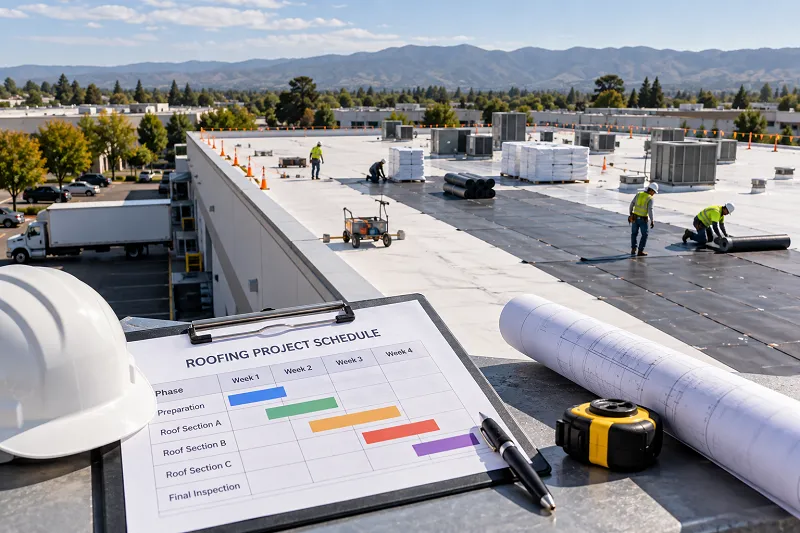
A realistic schedule should explain how the roof will be divided into workable areas and how crews intend to move across the property.
Weather also matters. Even when a project is scheduled during a generally favorable period, roofing work still needs flexibility. Crews may need to adjust daily activities based on rain, wind, temperatures, or the condition of exposed materials.
Good scheduling is not about promising that every day will go exactly as planned. It is about developing a sequence that allows the project to keep moving while protecting the building and reducing unnecessary disruption.
Access and Logistics Can Shape the Entire Project
Large roofing projects often involve logistical questions that homeowners rarely encounter on smaller residential jobs.
Where will materials be staged? How will debris leave the property? Can equipment safely reach the roof? Are there areas where vehicles, tenants, or customers need uninterrupted access?
These questions can affect productivity, safety, and the overall schedule.
A building with generous loading areas may be easier to coordinate than a property with narrow access, heavy traffic, shared parking, or limited space for material delivery. Rooftop equipment can create additional challenges by dividing the work area into smaller sections or limiting where roofing materials can be installed efficiently.
This is one reason commercial roofing project planning in Milpitas should include the entire property, not only the roof surface. What happens at ground level can have a direct impact on how efficiently work proceeds above.
Communication Helps Prevent Avoidable Disruptions
Property owners should know who they will communicate with during the project and how updates will be handled.
For a multi-day or multi-phase roofing project, even a brief update can be valuable. Knowing which area is being worked on, whether access will change, or whether weather has affected the schedule gives owners time to adjust their own operations.
Communication is especially important when a building remains occupied.
Tenants or employees may need advance notice about noise, temporary access restrictions, parking changes, odors associated with certain roofing products, or areas that should be avoided during specific phases of work.
Strong communication does not eliminate every inconvenience, but it makes those inconveniences easier to manage.
Quality Control Should Continue Throughout the Job
Quality control is not something that should happen only when the project is nearly finished.
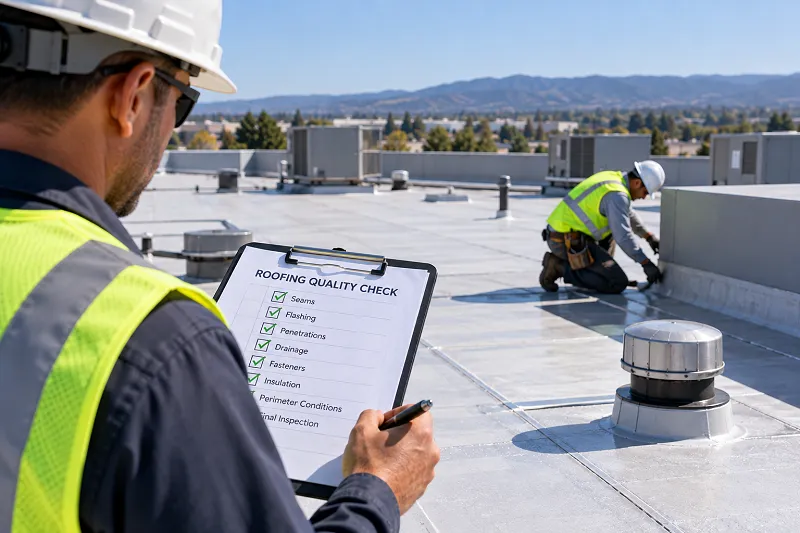
Large roofs contain many details that deserve attention during installation. Seams, flashings, penetrations, perimeter conditions, transitions, drainage points, fasteners, insulation, and other components all contribute to how the completed system performs.
If those details are checked as work progresses, concerns can be addressed while the relevant area is still accessible.
Property owners can ask how work is reviewed during installation and whether there is a final inspection process before the project is considered complete.
Experienced commercial roofing contractors in Milpitas should be able to discuss how workmanship is monitored, how unexpected conditions are documented, and how the completed system is reviewed.
The goal is not simply to finish a large roof quickly. The goal is to complete each phase carefully enough that the finished system performs as intended.
Unexpected Conditions Should Have a Clear Process
Even a thorough inspection cannot always reveal everything before an existing roof is opened.
Moisture beneath roofing materials, deteriorated decking, damaged insulation, hidden flashing problems, or previous repairs may only become visible once work begins.
Property owners should understand what happens if those conditions are found.
There should be a clear process for documenting the issue, explaining what was discovered, discussing available options, and obtaining approval before significant additional work proceeds.
This protects both the property owner and the contractor by keeping decisions documented and preventing unexpected changes from becoming confusing later.
Final Review Is Part of a Professional Roofing Project
Completion should involve more than removing equipment and sending a final invoice.
A final review gives the roofing team an opportunity to examine completed areas, confirm that project details have been addressed, and identify any remaining cleanup or finishing work.
Property owners should also understand any maintenance recommendations associated with the new roofing system.
Even a professionally installed roof benefits from routine inspection and timely maintenance. Drainage areas should remain clear, rooftop equipment should be serviced carefully, and penetrations or modifications made by other trades should not compromise the roofing system.
Thinking beyond installation helps protect the investment the property owner has just made.
FAQs About Large Roofing Projects
How early should a property owner begin planning a major roofing project?
Planning should begin well before the desired construction date, particularly when the building has active tenants, limited access, rooftop equipment, or complex logistics. Early preparation gives the owner and contractor time to review roof conditions, define scope, discuss material availability, plan staging areas, and coordinate work around business operations.
Can a large roofing project be completed while a building remains occupied?
In many situations, yes. The feasibility depends on the type of property, roof system, access points, work methods, and activities taking place inside the building. Careful phasing, communication, safety controls, and scheduling can help reduce disruption while allowing normal operations to continue in areas that are not directly affected by roofing work.
What should property owners ask about quality control?
Owners should ask how installation details are inspected during the job, who is responsible for reviewing completed work, how problems are documented, and whether a final walkthrough or inspection is included. Quality control should occur throughout the project so concerns can be addressed before crews move on to another area of the roof.
What happens if damaged materials are discovered underneath the existing roof?
Hidden deterioration may require additional work that was not visible during the initial inspection. A professional contractor should document the condition, explain why it matters, discuss the recommended correction, and obtain authorization before proceeding with major changes. Clear communication helps prevent surprises and keeps the project scope understandable.
Get Professional Support for Large-Scale Roofing Projects in Milpitas From Apollo Roofing Company
Large roofing projects require careful coordination from the first inspection through the final review. Scope, material selection, access, scheduling, communication, installation details, and quality control all need to work together for the project to move efficiently.
Apollo Roofing Company helps property owners approach complex roofing work with professional planning and experienced oversight. Whether you are preparing for a roof replacement, addressing widespread deterioration, or evaluating a commercial property with multiple roofing concerns, our team can help you understand the condition of the roof and the work required.
Contact Apollo Roofing Company to discuss your property, schedule a professional roofing evaluation, and start building a clear plan for your next major roofing project.
