

Commercial roofing projects are one of the most important investments property owners make. Whether you manage a retail center, warehouse, apartment complex, office building, or industrial facility, understanding the true commercial roof replacement cost in Santa Cruz helps you plan ahead and protect your property long term. In Santa Cruz, roofing costs continue to evolve due to material pricing, labor availability, energy efficiency standards, and California building requirements.
For large commercial properties especially, roofing decisions are rarely simple. Property owners must balance budget considerations with durability, weather resistance, energy performance, and long-term maintenance costs. Choosing the right contractor also plays a major role in the success of the project.
At Apollo Roofing Company, we work with commercial property owners throughout the region to provide clear guidance, detailed inspections, and reliable roofing solutions designed for California’s coastal climate. This guide explains what impacts pricing, what building owners should expect in 2026, and how to evaluate roofing investments wisely.
Understanding Commercial Roofing Costs in Santa Cruz
Every commercial roofing system is different. The size of the structure, roofing material, drainage design, accessibility, and existing roof condition all influence project pricing. Because of this, there is no single flat rate that applies to every property.
The average commercial roof replacement cost in Santa Cruz depends heavily on the type of roofing system installed and the complexity of the project. Flat and low-slope commercial roofs typically require specialized materials such as TPO, PVC, EPDM, or modified bitumen. These systems are designed to handle water drainage, UV exposure, and temperature changes common throughout coastal California.
In many cases, commercial roof replacement projects begin with a thorough inspection. Contractors evaluate moisture intrusion, insulation damage, flashing deterioration, structural concerns, and code compliance requirements before preparing an estimate. Older commercial roofs may also require tear-off work, decking repairs, or upgrades to meet current building standards.
For property owners planning large-scale improvements in 2026, early budgeting is critical. Roofing material costs remain sensitive to supply chain changes and labor demand throughout California. Waiting too long to address roofing issues can also lead to interior water damage, energy inefficiency, and expensive emergency repairs.
What Impacts Commercial Roofing Pricing?
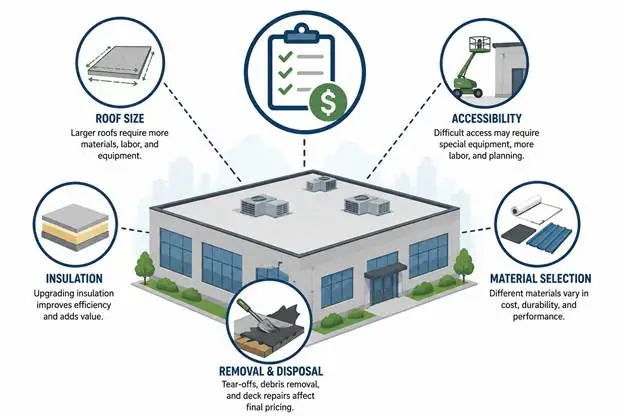
Several factors directly affect roofing costs for large properties. Roof size is one of the biggest variables because larger surfaces require more materials, labor hours, equipment, and safety planning. However, pricing is not based on square footage alone.
Roof accessibility can significantly influence labor costs. Buildings with limited staging areas, restricted parking access, or difficult equipment placement often require additional planning and manpower. Multi-story commercial properties may also involve specialized safety systems and lift equipment.
Material selection also changes project pricing considerably. TPO roofing remains popular because it offers energy efficiency and durability at a relatively balanced price point. PVC systems are often selected for restaurants or industrial facilities where chemical resistance is important. Metal roofing systems may cost more initially but provide excellent longevity and weather resistance.
Insulation requirements can further increase project costs. California energy regulations encourage efficient roofing systems that help reduce heating and cooling expenses. Upgrading insulation during roof replacement may increase upfront investment but can improve long-term operational savings.
Another major consideration is whether the existing roof requires complete removal. Some commercial systems allow overlays, while others need full tear-offs due to moisture damage or structural concerns. Disposal fees, debris handling, and deck repairs can all affect final pricing.
Understanding these variables helps property owners make informed decisions instead of focusing only on the lowest estimate.
Commercial Roofing Cost Per Square Foot in Santa Cruz
When evaluating bids, many property owners look at the commercial roofing cost per square foot in Santa Cruz to better compare estimates. While square-foot pricing offers a helpful benchmark, it should never be viewed as the only factor in project evaluation.
Commercial roofing systems can vary dramatically in complexity even when buildings appear similar in size. A warehouse with minimal rooftop penetrations may cost significantly less than a medical facility with HVAC systems, vents, skylights, and specialized drainage systems.
Roof slope also affects installation complexity. Steeper commercial roofs generally require additional safety precautions and labor time. Coastal weather exposure can influence material recommendations as well, especially in areas that experience heavy moisture, salt air, or prolonged sun exposure.
Property owners should also consider warranty coverage when comparing pricing. A slightly higher investment may provide longer manufacturer warranties, stronger installation guarantees, and higher-quality materials that reduce future repair needs.
At Apollo Roofing Company, we help clients understand not only the upfront numbers but also the long-term value of each roofing option. A properly installed commercial roof should provide dependable performance for decades while minimizing disruption to daily operations.
Why Large Commercial Properties Require Specialized Planning
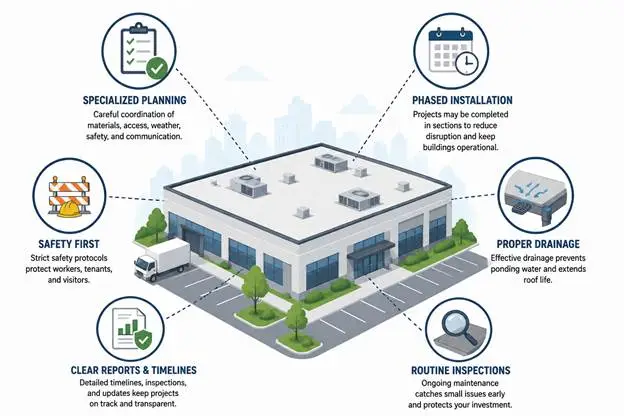
Large commercial roofing projects involve far more coordination than smaller residential installations. Shopping centers, apartment communities, schools, office campuses, and industrial facilities often remain occupied during roofing work, making scheduling and safety extremely important.
For this reason, project planning is one of the most critical stages of commercial roof replacement. Contractors must coordinate material deliveries, access points, noise management, weather timing, and tenant communication carefully.
Large-scale roofing systems may also require phased installation approaches. Instead of replacing the entire roof at once, contractors sometimes divide projects into sections to reduce operational interruptions and maintain building functionality.
Building owners should expect detailed project timelines, inspection reports, and safety protocols before work begins. Experienced commercial roofing contractors understand how to minimize business disruptions while maintaining installation quality.
Another important consideration for large properties is drainage design. Commercial roofs must efficiently move water away from the building to prevent ponding and long-term membrane damage. Improper drainage is one of the leading causes of premature roofing failure.
Routine inspections after installation also help protect the investment. Preventive maintenance programs can identify small issues early before they turn into costly repairs or interior leaks.
Large Commercial Roof Replacement Cost in California
Property owners across the state continue to see changes in the large commercial roof replacement cost in California due to evolving construction regulations and rising material expenses. California’s strict energy efficiency standards and environmental regulations often influence roofing system selection and installation requirements.
In coastal regions like Santa Cruz, roofing systems must also withstand moisture exposure, UV radiation, temperature fluctuations, and seasonal storms. Choosing materials designed for local climate conditions helps improve durability and long-term performance.
Labor costs in California also remain higher than national averages due to licensing requirements, skilled labor demand, and insurance standards. While this can increase initial project costs, working with experienced commercial roofing professionals helps ensure proper installation and code compliance.
Property owners should also consider lifecycle costs rather than focusing solely on upfront pricing. Lower-cost roofing systems may require more frequent repairs or earlier replacement. Investing in quality materials and professional installation often results in lower overall ownership costs over time.
Roof coatings and restoration systems may also be worth discussing for certain buildings. In some cases, restoration can extend roof life without requiring a complete replacement. However, roofs with significant structural damage or moisture intrusion typically require full replacement solutions.
At Apollo Roofing Company, we guide commercial clients through these decisions with detailed assessments and transparent recommendations tailored to their property goals.
Choosing the Right Commercial Roofing Contractor
Selecting the right contractor is just as important as selecting the right roofing material. Commercial roofing projects require technical expertise, proper licensing, safety training, and experience working on large-scale structures.
Property owners should always verify contractor credentials, insurance coverage, manufacturer certifications, and commercial project experience before signing an agreement. Reviewing past projects and customer feedback also provides valuable insight into workmanship quality and reliability.
Clear communication is another essential factor. Commercial roofing projects involve many moving parts, and building owners benefit from contractors who provide regular updates, realistic timelines, and transparent pricing.
A reputable contractor should also provide comprehensive inspections rather than rushing directly into replacement recommendations. Some roofs may still have remaining service life with proper repairs or restoration work.
At Apollo Roofing Company, our team prioritizes honest evaluations and long-term roofing performance. We work closely with commercial property owners throughout Santa Cruz to create roofing solutions that fit operational needs, budgets, and future maintenance goals.
Planning Ahead for Commercial Roof Replacement
One of the smartest strategies commercial property owners can adopt is proactive planning. Waiting until major leaks develop often leads to emergency repairs, interior damage, tenant disruption, and unexpected expenses.
Scheduling regular roof inspections helps identify early warning signs such as membrane deterioration, drainage problems, flashing damage, and moisture intrusion. These inspections also provide valuable information for long-term budgeting and capital improvement planning.
For properties approaching the end of their roof lifespan, developing a replacement timeline early allows owners to compare material options, secure financing if needed, and avoid rushed decisions during emergencies.
Commercial roofing technology also continues to evolve. Modern systems now offer improved energy efficiency, enhanced durability, and better environmental performance compared to older roofing materials. Exploring updated roofing options may provide significant long-term value for commercial buildings.
Understanding the commercial roof replacement cost in Santa Cruz before problems escalate gives property owners greater control over project planning and financial decision-making.
Compare Your Commercial Roof Replacement Cost in Santa Cruz with Help from Apollo Roofing Company
If you own or manage a large commercial property, understanding your roofing options is essential for protecting your investment. Apollo Roofing Company provides detailed inspections, transparent estimates, and reliable commercial roofing solutions tailored to Santa Cruz properties.
Our experienced team helps property owners evaluate materials, understand project timelines, and plan for long-term roofing performance with confidence. Whether you need a full replacement, restoration guidance, or preventative maintenance support, we are here to help you make informed decisions for your commercial property.
FAQs About Commercial Roof Replacement Cost in Santa Cruz
How long does a commercial roof replacement usually take?
Commercial roof replacement timelines depend on roof size, weather, materials, and building complexity. Smaller projects may take a few days, while larger commercial properties often require several weeks for safe, efficient completion.
What is the most common commercial roofing material?
TPO roofing is one of the most popular commercial roofing materials because it offers durability, energy efficiency, weather resistance, and cost-effective performance for many commercial buildings and large properties.
Can businesses stay open during roof replacement?
Yes, many businesses can remain open during commercial roof replacement. Experienced contractors use phased scheduling, safety measures, and careful planning to minimize disruptions and maintain daily operations.
Does insurance cover commercial roof replacement?
Insurance coverage depends on the cause of roof damage and the details of your policy. Storm or accidental damage may qualify for coverage, while aging, wear, and neglected maintenance are usually excluded.
How often should commercial roofs be inspected?
Commercial roofs should typically be inspected twice each year and after severe storms. Routine inspections help identify leaks, drainage problems, and early damage before costly repairs or replacement become necessary.
