

A roof is designed to take years of exposure to sun, wind, rain, temperature changes, debris, and everyday wear. That durability can make it easy to assume a roof is doing fine as long as there is no obvious leak. Roofing problems often begin quietly and develop long before water starts dripping from the ceiling.
Understanding what causes roof damage can help homeowners and commercial property owners recognize problems earlier, plan maintenance more effectively, and avoid allowing a small issue to affect other parts of the building.
The roofing system is also more complex than the shingles, tiles, or membrane visible from the ground. It includes underlayment, flashing, roof decking, drainage components, penetrations, insulation, ventilation, and numerous transition points that all need to work together.
As Apollo Roofing Company owner Simon Elmadawi explains, damage to the roof’s outer surface can eventually affect the entire system. That is why identifying potential problems early matters. The goal is not simply to keep the roof looking good. It is to preserve the layers beneath it and help prevent moisture from reaching the structure below.
Top Causes of Roof Damage
Most roofs do not fail because of a single dramatic event. Damage is often the result of repeated exposure, aging materials, neglected maintenance, or several smaller problems occurring at the same time.
A loose flashing detail may allow moisture to enter during heavy rain. Debris may block drainage in another area. Aging roofing materials may become less resistant to wind or water. Over time, those conditions can place greater stress on the roof.
Regular inspection and timely repair can help property owners identify these problems before deterioration spreads.
Weather
Weather is one of the most consistent sources of stress on any roofing system.
Roofing materials are exposed every day to sunlight. Ultraviolet radiation and heat can gradually affect the surface of many roofing products, causing materials to fade, dry, become brittle, or lose some of their flexibility as they age.
Wind creates a different type of stress. Strong gusts can lift shingles, disturb edges, loosen flashing, or place pressure on already weakened roofing components. Damage may not always be obvious from the ground. A shingle can remain in place while its seal has been weakened, leaving it more vulnerable during the next storm.
Rain introduces another concern. A properly functioning roof is designed to direct water away from the building, but water can take advantage of even small weaknesses. Failed flashing, damaged sealants, punctures, displaced roofing materials, or poorly draining areas can allow moisture to work beneath the surface.
One important point for property owners is that weather-related deterioration tends to build over time. A single sunny day or light rainstorm may not create a problem, but years of exposure can gradually reduce the roof’s ability to protect the structure.
This is why checking the roof after significant storms and including weather exposure in routine inspections can be valuable.
Lack of Maintenance
Roof maintenance is sometimes misunderstood as simply repairing something after it breaks. Effective maintenance begins earlier.
The purpose of an inspection is to find signs of deterioration while the problem is still manageable. A cracked seal, damaged flashing, loose roofing material, clogged drain, or small puncture may be relatively limited when first discovered. If it remains unnoticed, moisture and continued weather exposure can turn it into a much larger concern.
Consider a small opening around a roof penetration. First, the damage may only affect the material immediately surrounding a pipe or vent. If water repeatedly enters the opening, however, it may eventually affect the underlayment, decking, insulation, or interior finish.
The same is true for drainage. Gutters, drains, valleys, and other water-management areas need to remain clear enough to move water away from the roof. When debris prevents proper drainage, water may remain where the roofing system was not designed to hold it.
Routine maintenance provides an opportunity to catch up on these situations before they progress.
Property owners should also be cautious about improper repairs. Temporary patches may sometimes stop an immediate leak, but they do not necessarily correct the underlying cause. A professional evaluation can help determine whether the issue is localized or part of a broader roofing problem.
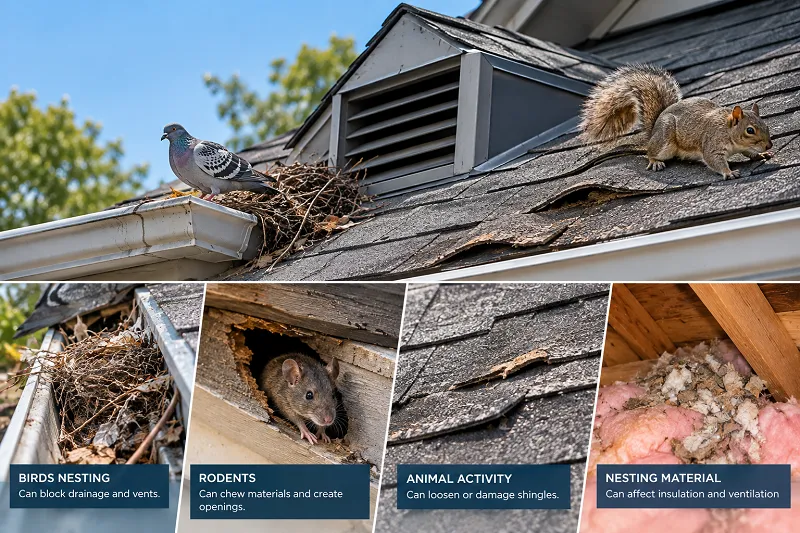
Birds, Rodents, and Other Animals
Animals may seem like a minor concern compared with storms or aging materials, but they can cause surprisingly significant roof damage.
Birds may nest in roof openings, gutters, vents, or other protected areas. Nesting material can obstruct drainage or ventilation, while repeated activity may disturb roofing components.
Rodents can create more serious problems when they attempt to gain access to an attic or wall cavity. Small openings around eaves, vents, flashing, or deteriorated wood may attract animals looking for shelter. Gnawing and nesting can expand an existing weakness and create a pathway for moisture.
Larger animals can also disturb roofing materials while moving across the roof. Lose or aging shingles may be particularly vulnerable.
Property owners should pay attention to recurring animal activity near the roofline. Scratching noises in an attic, nesting near vents, displaced materials, or visible openings should be investigated rather than ignored.
The important consideration is not simply removing the animal. Any damage created during the activity should also be evaluated and repaired so that the roofing system remains protected.
Trees
Mature trees can provide shade and improve a property’s appearance, but branches and falling debris can create several roofing concerns.
One of the most obvious risks is physical impact. A large branch can puncture roofing material, damage flashing, crack tiles, or affect the roof deck. Even smaller branches that repeatedly rub against the roof during windy conditions may gradually wear away protective surfaces.
Leaves and organic debris create a different problem.
When leaves collect in gutters, valleys, drains, or low areas, they can interfere with the roof’s ability to move water away efficiently. Wet debris may also hold moisture against roofing materials longer than normal.
Tree-related damage does not always require cutting down nearby trees. Regular trimming and reasonable clearance between branches and the roof can help reduce the risk.
After a significant storm or high-wind event, it is also worth checking for newly fallen branches or debris. Something that appears minor from the ground may have damaged roofing material underneath.
Age
Every roofing material has a useful service life, and aging is a normal part of roof ownership.
As materials age, they are exposed to repeated cycles of heat, sunlight, moisture, wind, and seasonal changes. Eventually, components can become less flexible, seals may weaken, surface materials may deteriorate, and repairs from previous years may begin to fail.
Age becomes especially important because the visible roofing surface protects several layers underneath it.
When the outer layer begins allowing water through, moisture can reach the underlayment and roof deck. If the issue continues, insulation, framing, ceilings, walls, and other parts of the building may eventually be affected.
That is why homeowners should avoid evaluating a roof based on age alone.
Two roofs installed in the same year may not be in the same condition. Material quality, installation, roof orientation, maintenance history, nearby trees, ventilation, drainage, weather exposure, and previous repairs can all influence how quickly a roof deteriorates.
A professional inspection provides a better picture of actual condition than simply relying on the installation date.
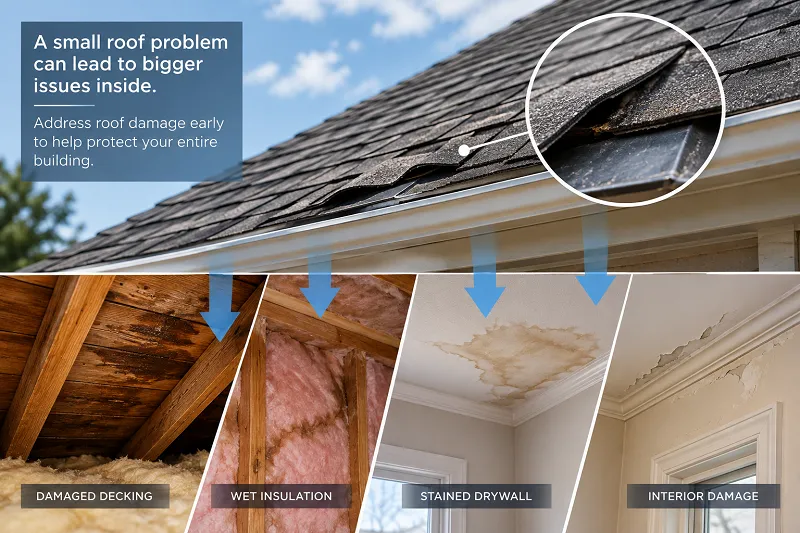
Small Roof Problems Can Become Building Problems
One of the biggest reasons to address roof damage early is that the effects rarely remain limited to the roof covering.
Water that enters beneath damaged roofing material can travel before becoming visible inside the building. By the time a ceiling stain appears, moisture may already have affected other components.
Persistent moisture can damage decking, insulation, drywall, paint, and structural materials. It may also create conditions that require more extensive repairs than the original roofing issue would have required.
This is why early investigation matters.
A small stain, loose shingle, damaged flashing area, clogged drain, or unusual roof condition should not automatically be treated as an emergency, but it also should not be ignored. A roofing professional can determine whether the issue is superficial, localized, or evidence of a larger problem.
When Should You Have Your Roof Inspected?
A roof does not have to be leaking before an inspection makes sense.
Routine inspections can be helpful for identifying developing problems, particularly on older roofs or properties surrounded by trees. An inspection can also be worthwhile after severe weather, when purchasing a property, before major renovation work, or when unexplained moisture appears inside the building.
Owners should also pay attention to visible warning signs such as missing or displaced roofing materials, damaged flashing, accumulated debris, sagging gutters, cracked components, or changes in the roof’s appearance.
Commercial roofs may require additional attention around drains, seams, rooftop equipment, membrane transitions, and areas frequently accessed by maintenance personnel.
The purpose of an inspection is not to assume that every unusual condition requires replacement. In many cases, identifying a problem early may allow for a more focused repair.
Frequently Asked Questions About Roof Damage
What are some of the earliest signs of roof damage?
Early signs can include displaced shingles or roofing material, damaged flashing, debris accumulation, clogged gutters or drains, ceiling discoloration, moisture around attic components, or visible deterioration around penetrations. Some problems are difficult to see from the ground, which is why professional inspection can be useful when something appears unusual.
Can a roof be damaged even if there is no visible leak?
Yes. Roofing damage can exist before water becomes visible inside a home or commercial building. Moisture may remain within roofing layers or travel along decking and framing before producing an interior stain. Lose materials, failed flashing, punctures, and drainage issues can also require attention even when the interior still appears to dry.
Should a roof be inspected after a storm?
A professional evaluation can be worthwhile after significant wind, heavy rain, falling branches, or other severe weather, especially if the roof is older or already has areas of concern. Storm damage is not always obvious. Roofing materials can loosen; flashing can shift, or impact damage can occur without immediately producing an interior leak.
Does an older roof automatically need replacement?
Not necessarily. Age is important, but actual roof conditions should guide the decision. Some older roofs may still be performing well, while others may show widespread deterioration. A roofing contractor can evaluate the materials, decking, flashing, drainage, previous repairs, and overall system before recommending repair or replacement.
Can regular maintenance really prevent roof damage?
Maintenance cannot prevent normal aging or severe weather, but it can help reduce avoidable problems. Clearing drainage areas, addressing damaged materials, checking flashing, and repairing small issues before they spread can help protect the roof and the building components beneath it.
Protect Your Property With Professional Roofing Services From Apollo Roofing Company
Roof damage does not always begin with a dramatic leak or missing section of roofing. More often, it develops gradually through weather exposure, aging materials, blocked drainage, animal activity, tree debris, or maintenance issues that have gone unnoticed.
Understanding these risks gives property owners a better opportunity to respond before minor deterioration becomes a more extensive problem.
Apollo Roofing Company provides residential and commercial roofing services for property owners in San Rafael and surrounding communities. Whether you have noticed signs of damage, recently experienced severe weather, are concerned about the age of your roof, or simply want a professional assessment of its condition, an experienced roofing team can help determine what the system needs.
Contact Apollo Roofing Company to schedule a professional roof evaluation and get clear guidance on the appropriate next steps for protecting your property.
