

A roofing project can feel simple at first. You notice missing shingles, cracked tiles, soft spots, leaks, or rising energy bills, and the next step seems clear: hire a roofer and get the work done. In Milpitas, however, the process also includes understanding roofing permits in Milpitas expectations, inspection requirements, and planning rules before work begins.
That may sound frustrating, but permits are not just paperwork. They help confirm that your roof is installed safely, follows current standards, and protects the long-term value of your property. The City of Milpitas states that residential re-roof work requires a permit, and it also notes that changes in roofing material type or color should be reviewed and approved by the Planning Division before permit issuance. The city also provides building permit resources, re-roof submittal information, online permitting options, and One-Stop Permit Center contacts for property owners and contractors.

Why Permits Matter for Roofing Projects
Permits protect the homeowner, the contractor, and the community. A roof is part of the home’s weatherproofing system, but it also affects ventilation, drainage, fire resistance, energy performance, and structural protection. When a roof is installed correctly, it helps the home perform as a complete system.
When a permit is pulled, the project becomes part of the official property record. That matters if you sell the home, file an insurance claim, refinance, or schedule future improvements. Unpermitted work can raise questions during real estate transactions, even if the roof appears fine from the street.
What Homeowners Should Know Before Starting
Before starting, homeowners should understand whether the project is a repair, a re-roof, a replacement, or a larger structural change. Small maintenance work may not follow the same path as a full replacement. A complete re-roof is different because it affects the building envelope and may require inspection.
This is where roofing permits in Milpitas become important. The city’s re-roof guidance makes clear that permit requirements apply to residential re-roof work. If your project includes changing from one material to another, such as asphalt shingles to tile or metal, the Planning Division may need to review the proposed material and color before the permit is issued.
Homeowners should also prepare for what may be discovered once the old roofing material is removed. Damaged decking, poor ventilation, dry rot, outdated flashing, or hidden leaks can change the scope. When these issues appear, the contractor may need to adjust the plan so the finished roof meets code and performs properly.
Understanding the Local Review Process
The permit process usually begins with confirming the scope of work. A contractor or property owner may need to gather project details, complete the required application, and provide supporting documents. The City of Milpitas offers building permit resources, forms, fee information, and online permitting options for certain projects.
For roofing, submittal needs can vary by property type and project scope. Residential projects and commercial projects may use different guidance. A straightforward single-family re-roof may be more direct than a project involving structural changes, new roof loads, or non-residential requirements.
Roof Replacement Permits and Project Planning
Many homeowners research roof replacement permits in Milpitas only after they have chosen a contractor or scheduled the job. A better approach is to discuss permitting during the estimate. This gives the contractor time to identify possible issues before materials are ordered and labor is scheduled.
Planning ahead also reduces stress. A replacement often involves material selection, tear-off, disposal, repairs to the substrate, installation, cleanup, and inspection. If the permit process is handled late, the project can be delayed even when the homeowner is ready to move forward.
Homeowners should ask who will apply for the permit, who will coordinate inspections, and whether permit fees are included in the proposal. Vague permit language can lead to confusion, unexpected costs, and scheduling problems.
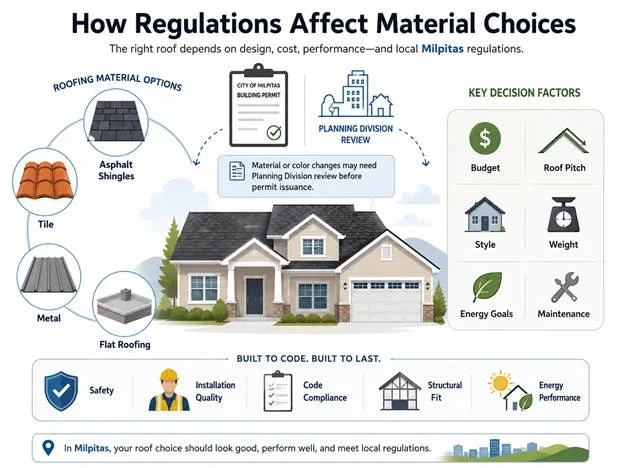
How Regulations Affect Material Choices
Material selection is one of the biggest decisions in a roofing project. In Milpitas, homeowners may consider asphalt shingles, tile, metal, flat roofing systems for certain structures, or other approved materials depending on the property and roof design. The right choice depends on budget, roof pitch, architectural style, weight considerations, energy goals, and maintenance expectations.
Local review can matter when the new roof changes the appearance of the property. The city’s residential re-roof guidance notes that changes in roofing material type or color require Planning Division review and approval before permit issuance. That means a roof that looks different from the previous system may need extra attention before installation begins.
Milpitas roofing regulations are not only about appearance. They also relate to safety, installation quality, and code compliance. A heavier material may raise structural questions. A reflective product may support energy performance, but it still needs to be compatible with the roof structure and manufacturer requirements.
Inspections and Why They Should Not Be Skipped
Inspections are a normal part of permitted construction. For roofing projects, an inspection helps confirm that the work was completed according to the approved scope and applicable standards. Depending on the project, this can include installation details, roof covering, flashing, and related components.
Homeowners sometimes worry that inspections will create delays, but they are there to protect the final result. A missed detail on a roof can become expensive later. Water intrusion may not appear right away. Improper flashing or ventilation can shorten roof life and lead to interior damage.
A good contractor plans around inspections rather than treating them as an afterthought. They understand when the city needs to be involved and how to keep the project moving while still respecting local requirements.
Common Mistakes That Can Delay a Roofing Project
One common mistake is assuming every roof project follows the same path. A like-for-like asphalt shingle replacement may be simpler than a material change or commercial roof project. Property type, project size, roof design, and existing conditions all matter.
Another mistake is choosing materials before checking whether they make sense for the home. Tile and some premium systems can be beautiful and durable, but the structure must be able to support the load. A roof is not just a surface treatment. It is a system, and each component needs to work with the others.
Homeowners also run into problems when permit responsibilities are unclear. If the proposal does not explain who handles the permit, when inspections happen, and what documentation is needed, the project can become frustrating.
What to Ask Your Roofing Contractor
A roofing consultation should include more than a price. Homeowners should feel comfortable asking how the contractor handles permits, what regulations may affect the project, and how inspections are coordinated. The answers can reveal a lot about the company’s professionalism.
Ask whether the proposed roofing system is appropriate for your home’s pitch, structure, and climate exposure. Ask how damaged decking will be handled if it is discovered during tear-off. Ask whether the contract includes cleanup, disposal, flashing, ventilation review, and permit coordination.
This is also a good time to discuss roof replacement permits in Milpitas if your project involves a full tear-off or major replacement. A contractor familiar with local expectations can explain what information is usually needed and help you avoid surprises.
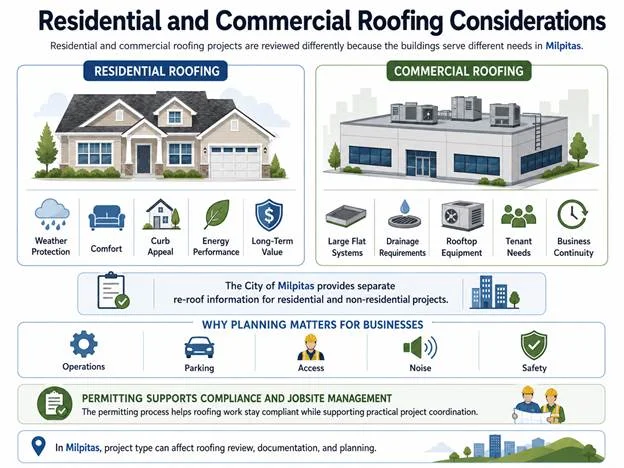
Residential and Commercial Roofing Considerations
Residential and commercial roofing projects are often reviewed differently because the buildings are used differently. Homes typically focus on weather protection, comfort, curb appeal, energy performance, and long-term value. Commercial roofs may involve larger flat systems, drainage requirements, rooftop equipment, tenant needs, and business continuity concerns.
The City of Milpitas provides separate re-roof information for residential and non-residential projects. That distinction matters because commercial roofs may require additional documentation or coordination depending on the property and scope.
For business owners, planning is especially important. Roofing work can affect operations, parking, access, noise, and safety around customers or employees. The permitting process helps make sure the project supports both compliance and practical jobsite management.
Why Local Experience Matters
Roofing is local. A contractor who understands the area knows how Milpitas homes are built, what roofing systems are common, and what issues often appear during replacement. Local experience also helps with communication around permits, inspections, and material choices.
Milpitas roofing regulations can feel technical if you are reading them for the first time. The right contractor can translate those requirements into a clear project plan. That means knowing what needs to happen, when it needs to happen, and how to keep the homeowner informed.
Apollo Roofing Company helps homeowners approach roofing projects with confidence by focusing on clear communication, quality workmanship, and practical guidance from start to finish.
Need Help With Roofing Permits in Milpitas? Call Apollo Roofing Company
Permits and regulations should not stop you from getting the roof your home needs. They should help protect your investment and give you confidence that the work is being done the right way. If you are planning a repair, re-roof, or replacement, Apollo Roofing Company is ready to help you understand the next steps and move forward with a clear plan. Contact Apollo Roofing Company today to schedule a roofing consultation in Milpitas.
FAQs About Roofing Permits in Milpitas
Do I need a permit to replace my roof in Milpitas?
In most full re-roof situations, yes, homeowners should expect a permit before work begins. The City of Milpitas states that residential re-roof work requires a permit, and changes in material type or color may also need Planning Division review before permit issuance. Confirming the scope early helps your project stay properly documented and reduces the chance of avoidable delays.
Who is responsible for getting the roofing permit?
Responsibility depends on the agreement between the homeowner and contractor, so it should be discussed before the contract is signed. Many professional roofing contractors help coordinate the permit process because they understand the project scope and required documents. Homeowners should make sure the proposal explains who will apply, who will pay fees, and who will schedule inspections.
What happens if roofing work is done without a permit?
Unpermitted work can create problems later, especially during a home sale, insurance claim, refinance, or future renovation. The city may require corrections, documentation, or additional review if work was completed without proper approval. Even when the roof appears finished, missing permit records can raise concerns about whether the installation followed local code and safety standards.
Can I change my roofing material or color during replacement?
You may be able to change the roofing material or color, but it should be reviewed before installation begins. The City of Milpitas notes that changes in material type or roofing color require Planning Division review and approval before permit issuance. This helps confirm that the proposed roof is appropriate for the property and consistent with applicable local requirements.
How can Apollo Roofing Company help with the process?
Apollo Roofing Company can help homeowners understand the roofing scope, discuss permit-related steps, and plan the project with fewer surprises. A knowledgeable roofing team can explain what information is needed, help identify potential issues early, and coordinate the work so the finished roof is safe, durable, and aligned with local expectations.
