

A comfortable home depends on more than heating and cooling equipment. The roof and attic also play a major role in how well indoor temperatures stay controlled throughout the year. When insulation is performing properly, it helps reduce unwanted heat transfer between the living space and the exterior environment.
For homeowners considering roof insulation in San Rafael, understanding how insulation works can make it easier to recognize comfort problems, energy waste, and roofing conditions that may deserve attention. Insulation is not simply a material placed above the ceiling. It works as part of a broader roofing and ventilation system that influences indoor temperature, moisture control, and overall efficiency.
Why Roof Insulation Matters More Than Many Homeowners Realize
Heat naturally moves from warmer areas toward cooler ones. During warmer weather, exterior heat can move through the roof and into the home. During cooler periods, heated indoor air can escape upward through ceilings and attic spaces.
Insulation helps slow this movement.
When the thermal barrier is adequate and consistently installed, indoor temperatures can remain more stable. Rooms may feel less affected by outdoor temperature swings, and heating or cooling systems may not need to work as frequently to maintain the thermostat setting.
Problems often become noticeable when insulation is thin, uneven, compressed, damaged, or missing in certain areas. One room may feel warmer than another, upstairs spaces may become uncomfortable in the afternoon, or the HVAC system may seem to run longer than expected.
These symptoms can have several causes, but insulation is one factor worth evaluating.
The Connection Between Your Roof and Indoor Comfort
The roof is one of the largest exterior surfaces exposed to sunlight, wind, moisture, and temperature changes. Because of that exposure, conditions at the roofline can influence what happens inside the building.
Insulation creates resistance between exterior temperatures and conditioned indoor spaces. The effectiveness of that resistance depends on the insulation material, thickness, installation quality, roof assembly, ventilation, and whether gaps or compressed areas are present.
A properly insulated roof assembly can help reduce noticeable temperature differences between rooms. It may also make the home feel more comfortable without requiring constant thermostat adjustments.
This is especially important in homes where upper floors or rooms directly below the roof tend to feel warmer or cooler than the rest of the house.
How Attic Insulation Supports the Roofing System
In many homes, the attic is the primary location where insulation creates a thermal boundary between living areas and the roof above.
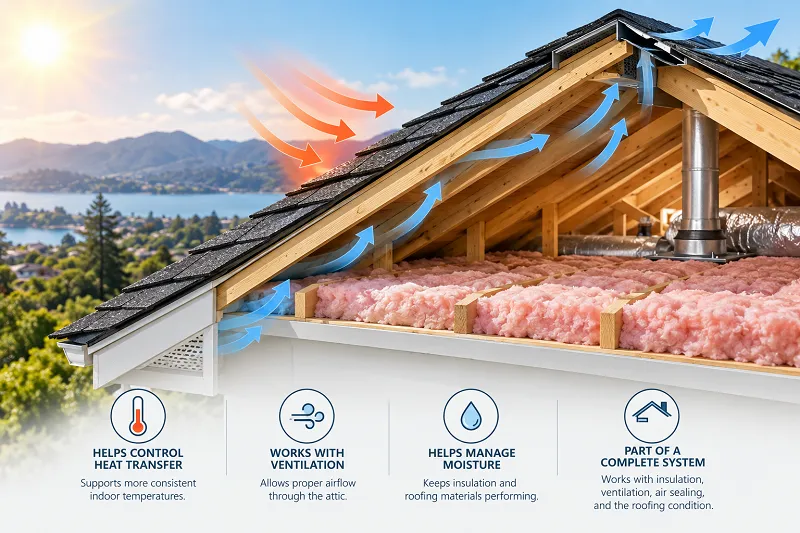
Proper attic insulation in San Rafael can help slow heat transfer while supporting more consistent indoor temperatures. However, insulation should not be viewed in isolation. Attic ventilation, air sealing, moisture management, and roofing condition all contribute to how the space performs.
For example, insulation that blocks ventilation pathways can create problems rather than solve them. Moisture that enters through a roof leak can also reduce insulation performance and potentially affect surrounding building materials.
That is why an evaluation should consider both the insulation and the condition of the roofing system around it.
Insulation Can Affect Energy Use Throughout the Year
Heating and cooling systems respond to heat gain and heat loss. When a home gains heat quickly during warm weather or loses heat rapidly during cooler conditions, the HVAC system has to compensate.
Insulation helps slow that transfer.
A well-insulated home may require less frequent heating or cooling to maintain a comfortable temperature. This does not mean insulation alone will determine energy costs. Window performance, air leakage, HVAC efficiency, thermostat settings, home size, and occupant habits also matter.
Still, insulation is an important part of the building envelope.
Homeowners interested in energy efficient roofing in San Rafael should consider insulation alongside roofing materials, ventilation, roof color, air sealing, and overall system condition. Efficiency is usually the result of several components working together rather than one upgrade acting alone.
Signs Your Home May Have an Insulation Problem
Insulation issues do not always create an obvious visual warning.
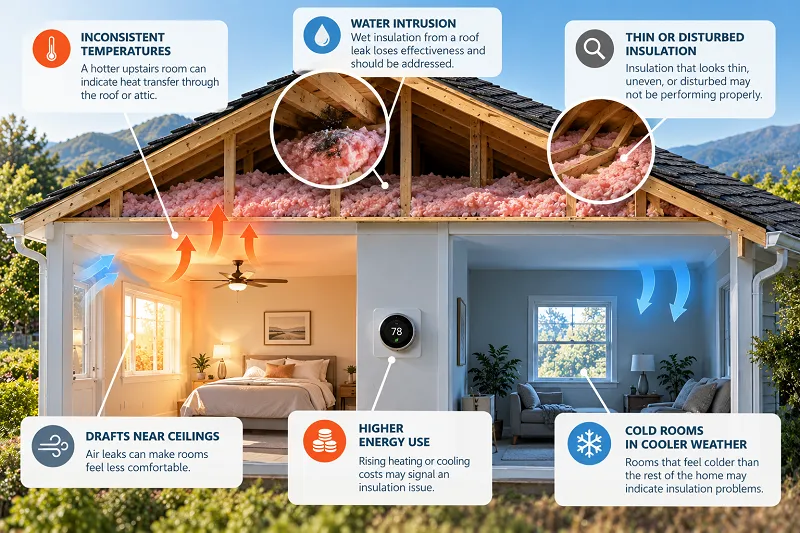
One common sign is inconsistent temperature from one area of the home to another. A second-floor bedroom that becomes noticeably hotter than downstairs rooms may indicate unwanted heat transfer through the roof or attic.
Higher-than-expected heating or cooling use can also justify a closer look, especially when the HVAC equipment is functioning properly.
Drafts near ceilings, unusually warm ceiling surfaces, cold rooms during cooler weather, or insulation that appears thin or disturbed in the attic may also suggest a problem.
Water intrusion deserves particular attention. If insulation has become wet because of a roof leak, its ability to perform as intended may be reduced. The source of the moisture should be corrected before damaged insulation is addressed.
Ventilation and Insulation Need to Work Together
Adding more insulation is not automatically the right solution for every attic.
Roof assemblies often depend on ventilation to help manage heat and moisture. Intake vents and exhaust vents allow air to move through designated pathways. If insulation covers these openings or restricts airflow, moisture and temperature problems can develop.
This is why insulation work should account for the design of the entire roof system.
Ventilation requirements can vary based on roof configuration, attic design, local building conditions, and the type of insulation being used. Proper placement matters just as much as insulation depth.
A balanced approach helps protect both indoor comfort and roofing performance.
Roof Condition Should Be Checked Before Insulation Improvements
Before adding or replacing insulation, it is important to understand whether the roof itself is allowing water into the attic.
Even a small leak around flashing, vents, penetrations, valleys, or aging roofing materials can affect insulation over time. Damp insulation may compress, hold moisture, or contribute to deterioration in nearby wood components.
Visible staining on rafters or decking can provide clues, but not every moisture problem is easy to identify from inside the attic.
A roofing inspection can help determine whether repairs should be completed before insulation improvements move forward.
This prevents homeowners from covering up symptoms without addressing the source of the problem.
Insulation Is One Part of an Efficient Roofing Strategy
Energy performance depends on how well multiple parts of the home work together.
Roofing materials protect the structure from weather. Insulation helps limit heat transfer. Ventilation supports airflow and moisture control. Air sealing reduces unintended movement of conditioned air through gaps and penetrations.
Together, these systems can create a more stable indoor environment.
When discussing energy efficient roofing in San Rafael, it is useful to think beyond the visible roof surface. What happens beneath the roofing material can be just as important to comfort and long-term performance.
A thoughtful evaluation can help identify whether the most useful improvement involves insulation, ventilation, roof repairs, air sealing, or a combination of these measures.
Frequently Asked Questions
How can I tell whether my roof insulation needs attention?
Uneven room temperatures, excessive heat upstairs, rising heating or cooling use, visible gaps in insulation, or areas where insulation appears compressed can all justify an inspection. Moisture staining in the attic should also be investigated because leaks can reduce insulation performance and affect nearby materials.
Can insulation help make my home more comfortable during warm weather?
Yes. Insulation helps slow heat moving through the roof and ceiling into living areas. When insulation is properly installed and paired with suitable ventilation, upstairs rooms may experience fewer temperature swings and the cooling system may not need to compensate as aggressively for heat entering from above.
Should insulation be replaced if the roof has leaked?
Wet insulation should be evaluated after the source of the leak has been identified and corrected. Depending on the material and the extent of moisture exposure, replacement may be necessary. Leaving damp insulation in place can reduce thermal performance and may allow moisture to remain around structural materials.
Is more insulation always better?
Not necessarily. Insulation should meet appropriate performance levels without blocking ventilation or creating moisture problems. Adding material without considering airflow, existing insulation condition, roof design, and air sealing can lead to disappointing results. A complete evaluation helps determine what the home actually needs.
How does attic ventilation affect insulation performance?
Ventilation helps move air through designated attic pathways and can assist with managing heat and moisture. Insulation should be installed so those pathways remain open where required. When insulation blocks vents or airflow is poorly balanced, attic temperatures and moisture conditions can become harder to control.
Improve Your Home’s Comfort with Roof Insulation in San Rafael from Apollo Roofing Company
Insulation can influence much more than how warm or cool an attic feels. It can affect indoor comfort, HVAC demand, moisture conditions, and the way the roofing system performs as a whole.
Apollo Roofing Company can evaluate your roof, attic conditions, ventilation, and related components to help identify areas that may be contributing to comfort or efficiency concerns. If your home feels difficult to keep comfortable or you are planning roofing improvements, schedule an inspection with Apollo Roofing Company to better understand what your roof system needs.
