

A roof can look perfectly solid from the street and still have a vulnerable spot only a few inches wide. Flashing is one of those small roofing components that rarely gets much attention until water finds its way inside.
Flashing is installed where roofing materials meet walls, chimneys, vents, skylights, valleys, and other transitions. These areas naturally create opportunities for water to move beneath the exterior roofing material. Properly installed flashing redirects that water toward the roof surface and drainage system instead.
For homeowners considering roof flashing in San Rafael, understanding how this component works can make it easier to recognize potential trouble before a small opening leads to damaged ceilings, insulation, decking, or interior finishes.
Why Flashing Matters More Than Its Size Suggests
Flashing does not cover most of the roof, but it protects some of its most complicated areas.
Water tends to follow gravity, seams, gaps, and changes in surface direction. A chimney, for example, interrupts the continuous slope of a roof. Without correctly installed flashing around its base, rainwater can collect or work its way into the joint between the chimney and roofing system.
The same principle applies around plumbing vents, skylights, dormers, roof-to-wall intersections, and valleys.
Flashing creates a controlled path for water. Instead of allowing moisture to settle around a vulnerable connection, it helps guide water away from that opening and back onto the roofing surface.
That is why a small flashing problem can sometimes result in a surprisingly noticeable leak inside the home.
San Rafael Weather Can Put Roofing Details to the Test
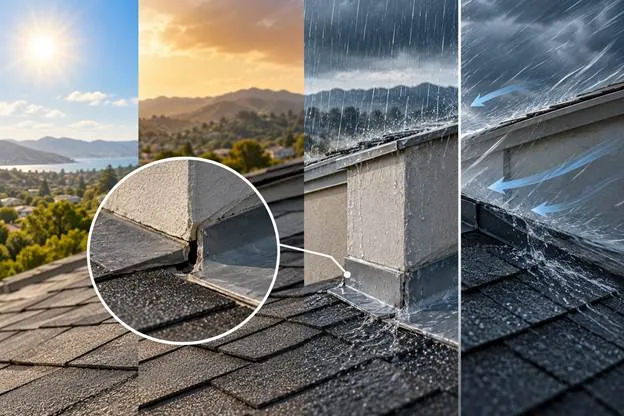
Roofing materials are exposed to more than rain. Sun, temperature changes, wind, moisture, and seasonal weather all contribute to gradual wear.
During dry periods, a small opening around flashing may not cause an obvious problem. Once extended rainfall arrives, however, water has more opportunities to enter the same vulnerable area repeatedly.
Wind-driven rain can make the situation more challenging because moisture does not always travel straight down. It may be pushed against walls, around roof penetrations, or beneath materials that normally shed water effectively.
For homeowners focused on roof leak prevention in San Rafael, these transition points deserve just as much attention as shingles, tiles, or other visible roofing materials.
Flashing Problems Are Not Always Easy to Spot
Some flashing issues are noticeable from the roof, while others remain hidden until signs appear indoors.
Metal flashing can loosen, bend, corrode, separate from surrounding materials, or become damaged during previous roofing work. Sealants used around certain details may also deteriorate with age. In other situations, the flashing itself may still be intact but was not integrated correctly with the roofing materials when installed.
Inside the house, warning signs may include ceiling stains, discoloration near exterior walls, damp areas around chimneys or skylights, peeling paint, or moisture in the attic.
The location of an interior stain does not always identify the exact entry point. Water can travel along decking, framing, or other surfaces before becoming visible. That is one reason professional evaluation is useful when tracing a roof leak.
Pay Attention to the Roof’s Most Vulnerable Areas
Preparing for rain means looking beyond the most visible roofing material.
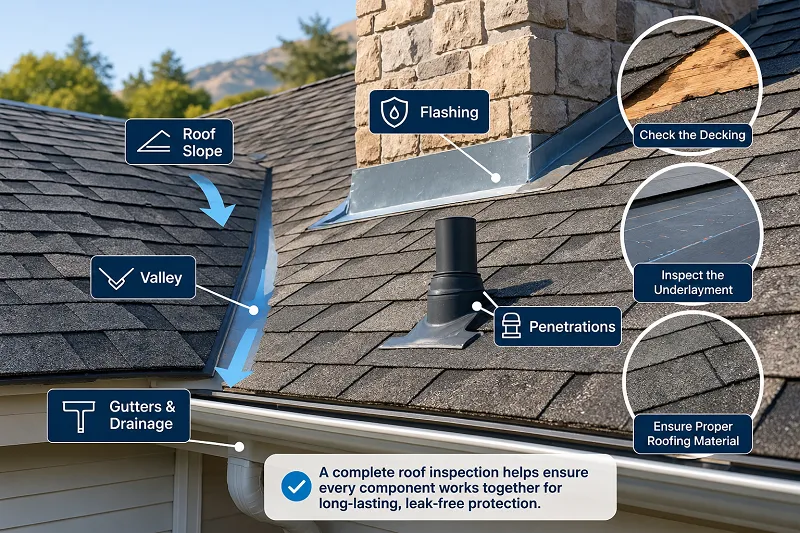
Chimneys are a common area of concern because several pieces of flashing may work together around their perimeter. Roof valleys also handle significant amounts of runoff because water from two roof slopes converges in the same area.
Skylights, vents, and other penetrations create additional openings that must remain properly sealed and flashed. Roof-to-wall intersections are equally important, particularly where a lower roof section meets an exterior wall.
These details may represent only a small percentage of the total roof area, yet they often perform some of the most important water-management work.
A roofing evaluation should consider how each component interacts with the surrounding materials instead of looking at one piece in isolation.
Previous Repairs Should Be Checked Too
A repaired section of roof should not automatically be assumed to be problem-free forever.
Roofing materials continue to age, buildings move slightly over time, sealants, weather, and surrounding components may deteriorate. An older repair may still be performing correctly, but it should be considered as part of a broader roof evaluation.
Properties that experienced leaks during previous rainy seasons deserve particular attention. A stain that disappeared after the weather changed does not necessarily mean the underlying cause disappeared with it.
If the source was never identified and corrected, another period of prolonged rain could allow the problem to return.
Repeated repairs in several nearby areas can also signal that it is time to examine the overall condition of the roofing system rather than treating every leak as an unrelated event.
Repairing Flashing Requires More Than Adding Sealant
Applying roofing sealant may appear to be a simple solution when a gap is visible, but flashing repairs often require a closer look at how the entire detail was constructed.
The roofing material may need to be carefully lifted or removed so the flashing underneath can be inspected. Damaged metal may require replacement. In other cases, adjacent roofing materials, underlayment, fasteners, or decking may also need attention.
Effective roof flashing repair in San Rafael should address the path water is taking, not simply cover the most visible opening.
This distinction matters because temporary patches can sometimes hide a larger problem without correcting it. A proper repair should restore the way the different roofing components overlap and direct water away from vulnerable areas.
Good Flashing Works as Part of the Whole Roofing System
Flashing does not operate independently. It relies on the surrounding roofing materials, underlayment, drainage features, and installation details to perform correctly.
For example, replacing damaged flashing without addressing deteriorated decking beneath it may leave part of the problem unresolved. Likewise, installing new roofing material over poorly positioned flashing can create another potential entry point for moisture.
The best approach is to evaluate the roof as a complete water-management system.
That includes checking how water moves across slopes, through valleys, around penetrations, along walls, and toward gutters or other drainage points. Looking at the complete system provides better context for deciding whether a localized repair is enough or whether additional work should be considered.
Address Small Problems Before Water Spreads
Roof leaks rarely become more convenient with time.
Moisture entering through a small flashing gap can affect more than the roofing material itself. Depending on where the water travels, it may reach roof decking, insulation, framing, ceilings, walls, or electrical components.
Early attention can help limit how far moisture travels and may make the repair more straightforward.
Homeowners do not need to diagnose the problem themselves. Watching for changes, documenting when leaks occur, and arranging an inspection when something appears unusual can provide useful information to the roofing contractor.
Thoughtful maintenance and timely roof leak prevention in San Rafael can help homeowners respond before minor deterioration develops into more extensive water damage.
FAQs About Roof Flashing
What is roof flashing, and what does it do?
Roof flashing is typically made from metal or another water-resistant material and installed around roof joints, penetrations, and transitions. Its purpose is to redirect rainwater away from areas where two surfaces meet or where an opening passes through the roof. Without properly positioned flashing, these locations can become easier pathways for moisture to enter the roofing system and eventually reach the home’s interior.
How can I tell if my roof flashing is damaged?
Possible warning signs include water stains on ceilings or walls, moisture around a chimney or skylight, loose or bent metal, visible gaps, corrosion, or roofing materials pulling away from a transition point. Some problems are difficult to see safely from the ground, and the location of an interior leak may not match the actual entry point. A roofing inspection can help trace the moisture source and determine whether flashing is involved.
Does damaged flashing always need to be replaced?
Not necessarily. The right solution depends on the flashing’s condition, how it was installed, and whether surrounding roofing materials have also been affected. Some localized issues may be repairable, while corroded, damaged, or improperly installed flashing may need replacement. Professional roof flashing repair in San Rafael should focus on restoring proper water flow rather than relying solely on surface sealants or temporary patches.
Should flashing be inspected even if my roof is not leaking?
Yes. A visible indoor leak is usually a late sign that water has already found a way past part of the roofing system. Periodic roof evaluations can identify loose materials, aging sealants, damaged flashing, and other vulnerable details before water reaches the interior. Inspections can be especially useful before wetter weather or when a roof has a history of leaks or previous repairs.
Prevent Costly Leaks with Professional Roof Flashing in San Rafael from Apollo Roofing Company
A small roofing detail should not be overlooked simply because it occupies less space. Flashing protects some of the areas where water intrusion is most likely to begin, and its condition can have a major effect on how well the entire roof manages rainfall.
Apollo Roofing Company can evaluate flashing, surrounding roofing materials, and other vulnerable areas to help determine what your roof actually needs. If you have noticed stains, recurring moisture, aging roof details, or simply want greater confidence before the next rainy period, contact Apollo Roofing Company to schedule a professional roof evaluation.
