

Choosing a commercial roofing system is not simply a matter of comparing materials and selecting the one with the lowest upfront price. A commercial roof protects the building, equipment, inventory, employees, tenants, and daily business operations beneath it. The wrong system can lead to higher maintenance costs, drainage problems, premature deterioration, or unnecessary disruption later.
Whether the project involves new construction or replacing an aging roof, commercial property owners should evaluate how the building is used, how the roof is designed, how often people will access it, and what environmental conditions it will face.
Apollo Roofing Company works with commercial property owners and surrounding areas to help evaluate these factors before roofing work begins. Understanding what influences system selection can make it easier to choose a roof that fits both the property and the long-term needs of the business.
Top Things to Consider When Choosing Commercial Roofing Systems
There is no single commercial roofing system that is appropriate for every property.
A warehouse with a large low-slope roof has different needs than a retail building, office complex, restaurant, or multifamily property. Even two buildings of similar size may require different roofing solutions depending on drainage, rooftop equipment, exposure, insulation needs, and maintenance expectations.
A good roofing decision starts with evaluating the complete building rather than focusing only on the roof covering itself.
Choice of Commercial Roofing Company
The contractor you choose can influence nearly every part of the project, from material recommendations to installation quality and long-term maintenance.
Commercial roofing requires different planning, equipment, safety procedures, and installation methods than many residential projects. Property owners should look for a roofing company with experience working on commercial structures and with the types of roofing systems being considered.
A contractor should be willing to explain why a particular system makes sense for the property. Recommendations should be based on roof slope, drainage, building use, existing conditions, and performance needs rather than simply on whichever product the contractor installs most frequently.
Communication also matters. Commercial roofing projects often involve property managers, tenants, HVAC contractors, maintenance teams, and business owners. A contractor who communicates clearly about scheduling, access, noise, material deliveries, and unexpected conditions can help reduce disruption during the project.
Building Location
A commercial building’s location can affect how the roofing system performs over time.
Local weather patterns, sun exposure, nearby trees, wind conditions, and surrounding structures may influence material selection and maintenance needs. For example, roofs may experience extended periods of sun along with seasonal rainfall, making drainage and material durability important considerations.
Trees near a building may contribute leaves, branches, and organic debris that can collect around drains or gutters. Buildings in exposed areas may experience different wind conditions than structures protected by surrounding development.
Local requirements also matter. A roofing contractor familiar with the area can help property owners understand permitting considerations and how local building conditions may influence the project.
Physical Characteristics of the Building
The building itself should guide the roofing decision.
Size, age, shape, structural design, roof height, and accessibility can all affect what systems are practical. An older commercial building may require additional evaluation of the roof deck or insulation before installation begins, while a newer building may offer more flexibility.
Large buildings also present logistical considerations. Material storage, crane access, staging areas, employee parking, customer entrances, and delivery routes may all need to be incorporated into the installation plan.
These details may not seem directly related to roofing material, but they can affect project cost, scheduling, and installation efficiency.
Roof Structure
The shape and construction of the roof are among the most important factors in system selection.
Roof slope influences how quickly water leaves the surface. A low-slope commercial roof requires a roofing system designed to manage water differently than a steep-slope roof. Drain locations, scuppers, gutters, tapered insulation, and other drainage components must work together with the roofing system.
The roof deck also matters because different materials and attachment methods may require different substrates.
Contractors should also evaluate penetrations such as HVAC units, skylights, plumbing vents, pipes, and exhaust systems. Each penetration interrupts the continuous roof surface and requires careful flashing and detailing.
A roof with many mechanical units may need a different design approach than a large, uninterrupted warehouse roof.
Roof Traffic
Some commercial roofs receive very little foot traffic. Others are accessed frequently by HVAC technicians, electricians, maintenance crews, telecommunications contractors, or building staff.
That distinction matters.
Frequent walking can place stress on certain roofing materials, particularly when technicians repeatedly follow the same path to reach mechanical equipment. A system that performs well on a roof with limited access may require added protection in high-traffic areas.
Walkway pads or reinforced access paths may be appropriate where regular maintenance occurs.
Planning these routes during installation can help reduce unnecessary wear and make future servicing of rooftop equipment more practical.
Building Use
A roof should support the way the building functions.
For example, a temperature-controlled retail space may place greater emphasis on insulation and energy performance. A warehouse may prioritize durability and long-term cost management. A restaurant may have more exhaust penetrations and mechanical equipment than a typical office building.
Businesses with sensitive equipment, inventory, or interior finishes may also require additional attention to moisture protection and installation sequencing.
Owners should tell the roofing contractor how the property is used, whether certain areas need to remain operational during the project, and whether future building changes are planned.
A contractor who understands the business can help recommend a system that supports both current and anticipated needs.
Material Longevity
Commercial roofing materials have different service-life expectations, but lifespan should never be considered in isolation.
Maintenance, installation quality, drainage, sun exposure, roof traffic, building movement, and weather can all influence how long a roofing system performs.
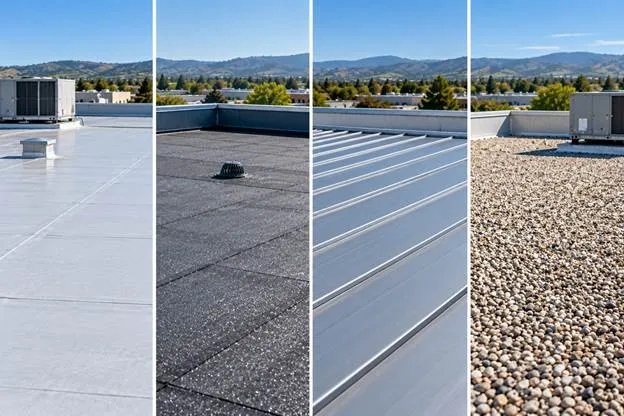
Metal roofing, for example, is known for durability and long service potential when properly designed and maintained. Other commercial systems may offer different advantages related to installation methods, repairability, energy performance, or project cost.
Instead of selecting a material solely because it has a longer advertised lifespan, property owners should consider how well it fits the building.
A durable product installed on the wrong roof design may not provide the results expected.
Project Budget
Budget is naturally an important part of any commercial roofing project, but the lowest initial price does not always represent the lowest long-term cost.
Commercial property owners should consider installation cost alongside maintenance expectations, repair needs, projected service life, insulation, drainage improvements, and future roof access.
For example, one system may cost more initially but require less maintenance over time. Another may be less expensive to install but need more frequent inspection or repair.
It is also important to understand exactly what is included in a roofing estimate.
Property owners should ask whether the proposal includes removal of existing materials, deck repairs, insulation, flashing, drainage work, permits, disposal, and other project components.
Clear estimates make it easier to compare contractors accurately and reduce the likelihood of unexpected costs after construction begins.
Think Beyond Installation
A commercial roofing project should not end when the installation crew leaves.
Ongoing inspection and maintenance play an important role in roof performance. Drains can become blocked, flashing can be damaged during mechanical work, and new rooftop equipment may be installed years after the roof itself.
Regular inspections can identify these changes before they develop into larger problems.
Property managers should also maintain records related to inspections, repairs, warranties, photographs, and equipment modifications. Those records can make future roof evaluations more accurate and help contractors understand how the system has changed over time.
FAQs About Choosing a Commercial Roofing System
What is the best roofing system for a commercial building?
There is no single best commercial roofing system for every building. The right choice depends on roof slope, building use, drainage, existing materials, rooftop equipment, traffic levels, budget, and long-term maintenance expectations. A professional evaluation can help determine which systems are appropriate for the specific property.
How important is roof drainage when choosing a roofing system?
Drainage is extremely important because commercial roofs must move water efficiently away from the building. Poor drainage can contribute to ponding water, increased wear, and problems around seams or penetrations. The roofing system and drainage design should be evaluated together rather than as separate parts of the project.
Should I choose a commercial roof based on lifespan alone?
No. Lifespan is important, but it should be considered alongside installation cost, maintenance requirements, repairability, building use, roof traffic, drainage, and environmental exposure. A roofing system with a long expected life may still perform poorly if it is not well suited to the building or installed correctly.
Can a commercial roof be replaced while the business remains open?
In many situations, yes. However, the contractor should plan around business operations. Noise, deliveries, equipment placement, entrances, parking, and access to certain areas may need to be coordinated in advance. Careful scheduling can help reduce disruptions while roofing work is underway.
How do I compare commercial roofing estimates?
Compare more than the total price. Review the roofing system, scope of work, removal requirements, insulation, flashing, drainage work, warranties, cleanup, permits, and how unexpected conditions will be handled. Two estimates with different prices may include very different amounts of work.
Start Your Commercial Roofing Project With Apollo Roofing Company – Call Us Today!
Choosing a commercial roofing system requires careful consideration of the building itself, not simply the roofing material. Roof structure, drainage, traffic, building use, location, maintenance needs, and long-term cost should all be evaluated before work begins. A commercial roof is a long-term investment in both the property and the business operating beneath it, so the right system should be selected based on how well it fits the building’s actual conditions.
Apollo Roofing Company provides commercial roofing services for property owners, including roof installation, replacement, repair, maintenance, and emergency roofing services. If your commercial roof is aging, experiencing recurring problems, or approaching replacement, a professional evaluation can help clarify your options and identify the most appropriate next step.
Contact Apollo Roofing Company to schedule a commercial roofing evaluation and discuss the roofing systems, installation considerations, and maintenance needs that make sense for your property.
