

A commercial roof does far more than cover a building. It protects inventory, equipment, employees, tenants, interior finishes, and the daily operations that keep a business moving. When the time comes to replace an aging roof or install one on a new commercial property, the decisions made before construction begins can affect performance for years.
For business owners considering commercial roof installation in Walnut Creek, the project should begin with more than a discussion about roofing material. Building use, roof slope, drainage, energy performance, existing conditions, rooftop equipment, and long-term maintenance all deserve attention before a system is selected.
Understanding how those factors fit together can help property owners approach a roofing project with clearer expectations and fewer surprises.
Start With the Building, Not Just the Roofing Material
Commercial roofing systems are not interchangeable.
A warehouse, retail center, office building, restaurant, medical facility, and multifamily property can place very different demands on a roof. Some buildings have numerous HVAC units and penetrations. Others have large uninterrupted roof areas, frequent maintenance traffic, or interior operations that cannot tolerate disruptions.
Roof slope also matters. Low-slope commercial roofs require different drainage and waterproofing strategies than steep-slope systems. The existing deck, insulation, structural condition, and previous roofing layers can also influence what installation methods are appropriate.
This is why choosing a roof based only on price per square foot can be misleading. The better starting point is determining which system fits the property and how the building is actually used.
The Existing Roof Needs a Thorough Evaluation
Before a new roofing system is installed on an existing commercial property, contractors need to understand what is already there.
Visible surface damage may tell only part of the story. Moisture can sometimes become trapped beneath roofing materials or insulation. Decking may have deteriorated in isolated areas. Previous repairs may have changed drainage patterns or concealed weak sections.
A professional evaluation gives the roofing team an opportunity to identify those conditions before installation begins.
For property owners planning commercial roofing installation in Walnut Creek, this early assessment can also help clarify whether complete removal is necessary, whether portions of the underlying assembly need repair, and what preparation should happen before the new system is installed.
Discovering these conditions during planning is generally easier to manage than encountering them unexpectedly after the project is already underway.
Roofing System Selection Should Reflect Long-Term Needs
Commercial roofs are available in several forms, and each system has its own installation requirements, maintenance considerations, and performance characteristics.
Single-ply membranes are common on many low-slope commercial buildings. Modified bitumen, built-up roofing, metal systems, and other materials may also be appropriate depending on the structure.
Instead of asking which roofing material is universally best, business owners should ask which option makes sense for their specific property.
Consider how often people access the roof, whether mechanical equipment requires regular servicing, how water drains, how much direct sunlight the roof receives, and whether future rooftop equipment may be added.
A knowledgeable commercial roofing contractor in Walnut Creek can explain how these building-specific conditions relate to the available roofing systems rather than recommending material without considering the property.
Drainage Is a Major Part of Roof Performance
Water management should be considered during installation, not after the first heavy rain.
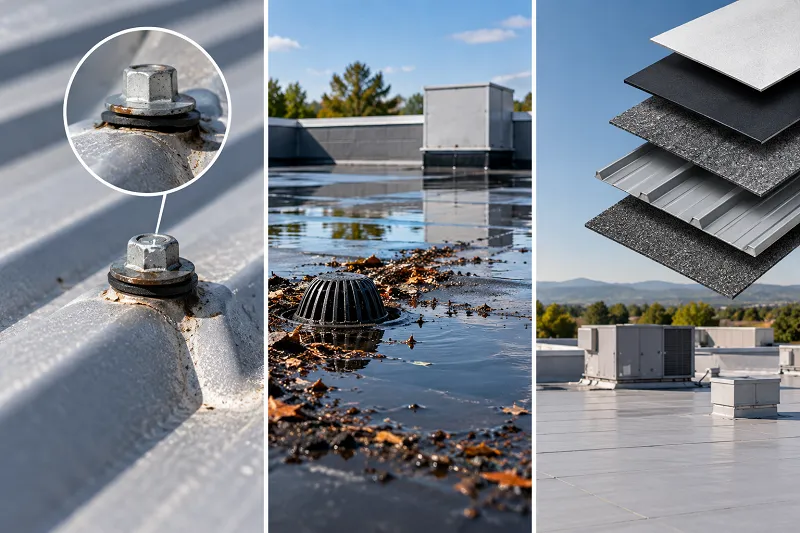
Commercial roofs often rely on drains, scuppers, gutters, downspouts, tapered insulation, or a combination of these components to move water away from the building. If drainage is poorly designed or existing pathways are blocked, water may remain on sections of the roof longer than intended.
Persistent ponding can place unnecessary stress on roofing materials and expose vulnerable seams, penetrations, and transitions.
During installation planning, contractors should evaluate how water currently moves across the roof and whether existing drainage conditions need improvement.
This is particularly important on larger low-slope buildings where even minor changes in elevation can influence how efficiently water reaches the designated drainage points.
Rooftop Equipment Requires Careful Coordination
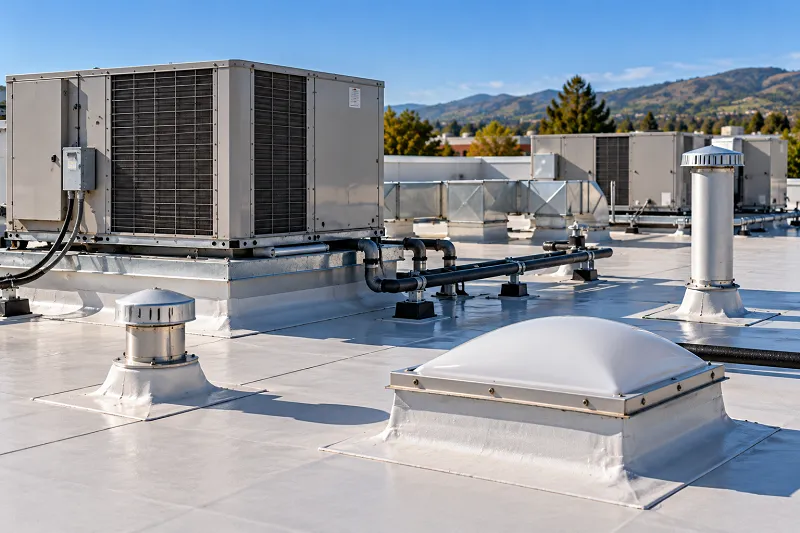
Commercial buildings frequently contain HVAC units, vents, pipes, skylights, exhaust systems, electrical components, and other penetrations.
Each penetration interrupts the continuous roof surface and requires proper detailing.
Flashing, curbs, seals, and transitions must be installed in a way that works with the selected roofing system. If rooftop equipment is scheduled for replacement or relocation, coordinating that work with the roofing project can prevent unnecessary cuts or modifications to a newly installed roof.
Business owners should discuss planned mechanical upgrades before construction begins.
Good coordination between the roofing contractor, property manager, HVAC professionals, and other trades can help reduce avoidable roof penetrations and prevent work from being repeated later.
Business Operations Should Be Part of the Installation Plan
Roof installation can affect the people and activities happening below.
Noise, material deliveries, equipment placement, parking restrictions, odors from certain roofing applications, and temporary access limitations may influence daily operations.
A contractor should understand when the business is open, which entrances must remain accessible, where employees or customers park, and whether certain areas of the property require additional protection.
For businesses that cannot close during construction, sequencing becomes particularly important.
A detailed project plan can help establish which areas will be worked on first, where materials will be stored, how debris will be managed, and how communication will occur if conditions change during the project.
Installation Quality Matters as Much as Material Quality
Even high-quality roofing products depend on correct installation.
Seams, flashing details, attachment methods, insulation placement, penetrations, edge conditions, and drainage components all need to work together as one system. Small installation errors in these areas may create problems that do not become obvious until months or years later.
Business owners should therefore evaluate contractors based on more than the roofing products they offer.
Experience with commercial systems, communication practices, project supervision, documentation, safety procedures, and familiarity with the type of property being roofed are all relevant considerations.
Working with a qualified commercial roofing contractor in Walnut Creek also gives property owners a local point of contact if questions arise during or after the installation.
Plan for Roof Maintenance Before the Project Is Finished
A new roof should not be treated as something that can be ignored until a leak develops.
Routine inspections can help identify blocked drains, damaged flashing, punctures, loose components, debris accumulation, or changes around rooftop equipment before they become larger concerns.
Business owners should understand what maintenance the roofing system requires and whether certain actions could affect manufacturer or contractor warranties.
Keeping basic records can also be useful. Installation documents, inspection reports, repair history, photographs, and information about rooftop equipment changes can provide valuable context when the roof is evaluated later.
A thoughtful maintenance plan helps protect the investment made during commercial roofing installation in Walnut Creek and gives property managers a clearer picture of how the system is performing over time.
FAQs About Commercial Roof Installation in Walnut Creek
How long does a commercial roof installation usually take?
The timeline varies according to the building size, roofing system, existing roof condition, weather, access, structural repairs, and the amount of rooftop equipment involved. A contractor should evaluate the property before providing a schedule and explain how the work will be phased to reduce disruption to normal business activities.
Can my business remain open while a commercial roof is being installed?
Many businesses can continue operating during roofing work, but planning is important. Deliveries, noise, equipment placement, parking, entrances, and interior activities should be discussed in advance. Contractors can often sequence the project so critical areas remain accessible while roofing work progresses elsewhere.
How do I know which commercial roofing system is right for my building?
The right system depends on factors such as roof slope, drainage, building use, existing materials, rooftop traffic, mechanical equipment, structural conditions, and long-term maintenance expectations. A professional assessment helps compare options according to the actual needs of the property instead of relying on a one-size-fits-all recommendation.
Should the old commercial roof always be removed before a new roof is installed?
Not necessarily. Whether removal is required depends on the existing assembly, moisture conditions, number of roof layers, deck condition, applicable requirements, and the specifications of the proposed roofing system. A contractor should inspect the existing roof and explain why removal or another installation approach is appropriate.
What should business owners ask before hiring a commercial roofing contractor?
Ask about experience with the proposed roofing system, project supervision, safety procedures, warranties, scheduling, cleanup, communication, inspections, and how unexpected conditions will be handled. Business owners should also request a clear scope of work so they understand what is included before construction begins.
Upgrade Your Property With Commercial Roof Installation in Walnut Creek From Apollo Roofing Company
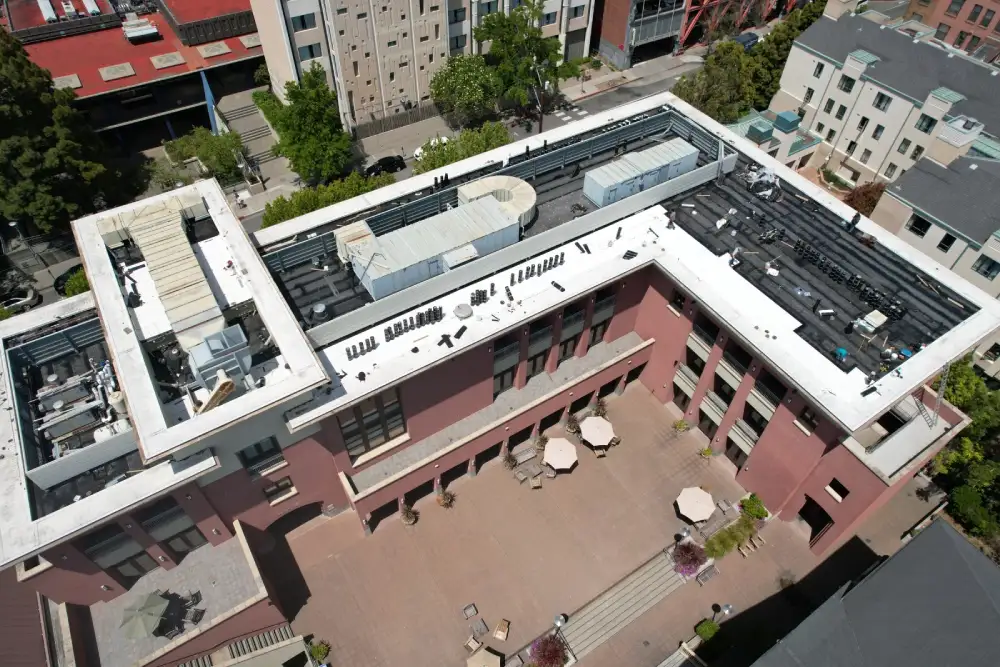
A commercial roofing project is a significant investment, and the decisions made before installation can be just as important as the work performed on the roof itself. Building conditions, drainage, materials, rooftop equipment, daily operations, and future maintenance should all be considered as part of the plan.
If your commercial roof is approaching the end of its service life or you are preparing for a new roofing project, Apollo Roofing Company can help you understand your options. Contact Apollo Roofing Company today to schedule an evaluation and discuss commercial roof installation in Walnut Creek for your property.
