

Metal roofing is valued for durability, weather resistance, and a long service life, but that does not mean it is maintenance-free. Like any roofing system, metal panels, seams, fasteners, flashing, coatings, and drainage components can develop problems as they age.
For Walnut Creek property owners, catching those problems early can make an important difference. A small opening around a fastener or a section of deteriorated sealant may seem minor during dry weather, but the same condition can allow moisture into the roofing assembly once rain arrives.
Understanding what commonly goes wrong with metal roofs can help homeowners and commercial property managers recognize when an inspection or repair may be appropriate.
Why Metal Roofs Still Need Periodic Attention
A metal roof is built from multiple components that work together rather than from panels alone. Seams connect sections of roofing. Flashing protects transitions around walls, vents, curbs, skylights, and other penetrations. Fasteners keep certain systems secured to the structure, while sealants and closures help limit water entry at vulnerable areas.
These components can age at different rates.
Metal expands when temperatures rise and contracts when conditions cool. That movement is expected, but years of repeated expansion and contraction can place stress on connections and surrounding materials. Exposure to sunlight, wind, moisture, debris, and foot traffic can also affect how the system performs.
A roof may therefore remain structurally sound while still developing isolated areas that require attention.
Property owners looking into metal roof repair in Walnut Creek should focus less on the age of the panels alone and more on the overall condition of the complete roofing system.
Loose or Deteriorated Fasteners Can Create Entry Points
Fasteners deserve attention because they help secure many types of metal roofing systems.
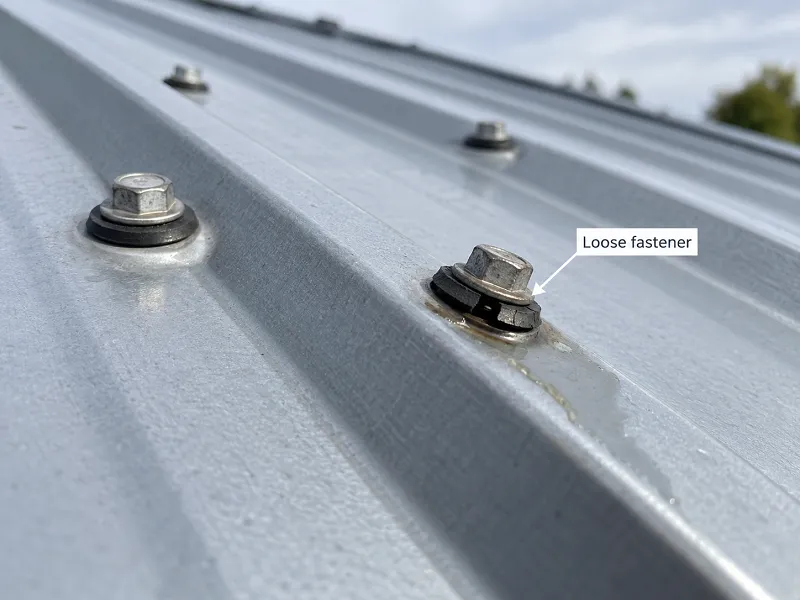
Over time, some exposed fasteners may loosen slightly, back out, or develop deterioration around their washers. Movement in the roofing panels, installation conditions, temperature changes, and normal aging can all contribute.
A fastener does not need to be completely missing to cause concern. A small gap may be enough to compromise the seal around the opening.
Simply tightening every visible screw is not always the correct solution. The surrounding metal, washer, existing hole, and condition of the panel should also be evaluated. In some cases, an improper repair can enlarge the opening or create additional stress.
A roofing professional can determine whether individual fasteners need adjustment, replacement, or a more extensive repair.
Seams and Panel Connections Can Become Vulnerable
Metal roofs often contain seams where panels meet or overlap. Those connections are designed to manage water while allowing the roofing system to respond to normal building and temperature movement.
When a seam begins to separate, lift, or lose its protective seal, water may find a path beneath the surface.
The problem can be difficult to identify from the ground. A seam may appear intact while a small opening exists beneath an edge or at a transition.
This is one reason roof leaks should not automatically be traced to the area directly above an interior stain. Water can enter at one location, move along structural components or insulation, and become visible somewhere else inside the building.
Professional evaluation helps trace the likely source instead of relying only on the location of visible interior damage.
Flashing Problems Often Develop Around Roof Penetrations
Every vent, pipe, skylight, HVAC curb, wall intersection, and similar penetration introduces a transition into the roofing system.
These areas require carefully installed flashing because they interrupt the otherwise continuous roof surface.
As materials age, flashing may loosen, sealants may deteriorate, or movement between components may create openings. Previous repairs can also become weak points when incompatible materials or short-term patching methods were used.
Property owners should pay particular attention to recurring leaks near rooftop equipment or penetrations. Repeatedly sealing the visible surface may not solve the underlying problem if the flashing itself has failed.
For larger buildings, commercial metal roof repair in Walnut Creek frequently involves investigating these transitions because commercial roofs may contain numerous vents, mechanical units, drains, and other rooftop components.
Rust and Corrosion Should Be Investigated Early
Metal roofing products are generally manufactured or coated to resist corrosion, but protective surfaces can become damaged.
Scratches, worn coatings, standing moisture, incompatible materials, debris accumulation, or long-term exposure may eventually allow corrosion to develop in localized areas.
Minor surface discoloration does not always mean a roof needs replacement. The location, severity, and depth of the corrosion matter.
However, rust should not simply be painted over without determining why it developed. If moisture continues reaching the area or the protective coating has failed, covering the surface may only hide a condition that continues underneath.
Early evaluation provides an opportunity to determine whether the affected area can be cleaned, treated, coated, repaired, or replaced.
Sealants and Protective Coatings Do Not Last Forever
Sealants serve an important role around certain seams, fasteners, penetrations, and transitions, but they are not permanent.
Long-term exposure to ultraviolet light and temperature changes can cause some sealants to shrink, crack, harden, or pull away from adjoining materials.
Roof coatings may also wear at different rates depending on exposure, drainage, previous maintenance, and rooftop traffic.
A deteriorated sealant line can sometimes look insignificant, yet it may be protecting one of the roof’s more vulnerable areas.
During metal roof repair in Walnut Creek, contractors may examine whether failed sealants are isolated or whether their condition points to broader movement or deterioration within the system.
Ponding Water and Drainage Problems Can Affect Metal Roofs
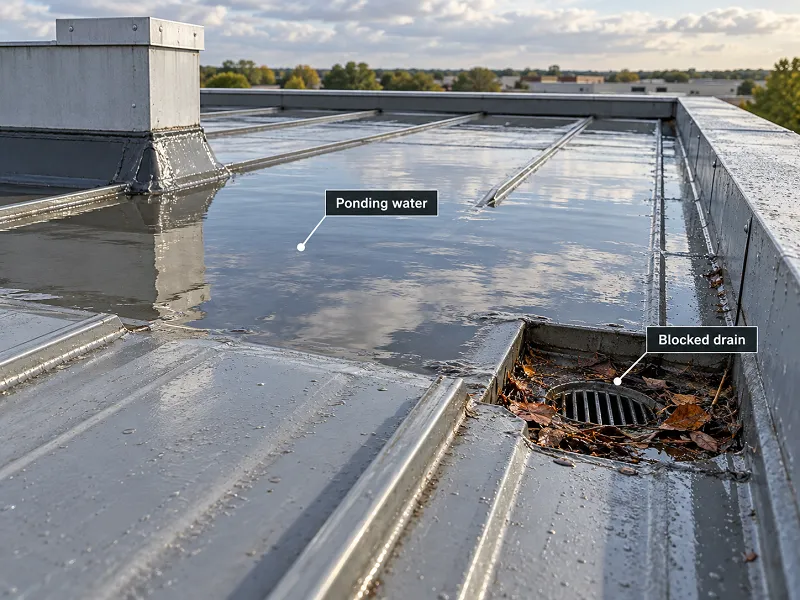
Metal roofing sheds water efficiently when the roof slope and drainage system are functioning correctly. Problems can develop when gutters, drains, scuppers, valleys, or other drainage paths become blocked.
Debris can slow water movement and allow moisture to remain against roofing components longer than intended.
On low-slope commercial roofs, drainage deserves particularly close attention. Persistent ponding may accelerate coating deterioration, increase the risk of corrosion in vulnerable areas, and expose weaknesses around seams or penetrations.
The repair should therefore address more than the visible damaged area. Identifying why water is collecting can reduce the likelihood of the problem returning.
Previous Repairs May Need a Second Look
Metal roofing requires repair materials and techniques that are compatible with the existing system.
Generic caulking, roofing cement, or patches designed for other roofing materials may not respond properly to metal movement. Some temporary fixes can also trap moisture or make future repairs more difficult.
If a roof has been repaired repeatedly in the same location, that pattern deserves attention.
Rather than adding another layer of material, a contractor can investigate whether the real source is a seam, flashing detail, damaged panel, fastener, drainage condition, or another component nearby.
This becomes especially important with commercial metal roof repair in Walnut Creek, where rooftop equipment and larger roof areas can make leak sources more difficult to isolate.
When Does a Metal Roof Need Repair Instead of Replacement?
A leak does not automatically mean an entire metal roof needs to be replaced.
Localized issues involving fasteners, flashing, sealants, minor panel damage, or individual penetrations may often be repairable when the surrounding roof remains in serviceable condition.
Replacement becomes a broader consideration when deterioration is widespread, corrosion has significantly affected multiple areas, structural problems exist, or previous repairs are no longer providing reliable performance.
The best answer depends on the specific roof rather than a universal age threshold.
An inspection allows the contractor to consider the condition of the panels, connections, drainage system, penetrations, substrate, and previous repair history before recommending a course of action.
FAQs About Repairing Metal Roofing in Walnut Creek
How can I tell if my metal roof needs professional repair?
Look for signs such as loose panels, missing or raised fasteners, visible rust, deteriorated sealant, damaged flashing, water stains, damp insulation, or recurring leaks. Some defects are difficult to see safely from the ground, so a professional inspection can help identify problems before they cause more extensive moisture damage.
Can a leaking metal roof usually be repaired without replacing it?
Often, yes. If the leak is caused by a localized seam, flashing detail, fastener, sealant failure, or damaged section of panel, repair may be possible. The contractor should inspect surrounding areas as well because water can travel beneath metal roofing and become visible some distance from the actual entry point.
What causes metal roofing to develop leaks over time?
Common causes include normal expansion and contraction, aging sealants, loose fasteners, damaged flashing, corrosion, blocked drainage, panel damage, and problems around roof penetrations. Previous repairs that were not compatible with the metal roofing system can also contribute to recurring leaks.
Should I repair a small metal roof leak if it only happens during heavy rain?
Yes, intermittent leaking still indicates that water is finding a way through the roofing system. Waiting until the leak becomes consistent may allow moisture to affect insulation, decking, ceilings, or other building materials. Investigating the source early can help limit the extent of future damage.
How often should a metal roof be inspected?
Inspection frequency depends on the roof’s age, condition, exposure, building type, and previous repair history. It is also sensible to have a roof evaluated after significant weather events or when new leaks, drainage issues, corrosion, displaced materials, or other unusual conditions become noticeable.
Get Professional Metal Roofing Repair in Walnut Creek From Apollo Roofing Company – Call Us Today!
Small roofing defects can become larger building problems when they are left exposed to repeated weather and moisture. If you have noticed a leak, loose roofing components, deteriorated flashing, corrosion, or another concern, having the roof evaluated can help clarify what is happening and what type of repair may be appropriate.
Apollo Roofing Company works with property owners to assess roofing conditions, identify problem areas, and recommend repairs based on the roof itself rather than relying on temporary fixes. Call Apollo Roofing Company today to schedule an inspection and get clear guidance on the next step for your metal roofing system.
