

Choosing the right roof style is one of the most important decisions a homeowner can make when planning a roofing project. A roof affects more than the appearance of the home. It also influences drainage, maintenance, ventilation, energy performance, long-term durability, and how well the home handles local weather conditions.
For many homeowners, the choice comes down to flat roof vs sloped roof. Both options can work well when properly designed and installed, but they serve different needs. A flat roof may offer a clean, modern look and practical access, while a sloped roof may provide stronger water runoff and a more traditional appearance.
The best choice depends on your home’s structure, your budget, your maintenance expectations, and how you want the roof to perform over time. Apollo Roofing Company helps homeowners understand these differences so they can make confident decisions before investing in a new roof.
What Is a Flat Roof?
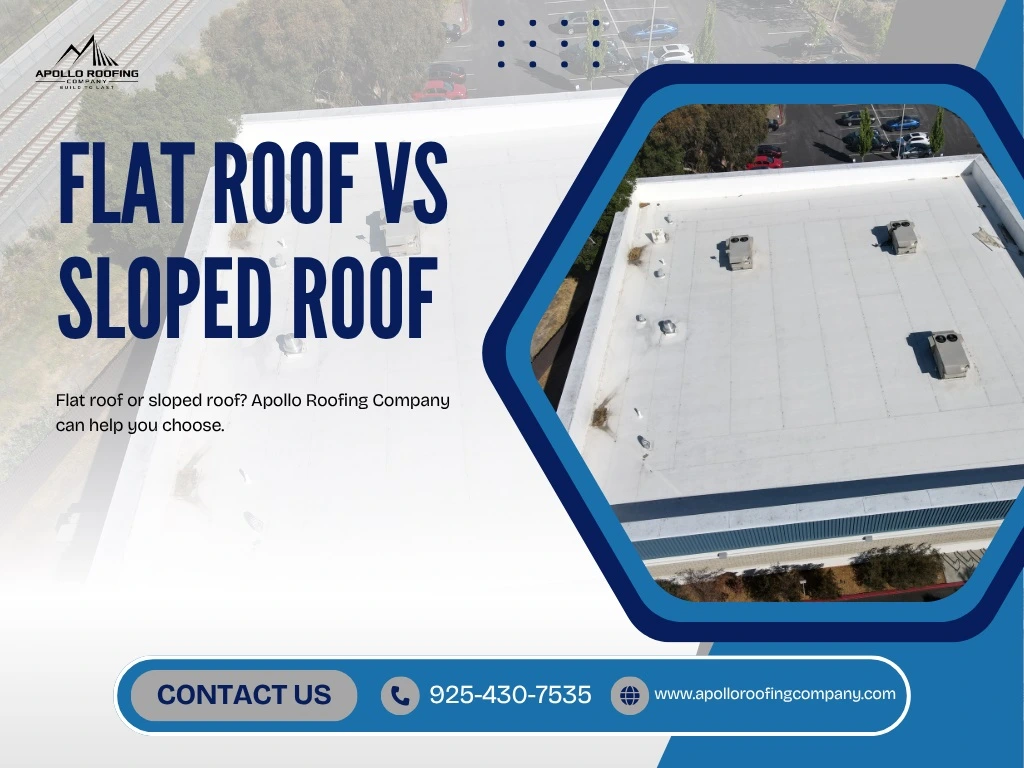
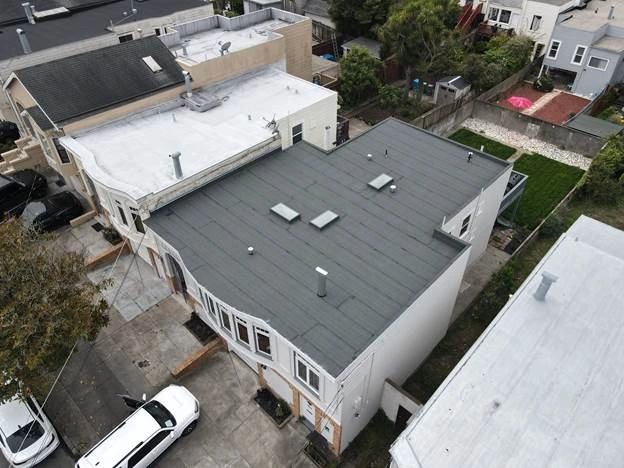
A flat roof is a roofing system with a very low slope. Although it may look level from the ground, it is not completely flat. It is designed with a slight pitch to help water move toward drains, scuppers, or gutters. This small slope is important because standing water can create long-term problems if the system is not properly installed or maintained.
Flat roofs are often used on modern homes, commercial buildings, additions, garages, and certain contemporary residential designs. They can create a sleek architectural profile and may allow for easier access when inspections or repairs are needed.
Common flat roofing materials include modified bitumen, built-up roofing, PVC, TPO, and other membrane systems. These materials are designed to create a water-resistant surface because flat roofs do not shed water as quickly as pitched systems. The installation must be precise, especially around seams, drains, roof edges, vents, and transitions.
What Is a Sloped Roof?
A sloped roof has a noticeable pitch that allows water, leaves, and debris to move downward more naturally. This is the roof style many homeowners picture when they think of a traditional residential home. Sloped roofs can be simple, with two main roof planes, or more complex, with valleys, dormers, chimneys, skylights, and multiple angles.
Sloped roofing systems commonly use asphalt shingles, tile, metal, slate, or wood shakes, depending on the home’s style and the homeowner’s goals. The pitch helps protect the roofing system by encouraging water to drain quickly. This is especially helpful during heavy rain because less water sits on the roof surface.
A sloped roof can also create attic space, improve ventilation opportunities, and provide classic curb appeal. However, the design and installation must still be handled carefully. Valleys, flashing, ventilation, and underlayment all play a major role in how well the roof performs.
Flat Roof vs Sloped Roof: Key Differences
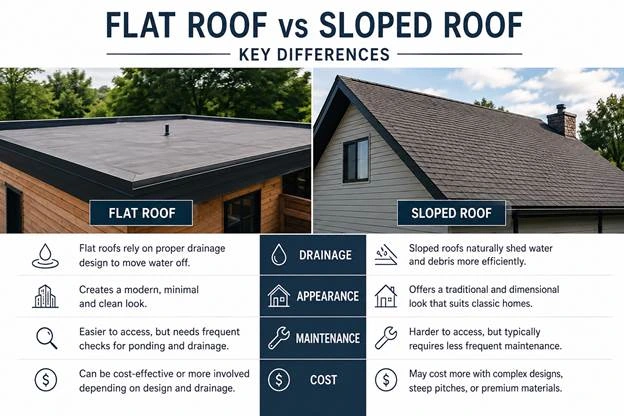
When comparing flat roof vs sloped roof, the biggest difference is drainage. A sloped roof naturally moves water off the roof surface, while a flat roof depends more heavily on proper drainage design. This does not mean flat roofs are poor choices, but it does mean they require careful planning and routine attention.
Appearance is another major difference. Flat roofs often create a modern, minimal look, while sloped roofs tend to create a more traditional or dimensional exterior. The right option depends partly on the architecture of the home. A flat roof may look natural on a modern home but out of place on a traditional design. A sloped roof may enhance a classic home but may not match the clean lines of a contemporary structure.
Maintenance also varies. Flat roofs are usually easier to access, but they may require more frequent checks for ponding water, clogged drains, seam issues, and membrane wear. Sloped roofs may be harder to walk on, but they typically shed water and debris more efficiently.
Cost can vary based on materials, roof size, complexity, labor, and structural needs. A simple flat roof may be cost-effective in some situations, while a complex flat roof with drainage upgrades can become more involved. A sloped roof may cost more when the design includes steep pitches, multiple valleys, or premium materials.
Benefits of Choosing a Flat Roof
A flat roof can be a strong choice for homeowners who want a clean, modern appearance. Its low-profile design can give a home a contemporary look and may work especially well for additions, garages, outdoor living structures, or homes with minimalist architecture.
Flat roofs can also provide easier access for maintenance. Since the surface is less steep, roofing professionals can often inspect drains, seams, and rooftop equipment more easily. This can be helpful when routine service is needed.
Another benefit is potential usable space. Depending on the design, structure, and local building requirements, some flat roofs may be planned for rooftop decks, solar equipment, HVAC systems, or other practical uses. However, this must be designed correctly from the start. Not every flat roof is built to handle foot traffic or added weight.
Flat roofs can also work well when a home’s design does not allow for a taller roofline. In certain neighborhoods or property layouts, a lower roof profile may be preferred for appearance, height restrictions, or architectural balance.
Drawbacks of Choosing a Flat Roof
The main concern with flat roofs is drainage. Since water does not move off the surface as quickly, the system must be designed to prevent ponding. If drains clog or the slope is not correct, water can sit on the roof and increase wear over time.
Flat roofs may also require more consistent maintenance. Leaves, dirt, and debris can collect around drains or low areas. Membranes can also develop punctures, seam separation, or surface wear if they are not inspected regularly.
Installation quality is especially important. A flat roof depends on proper waterproofing, strong seams, careful flashing, and reliable drainage. Small mistakes can lead to leaks or premature failure. Homeowners should work with a contractor who understands the specific materials and methods required for flat roof systems.
In areas where storms occur, homeowners may also need to watch for hidden damage. Services such as hail damage roof repair Santa Cruz can be important when impact damage affects roofing materials, flashing, or drainage components after severe weather.
Benefits of Choosing a Sloped Roof
A sloped roof offers strong natural drainage. Because of the pitch, rainwater runs off more easily and does not remain on the surface for long. This can reduce the risk of ponding water and help protect the roof during wet weather.
Sloped roofs also offer broad material options. Homeowners can choose from asphalt shingles, tile, metal, and other materials based on budget, style, durability goals, and maintenance preferences. This flexibility makes sloped roofing suitable for many types of homes.
Another advantage is curb appeal. Sloped roofs create depth, shape, and character. They can complement traditional, craftsman, Mediterranean, ranch, and many other home styles. The roofline often becomes a major part of the home’s visual identity.
Sloped roofs may also allow for attic space and ventilation improvements. Proper attic ventilation can help regulate temperature, reduce moisture buildup, and support the overall performance of the roofing system. When planned correctly, this can contribute to comfort and long-term roof health.
Drawbacks of Choosing a Sloped Roof
A sloped roof can be more complex to install, especially if the home has multiple roof planes, valleys, chimneys, skylights, or steep sections. More complexity often means more flashing details, more labor, and more areas that require careful attention.
Access can also be more difficult. Steep roofs are not easy or safe for homeowners to inspect on their own. Even routine maintenance should be handled by professionals to avoid injury and prevent damage to roofing materials.
Sloped roofs do not provide the same kind of usable rooftop space as flat roofs. While they are excellent for drainage and curb appeal, they are not designed for rooftop decks or equipment access in the same way a flat system may be.
Weather damage can also affect sloped roofs. Shingles may lift, tiles may crack, and flashing may loosen during storms. After severe weather, understanding the hail damage roof repair process can help homeowners know what to expect during inspection, documentation, repair recommendations, and final service.
Which Roof Style Works Best for Your Home?
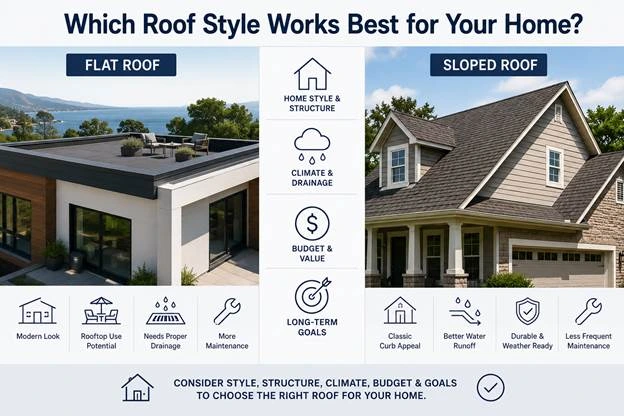
The best roof style depends on the home itself. A modern home with clean lines may be better suited for a flat roof, while a traditional home may look and perform better with a sloped roof. Structure matters as much as style. Some homes are designed to support one roofing type more naturally than the other.
Climate and drainage needs should also guide the decision. If the home is in an area with frequent rain, drainage should be a major priority. A sloped roof may offer simpler runoff, while a flat roof will need well-designed drainage and regular maintenance.
Budget is another factor. Homeowners should consider installation cost, maintenance needs, expected lifespan, repair likelihood, and material options. The lowest upfront price is not always the best long-term value. For storm-prone homes, homeowners may also need to understand hail damaged roof repair cost Santa Cruz when evaluating repair needs after weather-related damage.
Long-term goals should be part of the decision too. If you want a modern look or potential rooftop use, a flat roof may be appealing. If you want classic curb appeal and strong water shedding, a sloped roof may be the better fit.
Why Professional Roofing Guidance Matters
Roofing decisions should not be based on appearance alone. A professional contractor can evaluate the home’s structure, pitch, drainage, ventilation, material compatibility, and local weather exposure before recommending the best option.
Apollo Roofing Company helps homeowners compare roof styles based on practical performance, not just surface-level preferences. A professional inspection can reveal whether the current structure can support a certain roofing system, whether drainage improvements are needed, and which materials make the most sense for the home.
Professional guidance also helps prevent costly mistakes. A flat roof that is poorly sloped or a sloped roof with weak flashing can both lead to leaks. Good roofing work requires the right materials, proper installation, and attention to details that are easy to overlook.
FAQs About Flat Roof vs Sloped Roof
Is a flat roof actually flat?
A flat roof is not completely flat. It has a slight slope that helps direct water toward drains, gutters, or scuppers. This slope may not be easy to see from the ground, but it is essential for performance. Without proper drainage, water can collect on the roof surface and increase the risk of leaks, membrane wear, and long-term damage.
Which roof lasts longer, a flat roof or a sloped roof?
The lifespan depends on the materials, installation quality, maintenance, and weather exposure. A well-installed flat roof can perform well for many years, especially with regular care. A sloped roof may last longer in some cases because it sheds water more naturally. However, both systems need proper flashing, ventilation, and routine inspection to reach their expected service life.
Are flat roofs more likely to leak?
Flat roofs can be more vulnerable to leaks if drainage is poor or if seams, flashing, or membranes are not maintained. This does not mean flat roofs always leak. A properly installed flat roof with good drainage can perform reliably. The key is choosing the right materials, scheduling inspections, and addressing small issues before water intrusion occurs.
Are sloped roofs better for heavy rain?
Sloped roofs are often well-suited for heavy rain because the pitch helps water move off the roof quickly. This reduces the chance of standing water. However, a sloped roof still needs proper gutters, flashing, underlayment, and ventilation. Valleys and roof transitions must be installed carefully because these areas handle concentrated water flow during storms.
Which roof type is better for residential homes?
Many residential homes use sloped roofs because they offer strong drainage, classic curb appeal, and a wide range of material options. Flat roofs can also work well for certain residential designs, especially modern homes or additions. The better choice depends on the home’s architecture, structure, budget, maintenance expectations, and long-term goals.
How much should homeowners consider repair costs?
Repair costs should always be part of the decision. A roof that costs less upfront may require more maintenance or earlier repairs if it is not suited to the home. For homes affected by storms, hail damaged roof repair cost Santa Cruz can vary based on the extent of damage, material type, roof access, and whether underlayment or flashing repairs are needed.
Flat Roof vs Sloped Roof: Let Apollo Roofing Company Help You Decide
Choosing between a flat and sloped roof can feel overwhelming, but the right guidance can make the decision much easier. Apollo Roofing Company helps homeowners evaluate roof design, drainage needs, material options, maintenance expectations, and long-term performance before moving forward.
Whether you are planning a new roof, replacing an aging system, or comparing options after storm damage, our team can help you understand what works best for your home. For trusted roofing guidance, professional inspections, and dependable service, contact Apollo Roofing Company today.
