

A roof is made up of many visible materials, but some of the most important protection comes from smaller components that are easy to overlook. Flashing is one of them. It is installed around areas where water is more likely to find a way into the roofing system, such as chimneys, skylights, walls, valleys, vents, and other transitions.
When flashing is installed correctly and remains in good condition, it helps direct water away from vulnerable openings. When it loosens, corrodes, cracks, or separates, moisture can begin entering places homeowners may not notice right away.
Understanding how flashing works can help homeowners spot potential trouble earlier and avoid larger repair problems later.

What Roof Flashing Actually Does
Flashing is typically made from metal or another durable waterproof material. Its purpose is simple, but important. It creates a protective barrier where two roof surfaces meet or where the roofing system connects with another structure.
Water naturally follows gravity, but wind can push rain into gaps and seams. Flashing helps guide that water over the roof surface and toward proper drainage points instead of allowing it to move underneath shingles, tiles, or other roofing materials.
Without properly installed flashing, even a roof with high-quality materials can develop leaks around its most vulnerable areas.
Why Roof Transitions Need Extra Protection
Roofs are not always one smooth, uninterrupted surface. Chimneys extend through roofing materials. Skylight creates openings. Plumbing vents, exhaust vents, walls, dormers, and valleys all introduce transitions where different materials meet.
These areas need additional waterproofing because ordinary roofing materials alone may not be enough to stop water from entering.
Flashing is carefully positioned around these transitions, so water is redirected instead of trapped. For example, flashing around a chimney helps move rain away from the point where the chimney meets the roof. Valley flashing helps manage larger amounts of runoff where two roof slopes come together.
The more complex the roof design, the more important these details become.
Small Flashing Problems Can Create Larger Leaks
One of the challenges with flashing damage is that the original problem can be relatively small.
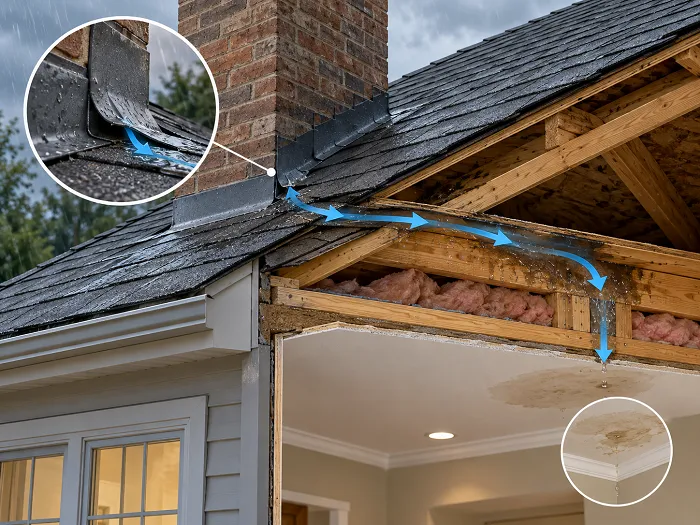
A loose edge, deteriorated sealant, corrosion, improper overlap, or a tiny gap may not look serious from the outside. Over time, however, repeated exposure to rain can allow moisture to move beneath roofing materials.
Once water gets inside, it may travel along roof decking, framing, insulation, or other surfaces before becoming visible inside the home. That means a ceiling stain may appear several feet away from the actual entry point.
This is why water intrusion can be difficult to diagnose without inspecting the roof itself.
Weather Exposure Can Wear Flashing Over Time
Flashing is designed for durability, but it still experiences constant exposure to the elements.
Sunlight can cause surrounding roofing materials and sealants to age. Wind can loosen components that were already beginning to shift. Seasonal rain repeatedly tests the same seams and transitions.
Temperature changes can also affect metal flashing. Materials expand when they heat up and contract when they cool down. Over many years, that movement can contribute to separation, loosened fasteners, or weakened seals.
Homes surrounded by trees may also experience debris buildup around valleys, chimneys, or roof transitions. When leaves and other material block drainage, water may remain near flashing longer than intended.
These conditions can increase the risk of roof water damage in Novato when weakened areas go unnoticed.
Installation Quality Matters From Day One
Flashing needs to be installed in the correct location, at the correct angle, and with the proper overlap.
Improperly installed flashing may create problems even when the material itself is new. If water is directed toward a seam instead of away from it, moisture can eventually move underneath the roofing system.
Fastener placement also matters. Too many exposed fasteners can create additional points where water might enter. Improper sealing can make matters worse.
This is one reason roofing should be treated as a complete system rather than a collection of individual materials. Shingles, underlayment, flashing, ventilation, drainage, and penetration all need to work together.
Signs That Flashing May Need Attention
Flashing problems are not always visible from the ground, but there are signs homeowners can watch for.
Water stains near ceilings or walls can indicate moisture intrusion. Staining near fireplaces or chimneys may point to a flashing issue around those areas. Peeling paint, damp attic materials, musty odors, or repeated leaks during heavy rain can also suggest that water is getting past the roof system.
Outside, visible rust, bent metal, lifted edges, missing sections, damaged sealant, or gaps around roof penetrations may indicate that flashing is no longer performing properly.
These signs do not automatically mean a complete roof replacement is needed. In some cases, targeted roof flashing repair in Novato may be enough to restore protection when the surrounding roofing system remains in good condition.
Why Early Repairs Matter
Water problems tend to become more expensive when they are ignored.
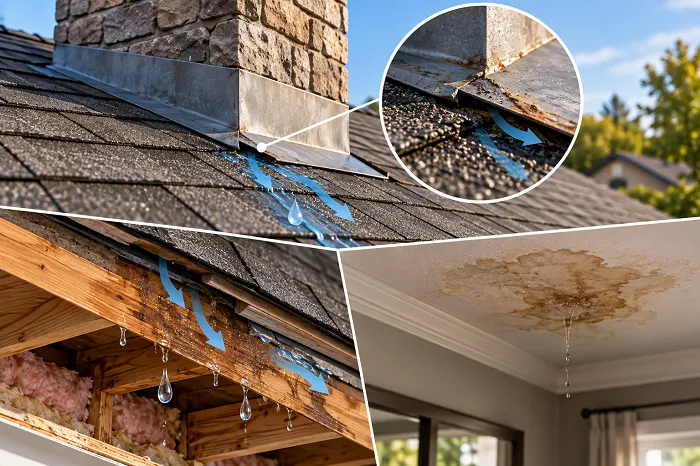
A small leak may begin with damaged flashing, but continued moisture can affect roof decking, insulation, framing, drywall, paint, and interior finishes. In some cases, prolonged dampness can also contribute to conditions that support mold growth.
Addressing flashing concerns early can help reduce the chance that the problem spreads beyond the original entry point.
This is especially important because homeowners may not see the full extent of moisture movement from inside the house. What appears to be a minor ceiling mark may be connected to a larger issue.
Professional inspection can help identify whether the flashing itself is damaged or whether another part of the roofing system is responsible.
Repair or Replacement Depends on the Bigger Picture
Not every flashing issue requires the same solution.
If the surrounding roofing material is still performing well and the flashing damage is isolated, repair may be practical. The damaged section can sometimes be removed, resealed, or replaced without disturbing large areas of the roof.
However, if flashing problems are widespread or connected to aging roofing materials, extensive deterioration, or repeated leaks, a broader solution may make more sense.
A roof that has already reached the later stages of its service life may not benefit from repeated small repairs if problems continue appearing in multiple areas.
A professional evaluation should consider the condition of the entire roof rather than focusing only on the most obvious leak.
Why Flashing Should Be Included in Regular Roof Inspections
Homeowners often think of inspections as a way to check shingles or tiles, but flashing deserves just as much attention.
Roof inspections can help identify loose metal, damaged sealants, corrosion, gaps, deteriorated materials, and drainage concerns before water enters the home.
Regular inspections are especially useful after strong storms, high winds, or when a roof has experienced previous leaks.
Catching a flashing issue early may allow for simpler repairs and can help reduce the risk of more extensive roof water damage in Novato.
FAQs About Roof Flashing
How long does roof flashing usually last?
The service life of flashing depends on the material, installation quality, roof design, weather exposure, and surrounding roofing components. Metal flashing can last for many years, but corrosion, movement, sealant failure, or roof repairs can shorten its useful life. Regular inspections help identify deterioration before leaks become serious.
Can damaged flashing cause a roof leak even if the shingles look fine?
Yes. Shingles may appear to be in good condition while water enters around a chimney, skylight, vent, wall connection, or other transition. Flashing protects these vulnerable areas, so even a small gap or separation can allow moisture underneath otherwise serviceable roofing materials.
Can flashing be repaired without replacing the entire roof?
In many cases, yes. If damage is localized and the surrounding roofing system is still in good condition, roof flashing repair in Novato may address the problem without requiring full replacement. The correct approach depends on the location, extent of damage, and condition of nearby roofing materials.
How can homeowners tell if flashing is failing?
Common warning signs include water stains, recurring leaks, rusted or bent metal, deteriorated sealant, loose flashing, and moisture near chimneys, skylights, or walls. Because leaks can travel before becoming visible, a roof inspection is often needed to confirm the actual source of the problem.

Keep Water Where It Belongs With Proper Roof Flashing in Novato From Apollo Roofing Company
Small roofing details can make a major difference in how well your home stays protected from water. Flashing around chimneys, vents, valleys, skylights, and other transitions helps control runoff and keeps moisture from reaching vulnerable parts of the roofing system.
Apollo Roofing Company can inspect flashing, identify signs of deterioration, and determine whether repair or broader roofing work is appropriate. If you have noticed a leak, water stain, damaged flashing, or simply want to understand the condition of your roof, contact Apollo Roofing Company to schedule an inspection and address potential problems before they spread.
