

A residential roof is more than the shingles, tiles, or other material visible from the street. Its long-term performance depends on how several components work together, including the roof deck, underlayment, flashing, drainage, insulation, penetrations, and airflow beneath the roofing system.
Ventilation is one of those details that homeowners may not think about until there is a problem. It is also something a professional roofing contractor should not overlook when evaluating the overall condition of a home.
At Apollo Roofing Company, residential roofing work is approached as a complete system. That means looking beyond the surface and considering the conditions that can influence how well the roof performs over time.
A Roofing System Has to Work Above and Below the Surface
When homeowners notice roofing trouble, the first signs are often visible ones. They may see missing shingles, cracked materials, damaged flashing, staining, or evidence of a leak.
Those visible conditions matter, but the space beneath the roof can be just as important.
Heat and moisture can collect in an attic when airflow is limited. The U.S. Department of Energy notes that keeping attics dry and appropriately ventilated can help improve durability and reduce moisture-related problems. Moisture can affect roof decking, insulation, and other components if conditions allow it to accumulate over time.
That is one reason attic ventilation for Milpitas homes should be considered as part of the broader roofing system rather than treated as an isolated upgrade.
A roofing professional should be looking at how the different parts of the assembly interact, not simply whether the outer roofing material still looks acceptable.
Milpitas Homes Face Changing Conditions Throughout the Day
Milpitas benefits from relatively mild South Bay weather, but roofs are still exposed to changing temperatures, direct sunlight, seasonal rain, and years of continuous weathering.
A roof can become significantly warmer under direct sun even when outdoor temperatures feel comfortable. Meanwhile, activities inside the home such as cooking, showering, and laundry can introduce moisture into indoor air. The Department of Energy specifically cautions against exhausting bathroom or kitchen ventilation into attic spaces because the added moisture can create problems there.
The goal is not simply to add vents wherever space is available. Air needs a practical path through the attic or roof assembly.
California building requirements recognize this relationship. Current California building provisions address cross ventilation for enclosed attics and rafter spaces and include requirements intended to prevent insulation or framing from interfering with airflow.
For homeowners, the important takeaway is straightforward. Ventilation should be considered as part of the design and condition of the entire roof.
More Vents Do Not Automatically Mean Better Performance
It is easy to assume that improving airflow simply means installing additional vents. Roofing systems are more complicated than that.
The location of intake and exhaust points matters. So does the amount of open ventilation area, the roof configuration, insulation placement, attic design, and whether existing vents are obstructed.
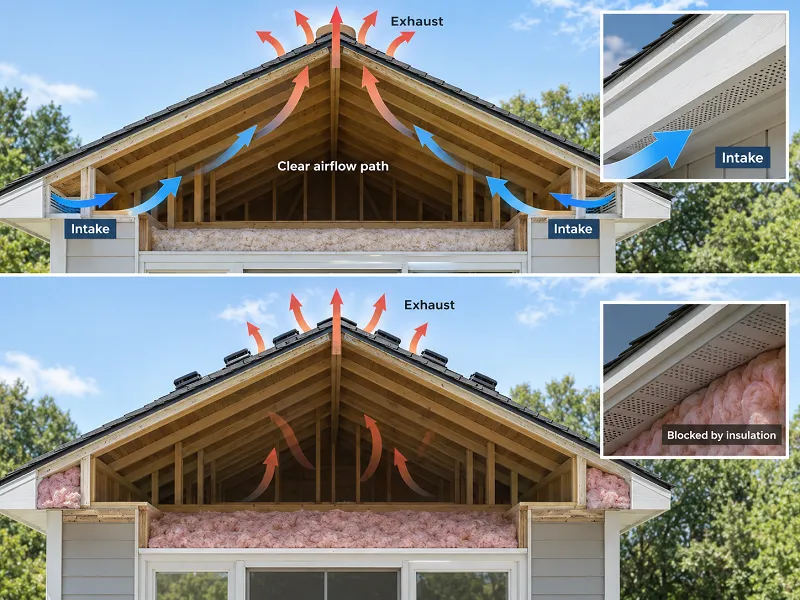
For example, vents near the lower portion of a roof can allow outside air to enter while properly positioned upper vents allow warmer air to leave. California Energy Commission guidance discusses this relationship between soffit or eave vents and higher roof vents and emphasizes maintaining a clear path for air movement.
Adding exhaust ventilation without adequate intake may not correct the underlying issue. Likewise, installing vents that are blocked by insulation can limit their usefulness.
This is why professional evaluation matters. The objective is not to install the greatest number of vents. It is to determine whether the roofing assembly is functioning the way it should.
Ventilation Should Be Considered During Other Roofing Work
Homeowners do not necessarily need to treat ventilation as a separate roofing project.
A roof inspection, repair, replacement, or major roofing improvement is already an opportunity for a contractor to examine how the overall system is performing. Existing vents can be reviewed for damage or obstruction, attic conditions can be considered where accessible, and airflow details can be evaluated alongside other roofing components.
This broader approach is especially valuable during roof replacement.
Removing existing roofing materials provides an opportunity to identify concerns that may not have been visible previously. Contractors may discover damaged decking, deteriorated flashing, poorly placed penetrations, blocked airflow paths, or other construction details requiring attention.
Professional roofing work should account for these conditions rather than simply covering them with new material.
The roof ventilation benefits in Milpitas are therefore best understood in the context of whole-roof performance. Airflow can be an important part of the system, but it works alongside proper installation, drainage, flashing, insulation, weather protection, and ongoing maintenance.
Older Homes May Have Different Ventilation Conditions
Not every Milpitas house was built using the same roofing methods or construction standards.
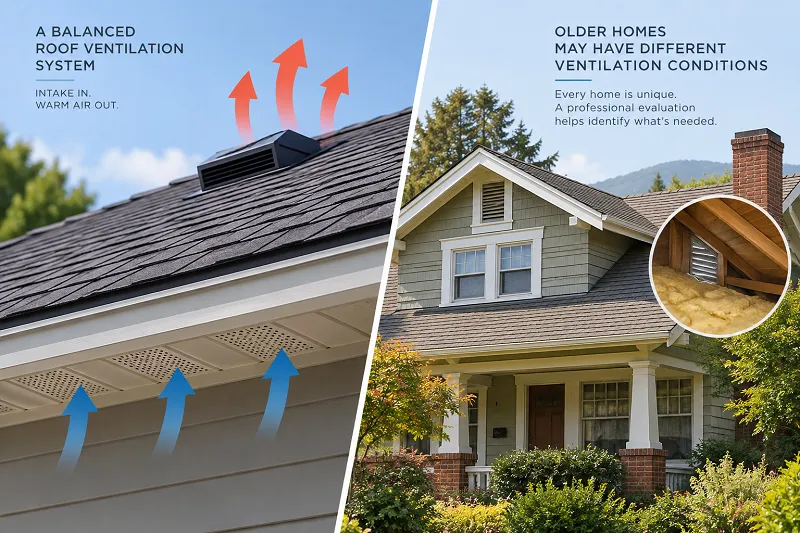
Older homes may have undergone previous roof replacements, attic insulation upgrades, remodeling projects, additions, or repairs. Each change has the potential to affect the way the roof assembly functions.
For example, insulation installed near an eave can unintentionally restrict an existing intake opening. A remodel may alter interior moisture conditions. A previous roofing project may have changed the type or placement of vents without considering the balance of the entire system.
That does not automatically mean an older home has a ventilation problem. It means assumptions should be avoided.
A roofing professional can evaluate what is actually present before recommending changes.
When reviewing attic ventilation for Milpitas homes, Apollo Roofing Company can consider it together with the roof’s age, materials, flashing, visible deterioration, drainage, penetrations, and other conditions that affect long-term performance.
Good Residential Roofing Comes Down to the Details
Many roofing problems begin with details that are easy to overlook.
A flashing transition that was not installed correctly, a drainage area that repeatedly holds water, damaged underlayment, aging sealants, deteriorated roof decking, or restricted airflow can gradually affect performance.
Homeowners should expect a professional roofing contractor to pay attention to these details.
That does not mean every roof needs major work. Sometimes a roof requires a localized repair. In other situations, broader deterioration may make replacement more practical. Ventilation improvements may be appropriate for certain roofing assemblies, while properly designed unvented assemblies can also exist under California building provisions.
The right recommendation depends on the home.
Understanding the roof ventilation benefits in Milpitas is useful, but ventilation is only one part of protecting a residential roofing system. Professional assessment should consider how all the components work together before determining what, if anything, needs to change.
FAQs About Residential Roof Airflow in Milpitas
Does every Milpitas home need the same type of roof venting?
No. The appropriate approach depends on the attic configuration, roof design, insulation, existing vents, roofing materials, and construction of the home. Some assemblies use ventilated attic spaces while properly designed unvented assemblies may also be permitted. A contractor should evaluate the actual roof before recommending changes rather than assuming one solution works for every property.
Can poor attic airflow damage a roof?
Improper attic conditions can contribute to moisture accumulation and excessive heat, which may affect roof decking, insulation, and other components over time. Ventilation is not the only factor involved, however. Roof leaks, indoor moisture sources, insulation, air sealing, flashing, and the overall construction of the assembly should also be examined before identifying the cause of a problem.
Should ventilation be checked when replacing a residential roof?
A roof replacement is a practical time to review ventilation because contractors already have an opportunity to evaluate significant portions of the roofing system. Existing vents, intake areas, insulation clearance, roof decking, flashing, and other components can be considered together. Addressing these details during the project can help the new roofing system function as a complete assembly.
How can I tell whether my home’s attic airflow needs attention?
Possible concerns may include unusually hot attic conditions, visible moisture, condensation, musty odors, deteriorated decking, blocked vents, or insulation covering intake openings. These signs do not prove that ventilation is the only cause. A professional roof evaluation can help determine whether the issue involves airflow, moisture intrusion, insulation, roof damage, or a combination of conditions.
Turn to Apollo Roofing Company for Residential Roofing Services and Professional Roof Ventilation in Milpitas
A dependable residential roof depends on much more than the material installed on top of your home. Installation quality, flashing, drainage, decking, penetrations, insulation conditions, and airflow can all influence how the system performs.
Apollo Roofing Company takes these details seriously as part of professional residential roofing service. Whether you are dealing with an aging roof, planning a replacement, investigating a leak, or simply want a better understanding of your roof’s condition, our team can evaluate the system as a whole rather than focusing on one component in isolation.
Contact Apollo Roofing Company to schedule a professional residential roofing evaluation and make sure the important details beneath the surface are not being overlooked.
