

A roof can develop problems long before it becomes obvious from the ground. A few missing shingles, an occasional ceiling stain, or granules collecting in the gutter may seem minor on their own. The bigger question is whether those issues are isolated and repairable or signs that the roofing system as a whole is approaching the end of its useful life.
Knowing when a roof replacement is needed can help homeowners avoid spending money on repeated repairs that only address symptoms. At the same time, not every roofing problem requires a complete replacement. A relatively young roof with localized damage may still have years of service left after the right repair.
The most reliable decision comes from looking at the roof’s age, condition, history, and extent of deterioration together. Apollo Roofing Company helps property owners in Walnut Creek and surrounding areas evaluate these factors so they can understand whether repair or replacement makes more sense for their property.
Signs a Roof Replacement Is Needed
Roof replacement decisions are rarely based on a single visible problem. Contractors typically look at how widespread the damage is, whether moisture has reached underlying materials, how many previous repairs have been made, and whether the roofing system can continue protecting the building reliably.
Several conditions can indicate that it is time to take a closer look.
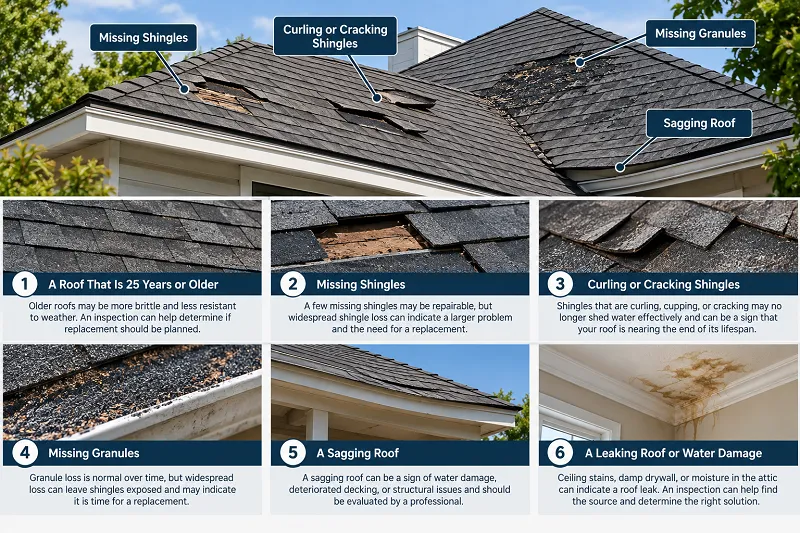
A Roof That Is 25 Years or Older
Roof age is an important starting point, particularly with asphalt shingles.
Many asphalt shingle roofs are designed to provide decades of service, but their actual lifespan depends on the product, installation quality, ventilation, maintenance, sun exposure, weather, and other conditions. Reaching a certain age does not automatically mean a roof must be replaced, but an older system deserves closer attention.
As shingles age, they may become more brittle and less resistant to wind, temperature changes, and moisture. Seal strips can weaken, granules can loosen, and previous repairs may become more noticeable.
If nearby homes were built around the same time and multiple neighbors are beginning to replace their roofs, that can also be a useful reminder to check your own. Homes in the same development may have similar roofing materials and installation dates, although their actual condition can still vary.
An inspection can help determine whether an aging roof remains serviceable or whether replacement should be planned before larger problems develop.
Missing Shingles
A few missing shingles do not necessarily mean the entire roof has failed.
High winds, falling debris, installation issues, or localized damage may occasionally affect a small area. If the surrounding shingles remain flexible and in good condition, replacing the damaged pieces may be enough.
The situation changes when missing shingles appear across several sections of the roof.
Widespread shingle loss may indicate that the material is aging, seal strips are no longer holding properly, or the roof has become increasingly vulnerable to wind. Each missing shingle can expose the layers below to additional weather.
The ability to perform a durable repair matters too. Matching older shingles can be difficult, and surrounding material may crack or break when contractors try to work around it. When repairs become increasingly complicated or frequent, replacement may provide a more practical long-term solution.
Shingles That Are Curling or Cracking
Shingles are designed to lie relatively flat so they can shed water effectively. When they begin curling, cupping, clawing, or cracking throughout the roof, their ability to perform that job may be declining.
Curling can happen when edges or centers begin lifting away from the roof surface. Cracking can develop as roofing materials repeatedly expand and contract with changing temperatures.
One damaged shingle is different from widespread deterioration.
If curling or cracking is limited to a small section, repair may still be possible. If the same deterioration appears across multiple roof slopes, it may indicate broader aging of the roofing material.
These conditions matter because lifted or damaged shingles can create openings where wind-driven rain reaches areas that were previously protected.
Missing Granules
The small mineral granules on asphalt shingles are more than a decorative surface. They help protect the asphalt layer underneath from sunlight and physical exposure.
Some granule loss is normal, especially with a newer roof when loose material from manufacturing may wash into the gutters. Granule loss also tends to increase as shingles age.
The concern is widespread or uneven loss that leaves portions of the shingle surface visibly exposed.
Homeowners may notice granules in gutters or around downspout outlets, but the amount alone does not always tell the full story. A roofer may need to examine the shingles themselves to determine whether the loss is expected or whether the roofing material has deteriorated significantly.
When substantial granule loss occurs across an older roof, replacement may be worth considering.
A Sagging Roof
A visibly sagging roof deserves prompt professional evaluation because the problem may extend beyond the surface roofing material.
Sagging can sometimes be associated with deteriorated decking, prolonged moisture exposure, damaged framing, or other structural issues. The cause must be identified before deciding on the appropriate work.
This is not typically a condition that should be evaluated solely from the ground or addressed with a simple cosmetic repair.
A contractor may need to inspect the roofing materials, deck, attic, and structural components to understand what is happening. If water damage has affected a large portion of the roof assembly, replacement may involve more than installing new shingles. Damaged decking or other components may also require attention.
A Leaking Roof
A roof leak does not automatically mean you need a new roof.
Many leaks begin at specific locations such as damaged flashing, roof penetrations, valleys, vents, skylights, or isolated areas of worn roofing material. When the roof is otherwise in good condition, repairing the source may solve the problem.
Repeated or widespread leaks are different.
If new leaks continue appearing in multiple locations, the underlying roofing system may have broader deterioration. Previous patches may also make future troubleshooting more complicated if they addressed visible symptoms without resolving the original source.
Another challenge is that water can travel after entering the roof. The ceiling stain inside your home may not be directly beneath the exterior opening. Water may move along decking, framing, or other materials before becoming visible.
A thorough inspection helps determine whether the leak is isolated or part of a larger roofing problem.
Water Damage Inside the Home
Roof leaks do not always produce an obvious drip.
Homeowners may first notice yellow or brown ceiling stains, peeling paint, damp drywall, musty odors, discoloration in the attic, or moisture near upper walls. These signs should not be ignored simply because the area feels dry when inspected.
Water intrusion can be intermittent. A leak may only become active during wind-driven rain, prolonged storms, or when water approaches the roof from a particular direction.
Interior damage also does not reveal how severe the exterior problem is. A relatively small flashing defect can sometimes create a noticeable stain, while a more extensive roofing issue may remain hidden for some time.
The goal of an inspection is to trace the moisture back to its source and determine how much of the roof assembly has been affected.
Roof Repair or Roof Replacement: How Do You Decide?
One of the most important roofing decisions is determining when continued repairs stop making financial or practical sense.
A repair is often appropriate when damage is localized, surrounding materials remain in good condition, and the roof still has meaningful service life remaining. Examples may include replacing several damaged shingles, correcting localized flashing problems, or repairing a specific penetration.
Replacement becomes more reasonable when deterioration is widespread.
Consider an older roof with curling shingles across several slopes, recurring leaks, and previous repairs in different locations. Fixing one area may solve today’s problem, but another weakened section could fail later. Continuing to patch the system can eventually become less practical than replacing it.
This is why a contractor should look at the roof as a complete system rather than focusing only on the most obvious defect.
What a Roof Inspection Should Evaluate
A useful roof inspection goes beyond asking whether shingles are present or missing.
The contractor should look at the condition of the roofing material, flashing, valleys, penetrations, roof edges, drainage areas, and other vulnerable transitions. Signs of previous repairs can provide additional clues about the roof’s history.
Where accessible, attic conditions may also help identify moisture intrusion, deteriorated decking, ventilation concerns, or staining that is not visible from outside.
The findings should then be considered alongside the age of the roof and the extent of the damage.
Homeowners should feel comfortable asking why a contractor recommends repair or replacement. A clear explanation of what is damaged, how widespread the issue is, and what the proposed work will address can make the decision much easier to understand.
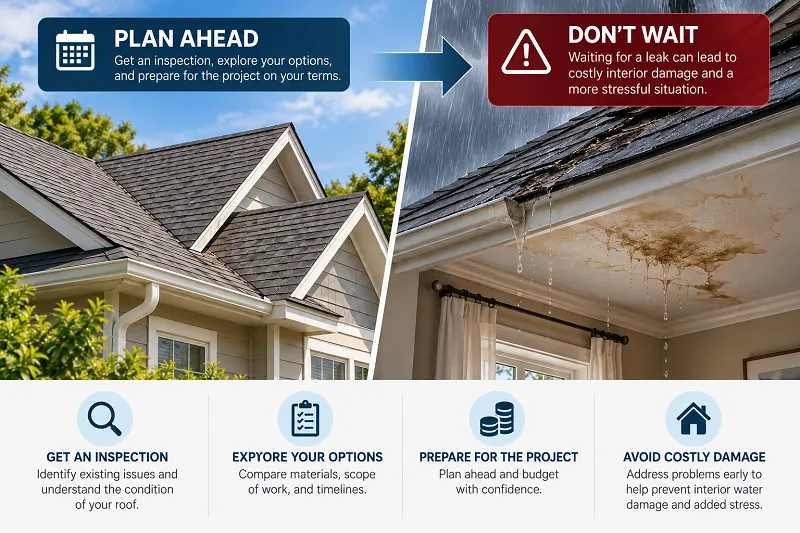
Planning a Roof Replacement Before It Becomes an Emergency
Roof replacement is easier to plan when homeowners have time to compare options, understand the scope of work, and prepare for the project.
Waiting until active water intrusion causes significant interior damage can make the situation more stressful.
If an older roof is beginning to show several signs of deterioration, an inspection can provide useful information even if replacement is not immediately necessary. Homeowners may discover that the roof still has useful life remaining, or they may learn that replacement should be included in their near-term plans.
Either way, having that information gives you more control over the decision.
Frequently Asked Questions About Roof Replacement
Does an old roof automatically need to be replaced?
Not necessarily. Age is an important consideration, but the actual condition of the roofing system matters more than a number alone. Installation quality, roofing material, ventilation, maintenance, weather exposure, and previous repairs can all affect longevity. An inspection can help determine whether an older roof remains serviceable or is showing widespread deterioration.
Can I replace only part of my roof?
Partial replacement may be possible in certain situations, particularly when damage is confined to a distinct roof section. However, contractors also need to consider the age and condition of the remaining roofing material, how the sections connect, and whether compatible materials are available. In some cases, replacing the complete system may provide a more consistent long-term solution.
How do I know whether a roof leak requires repair or replacement?
The location of the leak alone does not determine the answer. A contractor needs to identify how water entered, how much roofing material is affected, and whether the surrounding system remains in good condition. One damaged flashing area may require only repair, while recurring leaks across an aging roof may indicate that replacement deserves consideration.
Should I wait until my roof starts leaking before replacing it?
There is generally no advantage to waiting for active interior water damage if an inspection has already identified widespread roof deterioration. Planning replacement before a major leak develops can provide more time to review materials, project scope, and scheduling. However, a roof should not be replaced solely because it has reached a certain age if its condition does not warrant it.
What happens if damaged roof decking is found during replacement?
Roofing materials are installed over a structural deck, and deteriorated decking may not always be visible until the existing roofing is removed. If contractors uncover sections that are damaged, weakened, or unsuitable for the new roofing system, those areas may need to be replaced before installation continues. Your contractor should explain how unexpected decking work is handled in the project scope.

Make the Right Decision for Your Roof With Apollo Roofing Company
Roof replacement should not be based on guesswork or a single warning sign. Age, shingle condition, recurring leaks, missing materials, water damage, structural concerns, and the history of previous repairs all help tell the larger story.
Apollo Roofing Company can evaluate the condition of your roofing system and explain whether targeted repairs are still practical or whether replacement may provide a better long-term solution. If your roof is showing signs of deterioration or you simply want a clearer understanding of its remaining condition, contact Apollo Roofing Company to schedule a professional roof evaluation.
