

Los Angeles is known for sunshine, but the same weather that makes Southern California attractive can be demanding commercial roofing systems. Long periods of intense sunlight, elevated rooftop temperatures, limited rainfall, and repeated heating and cooling cycles can gradually change how roofing materials perform.
For property owners and facility managers, understanding commercial roof lifespan in Los Angeles conditions can help clarify why some roofs age faster than expected. A roof may appear to be sound from the ground while its membrane, seams, coatings, flashing, or insulation are already reacting to years of heat and ultraviolet exposure.
Commercial roofs are designed to withstand outdoor conditions, but no system is unaffected by time. The difference often comes down to material selection, installation quality, drainage, maintenance, and how quickly early signs of deterioration are addressed.
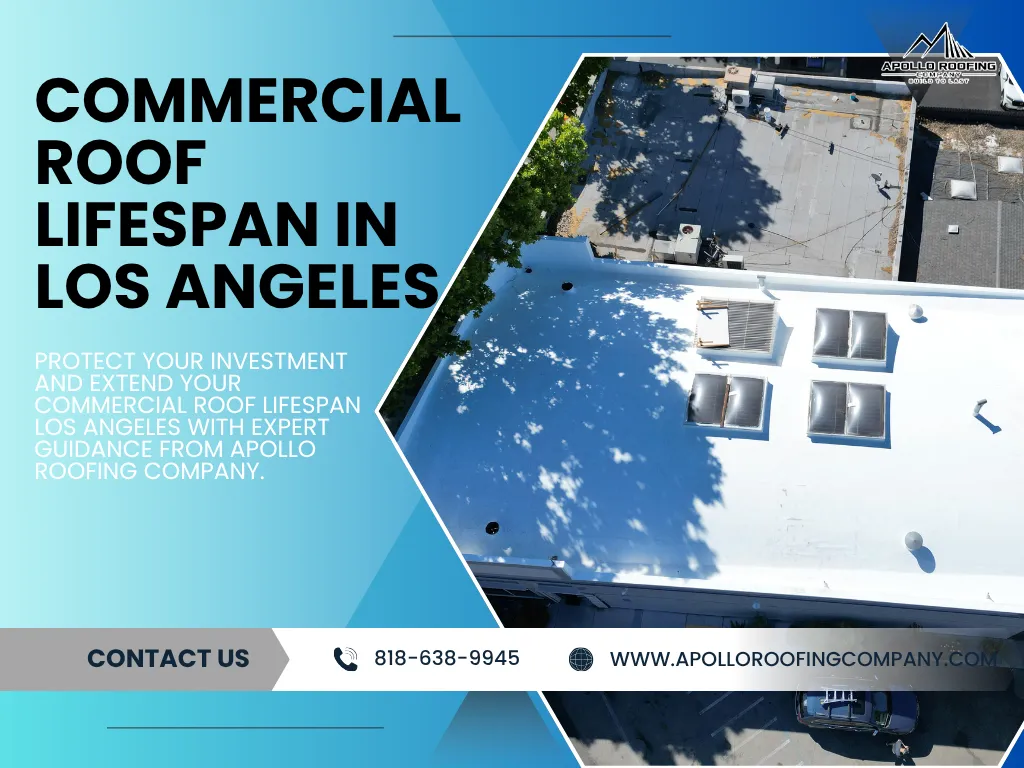
Why Los Angeles Sunlight Is Hard on Commercial Roofs
Commercial roofs often receive direct sunlight for most of the day. Unlike shaded exterior walls, large flat or low-slope roofs can remain exposed from morning through late afternoon.
Solar radiation heats the roof surface while ultraviolet radiation interacts with the roofing material itself. Over time, UV exposure can affect binders, coatings, adhesives, and other components that help roofing systems remain flexible and weather resistant.
Some materials gradually become harder or more brittle. Others may lose surface protection, fade, crack, or show changes around seams and penetrations. These effects do not usually appear overnight. They develop slowly, which is why routine inspections are important even when there is no obvious leak.
Professionals experienced with commercial roofing in Los Angeles can evaluate whether surface aging is limited to cosmetic changes or is beginning to affect the roof’s ability to protect the building.
Heat Creates Constant Expansion and Contraction
Roof temperatures can climb far above the surrounding air temperature on sunny days. A dark roof surface may absorb a significant amount of solar energy, causing the membrane and underlying components to heat up substantially.
When the sun goes down, the roof begins to cool. This daily movement between hotter and cooler conditions causes roofing materials to expand and contract.
The movement may seem minor during a single day, but commercial roofs experience thousands of these cycles over their service life. Seams, flashing, fasteners, edges, and areas around rooftop equipment can experience repeated stress.
Over time, this movement may contribute to loosened connections, separated seams, cracked sealants, or fatigue around penetrations. Buildings with large roof areas can be especially sensitive because even small material movements become more significant across greater distances.
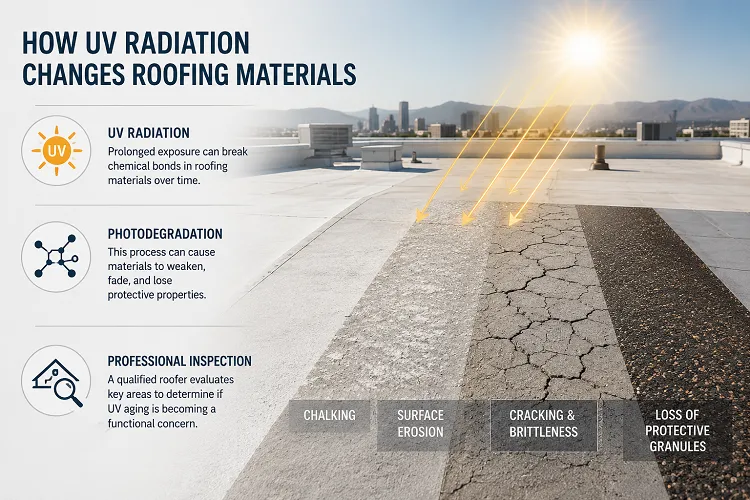
How UV Radiation Changes Roofing Materials
Ultraviolet radiation affects many materials through a process known as photodegradation. In simple terms, prolonged UV exposure can break certain chemical bonds within a material.
Commercial roofing products are manufactured with this exposure in mind, but resistance varies between systems. Membranes, modified bitumen, coatings, and sealants each respond differently depending on their composition, thickness, age, installation, and maintenance history.
Aging may appear as chalking, surface erosion, discoloration, cracking, brittleness, or loss of protective granules. These changes do not automatically mean a roof needs replacement, but they can signal that the material is becoming less resilient.
This is one reason visual inspection alone does not always tell the full story. A qualified roofer can look at seams, flashing, drainage areas, penetrations, membrane condition, and other components to determine whether UV aging is becoming a functional concern.
Los Angeles Heat Roof Damage Can Develop Gradually
Los Angeles heat roof damage is often cumulative rather than dramatic. A roof may not fail because of one unusually hot afternoon. Problems tend to develop through years of repeated exposure.
Sealants may begin losing flexibility. Membranes can become stressed around attachment points. Flashing details may weaken. Protective coatings can wear thin in areas that receive the most direct sunlight.
Heat can also affect insulation and adhesives below the visible roof surface. If moisture has already entered the roofing assembly, elevated temperatures may accelerate certain forms of deterioration and make trapped moisture more problematic.
Because gradual damage is easier to overlook, property owners sometimes discover problems only after interior leaks appear. By then, deterioration may extend beyond the original weak point.
Rooftop Equipment Adds Another Layer of Stress
Commercial buildings often contain HVAC units, vents, exhaust systems, skylights, drains, solar equipment, and other rooftop penetrations.
These features create transitions where different materials meet. Those transitions frequently depend on flashing, sealants, curbs, or specialized membrane details to remain watertight.
Heat movement can place additional stress around these areas. Maintenance technicians also walk near rooftop equipment, increasing the possibility of punctures, scuffs, or localized wear.
A roofing system can therefore age unevenly. Open field areas may remain in good condition while sections around HVAC curbs or frequently accessed pathways show more advanced deterioration.
Regular inspections should pay particular attention to these vulnerable zones.
Reflective Roofing Can Help Manage Rooftop Temperatures
Reflective roofing materials and coatings are commonly used on commercial buildings because they can reduce the amount of solar energy absorbed by the roof surface.
A lighter or more reflective surface can remain cooler than a highly absorptive one under similar conditions. Reduced surface temperature may lessen some thermal stress while also affecting heat transfer into the building.
However, reflectivity alone does not determine roof performance. Drainage, insulation, membrane quality, installation details, ventilation, and maintenance all matter.
A reflective coating installed over an unsuitable or deteriorated roof will not solve underlying problems. Before applying a coating, the existing roof should be evaluated for moisture, structural concerns, adhesion problems, and damaged areas.
Maintenance Can Influence How Long a Commercial Roof Performs
The service life of a commercial roof depends partly on what happens after installation.
Routine maintenance gives property owners an opportunity to identify small issues before they become more disruptive. Loose flashing, aging sealant, clogged drains, damaged membrane sections, and worn coatings can often be addressed more efficiently when they are found early.
Debris should also be removed when necessary because it can block drainage or trap moisture. Water that remains on a low-slope roof for extended periods may place additional stress on roofing materials and seams.
Scheduled inspections are especially valuable after periods of extreme heat, unusual weather, construction activity, or rooftop equipment servicing.
Well-planned maintenance does not make a roof permanent, but it can help preserve the system’s intended performance and provide better information for repair and replacement planning.
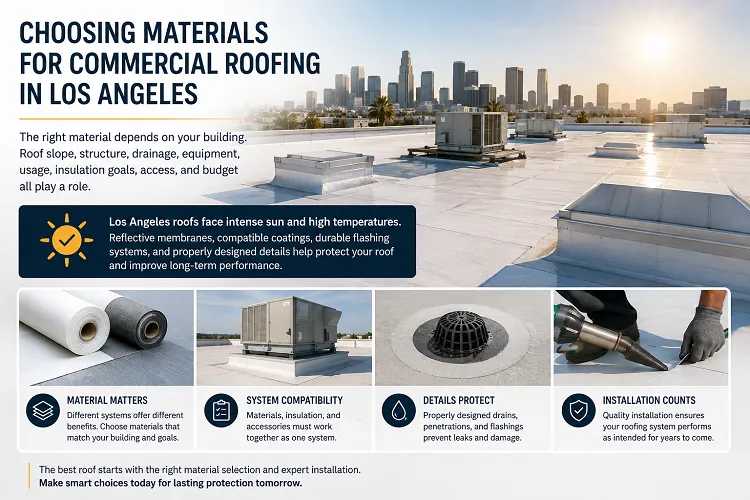
Choosing Materials for Commercial Roofing in Los Angeles
Material selection should reflect the building rather than relying on a one-size-fits-all recommendation.
Roof slope, existing construction, drainage, structural capacity, rooftop equipment, building use, insulation goals, maintenance access, and budget all influence the decision.
For commercial roofing in Los Angeles, solar exposure and rooftop temperature should also be part of the discussion. Reflective membranes, compatible coatings, durable flashing systems, and properly designed details can help a roof manage demanding conditions.
Installation quality remains just as important as the product itself. Even a durable roofing material can develop premature problems when seams, edges, drains, penetrations, or flashing are improperly installed.
Inspections Help Identify Los Angeles Heat Roof Damage Earlier
A professional inspection provides a closer look at how a roofing system is responding to its environment.
Roofers can check for cracking, blistering, open seams, surface deterioration, drainage issues, damaged flashing, failing sealants, punctures, and other conditions that may not be visible from ground level.
Early identification of Los Angeles heat roof damage can also help owners budget more intelligently. Instead of waiting for an unexpected leak or emergency repair, building managers can prioritize work based on condition and urgency.
Inspection records can be useful for long-term planning because they show how quickly certain areas of the roof are changing over time.
FAQs About Commercial Roof Lifespan in Los Angeles
What affects the lifespan of a commercial roof in Los Angeles?
Commercial roof performance depends on the roofing material, installation quality, UV exposure, rooftop temperatures, drainage, foot traffic, maintenance, and the number of penetrations on the roof. A system that is inspected and maintained regularly may perform differently from an identical roof that receives little attention.
Can intense sunlight shorten a commercial roof’s service life?
Yes. Prolonged sunlight exposes roofing materials to both heat and ultraviolet radiation. Over many years, those forces can contribute to surface erosion, brittleness, fading, sealant deterioration, and movement at seams or flashing. The actual effect depends on the roof system and how well it is maintained.
How often should a commercial roof be inspected in Los Angeles?
Inspection frequency depends on roof age, material, building use, and warranty requirements. Many property owners schedule routine professional inspections and additional evaluations after severe weather, construction activity, or noticeable leaks. Older roofs may benefit from closer monitoring as materials begin to age.
Does a reflective roof automatically last longer?
Not necessarily. Reflective surfaces can reduce heat absorption, but longevity also depends on membrane quality, installation, drainage, flashing, insulation, maintenance, and compatibility between materials. Reflectivity should be considered as one part of a complete roofing system rather than a stand-alone solution.
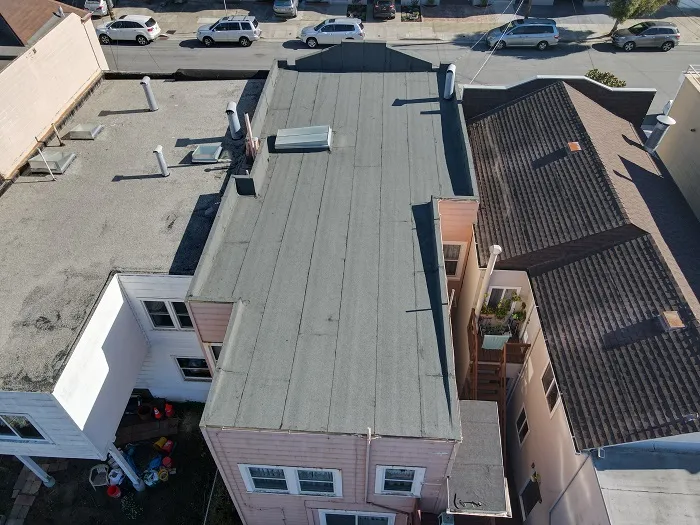
Get Expert Help for Commercial Roof Lifespan in Los Angeles from Apollo Roofing Company
Managing commercial roof lifespan Los Angeles properties requires more than reacting to visible leaks. Heat, ultraviolet exposure, rooftop equipment, drainage, and normal material aging all influence how a commercial roof performs over time.
Apollo Roofing Company can inspect your commercial roofing system, identify areas of concern, and explain practical options based on the condition of the roof. Whether your building needs maintenance, targeted repairs, restoration, or replacement planning, a professional evaluation can help you make informed decisions before minor deterioration becomes a larger problem.
Contact Apollo Roofing Company to schedule a commercial roof assessment and protect your property with a roofing strategy designed for Los Angeles conditions.
