

Choosing a new roof in Los Angeles is not just about picking a color or matching your home’s style. The right material has to handle strong sun exposure, dry heat, seasonal rain, coastal moisture, wind, fire-safety concerns, and local energy requirements. For many homeowners, the roof also needs to support long-term goals like lower cooling costs, improved resale value, stronger curb appeal, and better protection during changing weather patterns.
That is why choosing the best roofing materials in Los Angeles requires a careful look at performance, lifespan, cost, maintenance, and code compliance. A material that works well in one region may not be the right fit for Southern California homes. Los Angeles properties include Spanish-style homes, modern builds, hillside properties, flat-roof homes, coastal residences, and older structures that may need extra care during replacement.
Apollo Roofing Company helps homeowners understand which roofing materials make sense for their home, budget, and long-term needs. In this 2026 guide, we will walk through the top roofing material options for Los Angeles homes and explain what to consider before making your decision.
Why Roofing Material Choice Matters in Los Angeles
Los Angeles roofs face a unique combination of conditions. Long periods of sun exposure can age materials, fade colors, and increase attic temperatures. Occasional heavy rain can expose weak flashing, poor drainage, or worn underlayment. Coastal air can affect certain metals, while hillside and wildfire-prone areas may require stronger attention to fire resistance.
California’s 2025 Building Energy Efficiency Standards apply to building permit applications filed on or after January 1, 2026, and include roofing-related energy requirements for new construction and reroofing projects. These standards address factors such as solar reflectance, thermal emittance, and Solar Reflectance Index, which all help determine how a roof responds to heat.
Los Angeles also has cool roof expectations through its Green Building Code, with requirements tied to reflectance, emittance, or SRI values for residential roofing materials. This means homeowners should think beyond appearance. The right roof should meet local expectations while supporting comfort, safety, and long-term performance.
Asphalt Shingles for Affordability and Versatility
Asphalt shingles remain one of the most common residential roofing materials because they are practical, flexible, and generally more budget-friendly than premium options. They come in many colors and profiles, making them suitable for a wide range of Los Angeles home styles. Architectural shingles can provide a more dimensional appearance than basic three-tab shingles while offering stronger performance.
For many homeowners, asphalt shingles are appealing because they balance cost and function. They are relatively quick to install, easier to repair, and available in cool roof-rated options that can help meet energy-related requirements when selected properly. This makes them a strong option for homeowners who want dependable protection without moving into the higher price range of tile or metal.
However, asphalt shingles may not last as long as some premium roofing materials, especially under constant sun exposure. Quality matters, as does proper installation. Good ventilation, correct underlayment, and careful flashing details all help extend the life of a shingle roof in Southern California.
Clay Tile for Classic Southern California Style
Clay tile is one of the most recognizable roofing materials in Los Angeles. It pairs beautifully with Spanish, Mediterranean, Mission, and traditional Southern California architecture. Beyond its appearance, clay tile can offer impressive longevity when installed correctly and maintained over time.
Clay tile performs well in hot, dry climates because it resists sun damage and does not deteriorate as quickly as some lighter-weight materials. It also provides natural thermal benefits because the shape of the tiles allows airflow beneath the roof covering. This can help reduce heat transfer into the home when paired with the right underlayment and ventilation.
The main considerations are weight, cost, and maintenance. Clay tile is heavier than asphalt shingles, so the roof structure must be evaluated before installation. The tiles can also crack if walked on improperly, which makes professional maintenance important. For homeowners who want a classic Los Angeles look with long-term value, clay tile remains a standout choice.
Concrete Tile for Strength and Design Flexibility
Concrete tile offers many of the visual benefits of clay tile, but often with more design flexibility. It can be made to resemble clay, slate, or even wood shake while providing strong durability. Many Los Angeles homeowners choose concrete tile because it offers a substantial, high-end appearance and can perform well in the region’s climate.
Concrete tile is often considered one of the most durable roofing materials for homes, especially when the roof structure can support its weight. It can resist harsh sun exposure, hold up well over time, and provide solid protection when installed as part of a complete roofing system.
Like clay tile, concrete tile requires attention to underlayment. The tiles themselves may last for decades, but the underlayment beneath them is critical for waterproofing. A professional contractor should evaluate the entire roof system, not just the visible surface. Apollo Roofing Company can help homeowners determine whether concrete tile is appropriate for their home’s structure and long-term goals.
Metal Roofing for Longevity and Energy Performance
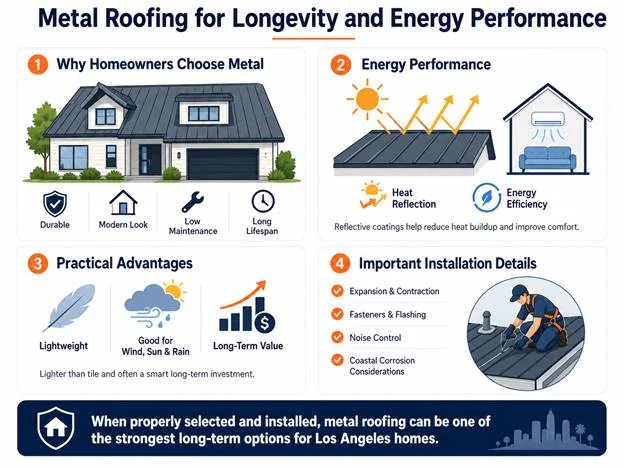
Metal roofing has become more popular among Los Angeles homeowners who want a durable, modern, and energy-conscious roof. It is available in standing seam panels, metal shingles, and styles that can mimic other materials. Metal reflects heat well when finished with the right coatings, making it a strong option for homeowners focused on comfort and efficiency.
Metal roofing is also lightweight compared to tile, which can make it suitable for homes that may not be ideal candidates for heavier materials. It can perform well against wind, sun, and rain when installed by an experienced roofing team. For homeowners planning to stay in their home long term, the higher upfront cost may be balanced by longevity and lower maintenance needs.
However, metal roofing requires proper installation to avoid issues with expansion, contraction, fasteners, noise, and flashing. Coastal homes may also need careful material selection to reduce corrosion concerns. When chosen and installed correctly, metal can be one of the strongest long-term roofing investments for Los Angeles homes.
Flat and Low-Slope Roofing Systems
Many Los Angeles homes, especially modern, mid-century, and urban properties, have flat or low-slope roofs. These roofs require different materials than steep-slope homes because water does not shed as quickly. The focus is waterproofing, drainage, seam strength, and reflectivity.
Common options include TPO, PVC, modified bitumen, and other membrane systems. These materials can be excellent choices when installed correctly, especially for homes with rooftop decks, solar panels, HVAC equipment, or modern architectural designs.
For flat roofs, drainage is especially important. Ponding water, poor slope, damaged flashing, or weak seams can lead to leaks and premature roof failure. A professional roofing contractor should evaluate the slope, roof penetrations, drainage points, and existing surface before recommending a system.
Cool Roofing and Energy Efficiency
Cool roofing is especially important in Los Angeles because roof surfaces absorb a significant amount of solar heat. Materials with higher solar reflectance and thermal emittance can help reduce heat absorption, which may improve comfort and support energy efficiency. California and local requirements make this an important part of the roofing conversation in 2026.
Homeowners exploring energy-efficient roofing materials in California should look for products that are rated for reflectance and heat performance, not just marketed as “cool.” The Cool Roof Rating Council provides product rating information, and local code requirements may vary depending on roof slope and project type.
Cool roof options may include specially rated asphalt shingles, tile, metal, coatings, and membrane systems. The right choice depends on your roof type, budget, appearance goals, and whether the project is a repair, replacement, or new installation.
Fire Resistance and Roofing Safety
Fire performance is a major consideration across California. Roof coverings are classified by fire rating, with Class A providing the highest level of fire resistance. The University of California’s wildfire mitigation guidance explains that Class A roof coverings provide the best protection among roof covering classifications.
In wildfire-prone areas, homeowners should be especially cautious with untreated wood shakes or other vulnerable materials. Fire-resistant materials such as certain asphalt shingles, clay tile, concrete tile, metal, and slate may provide stronger protection when installed as part of an approved assembly.
A roof’s fire resistance is not only about the visible material. The full system matters, including underlayment, decking, vents, openings, gutters, and maintenance. Keeping debris off the roof and out of gutters can also reduce fire risk.
How to Choose the Right Roofing Material for Your Home
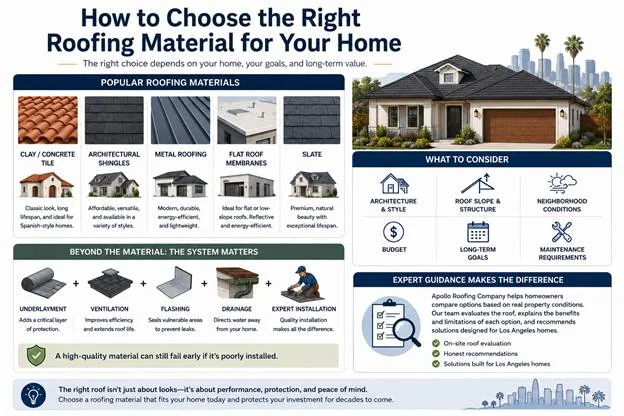
The right roofing material depends on your home’s architecture, roof slope, structural capacity, neighborhood conditions, budget, and long-term expectations. A Spanish-style home may look best with clay or concrete tile, while a modern home may benefit from metal or a reflective membrane system. A budget-conscious homeowner may prefer architectural shingles, while a long-term homeowner may want a premium material with a longer lifespan.
It is also important to think about maintenance. Some materials require more specialized care, while others are easier to repair. The roof’s underlayment, ventilation, flashing, and drainage are just as important as the material itself. A high-quality material can still fail early if it is poorly installed.
Apollo Roofing Company helps homeowners compare options based on real property conditions. Instead of guessing, our team evaluates the roof, explains the benefits and limitations of each option, and recommends solutions designed for Los Angeles homes.
Choose the Best Roofing Materials in Los Angeles With Apollo Roofing Company
Your roof should be built for more than today’s weather. It should be designed for years of sun exposure, seasonal rain, local code requirements, curb appeal, and long-term protection.
Apollo Roofing Company helps homeowners choose the best roofing materials in Los Angeles that fit their home, budget, and performance goals. Whether you are considering shingles, tile, metal, slate, or a flat-roof system, our team can explain your options and guide you toward a roof built for Southern California conditions.
Contact Apollo Roofing Company today to schedule your roofing consultation and start planning a stronger, more efficient, and better-looking roof for your home.
FAQs About Roofing Materials in Los Angeles
What roofing material lasts the longest in Los Angeles?
Slate, clay tile, concrete tile, and metal roofing are often among the longest-lasting options when properly installed and maintained. The best choice depends on your home’s structure, roof slope, budget, and style. Underlayment, ventilation, flashing, and installation quality also play a major role in how long the roof performs.
Are cool roofs required in Los Angeles?
Cool roof requirements may apply depending on the project type, roof slope, material, and applicable code standards. Los Angeles and California energy standards place importance on reflectance, thermal emittance, and SRI values. Before choosing a product, homeowners should work with a qualified contractor to confirm what applies to their specific project.
What are the best options for energy efficiency?
Homeowners considering energy-efficient roofing materials in California may look at cool roof-rated shingles, reflective tile, coated metal roofing, and reflective flat-roof membrane systems. The right option depends on roof shape, slope, budget, and home design. Proper attic ventilation and insulation also affect energy performance.
Which roofing materials offer the best fire resistance?
The most durable roofing materials for homes are not always the same as the most fire-resistant, but there is often overlap. Class A-rated asphalt shingles, clay tile, concrete tile, metal, and slate can provide strong fire resistance when installed as approved systems. Homeowners in higher-risk areas should confirm ratings before choosing materials.
Is tile roofing a good choice for Los Angeles homes?
Tile roofing can be an excellent choice for many Los Angeles homes because it handles heat well, offers strong curb appeal, and complements common Southern California architecture. However, tile is heavy, so the home’s structure must be evaluated first. The underlayment is also critical because it provides much of the roof’s waterproofing protection.
