

Retail properties have different roofing demands than many residential buildings. A roof over a store, shopping center, showroom, restaurant, or mixed-use retail space has to protect the building while supporting daily business operations below. When roofing problems develop, the impact can extend beyond the roof itself and affect tenants, customers, inventory, interior finishes, equipment, and the overall experience of the property.
That makes retail building roofing in San Francisco an important part of property planning, not just a maintenance expense. Owners need to think about roof condition, drainage, access, materials, repairs, replacement timing, and how work will affect businesses that may need to remain open throughout the project.
A thoughtful roofing plan can help reduce disruptions, manage long-term costs, and make it easier to respond before small issues become larger problems.
Understand the Roofing System Already in Place
Before making decisions about repairs or replacement, property owners should understand what type of roof is currently on the building.
Many retail properties use flat or low-slope roofing systems, including modified bitumen, single-ply membranes, built-up roofing, or other commercial systems. Some buildings may have pitched sections, metal components, tile, or combinations of materials based on the age and design of the property.
Each system has different maintenance needs, expected service life, and repair considerations.
The condition of the existing roof also matters. A roof with isolated damage may be suitable for targeted repair, while widespread deterioration, repeated leaks, failing seams, or aging materials may point toward a broader solution.
A professional inspection can help clarify what is happening across the roof instead of relying only on visible interior symptoms.
Pay Close Attention to Drainage
Drainage is one of the most important factors in commercial roofing performance.
Flat and low-slope roofs are designed to move water toward drains, scuppers, gutters, or other drainage points. When those pathways become blocked or when the roof surface begins to hold water, moisture can remain in place longer than intended.
Standing water can increase stress on roofing materials and may expose weak seams, flashing, or deteriorated areas.
Retail properties can be especially vulnerable because rooftop equipment, foot traffic, debris, and building modifications can affect drainage patterns over time.
Property owners should keep drains clear and pay attention to areas where water regularly collects after rain. Repeated ponding may indicate that the issue goes beyond simple cleaning and should be evaluated.
Consider Rooftop Equipment and Penetrations
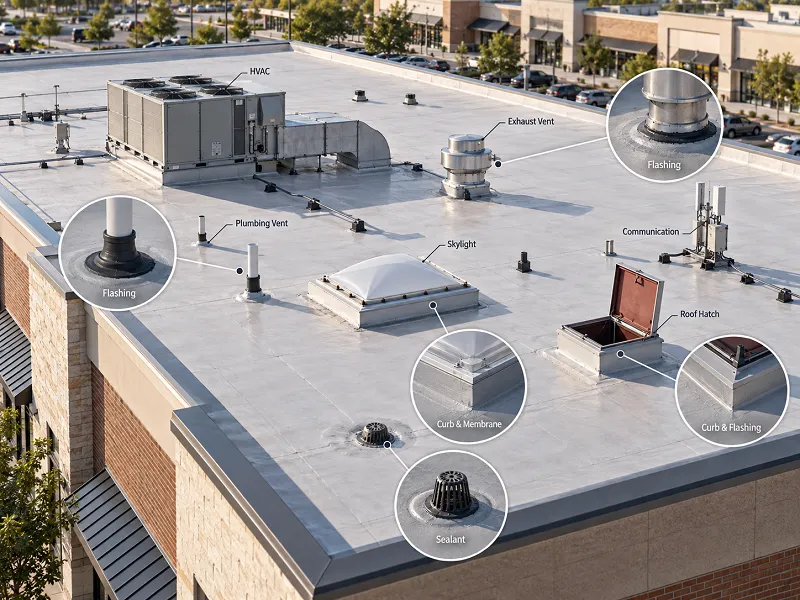
Retail buildings often have more rooftop penetrations than a typical home.
HVAC units, exhaust systems, vents, plumbing penetrations, ducts, skylights, signs, and communication equipment may all pass through or sit on the roofing system.
Each penetration creates a transition point where careful flashing and waterproofing are essential.
Problems can develop when equipment is replaced, moved, or serviced without coordinating with roofing requirements. A technician may disturb flashing, sealants, curbs, or membrane areas while working on mechanical equipment.
For that reason, commercial roofing for retail buildings in San Francisco should account for both the roof itself and the systems installed on top of it. Property owners should make sure roofing conditions are reviewed whenever major rooftop equipment work takes place.
Plan Roofing Work Around Business Operations
Roofing on an active retail property requires more coordination than work on an empty building.
Customers still need access. Employees need safe entrances. Deliveries may need to continue. Parking areas may need to remain open. Tenants may have operating hours that cannot easily be changed.
These factors should be discussed before work begins.
Contractors may need to stage materials carefully, restrict certain work to specific times, protect entrances, manage debris, or adjust access routes around active businesses.
Noise can also be a concern, especially for restaurants, medical tenants, salons, offices, or customer-facing businesses where the indoor environment matters.
The best roofing plan considers how the work will be completed while minimizing unnecessary interruption to tenants and customers.
Think Beyond Immediate Repairs
When a leak appears, it is natural to focus on stopping the water as quickly as possible.
That is important, but repeated repairs without understanding the broader roof condition can become expensive over time.
If leaks continue to appear in different areas, the problem may not be a single isolated defect. Aging membranes, deteriorated seams, failing flashing, drainage problems, or moisture trapped within the roofing assembly may all contribute.
This is where a broader assessment becomes useful.
Property owners should ask whether the recommended repair addresses the source of the problem, how long the repair is expected to perform, and whether the roof has other areas showing similar wear.
A short-term repair may be appropriate in some cases, but it should still fit into a larger maintenance or replacement plan.
Choose Materials Based on the Building
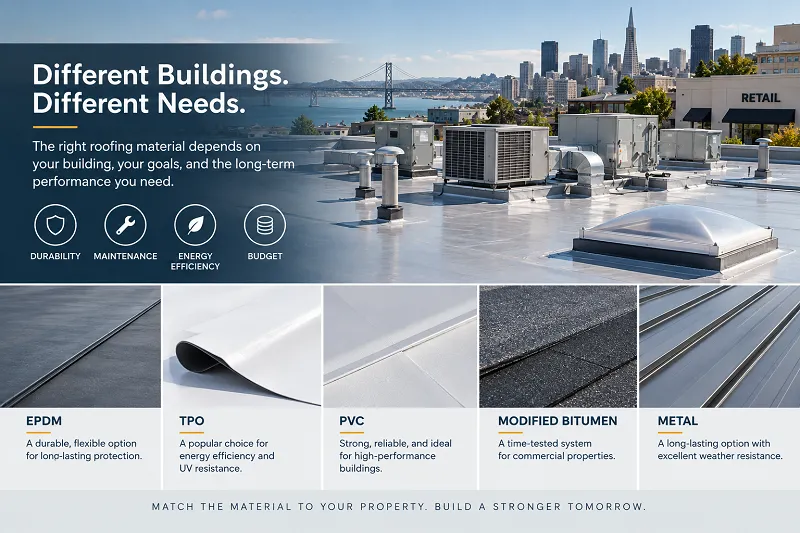
There is no single roofing material that is right for every retail property.
The building’s slope, size, structure, drainage, rooftop equipment, age, exposure, and budget all affect which system makes sense.
Some owners may prioritize durability and ease of maintenance. Others may need a system that can accommodate frequent rooftop access or complex mechanical equipment.
Energy performance may also be part of the discussion, particularly for large roof surfaces exposed to sunlight.
For retail property roofing in San Francisco, material selection should be based on how the building is actually used rather than simply choosing the lowest-cost option.
A roofing system works best when it is matched to the property, installed correctly, and maintained according to its needs.
Review Access and Safety Requirements
Retail roofs often need regular access for HVAC technicians, electricians, maintenance personnel, and other service providers.
That means roof access and traffic patterns matter.
Frequent foot traffic can wear down certain areas, especially around equipment, access points, ladders, and service paths.
Protective walk pads or designated routes may help reduce unnecessary damage in high-traffic areas.
Property owners should also consider how safely contractors and maintenance teams can reach the roof and move around once they are there.
Good roofing planning is not only about waterproofing. It also includes how the roof will be used and maintained after installation.
Keep Maintenance Consistent
Routine maintenance can help property owners identify problems before they become disruptive.
Inspections can reveal loose flashing, membrane damage, blocked drainage, deteriorated sealants, punctures, open seams, and other issues that may not be visible from the ground.
Regular maintenance is especially valuable after periods of heavy rain, strong wind, or work by other trades.
Keeping records can also help.
When owners document repairs, inspections, warranties, and roof age, it becomes easier to track recurring problems and make better decisions about future work.
For larger retail properties or multi-tenant buildings, this information can be especially useful when planning budgets and capital improvements.
Understand the Cost of Delaying Roofing Work
Delaying roofing work can sometimes save money in the short term, but it can also increase the cost of future repairs.
Water intrusion can affect insulation, decking, framing, ceilings, electrical systems, and interior finishes.
In a retail setting, leaks can also affect inventory, displays, customer areas, and tenant operations.
That is why retail property roofing in San Francisco should be approached as part of overall property risk management.
The goal is not to replace a roof before it is necessary. It is to avoid allowing manageable problems to develop into more expensive damage.
Frequently Asked Questions About Retail Building Roofing in San Francisco
How often should a retail building roof be inspected?
Retail roofs should be inspected regularly, especially when they support rooftop equipment or experience frequent service traffic. Inspections are also useful after strong storms or when leaks appear. A consistent schedule can help identify drainage problems, seam failures, flashing issues, punctures, and other wear before damage spreads.
What are common roofing problems on retail buildings?
Common issues include standing water, blocked drains, damaged flashing, punctures, seam separation, deteriorated sealants, and leaks around rooftop equipment. Roof traffic and mechanical servicing can also contribute to damage. Because many retail roofs are low-slope systems, drainage and penetration details deserve careful attention.
Can a retail roof be repaired while businesses stay open?
In many cases, yes. Roofing work can often be coordinated around normal business operations, but planning is important. Contractors may need to manage noise, debris, parking, entrances, deliveries, and tenant access. The project schedule should be discussed in advance to reduce disruption and maintain safe conditions.
How do I know when repair is no longer enough?
Repeated leaks, widespread membrane deterioration, failing seams, ongoing drainage problems, or frequent repairs in multiple areas may indicate that a broader solution is needed. A professional evaluation can help determine whether continued repair is practical or whether replacement may provide better long-term value.
Keep Your Business Covered with Retail Building Roofing in San Francisco from Apollo Roofing Company
A reliable retail roof helps protect far more than the building itself. It supports tenants, customers, inventory, equipment, and the day-to-day operation of the property.
Apollo Roofing Company can evaluate your roof, identify areas of concern, and recommend solutions based on the condition and needs of your building. Whether you are dealing with recurring leaks, planning repairs, or considering a full replacement, our team can help you understand your options.
For professional commercial roofing for retail buildings in San Francisco, contact Apollo Roofing Company to schedule an inspection and discuss the next steps for your property.
