

Proper drainage is one of the most critical components of any commercial roofing system, especially in a city like San Francisco where weather conditions can shift quickly. From heavy rain to persistent coastal moisture, water management plays a direct role in protecting buildings from structural damage and long-term deterioration. Without an effective drainage system in place, even the most durable roofing materials can fail prematurely.
This is why commercial roof drains installation in San Francisco has become a top priority for property owners and facility managers. A well-designed drainage system ensures that water is directed safely away from the roof, reducing the risk of leaks, pooling, and costly repairs. Apollo Roofing Company brings deep local expertise to every project, helping businesses maintain safe and efficient roofing systems built for the Bay Area environment.
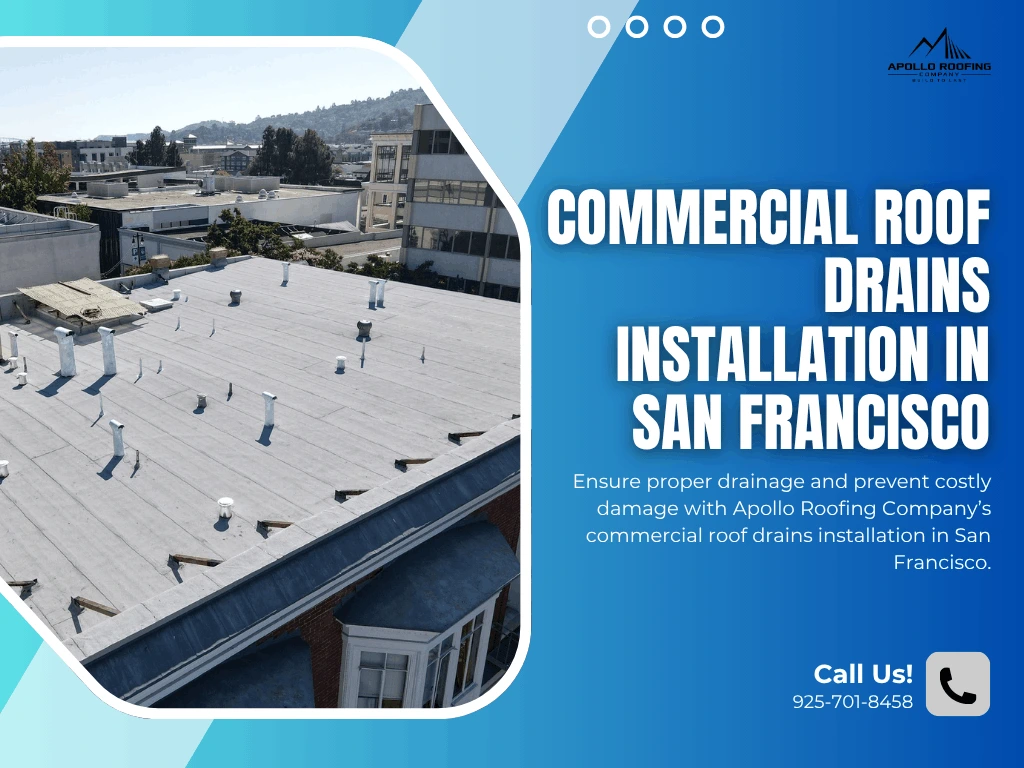
Understanding Commercial Roof Drainage Systems
Commercial roofs are typically flat or low-sloped, which means water does not naturally run off as quickly as it would on a pitched residential roof. Because of this, specialized commercial roof drainage systems in San Francisco are required to handle water flow effectively.
These systems are designed to collect and redirect water through a network of drains, pipes, and outlets. When properly installed, they prevent water accumulation and protect the roof’s structural integrity. The effectiveness of a drainage system depends not only on its design but also on the quality of installation and ongoing maintenance.
In a city with frequent fog and moisture exposure, even small drainage issues can escalate quickly. That is why investing in a reliable system is essential for long-term performance.
Types of Commercial Roof Drains
There are several types of commercial roof drains, each suited for different building designs and drainage needs. Interior drains are commonly used on large commercial buildings, directing water through internal piping systems. These drains are efficient and protected from external debris, making them a popular choice.
Scupper drains are another option, allowing water to exit through openings along the roof edge. These are often paired with downspouts and are effective for managing overflow during heavy rainfall.
Gutter systems can also play a role in drainage, especially for buildings with slight slopes. They help guide water away from the roof and foundation, reducing the risk of damage.
Choosing the right system depends on the structure of the building, the expected water volume, and local weather conditions.
Importance of Professional Roof Drain Installation
Proper roof drain installation in San Francisco is not just about placing drains in the right locations. It requires a comprehensive understanding of building design, water flow patterns, and local regulations. Poor installation can lead to standing water, leaks, and even structural issues over time.
Professional installation ensures that the system is designed to handle peak rainfall and that all components work together seamlessly. This includes correct placement, proper sealing, and integration with the overall roofing system.
Apollo Roofing Company approaches every project with precision, ensuring that each drainage system is tailored to the specific needs of the property. This attention to detail helps prevent future issues and extends the lifespan of the roof.
Key Components of Commercial Drainage Systems
A complete drainage system consists of several interconnected components that work together to manage water effectively. Drains serve as the primary collection points, capturing water from the roof surface. Pipes and downspouts then transport the water away from the building.
Strainers and covers are essential for preventing debris from clogging the system, while flashing and waterproofing elements ensure that water does not seep into vulnerable areas. Each component plays a vital role in maintaining the overall efficiency of the system.
When any part of the system is compromised, it can affect the entire drainage process. Regular inspections and maintenance are important to keep everything functioning properly.
Common Drainage Issues in San Francisco
San Francisco’s climate presents unique challenges for commercial roofing systems. Frequent moisture can lead to debris buildup, which can clog drains and restrict water flow. Over time, this can cause water to pool on the roof, increasing the risk of leaks and structural damage.
Another common issue is improper slope design, which prevents water from reaching the drains efficiently. In older buildings, outdated drainage systems may not meet current standards, making upgrades necessary.
Addressing these issues early is key to avoiding costly repairs. A well-maintained drainage system helps protect both the roof and the building as a whole.
Benefits of Upgrading Your Commercial Drainage System
Upgrading to modern commercial roof drainage systems in San Francisco offers several advantages. Improved water management reduces the risk of leaks and extends the life of the roofing system. It also enhances safety by preventing water accumulation that can weaken structural components.
Energy efficiency can also be improved, as proper drainage supports better insulation performance. In addition, a reliable system helps property owners avoid unexpected repair costs, making it a smart long-term investment.
For businesses, maintaining a functional roof is essential to daily operations. Investing in an upgraded drainage system provides peace of mind and protects valuable assets.
Why Work with a Local San Francisco Roofing Expert
Choosing a local contractor for commercial roof drains installation in San Francisco ensures that the project is handled with an understanding of regional conditions and requirements. Local experts are familiar with building codes, permit processes, and environmental factors that impact roofing systems.
Apollo Roofing Company brings years of experience working in the Bay Area, allowing them to recommend solutions that are both effective and compliant. Their knowledge of local weather patterns helps ensure that drainage systems are built to handle real-world conditions.
Working with a trusted local team also means faster response times and ongoing support, which is essential for maintaining the performance of commercial roofing systems.
Schedule Your Commercial Roof Drains Installation in San Francisco with Apollo Roofing Company Today
When it comes to protecting your commercial property, a reliable drainage system is essential. Apollo Roofing Company specializes in roof drain installation in San Francisco, delivering solutions that are built to perform in the Bay Area’s demanding conditions.
Our team provides expert guidance, high-quality workmanship, and customized systems designed to meet your building’s needs. From new installations to system upgrades, we are committed to helping you maintain a safe and efficient roofing system.
Contact Apollo Roofing Company today to schedule your consultation and ensure your commercial property is equipped with a dependable drainage solution that stands the test of time.
FAQs: Commercial Roof Drains Installation in San Francisco
What is commercial roof drains installation in San Francisco?
It refers to the process of designing and installing drainage systems on commercial roofs to manage water flow and prevent damage caused by standing water.
Why are drainage systems important for commercial roofs?
They help prevent water accumulation, reduce the risk of leaks, and protect the structural integrity of the building.
How often should commercial roof drains be inspected?
It is recommended to have inspections at least twice a year, especially before and after the rainy season.
What are the signs of a failing drainage system?
Common signs include standing water, leaks, slow drainage, and visible debris buildup around drains.
Can existing drainage systems be upgraded?
Yes, older systems can be improved or replaced to meet modern standards and handle increased water flow more efficiently.
How long does roof drain installation take?
The timeline depends on the size and complexity of the project, but most installations can be completed within a few days to a week.
