

Replacing a flat roof is a significant investment for any San Francisco homeowner or commercial property owner. Unlike a simple repair, replacement involves much more than installing a new surface. The condition of the existing roof, the materials selected, access to the building, labor requirements, drainage, permits, and even rooftop equipment can influence the final price.
That is why understanding flat roof replacement cost in San Francisco starts with understanding the building itself. Two roofs with similar square footage can have very different replacement costs if one has easy access and minimal damage while the other requires extensive tear-off work, structural repairs, or specialized equipment.
A detailed roof evaluation can help uncover these differences before work begins. Knowing what affects pricing makes it easier to compare estimates, set a realistic budget, and understand where your roofing investment is going.
Roof Size and Complexity: How Dimensions Affect Your Replacement Price
Roof size is one of the most straightforward factors affecting replacement cost. A larger roof requires more membrane, insulation, flashing, fasteners, adhesives, and other roofing materials. It also requires additional labor to remove the existing system and install the new one.
Square footage, however, does not tell the entire story.
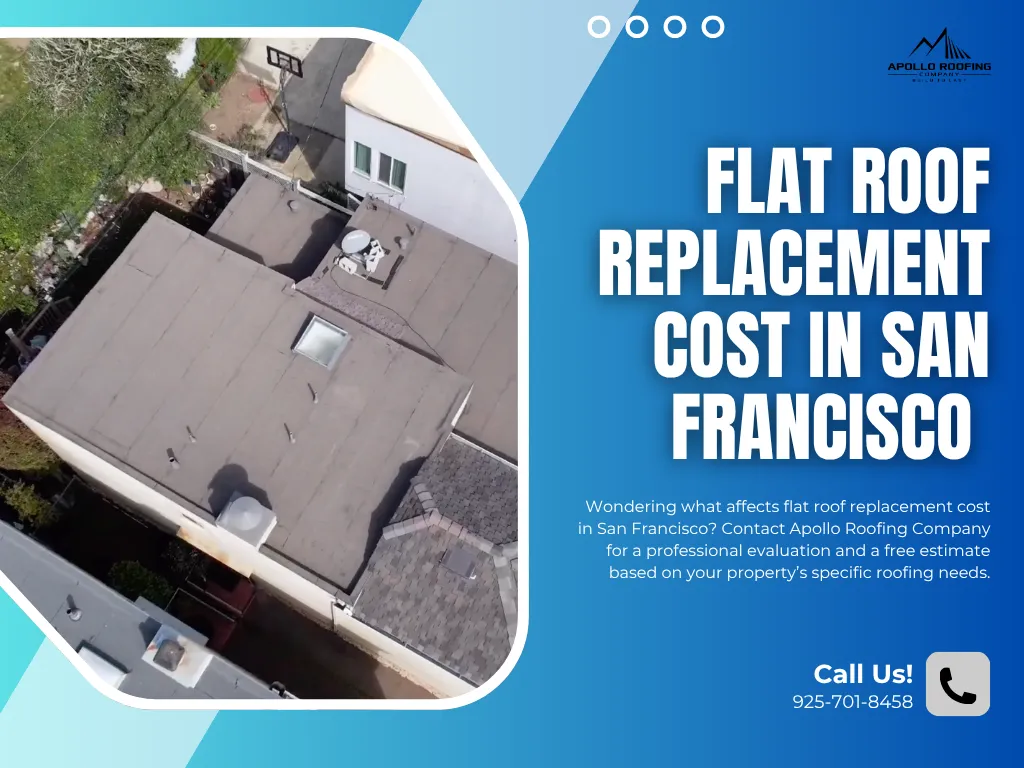
A simple rectangular roof with relatively few penetrations may be easier to replace than a smaller roof containing multiple levels, parapet walls, skylights, vents, HVAC equipment, roof hatches, and unusual transitions. Each detail requires additional planning and installation work.
Complex roofs may also contain more flashing and waterproofing details. These areas require precision because transitions and penetrations are often among the places where leaks can develop if the roofing system is not properly installed.
The shape and configuration of the roof should therefore be considered alongside its total size when estimating the project.
Roofing Material Choices: Comparing Costs for Different Flat Roof Options
Material selection can substantially influence the cost and long-term performance of a flat roof.
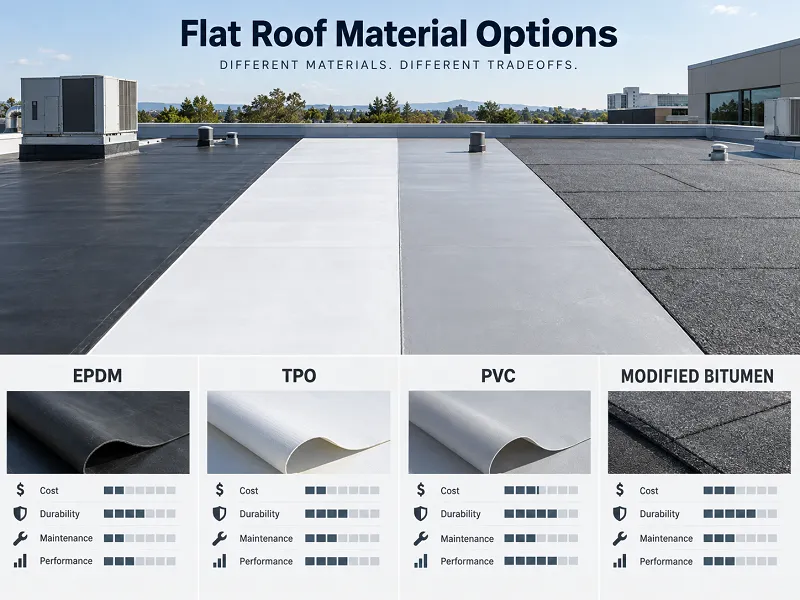
EPDM is a synthetic rubber membrane known for its flexibility and durability. TPO is a single-ply roofing membrane designed to resist ultraviolet exposure and is commonly used on low-slope roofs. PVC is another single-ply option known for durability and energy-efficient characteristics. Modified bitumen combines asphalt with polymer-modified materials and has long been used for flat and low-slope roofing applications.
Each roofing system comes with its own material costs, installation methods, maintenance considerations, and expected performance characteristics.
The least expensive material at installation is not necessarily the least expensive choice over the life of the roof. Property owners should also consider the building’s use, rooftop traffic, drainage, exposure, maintenance needs, and how long they expect to own the property.
A roofing contractor can help explain how different systems perform so the decision is based on more than price alone.
Labor Costs in San Francisco: Why Location Impacts Your Roof Replacement Budget
Labor is another important part of the total project cost.
Roof replacement requires trained workers to remove old materials, prepare the roof deck, address flashing and penetrations, install the new roofing system, and complete waterproofing details correctly.
San Francisco properties can also create logistical challenges that affect the amount of labor required. Dense neighborhoods, limited staging space, narrow streets, parking restrictions, and multi-story buildings can make moving workers, materials, and debris more complicated.
A project on an easily accessible building may move differently from one where roofing materials must be carefully transported through limited access points or lifted onto the roof.
These logistical details help explain why flat roof replacement cost in San Francisco cannot always be determined accurately from square footage alone.
Roof Condition: How Pre-existing Damage Can Increase Replacement Costs
What lies underneath an existing roof is one of the biggest variables in a replacement project.
Water may have entered through damaged membrane areas, deteriorated flashing, open seams, or failed penetrations. Over time, moisture can affect insulation, decking, and other components beneath the visible roof surface.
Some of this damage may not become fully apparent until the existing roofing materials are removed.
If deteriorated decking or other damaged materials are discovered, they may need to be repaired or replaced before the new roofing system can be installed. Installing a new roof over an unsuitable substrate can compromise the performance of the entire system.
This is why a detailed inspection before replacement is important. While an inspection may not reveal every hidden condition, it can help identify warning signs and give property owners a clearer understanding of possible additional work.
Accessibility and Safety Requirements: How Difficult Roof Access Can Drive Up Costs
Roof access can have a larger effect on cost than many property owners expect.
San Francisco has many multi-story buildings, closely spaced structures, and properties with limited exterior access. In some cases, crews may require additional equipment or more complex staging to safely move roofing materials onto the building and remove debris.
Scaffolding, lifting equipment, fall protection, or other safety measures may also be required depending on the property and project conditions.
These requirements are not simply logistical extras. They help crews perform the work safely while protecting the property, neighboring areas, pedestrians, and workers.
When comparing roofing estimates, property owners should understand whether access equipment and required safety measures are already included in the proposed price.
Permits and Regulations: Understanding San Francisco’s Roofing Codes and Fees
Roof replacement projects may require permits, inspections, and compliance with applicable building requirements.
These requirements can affect both the project timeline and overall cost. Permit fees, inspections, documentation, and required construction details should be considered during planning rather than treated as an afterthought.
An experienced local roofing contractor should be familiar with the permitting process associated with the proposed work and can explain how these requirements fit into the project.
Before accepting an estimate, ask whether permit-related costs are included and who will be responsible for obtaining the necessary approvals.
Clear expectations at the beginning can help prevent confusion once the project is underway.
Additional Features: Impact of Insulation, Drainage Systems, and More
A flat roof replacement can involve much more than the visible roofing membrane.
Insulation may need to be replaced or upgraded depending on the condition and design of the existing assembly. Drainage components may also require attention, particularly if the roof experiences recurring ponding or has damaged drains, gutters, or downspouts.
Roof penetrations and accessories can add additional complexity.
Skylights, solar equipment, roof hatches, vents, HVAC units, and other rooftop systems must be properly integrated with the new roofing assembly. Their flashing and waterproofing details can affect both the scope of work and final project cost.
This is one reason property owners benefit from looking at the roof as a complete system rather than focusing only on the surface material.
A lower estimate may not necessarily offer better value if important drainage, insulation, or flashing work has been excluded.
Frequently Asked Questions About Flat Roof Replacement Cost in San Francisco
Why can two flat roof replacement estimates be very different?
Roofing contractors may be pricing different scopes of work even when the projects initially appear similar. One proposal may include tear-off, insulation, decking repairs, new flashing, drainage improvements, permits, and debris disposal, while another may exclude some of these items. Reviewing the full scope is essential when comparing prices.
Does a larger flat roof always cost more to replace?
Larger roofs generally require more materials and labor, but size is only one factor. A smaller roof with difficult access, numerous HVAC units, skylights, parapet walls, extensive damage, or complicated drainage can require more work than a larger, simple roof. Complexity and existing conditions can significantly influence total cost.
Can hidden roof damage increase the final replacement price?
Yes. Some deterioration cannot be fully seen until the old roofing system is removed. Moisture-damaged insulation, deteriorated decking, or other underlying problems may require additional work before the new roofing system can be installed. Ask your contractor in advance how unexpected repairs will be priced and approved.
Which flat roofing material is the most affordable?
Material pricing varies based on the roofing system, building requirements, installation method, and project conditions. EPDM, TPO, PVC, and modified bitumen each have different characteristics and cost considerations. Instead of selecting a system solely by initial price, consider durability, maintenance, building use, and expected long-term performance.
Are permits included in a flat roof replacement estimate?
That depends on the contractor and the proposal. Some estimates may include permit-related expenses, while others list them separately. Property owners should ask specifically about permits, inspections, disposal, equipment, and other project costs before signing a contract so they understand what the quoted price covers.
Wondering About Flat Roof Replacement Cost in San Francisco? Call Apollo Roofing Company for a Free Estimate!
Flat roof replacement pricing depends on much more than square footage. Materials, existing roof damage, accessibility, drainage, insulation, permits, rooftop equipment, and the overall complexity of the property can all influence what the project requires.
Apollo Roofing Company can evaluate your existing roof and help you understand the factors affecting your specific replacement project. A professional assessment gives you a clearer picture of the roof’s condition, recommended system, project scope, and potential costs before work begins.
If your flat roof is aging, leaking, or showing signs of deterioration, contact Apollo Roofing Company to request a free estimate. Our team can help you explore your options and plan a flat roof replacement suited to your San Francisco property.
