

Winter in Santa Cruz is less about snow and ice and more about rain, coastal winds, storm debris, and repeated moisture. After months of relatively dry weather, the wetter season can expose roofing problems that were difficult to notice earlier in the year. A vulnerable flashing detail, damaged roofing material, clogged drain, or aging roof penetration may not cause an obvious problem until heavier or wind-driven rain arrives.
Santa Cruz’s coastal location also means roofs can experience a combination of moisture, wind, sun, and salt-containing coastal air throughout the year. During winter storms, existing weaknesses may become much easier to detect as water tests roof edges, penetrations, flashing, drainage components, and other vulnerable areas.
Understanding the roofing problems that commonly become noticeable during Santa Cruz’s winter weather can help residential and commercial property owners recognize warning signs and respond before water damage becomes more extensive.
Why Santa Cruz Winter Weather Can Be Hard on a Roof
A roof is designed to manage exposure to weather, but its ability to do that depends on the condition of the entire roofing system. Roofing materials, flashing, gutters, drains, penetrations, underlayment, roof edges, and structural components all play a role.
During Santa Cruz’s wetter months, several conditions can affect these areas at the same time. Rain places greater demands on the roof’s water-shedding and drainage systems. Strong winds can affect loose or deteriorated roofing materials. Leaves, branches, and other storm debris can obstruct gutters and drains.
Winter weather does not necessarily create a roofing defect from scratch. In many cases, storms expose a weakness that developed gradually during previous months or years but had not yet caused an obvious symptom.
Coastal Winds Can Leave Roofing Materials Vulnerable
Santa Cruz’s coastal setting can bring windy conditions, particularly as winter storm systems move through the region. Roofing materials that are already loose, damaged, deteriorated, or poorly secured may be more vulnerable when winds increase.
On shingle roofs, wind can lift, loosen, crease, or remove vulnerable shingles. Tile roofs may have cracked, slipped, or damaged components that require attention. Other roofing systems can experience problems around flashing, roof edges, panels, penetrations, or accessories.
Wind damage is not always obvious from the ground. A roof may appear generally intact while having a relatively small vulnerable area that allows water to enter during the next period of rain.
After significant storms, Santa Cruz property owners can look from a safe location for missing or displaced roofing materials, damaged flashing, fallen branches, or roofing debris around the property. New ceiling stains or unexplained indoor moisture following a storm are also reasons to investigate further.
Heavy and Wind-Driven Rain Can Reveal Hidden Roof Leaks
Rain is one of the most important winter roofing concerns in Santa Cruz.
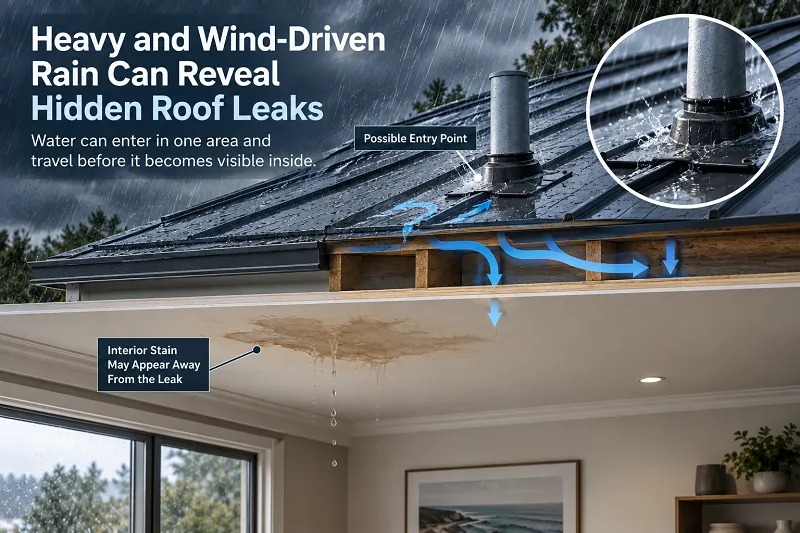
A roof can appear to perform normally through the area’s drier months even when flashing, sealants, penetrations, roofing materials, or transitions have begun to deteriorate. When sustained or wind-driven rain arrives, water may reach vulnerable areas that did not produce noticeable leaks during dry weather.
Roof leaks can also be difficult to diagnose because the location of an interior stain does not always identify where water entered the roofing system. Once moisture gets through an opening, it can travel along decking, framing, insulation, pipes, or other building components before becoming visible.
A ceiling stain several feet from the apparent roof problem could therefore originate somewhere else entirely.
Simply patching the area directly above a stain may not address the actual source. A professional roof evaluation can help trace the moisture pathway and determine which roofing component needs attention.
The First Significant Rains Can Expose Problems From the Dry Season
One reason winter roofing problems can seem sudden in Santa Cruz is the seasonal change from relatively dry conditions to wetter weather.
A small opening or deteriorated component may exist for some time without producing visible interior damage when little rain is falling. Once more frequent or heavier rainfall returns, that same vulnerability may begin allowing water into the roofing assembly.
The first significant rains of the season are therefore a useful time to pay attention to changes inside and outside the property. New ceiling discoloration, dripping, damp areas, unusual odors, overflowing gutters, or water appearing where it normally does not can all indicate that something deserves closer evaluation.
Finding the source early can help property owners address the roofing issue before repeated storms allow additional moisture into the building.
Clogged Gutters and Poor Drainage Can Create Bigger Problems
Santa Cruz winter storms can bring leaves, small branches, needles, and other debris onto roofs and into drainage systems. When gutters, downspouts, drains, or scuppers become obstructed, rainwater may not leave the roof as intended.
Property owners may notice gutters overflowing during heavy rain, water spilling in unexpected locations, debris collecting around drains, or water remaining on portions of a low-slope roof.
Drainage is especially important for commercial roofing systems. Low-slope roofs often rely on carefully positioned drains, scuppers, gutters, or other components to move water away efficiently. Persistent ponding or a sudden change in how the roof drains should be evaluated rather than ignored.
Keeping drainage paths clear is an important part of roof maintenance, but property owners should avoid climbing onto wet roofs or using unstable ladders during storms. Components that cannot be accessed safely should be inspected or serviced by qualified professionals.
Falling Branches Can Cause Sudden Roof Damage
Trees are an important consideration during Santa Cruz’s winter storm season. Strong winds can break weakened limbs, while saturated soil can contribute to tree instability in some circumstances.
When a large branch strikes a roof, the damage may extend beyond a few broken shingles or tiles. Impact can affect flashing, gutters, decking, roof edges, structural components, skylights, or rooftop equipment.
Smaller branches and debris can cause problems as well. They may collect in valleys and drainage areas, scrape roofing surfaces, or repeatedly strike roof components during windy conditions.
Property owners can reduce some risk by having questionable branches evaluated before severe weather, particularly when large limbs extend directly over a home or commercial building. Tree work that requires climbing or cutting substantial limbs should be left to qualified tree professionals.
If a large branch does hit the roof, a professional evaluation is advisable even when the damage does not appear extensive from the ground.
Coastal Exposure Deserves Attention
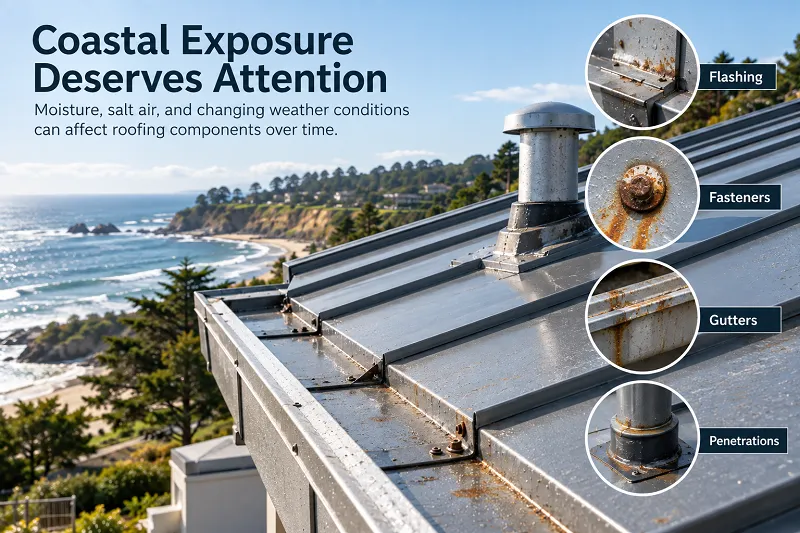
Santa Cruz properties near the coast experience environmental conditions that can differ from those farther inland. Moisture and salt-containing coastal air can contribute to corrosion of susceptible metal components over time, particularly when materials, protective finishes, or fasteners are already aging or damaged.
That does not mean every coastal roof will develop corrosion problems. Roofing material, distance from the ocean, exposure, installation details, maintenance, and the specific metal components involved all matter.
During a roof evaluation, flashing, fasteners, metal edges, gutters, penetrations, and rooftop equipment connections may deserve attention for signs of deterioration. Addressing vulnerable components before they fail can help maintain the roof’s ability to manage winter rain.
Small Winter Leaks Should Not Be Ignored
A roof leak that appears during a Santa Cruz rainstorm can be easy to postpone once the weather clears and the dripping stops. The absence of visible water, however, does not necessarily mean the underlying roofing problem has resolved itself.
Moisture may remain within insulation, decking, ceilings, walls, or other building materials. If the same opening allows water inside during subsequent storms, repeated moisture exposure can contribute to additional deterioration.
Watch for new ceiling discoloration, peeling or bubbling paint, damp insulation, musty odors, visible dripping, or unexplained moisture near walls, skylights, vents, and other areas.
Taking photos and noting when the problem occurs can also be helpful. For example, whether a leak appears only during wind-driven rain or after several hours of sustained rainfall may provide useful information when a roofing professional investigates the source.
Commercial Roofs May Need Additional Winter Attention
Commercial properties in Santa Cruz can have additional roof details that deserve attention during wet weather. HVAC equipment, vents, pipes, skylights, drains, curbs, electrical components, and other rooftop equipment create transitions and penetrations that must remain properly integrated with the roofing system.
Low-slope commercial roofs also depend heavily on effective drainage. Blocked drains or changes in roof surface conditions may allow water to remain in areas where it previously drained efficiently.
Property owners and facility managers should pay attention to changes after storms, including interior staining, unexpected ponding, drainage problems, damaged flashing, or debris around rooftop equipment.
A commercial roof should be evaluated as a complete system rather than focusing only on the visible roof surface.
Preparing a Santa Cruz Roof for Winter Weather
Preparing a roof for Santa Cruz’s wetter season does not mean assuming that repairs are automatically necessary. The goal is to identify existing vulnerabilities before repeated rain and wind make them more disruptive.
A professional roof inspection can evaluate roofing materials, flashing, penetrations, roof edges, gutters, drains, and other areas where problems commonly develop. Property owners can also monitor drainage from the ground, watch for visible changes after storms, and have potentially hazardous tree limbs evaluated.
If the roof has a history of leaks, the period before sustained winter rain is also a good opportunity to investigate the source rather than waiting for water to reappear.
For commercial properties, planning may include checking drainage areas and roof transitions around HVAC units and other equipment before the wettest periods of the year.
When Should You Call a Roofing Professional?
Not every Santa Cruz winter storm means your roof needs repairs. Certain warning signs, however, deserve attention.
Missing or displaced roofing materials, active leaks, new ceiling stains, damaged flashing, persistent drainage problems, fallen branches, visible roof damage, or unexplained interior moisture are all reasons to consider a professional roof evaluation.
An inspection is particularly useful when the source of a leak is unclear. Rather than assuming the visible interior symptom is directly beneath the roof defect, a roofing professional can evaluate flashing, penetrations, drainage, materials, and surrounding roof areas to help identify the source.
Property owners should also avoid climbing onto wet or storm-damaged roofs. The same conditions that reveal roofing problems can make roof access significantly more dangerous.
Frequently Asked Questions About Winter Roofing in Santa Cruz
What roofing problems are common during winter in Santa Cruz?
Winter roofing problems in Santa Cruz often become noticeable during periods of heavy or wind-driven rain. Property owners may discover leaks, loose or damaged roofing materials, deteriorated flashing, clogged gutters or drains, and damage caused by falling branches or storm debris. Some of these issues may have developed earlier but only become apparent once wetter weather arrives.
Should I have my roof inspected before the rainy season in Santa Cruz?
A roof inspection can be useful if your roof is older, has a history of leaks, has visible damage, or has recently been affected by strong winds or falling branches. An inspection can evaluate roofing materials, flashing, penetrations, drainage components, and other areas that may become vulnerable when sustained rain arrives.
Why does my roof only leak during heavy or wind-driven rain?
Some roof vulnerabilities may only allow water to enter under particular weather conditions. Wind-driven rain can reach flashing, roof edges, penetrations, and transitions differently than lighter rainfall. Water can also travel through the roofing assembly before appearing indoors, so the location of a ceiling stain may not be directly below the source of the leak.
What should I do if I notice a roof leak during a Santa Cruz storm?
Move belongings away from the affected interior area and contain dripping water when it is safe to do so. Avoid climbing onto a wet or storm-damaged roof to investigate the problem yourself. Document where and when you noticed the leak, then contact a qualified Santa Cruz roofing company to evaluate the source once conditions allow safe roof access.
Can clogged gutters cause roofing problems during Santa Cruz winters?
Yes. Leaves, branches, needles, and other debris can restrict gutters, downspouts, roof drains, and scuppers. When rainwater cannot drain properly, it may overflow or collect in unintended areas. Keeping drainage components clear and addressing persistent drainage problems can help the roofing system manage Santa Cruz’s wetter winter weather.
Protect Your Santa Cruz Property This Winter With Apollo Roofing Company
Santa Cruz winters can put a roofing system to the test through periods of rain, coastal winds, storm debris, falling branches, and repeated moisture. These conditions often reveal vulnerabilities that were less noticeable during the area’s drier months. Paying attention to leaks, damaged materials, drainage problems, and other changes after storms can help property owners respond before a roofing issue becomes more disruptive.
Apollo Roofing Company helps residential and commercial property owners in Santa Cruz evaluate roof damage, investigate leaks, and determine whether repair or a more extensive roofing solution is appropriate. If winter weather has exposed a problem with your roof, contact Apollo Roofing Company to schedule a professional evaluation and get clear guidance on the next step for your Santa Cruz property.
