

A commercial roof does far more than cover a building. It protects equipment, inventory, employees, customers, and the day-to-day operations happening below it. When a new roofing system is needed, business owners have decisions to make about materials, drainage, scheduling, building conditions, and the contractor responsible for bringing everything together.
Planning a commercial roof installation Santa Cruz project can feel complicated, especially when roofing is not something a property owner deals with regularly. Understanding what happens before and during installation can make those conversations easier. It can also help business owners recognize why a successful project begins well before materials arrive at the property.
Commercial Roofing Starts With the Building, Not the Roofing Material
It is tempting to begin by comparing roofing materials, but a commercial roofing project should first consider the building itself. Two businesses located on the same street can have very different roofing requirements.
The existing roof condition, roof slope, drainage configuration, penetrations, rooftop equipment, structural considerations, and how the building is used can all affect the project. A warehouse may present different priorities than an office, retail property, restaurant, or multifamily building.
An evaluation of the existing conditions gives the roofing contractor a clearer picture of what the property actually needs. It may also uncover deterioration, drainage concerns, or other conditions that should be addressed as part of the project rather than covered by a new roofing system.
Choosing a Roofing System Requires More Than Comparing Materials
Commercial properties can use several types of roofing systems, and no single option is automatically right for every building.
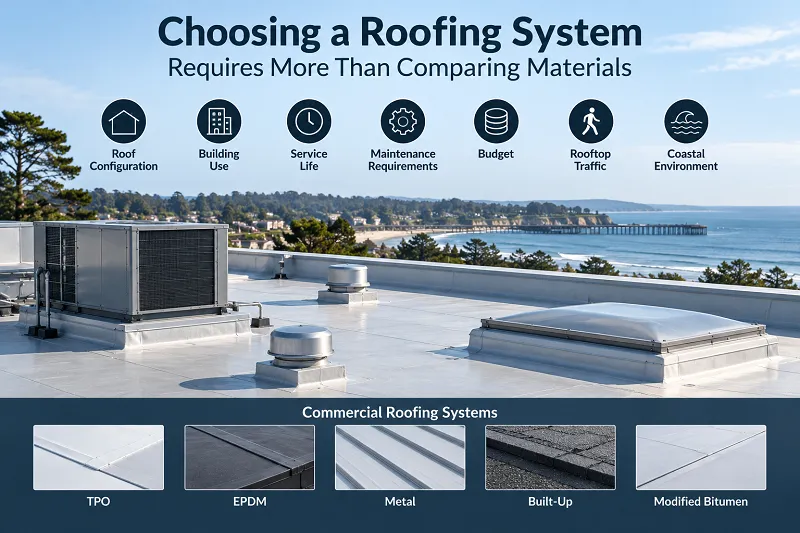
Roof configuration is an important starting point. Low-slope roofs and steeper commercial roofs manage water differently and may require different materials and installation methods. Building use, expected service life, maintenance requirements, budget, rooftop traffic, and exposure to local environmental conditions also deserve consideration.
Santa Cruz’s coastal setting adds another factor. Moisture, wind, sunlight, and salt-containing coastal air can influence roofing components and materials differently depending on the property’s location and roofing system.
During commercial roofing installation in Santa Cruz planning, business owners should expect the contractor to explain why a particular system is appropriate for their building rather than recommending a material without considering the property as a whole.
Drainage Deserves Attention Before Installation Begins
Water management is one of the most important parts of commercial roof performance.
Depending on the building, water may be directed through drains, gutters, downspouts, scuppers, or a combination of components. The roofing system and drainage design need to work together so rainfall can leave the roof efficiently.
Existing drainage problems should not be overlooked simply because a new roof is being installed. Areas where water repeatedly collects may point to conditions that require further evaluation. Drains also need to remain properly integrated with the new roofing system.
A contractor should assess how water currently moves across the roof and identify concerns that could affect the completed system. Good drainage planning is less noticeable than a new roof surface, but it can have a major influence on long-term performance.
Rooftop Equipment and Penetrations Require Careful Detailing
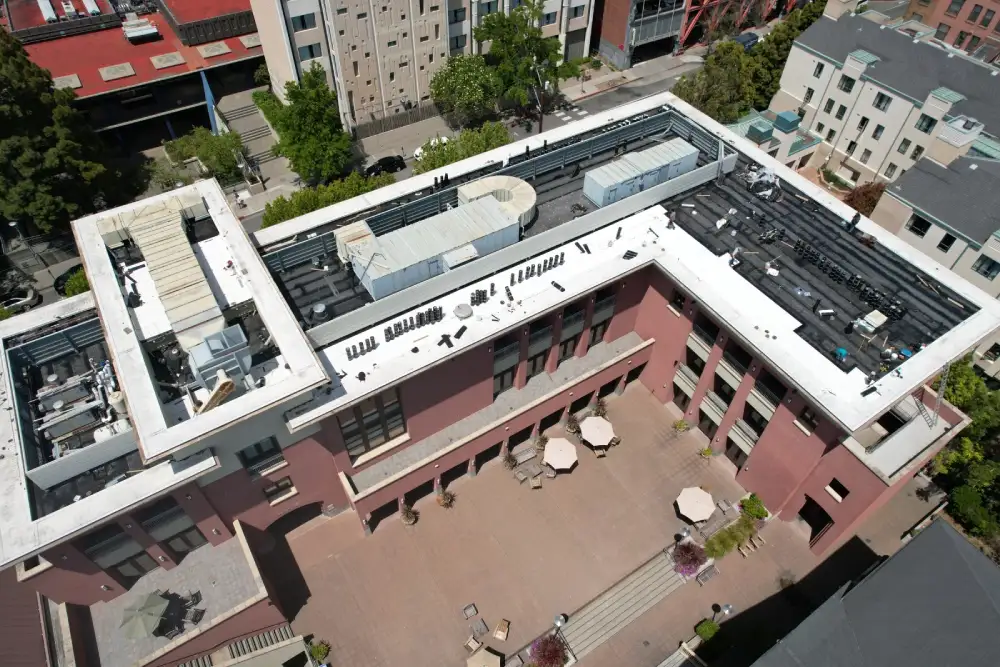
Commercial roofs often have more going on than residential roofs. HVAC units, vents, pipes, skylights, exhaust systems, electrical components, and other equipment may create penetrations or transitions throughout the roofing surface.
These areas require careful detailing because the roof must remain in watertight while accommodating the building components passing through it.
The condition of existing curbs and penetrations should be reviewed during project planning. Coordination may also be needed when other trades are involved with rooftop equipment.
These details are a good example of why commercial roofing is a complete system. Performance depends not only on the main roof surface but also on how transitions, edges, penetrations, flashing, and drainage components work together.
Local Requirements Should Be Part of the Planning Process
Commercial roofing work may be subject to building codes, permit requirements, inspections, and other rules depending on the project scope and property.
Requirements can change, so business owners should avoid relying solely on information from an old roofing project or another building. The details that applied several years ago may not necessarily apply to a new project today.
Working with an experienced commercial roofing contractor Santa Cruz property owners can consult helps bring these considerations into the planning process. The contractor should be able to discuss requirements relevant to the proposed work and clarify which project responsibilities they will handle.
Installation Planning Should Consider Business Operations
For an occupied commercial property, the work happening below the roof matters almost as much as the work happening above it.
Roof installation can involve material deliveries, equipment, crews, temporary access restrictions, noise, debris management, and activity around the building. Certain areas may need to remain available for customers, employees, deliveries, tenants, or emergency access.
Discussing these needs before work begins allows the contractor and property owner to establish realistic expectations.
A business that receives frequent deliveries, for example, may need additional coordination around loading areas. Customer-facing property may have different concerns about entrances, parking, and work hours. There may still be disruption during construction, but thoughtful planning can help reduce avoidable conflicts.
Weather Can Influence the Installation Schedule
Roofing work takes place outdoors, which means weather remains part of the schedule even when a project has been carefully planned.
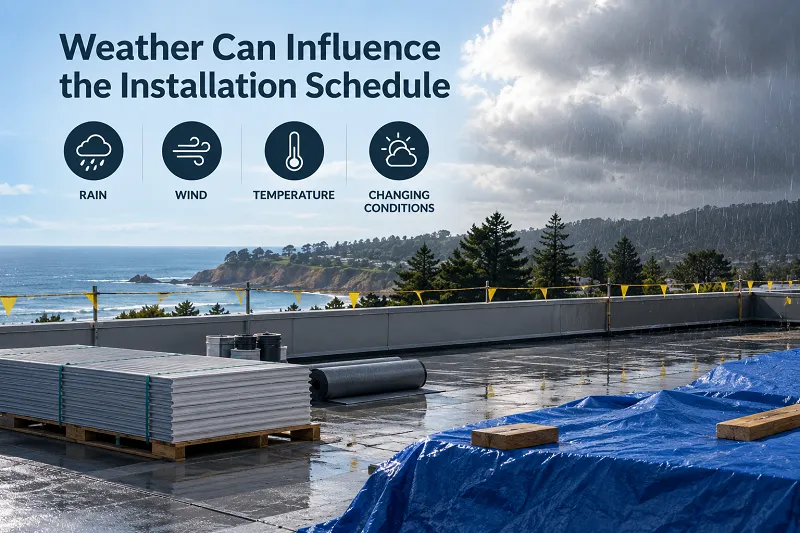
Rain, wind, temperature, and other conditions can affect when certain roofing activities can be performed safely and correctly. Coastal conditions may also change quickly.
A realistic schedule should account for the possibility of weather-related adjustments. Business owners should ask how the contractor monitors conditions, protects exposed areas during the project, and communicates when the schedule needs to change.
Clear communication is especially valuable for commercial properties because a change in roofing activity can affect deliveries, tenants, employees, or other contractors working at the site.
The Lowest Proposal Does Not Always Tell the Whole Story
Commercial roofing proposals can vary significantly, and comparing only the final price can leave important differences unnoticed.
The proposed roofing system, scope of removal, insulation, flashing, penetrations, drainage details, warranties, cleanup, and handling of unforeseen conditions can all affect what is included. Two proposals with different prices may not actually be offering the same work.
Business owners should review what each proposal covers and ask questions about unclear language. A detailed scope helps establish expectations before construction starts and provides a clearer basis for comparing contractors.
Price matters, but understanding what the price represents matters too.
Communication Should Continue Throughout the Project
Good communication should not end once the contract is signed.
Business owners should know who their primary contact is, how project updates will be provided, and what happens if crews uncover unexpected conditions. Existing roofing materials can sometimes conceal deterioration that was not visible during the initial evaluation.
When something unexpected is discovered, the contractor should explain what was found, how it affects the planned work, and what options are available.
Consistent communication helps property owners make informed decisions without having to guess what is happening on the roof.
Think Beyond Installation Day
A new commercial roof is a long-term property asset, so planning should include what happens after installation.
Business owners should understand the roofing system’s maintenance recommendations and warranty terms. They should also know when professional inspections are appropriate, and which changes around the roof should prompt a call to a roofing professional.
Future rooftop work deserves attention as well. HVAC technicians, electricians, and other contractors may need roof access, and careless activity can damage roofing materials or flashing.
Protecting the roof after installation helps preserve the investment made during the project.
Frequently Asked Questions About Commercial Roof Installation
How long does commercial roof installation in Santa Cruz typically take?
There is no single timeline that applies to every commercial property. Project duration depends on roof size, system type, existing roof conditions, removal requirements, rooftop equipment, weather, access, inspections, and the complexity of the installation. A roofing contractor can provide a more meaningful schedule after evaluating the building and defining the scope of work.
Can my business remain open while a new commercial roof is installed?
Many businesses can continue operating during roofing work, but the answer depends on the building and project. Noise, equipment placement, deliveries, parking, entrances, and safety zones may affect normal operations. Discussing business hours and critical access areas beforehand allows the roofing contractor to plan around site-specific priorities whenever practical.
How do I know which commercial roofing system is right for my building?
The appropriate system depends on factors including roof slope, drainage, building use, existing conditions, rooftop equipment, maintenance expectations, budget, and environmental exposure. Instead of choosing based only on material popularity or price, property owners should have the roof evaluated and ask why the recommended system fits their particular building.
What should I ask a roofing contractor before signing a proposal?
Ask what the scope includes, which roofing system is proposed, how drainage and penetrations will be addressed, how unexpected conditions are handled, what warranties apply, and how the project will affect building access. It is also helpful to understand the anticipated schedule and how updates will be communicated throughout construction.
Trust Apollo Roofing Company for Your Commercial Roof Installation Santa Cruz Project
A successful commercial roof begins with informed planning. From evaluating existing conditions and selecting an appropriate system to coordinating drainage, rooftop equipment, scheduling, and ongoing communication, each decision contributes to the finished roof.
Apollo Roofing Company works with property owners to understand their building and develop a roofing approach based on its specific needs. If you are preparing for commercial roofing installation in Santa Cruz or need guidance from a commercial roofing contractor Santa Cruz business can turn to, contact Apollo Roofing Company to schedule an evaluation and start planning your project with confidence.
