

Metal roofing is known for durability, long service life, and its ability to stand up to demanding weather conditions. Still, even a well-built metal roof is not immune to wear. Fasteners can loosen, sealants can deteriorate, flashing can become vulnerable, and moisture can find its way into areas that once performed without a problem.
For property owners, the challenge is that metal roof problems are not always obvious from the ground. A small opening around a penetration or a damaged seam may allow water into the roofing assembly long before a noticeable interior leak develops. Knowing what to watch for can make it easier to address concerns before they affect a larger portion of the property.
If you are considering metal roofing repair Santa Cruz services, understanding how metal roofing systems age and where problems commonly develop can help you have a more productive conversation with a roofing professional.
Why Metal Roofs Develop Problems Over Time
A metal roof is made up of more than the visible panels. Depending on the roofing system, it may include fasteners, clips, seams, flashing, sealants, underlayment, drainage components, and specialized details around penetrations.
These components are exposed to changing conditions throughout the year. Metal naturally expands when temperatures rise and contracts as temperatures fall. A properly designed roof accounts for this movement, but years of repeated expansion and contraction can place stress on connections, seams, and flashing details.
Santa Cruz properties also experience moisture, wind, sun exposure, and coastal environmental conditions. The effects can vary considerably depending on a property’s exact location, roof design, metal type, protective coating, installation quality, and maintenance history.
That is why diagnosing a metal roofing problem should involve looking at the roof as a complete system rather than focusing only on the most visible symptom.
Loose or Damaged Fasteners Can Create Vulnerable Areas
Some metal roofing systems use exposed fasteners to secure panels. These fasteners typically incorporate washers or other sealing components designed to help keep water out.
Over time, movement in the roofing materials can affect those connections. A fastener may loosen, back out, become damaged, or lose an effective seal around its washer. Even a relatively small gap can create a potential pathway for moisture.
Simply tightening every visible fastener is not necessarily the correct solution. Over-tightening can damage washers or distort the surrounding metal, while replacing a fastener without determining why it failed may leave the underlying cause unresolved.
A professional assessment can identify which connections need attention and whether the problem is isolated or occurring across a broader section of the roof.
Seams and Panel Connections Need Careful Attention
Seams are another important area to inspect when a metal roof begins showing signs of trouble. Standing seam and other metal roofing systems rely on properly formed connections between panels to manage water while allowing the system to perform as designed.
Movement, physical damage, installation issues, or deterioration of related components can compromise these areas. The resulting opening may be difficult to see, particularly if the change is small.
Water entering around a seam can also travel beneath the panels before becoming visible indoors. That means the location of a ceiling stain does not always correspond directly with the roof defect above it.
Finding the actual entry point is an important part of metal roof repair Santa Cruz property owners should expect from a qualified roofing evaluation.
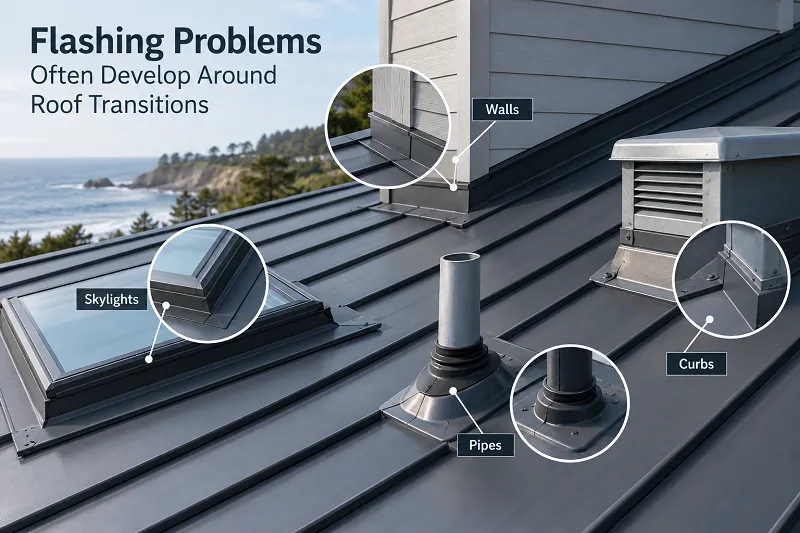
Flashing Problems Often Develop Around Roof Transitions
Metal roofs frequently intersect with walls, vents, skylights, pipes, curbs, and other building components. Each transition requires detailing that helps direct water away from vulnerable openings.
Flashing can deteriorate, shift, become damaged, or lose an effective seal. Roof movement can be especially important around penetrations because the metal panels and the components passing through them may respond differently to temperature changes.
A repair in these areas needs to account for water movement as well as the natural movement of the roofing system. Covering a questionable area with additional sealant without understanding the flashing configuration may provide only a temporary response.
Careful inspection helps determine whether flashing, sealant, adjacent panels, or another component is actually responsible.
Corrosion and Coating Damage Should Not Be Ignored
Metal roofing materials are commonly manufactured or coated to resist corrosion, but protective surfaces can still become damaged. Scratches, prolonged moisture exposure, incompatible materials, debris accumulation, and aging coatings may contribute to deterioration depending on the type of metal and roofing system.
Early surface changes do not automatically mean that a roof requires replacement. They should, however, be evaluated before assuming they are purely cosmetic.
A roofer can assess the condition of the affected metal, determine how extensive the deterioration is, and recommend an appropriate response based on the specific roofing material.
Leaks May Begin Far From the Interior Water Stain
One of the most frustrating aspects of roof leaks is tracking where the water actually entered.
After moisture gets beneath the exterior roofing, it may follow decking, framing, insulation, or other components before appearing inside the building. On a commercial property, water can remain concealed above ceiling systems or within insulation before anyone notices visible staining or dripping.
This is one reason professional diagnosis matters. Repairing only the area directly above an interior stain can miss the actual source.
For commercial metal roof repair Santa Cruz, identifying the complete moisture pathway is particularly important because large roof areas may contain numerous penetrations, transitions, seams, and drainage points.
Drainage Problems Can Affect Metal Roofing Performance
A metal roof must move water efficiently toward gutters, drains, scuppers, or other designated drainage areas. Leaves, branches, sediment, and other debris can interfere with that process.
Water that repeatedly collects where it should not can place additional stress on vulnerable roof details. Clogged gutters can also cause water to overflow into areas that were not designed for prolonged exposure.
Property owners should pay attention to drainage after storms. Overflowing gutters, persistent debris accumulation, unusual water patterns, and signs of moisture around roof edges are all reasons to investigate further.
Maintenance around drainage components can also give a roofing professional an opportunity to identify developing concerns elsewhere on the roof.
Why Small Metal Roof Problems Are Worth Investigating
A minor leak may seem manageable when it only appears during heavy rain. The visible water, however, may represent only part of the issue.
Moisture can affect insulation, decking, interior finishes, and other building materials depending on where it travels. Repeated water entry may also make the source more difficult to diagnose if several components become affected over time.
Early evaluation gives property owners more information. It can help determine whether the concern is limited to a fastener or flashing detail, involves a larger section of the roof, or indicates a condition that requires more extensive work.
Waiting for a small symptom to become severe rarely provides an advantage.
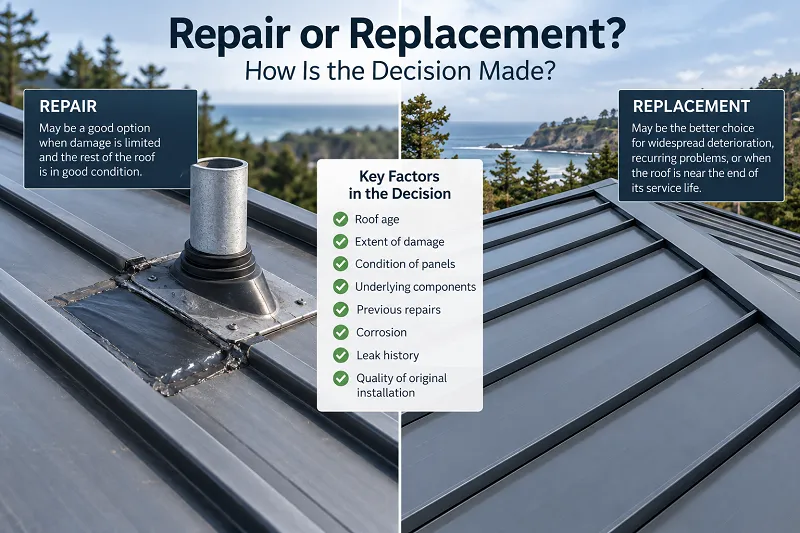
Repair or Replacement: How Is the Decision Made?
Discovering a problem does not automatically mean the entire metal roof needs to be replaced. Many concerns may be repairable when the surrounding roof remains in serviceable condition.
The appropriate approach depends on factors such as the roof’s age, the extent of damage, the condition of the panels and underlying components, previous repairs, corrosion, leak history, and whether the original installation is contributing to recurring problems.
A localized repair may make sense when damage is limited and the rest of the system is performing properly. More widespread deterioration or repeated failures may justify discussing broader options.
A knowledgeable roofing contractor should explain what was found and why a particular course of action is being recommended rather than treating replacement as the automatic answer.
Professional Inspection Helps Reveal What Is Happening
Property owners can notice warning signs from safe locations, including interior stains, visible panel damage, debris accumulation, unusual drainage, or changes around roof edges. Walking on a metal roof without proper training and safety equipment is different.
Metal surfaces can be slippery, and improper foot placement can damage certain roofing components. Repairs also need to be compatible with the existing roof material and system.
Professional inspection provides a safer and more complete way to identify the source of a problem. It also helps distinguish between cosmetic changes, routine maintenance needs, localized damage, and conditions requiring more substantial attention.
Frequently Asked Questions About Metal Roofing Repair
What are the most common signs that a metal roof may need repair?
Possible warning signs include interior water stains, active leaks, loose or damaged fasteners, separated or compromised seams, deteriorated flashing, damaged coatings, corrosion, and unusual drainage patterns. Because some defects are difficult to see from the ground, a professional inspection can help determine whether a visible symptom is connected to a roofing problem.
How quickly should I schedule metal roofing repair Santa Cruz services after noticing a leak?
It is generally wise to have a suspected leak evaluated promptly rather than waiting for the next major storm. Water can travel beneath roofing materials and affect areas away from the original entry point. Early evaluation can help identify the source, document the condition of the roof, and determine whether a localized repair is appropriate before additional moisture enters the building.
Can a damaged metal roof be repaired without replacing the entire roof?
In many situations, yes. Whether repair is appropriate depends on the location and extent of the damage, roof age, panel condition, flashing details, corrosion, previous repairs, and the overall performance of the system. An inspection is necessary to determine whether a targeted repair can address the problem or whether deterioration is widespread enough to consider a larger roofing project.
How can property owners reduce the risk of unexpected metal roof problems?
Regular professional inspections and timely attention to visible concerns can help property owners understand how their roof is performing. It is also useful to keep drainage areas clear and have the roof evaluated after significant weather events or whenever unexplained interior moisture appears. Maintenance needs vary by roof system, so recommendations should be based on the actual roof rather than a one-size-fits-all schedule.
Address Roof Damage Early With Metal Roofing Repair in Santa Cruz From Apollo Roofing Company
Metal roofing problems are easier to manage when property owners know what is happening and have a clear plan for addressing it. Whether the concern involves fasteners, seams, flashing, drainage, corrosion, or an unexplained leak, the first step is identifying the actual source instead of relying on a quick surface fix.
Apollo Roofing Company can evaluate residential and commercial metal roof repair Santa Cruz needs and recommend an approach based on the condition of the existing roofing system. If you have noticed signs of damage or moisture, contact Apollo Roofing Company to schedule a professional roof evaluation and determine the right next step for your property.
