

Planning for a roof replacement is a major decision for any homeowner. A new roof protects the structure of your home, improves curb appeal, supports energy efficiency, and helps prevent costly water damage. Still, one of the first questions most property owners ask is simple: how much should I expect to pay?
Understanding the roof cost San Rafael homeowners may face in 2026 requires more than checking a national average. Roofing prices vary widely depending on the size of the home, roof design, material selection, permit requirements, local labor rates, and California building standards. In Marin County, factors such as wildfire safety, coastal moisture, seasonal rain, and energy efficiency expectations also play an important role.
This guide breaks down what affects the cost of a new roof in San Rafael, why local pricing can be higher than in other areas, and how homeowners can prepare for the investment with confidence.
What Is the Average Roof Replacement Cost in San Rafael in 2026?
In 2026, many San Rafael homeowners should expect a full roof replacement to fall in the mid-five-figure range. For a standard-sized residential roof with asphalt shingles, projects often range from approximately $15,000 to $25,000. Larger homes, complex rooflines, premium shingles, metal roofing, or tile systems can raise the investment significantly. Some projects may exceed $40,000, especially when structural repairs, decking replacement, or specialty materials are involved.
These ranges are helpful starting points, but they are not final quotes. A roof is not priced only by square footage. Two homes with similar roof sizes can have very different costs if one has steep slopes, multiple valleys, skylights, chimneys, or aging decking beneath the existing materials.
The cost of a new roof in San Rafael also reflects the realities of Bay Area construction. Local labor rates, disposal costs, building permits, material transportation, and compliance with California codes all influence the final price. Roofing in Marin County is not only about installing a visible exterior layer. It is about building a complete system that protects the home from rain, wind, heat, moisture, and fire risk over time.
Why Roofing Prices Are Higher in Marin County
Homeowners comparing San Rafael roofing estimates to national averages may notice that local pricing is often higher. This is common throughout much of the Bay Area, and there are several reasons why.
Labor is one of the biggest factors. Skilled roofing crews in Northern California work in a demanding market where wages, insurance, training, and safety requirements all affect pricing. A roof replacement requires experienced professionals who understand proper installation methods, fall protection, waterproofing details, ventilation, flashing, and local inspection standards.
Material pricing also plays a major role. Roofing materials are affected by manufacturing costs, fuel prices, transportation expenses, and supply availability. Shingles, underlayment, flashing, vents, fasteners, and disposal materials all contribute to the overall project total.
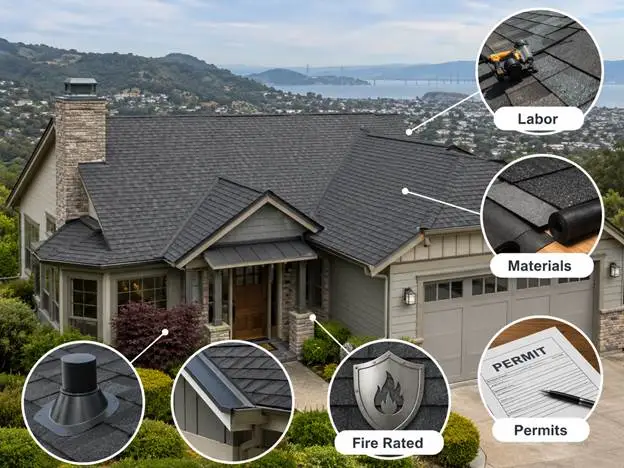
San Rafael homes may also need materials that meet higher performance expectations. Many homeowners choose Class A fire-rated roofing products for better protection and code compliance. In a region where wildfire awareness is part of responsible homeownership, fire-rated materials can be a smart long-term decision. While they may cost more upfront, they can provide stronger protection and greater peace of mind.
Permit and inspection requirements are another important part of local roofing costs. Most full roof replacements require proper city approval and inspection. These steps help ensure that the work meets current building standards and protects the long-term value of the property.
Key Factors That Influence Roof Replacement Pricing
Every roof replacement is different. A reliable estimate should be based on a detailed inspection, not a quick guess. Several major factors affect the final price.
Roof Size and Square Footage
The size of the roof is one of the most obvious cost drivers. Larger roofs require more materials, more labor, more fasteners, more underlayment, and more disposal. However, roof size is not always the same as home square footage.
A one-story home may have a larger roof surface than a two-story home with the same interior square footage. Roof pitch, overhangs, garage sections, covered patios, and additions can all increase the total roofing area. This is why professional measurements are important when estimating the true cost.
Roof Complexity and Architectural Design
The shape and design of the roof can significantly affect labor time. A simple gable roof is usually more efficient to replace than a roof with multiple slopes, valleys, dormers, skylights, chimneys, or intersecting sections.
Complex rooflines require more cutting, flashing, sealing, and detail work. Valleys must be carefully installed because they direct large amounts of water toward the gutters. Chimneys and skylights require proper flashing to prevent leaks. Steeper roofs also require additional safety precautions and may take longer to complete.
These details matter because roofing is not just about covering the surface. It is about controlling water movement and protecting vulnerable transition points. Many roof leaks begin around penetrations, edges, and flashing areas, which is why careful craftsmanship is essential.
Roofing Material Selection
Material choice has one of the largest impacts on pricing. Asphalt shingles are often the most cost-effective option and remain popular because they offer dependable performance at a reasonable price. Architectural shingles typically cost more than basic three-tab shingles, but they provide better durability, stronger visual appeal, and improved wind resistance.
Metal roofing requires a higher upfront investment but can offer excellent longevity, energy efficiency, and fire resistance. It can be a smart option for homeowners who want a durable system with a longer service life.
Tile roofing has a distinctive appearance and can last for decades when properly installed. However, tile is heavy, and not every home is structurally prepared for it. In some cases, reinforcement may be needed before installation, which can add to the total cost.
The best roofing material depends on the home’s structure, budget, style, long-term goals, and local performance needs. A professional roofing contractor can help compare options based on durability, maintenance requirements, appearance, and overall value.
Underlayment, Flashing, and Moisture Protection
A roof is more than the shingles or tiles visible from the street. Underlayment, flashing, starter strips, drip edge, vents, and waterproofing details all play important roles in roof performance.
Underlayment acts as a protective layer beneath the primary roofing material. It helps defend against wind-driven rain and moisture intrusion. Flashing protects areas where the roof meets walls, chimneys, skylights, and other penetrations. Drip edge helps guide water away from fascia boards and roof edges.
Cutting corners on these components can lead to leaks, premature deterioration, and costly repairs. While higher-quality materials may increase the upfront price, they often improve long-term protection and help support warranty compliance.
Ventilation and Energy Performance
Proper ventilation is an important part of a healthy roofing system. When attic heat and moisture cannot escape, roofing materials may age faster. Poor ventilation can also contribute to elevated indoor temperatures, moisture buildup, and increased strain on cooling systems.
In San Rafael, where homes can experience warm summer days, seasonal rains, and coastal moisture influences, ventilation should not be overlooked. A roof replacement is often the right time to evaluate whether the attic has enough intake and exhaust ventilation.
Energy-efficient roofing materials may also help reduce heat absorption and improve indoor comfort. While these upgrades may affect the total project cost, they can support better long-term performance.
Tear-Off, Disposal, and Decking Condition
Most professional roof replacements include removing the existing roofing materials before installing the new system. This tear-off process allows the contractor to inspect the roof deck underneath.
The decking is the structural surface that supports the roofing system. If it is soft, rotted, warped, or damaged by past leaks, it may need to be replaced before new materials can be installed. Installing a new roof over damaged decking can compromise the entire system.
Tear-off and disposal add labor and hauling costs, but they are important steps. They help uncover hidden problems and ensure the new roof has a solid foundation.
How California Building Standards Affect Roof Cost
California building standards continue to shape roofing practices. Fire safety, energy efficiency, ventilation, and material requirements can all affect roof replacement pricing.
For San Rafael homeowners, these standards are not just regulatory details. They help protect homes from real local risks. Fire-rated roofing materials can reduce vulnerability during wildfire season. Proper ventilation can improve roof lifespan. Energy-conscious material choices can support indoor comfort and long-term efficiency.
Meeting code requirements may add cost upfront, but it also helps protect the property and maintain resale value. A roof that is installed correctly and inspected properly provides more than surface-level protection. It gives homeowners confidence that the system was built to current standards.
Is a New Roof Worth the Investment?
A new roof can feel like a large expense, especially when the existing roof is still mostly intact. However, delaying replacement can often lead to higher costs later.
An aging roof may allow water intrusion during rainstorms. Even a small leak can damage insulation, drywall, framing, flooring, and electrical components. Moisture problems can also contribute to mold growth and structural decay.
Older roofs may also affect insurance coverage. Some providers may request roof documentation, limit coverage, or deny certain claims if the roof is past its expected service life or shows signs of neglect.
A new roof offers several important benefits. It protects the home from water damage, improves curb appeal, supports better energy performance, and can make the property more attractive to future buyers. In a competitive Marin County housing market, a newer roof can be a meaningful selling point.
When viewed over its full lifespan, a quality roof replacement is not simply a repair expense. It is a long-term investment in protection, comfort, and property value.

How to Budget for a New Roof in San Rafael
If you are planning a roof replacement in 2026, it is helpful to start with a realistic budget range. Avoid relying only on online calculators, because they cannot see your roof’s condition, slope, flashing needs, ventilation, or decking.
A professional inspection gives you a clearer picture of what your home actually needs. During the inspection, a contractor should evaluate roof size, material condition, structural details, drainage points, attic ventilation, and potential problem areas.
It is also wise to ask what is included in the proposal. A detailed estimate should explain materials, tear-off, disposal, underlayment, flashing, ventilation work, permits, warranties, and projected timeline. Clear proposals make it easier to compare contractors fairly.
Be cautious of unusually low bids. Roofing shortcuts can be expensive later. A low estimate may leave out important components, use lower-quality materials, skip proper ventilation, or fail to account for necessary repairs. The cheapest roof is rarely the best value if it leads to leaks, warranty issues, or early replacement.
How to Get an Accurate Roof Estimate
The best way to understand Roof Cost San Rafael homeowners can expect for a specific property is to schedule an on-site evaluation. A roofing professional can identify details that are impossible to confirm from a general pricing guide.
A strong estimate should answer several key questions. What materials are recommended? Does the decking appear sound? Is the ventilation adequate? Are there flashing concerns? Are permits required? What warranties apply? How long will the project take?
The contractor should also take time to explain why certain recommendations are being made. Homeowners should never feel rushed or confused during the estimating process. A transparent proposal helps you understand exactly where your money is going and how each component contributes to long-term roof performance.
FAQs About New Roof Cost in San Rafael
How long does a new roof last?
The lifespan depends on the material, installation quality, ventilation, maintenance, and local weather exposure. Asphalt shingles often last 20 to 30 years. Metal and tile roofing systems can last several decades longer when properly installed and maintained.
Will insurance cover a roof replacement?
Insurance may cover roof replacement if the damage comes from a sudden covered event, such as storm damage. Normal aging, wear, deterioration, or lack of maintenance is usually not covered. Homeowners should review their policy and contact their insurance provider for specific guidance.
How long does roof installation take?
Many residential roof replacements can be completed within a few days to a week. Larger homes, complex roof designs, specialty materials, weather delays, or decking repairs can extend the timeline.
Can I stay home during roof replacement?
Yes, most homeowners can stay in their home during roof replacement. The process can be noisy, and there may be temporary disruptions around driveways, patios, and outdoor areas. A professional crew should communicate what to expect and take precautions to protect the property.
What affects roofing cost the most?
The biggest factors are usually roof size, material choice, roof complexity, labor requirements, tear-off needs, ventilation upgrades, and the condition of the underlying decking.
Should I replace my roof before selling my home?
A newer roof can be attractive to buyers because it reduces concerns about future repair costs. If your roof is near the end of its service life, replacing it before listing may improve buyer confidence and support property value. However, the best choice depends on the roof’s condition, the local market, and your selling timeline.
Apollo Roofing Company Provides Clear New Roof Cost San Rafael Estimates
If you are researching new roof cost San Rafael pricing for 2026, the next step is a professional inspection. General price ranges can help you plan, but your actual investment depends on your home’s size, structure, materials, ventilation, and existing roof condition.
Apollo Roofing Company provides detailed evaluations, transparent estimates, and expert installation tailored to San Rafael homes and Marin County building requirements. Our team explains each part of the proposal clearly, so you understand the value behind your investment.
Whether you are replacing an aging roof, planning ahead before problems develop, or comparing material options, Apollo Roofing Company is ready to help you make an informed decision.
Call Apollo Roofing Company today to schedule your inspection and receive a customized breakdown of the new roof cost San Rafael homeowners can trust.
