

Winter can reveal roofing problems that remain almost invisible during California’s long stretches of dry weather. A roof may appear perfectly functional through summer and early fall, only for the first sustained rain to expose deteriorated flashing, damaged shingles, drainage problems, or small openings that allow moisture inside.
Unlike regions where snow and ice are the primary winter roofing concerns, many California homeowners are more likely to deal with repeated rainfall, occasional strong winds, fallen debris, and moisture that finds its way into vulnerable parts of the roofing system. These conditions can affect both older roofs and newer systems with isolated damage.
Understanding what tends to go wrong during winter gives homeowners an opportunity to recognize warning signs earlier and respond before a manageable repair becomes a larger problem.
Apollo Roofing Company provides roof inspections, repairs, replacements, and other roofing services for residential and commercial properties. Here are some of the winter roofing problems property owners should understand and what can be done about them.

Roofing Problems That May Occur During the Winter Season
Winter does not necessarily create every roofing problem from scratch. In many cases, wet weather simply exposes weaknesses that were already developing.
A small gap around flashing may remain unnoticed for months without rain. Leaves may slowly collect in a roof valley without causing an obvious issue during dry weather. An aging shingle may stay in place until a windy storm finally lifts it.
This is why winter roofing problems often seem sudden even when the underlying condition has existed for some time.
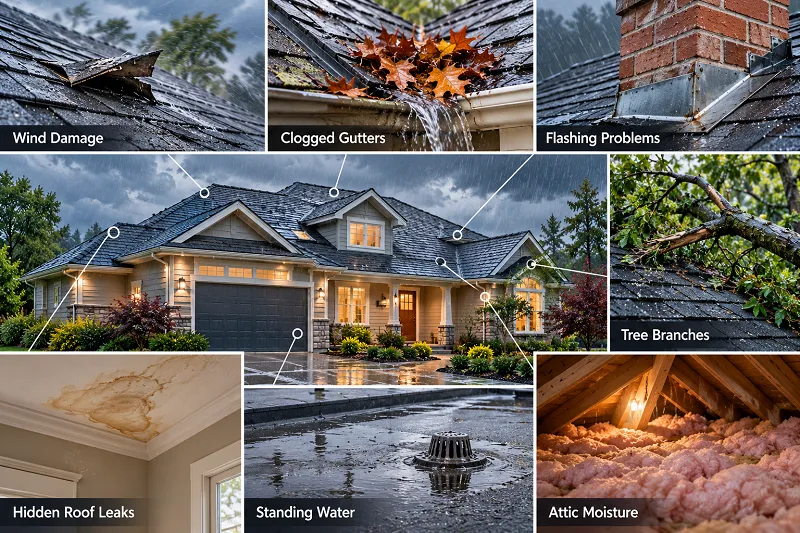
Wind Damage Can Loosen Roofing Materials
Strong winds can put pressure on shingles, flashing, ridge components, vents, and other exposed roofing materials.
Asphalt shingles are designed to remain secured to the roof deck, but age, previous heat exposure, deteriorated seal strips, or improper installation can make individual shingles more vulnerable. During windy weather, weakened sections may lift or shift.
Sometimes the damage is obvious. A homeowner may notice a shingle in the yard or see an exposed section of roof from the ground. In other cases, the change is much more subtle.
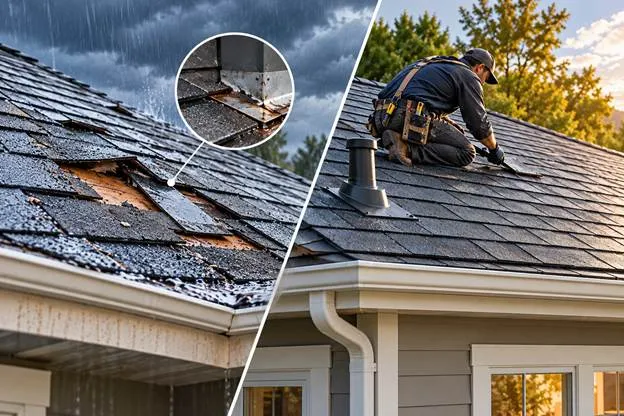
A slightly lifted shingle can create a pathway for wind-driven rain. Flashing around chimneys, walls, skylights, and penetrations may also loosen enough to let moisture enter beneath surrounding roofing materials.
After a particularly windy storm, it can be helpful to visually check the property from the ground. Look for missing materials, debris on the roof, displaced flashing, or anything that appears different from before the storm.
If something looks questionable, a professional roof inspection can determine whether the area needs repair.
Heavy Rain Can Expose Hidden Roof Leaks
One of the most common winter roofing concerns is water intrusion.
Roof leaks are not always caused by an obvious hole. Water often enters at vulnerable transitions such as flashing, valleys, vents, skylights, pipe penetrations, or deteriorated sections of roofing material.
The location of an indoor water stain can also be misleading.
Once water gets beneath the roofing system, it may travel along decking, rafters, or other structural components before finally becoming visible on a ceiling or wall. A stain in one room does not necessarily mean the leak begins directly above that spot.
Homeowners should pay attention to ceiling discoloration, damp attic insulation, musty odors, peeling paint, or darkened wood in the attic. Even if an area dries after the storm passes, the source of the moisture may still require attention.
Repeated leaks can eventually affect insulation, decking, framing, drywall, and interior finishes, making early investigation worthwhile.
Clogged Gutters Can Create Drainage Problems
The roofing system is responsible for more than simply stopping rain from entering the building. It also has to move water away efficiently.
Gutters and downspouts play an important role in that process.
During fall and winter, leaves, twigs, dirt, and other debris can accumulate inside gutters. If enough material builds up, rainwater may not drain as quickly as it should.
Instead, water can overflow the gutter edge or remain in sections that are sagging or poorly pitched. Overflow can expose fascia boards, siding, landscaping, and areas around the foundation to unnecessary moisture.
Roof valleys can experience similar problems when debris collects where two roof slopes meet. Because valleys often carry a significant amount of runoff during storms, restricted drainage in these areas deserves attention.
Cleaning gutters before the rainy season and checking them periodically can help maintain a clear path for water to leave the roof.
Flashing Problems Often Show Up During Wet Weather
Flashing is one of the most important parts of a roofing system, even though homeowners rarely notice it.
It is installed where the roof meets another surface or changes direction. Common locations include chimneys, roof-to-wall intersections, valleys, skylights, vents, and other penetrations.
These are areas where water naturally tends to collect or flow.
Over time, flashing can loosen, corrode, separate, or become damaged. Sealants used around certain areas can also shrink or crack as they age.
During dry weather, these changes may cause no obvious symptoms. Once rain arrives, however, water can find very small openings.
This is one reason a roof can begin leaking even when most of the shingles still appear to be in good condition. Sometimes the problem is concentrated around one transition rather than across the entire roof.
A professional roofer can inspect these vulnerable locations and determine whether flashing needs to be resealed, repaired, or replaced.
Tree Branches Can Damage the Roof During Storms
Trees provide valuable shade during California’s warmer months, but branches extending over a roof can create challenges when winter storms arrive.
Wind can break weakened limbs and send smaller branches onto roofing surfaces. Even when a branch does not puncture the roof, repeated contact can scrape shingles or damage protective surfaces over time.
Leaves and small debris from nearby trees can also accumulate in gutters and roof valleys.
Property owners should periodically look at trees surrounding the home, particularly branches that are dead, damaged, or positioned directly above the roof.
Appropriate pruning before storm season can reduce some of these risks. Larger limbs should generally be handled by a qualified tree professional rather than homeowners attempting to remove them from ladders or roofs.
Standing Water Can Be a Warning Sign
Most sloped residential roofs are designed to move water away fairly quickly. When water consistently remains in one area after rainfall, it deserves investigation.
Standing water may indicate a drainage obstruction, an issue with a roof valley, or a low area where water is not moving as intended.
Flat and low-slope roofing systems require particular attention because their drainage relies heavily on proper slope, drains, scuppers, and other components.
Water that remains on a roof for extended periods increases moisture exposure and can place additional stress on already vulnerable materials.
One puddle immediately after a storm does not automatically indicate a serious roofing failure. However, recurring ponding or water that remains long after surrounding areas have dried should be evaluated.
Attic Moisture Can Point to More Than a Roof Leak
Not all winter moisture problems begin with rain entering through the roof.
Moisture generated inside the home can also move upward into the attic. Cooking, bathing, laundry, and normal household activity all add moisture to indoor air.
When attic ventilation is inadequate or airflow is restricted, excess moisture may remain around insulation, framing, and the underside of the roof deck.
This can sometimes be mistaken for an exterior roof leak.
A roofing evaluation should therefore look beyond the visible roof surface. Understanding ventilation, insulation, roof condition, and the location of moisture can help determine where the problem actually originates.
Correct diagnosis matters because repairing shingles will not solve an attic ventilation problem, just as improving ventilation will not repair damaged flashing that is allowing rain inside.
Why Winter Roof Inspections Can Be Valuable
A winter roof inspection is not simply about finding active leaks.
It can help identify conditions that make leaks more likely, including deteriorated shingles, loose flashing, clogged drainage areas, deteriorated penetrations, or evidence of previous water intrusion.
This is particularly useful for older roofs or properties that have experienced recurring issues during storms.
Homeowners should also consider an inspection after unusually strong wind or heavy rain if they notice changes indoors or around the property.
The goal is not to assume that every roof needs repairs. A good inspection should help distinguish normal aging from conditions that actually require attention.
Repairing Winter Roof Problems Before They Spread
Small roofing problems can become more complicated when repeated storms continue exposing the same vulnerable area.
For example, replacing a few damaged shingles or repairing flashing may be relatively contained if the surrounding roof deck remains dry and structurally sound. If water continues entering for weeks or months, the affected area may eventually involve decking, insulation, interior finishes, or other materials.
That is why the timing of repairs matters.
Apollo Roofing Company can evaluate the source and extent of a roofing problem and recommend repairs based on the actual condition of the system. When broader deterioration is present, the inspection can also help homeowners understand whether repair or roof replacement is the more practical long-term approach.
Frequently Asked Questions About Winter Roofing Problems
What are the most common winter roofing problems in California?
California’s winter roofing concerns are often associated with rain, wind, drainage, falling debris, and moisture rather than prolonged snow or ice. Common issues include roof leaks, damaged or lifted shingles, deteriorated flashing, clogged gutters, blocked roof valleys, fallen branches, and attic moisture. Existing weaknesses may become much easier to notice once sustained rain begins.
Should I have my roof inspected before or after the rainy season?
Both can be useful depending on the roof’s condition. An inspection before the rainy season may identify vulnerable areas before storms arrive. An inspection after significant storms can help identify wind damage, debris impact, drainage problems, or leaks that developed during winter. Older roofs and roofs with a history of leaks may benefit from more regular evaluations.
Does a ceiling stain always mean the roof is currently leaking?
Not necessarily. A ceiling stain may be evidence of a previous leak, condensation problem, plumbing issue, or active roof leak. Water can also travel through the roof assembly before becoming visible indoors, so the location of the stain does not always identify the entry point. A professional evaluation can help determine whether moisture is still entering and where it originates.
Can clogged gutters actually damage a roof?
Clogged gutters can contribute to drainage problems by preventing rainwater from moving away from the roof edge efficiently. Water may overflow onto fascia, exterior walls, or surrounding areas. Debris can also hold moisture against roofing components. Keeping gutters and downspouts clear supports the overall drainage system and helps water move away from the building as intended.
Should I repair a roof leak immediately during winter?
Roof leaks should be evaluated as soon as reasonably possible because continued moisture exposure can affect roofing materials, decking, insulation, framing, and interior finishes. The appropriate repair depends on the weather, accessibility, and severity of the problem. A roofing professional can identify the source and determine whether temporary protection or a permanent repair is appropriate.
Protect Your California Roof Through the Winter With Apollo Roofing Company
Winter rain does not have to become the first sign that something is wrong with your roof.
Paying attention to drainage, flashing, shingles, attic conditions, nearby trees, and signs of previous moisture can help homeowners recognize potential problems before they spread. When a leak or damaged roofing component does appear, identifying the actual source is more valuable than simply treating the visible symptom.
Apollo Roofing Company provides roofing inspections, repairs, and replacement services for homeowners and property owners across its California service areas. If your roof has developed a leak, experienced storm damage, or simply has not been evaluated in several years, contact Apollo Roofing Company to schedule an inspection and understand what your roof may need before the next stretch of wet weather.
