

Hillside homes are part of what makes Santa Cruz so distinctive. Elevated lots can offer impressive views, greater privacy, and unique architecture, but they can also create roofing challenges that are very different from those found on a level property. Access, drainage, wind exposure, vegetation, slope stability, and the shape of the home can all influence how a roof should be inspected, maintained, repaired, or replaced.
For homeowners, understanding hillside roofing in Santa Cruz means looking beyond the roofing material itself. A reliable roof must work with the property around it, especially when the home sits on a steep lot or is exposed to coastal weather from several directions.
Roof Access Can Be More Complicated on a Hillside
One of the first differences with a hillside property is access.
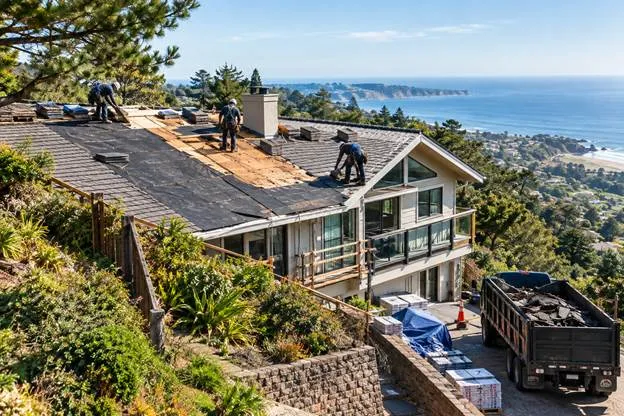
A home built on a sloped lot may have one side that appears to be two stories tall and another that rises three or four stories above the ground. Steep driveways, narrow streets, retaining walls, neighboring structures, landscaping, and limited staging areas can all affect how roofing crews reach the roof and move materials safely.
These conditions matter when planning repairs or replacement. Contractors may need to think carefully about where materials can be delivered, where equipment can be placed, and how removed roofing materials will be transported off the property.
Access does not necessarily make a roofing project difficult, but it should be evaluated early. A contractor who understands the property before work begins can plan the project more effectively and reduce surprises once crews arrive.
Drainage Deserves Extra Attention
Water naturally follows gravity, which makes drainage especially important on sloped properties.
Rainwater moving off a roof must be directed away from the structure without creating new problems farther downhill. Gutters, downspouts, roof valleys, drainage outlets, and surrounding grading all play a role.
When drainage is poorly controlled, runoff can collect near foundations, retaining walls, walkways, decks, or lower portions of the property. Water may also move quickly through gutters during heavy rain, putting more pressure on drainage systems.
For roofing for hillside homes in Santa Cruz, the roof and the property’s broader drainage plan should work together. A roofing professional should pay attention to where water leaves the roof, where it travels next, and whether any parts of the drainage system are showing signs of overflow or deterioration.
Wind Exposure Can Vary by Elevation and Orientation
Homes on exposed slopes may experience wind differently from homes in flatter, more sheltered neighborhoods.
Roof sections facing prevailing weather can receive more direct wind pressure, particularly during seasonal storms. Over time, wind can affect loose shingles, flashing, ridge materials, vents, and other exposed roof components.
The effect is not always uniform across the roof. One side of the home may be protected by trees or nearby structures while another side is fully exposed.
That uneven exposure is one reason roof inspections should evaluate every roof plane rather than focusing only on the most visible section. Areas that receive stronger wind may show wear sooner or require closer attention after storms.

Coastal Moisture Still Plays a Role
Santa Cruz’s hillside neighborhoods may sit farther from the immediate shoreline, but many are still influenced by the broader coastal environment.
Marine air can bring moisture that settles on roofing surfaces, metal components, flashing, vents, fasteners, and other exposed areas. Depending on elevation, orientation, vegetation, and distance from the coast, some properties may experience persistent dampness during certain times of year.
That does not mean hillside roofs automatically deteriorate faster. It does mean homeowners should pay attention to how moisture interacts with their roofing materials.
Metal components showing corrosion, sealants beginning to deteriorate, or shaded roof areas that stay damp for long periods can all be worth evaluating before they turn into larger problems.
Trees Can Help and Hurt a Hillside Roof
Mature trees are common around Santa Cruz hillside properties and can contribute to privacy and shade. They can also create roofing concerns when branches extend over the home or when debris collects in valleys and drainage areas.
Leaves, pine needles, small branches, and other organic debris can hold moisture against roofing materials. Debris can also block gutters and downspouts, increasing the risk of overflow during rain.
Branches that rub against the roof may damage shingles or other roofing surfaces over time. Larger limbs can become a concern during wind events if they are already weak or damaged.
At the same time, removing too much surrounding vegetation without considering sun exposure can change how much direct heat a roof receives. The goal is not simply to eliminate every tree near the home, but to keep vegetation managed so it does not interfere with roof performance.
Roof Design Can Affect Performance
Hillside homes often feature more complex architecture than standard rectangular houses.
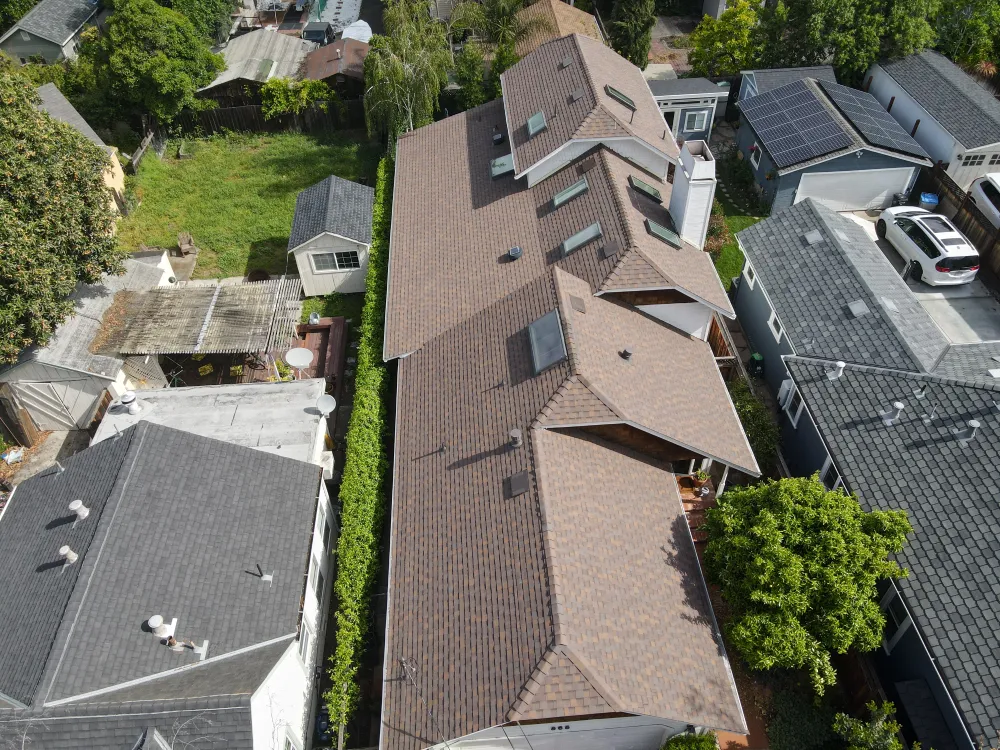
Split levels, multiple roof elevations, balconies, skylights, dormers, intersecting rooflines, and additions can create more areas where water needs to be carefully directed.
Every valley, wall intersection, skylight, vent, and roof transition introduces another location where flashing and waterproofing details matter. These areas deserve close attention during installation and inspection because they are common points of vulnerability if water is not directed properly.
Complex rooflines are not inherently problematic. They simply require careful installation and maintenance.
When evaluating a hillside home, a roofer should consider how all parts of the roof connect and where water is likely to concentrate during storms.
Material Choice Should Match the Property
The best roofing material for a hillside home depends on more than appearance.
Weight, roof pitch, architectural design, existing structure, fire considerations, maintenance requirements, and exposure can all influence the decision.
Asphalt shingles are widely used and can work well on many sloped roofs when properly installed. Tile offers a different appearance and performance profile, but the weight of the system needs to be appropriate for the structure. Metal roofing may also be considered for some properties because of its durability and ability to shed water efficiently.
The right material should fit both the building and the conditions around it.
A qualified roofing contractor for hillside homes in Santa Cruz can help homeowners compare options based on the actual property rather than recommending one material for every situation.
Flashing Becomes Especially Important
Flashing is one of the less visible parts of a roof, but it plays a critical role in keeping water out.
It is typically installed around chimneys, skylights, vents, roof-to-wall connections, valleys, and other transitions where roofing materials meet another surface.
On complex hillside homes, there may be more of these transition points than on simpler structures. That makes flashing installation and maintenance particularly important.
A small flashing defect can allow water to travel beneath the roof covering before the leak becomes visible inside the home. By the time a stain appears on a ceiling, the actual entry point may be several feet away.
Regular inspections can help identify deteriorated or loose flashing before moisture has time to affect surrounding materials.
Maintenance Is Easier Than Emergency Repair
Hillside homes can be more challenging to access during bad weather, which makes proactive maintenance especially valuable.
Waiting until water is entering the home during a storm may limit repair options and make access more difficult. Routine inspections give homeowners a chance to identify worn materials, blocked drainage areas, loose flashing, damaged shingles, or other concerns under safer conditions.
Maintenance also provides a clearer picture of how the roof is aging.
If the same area requires repeated repairs, that pattern may indicate a larger issue with installation, drainage, or material condition. Addressing the cause is usually more effective than repeatedly repairing the visible symptom.
Replacing a Hillside Roof Requires Planning
Roof replacement on a hillside property involves more than removing old materials and installing new ones.
Material delivery, crew access, fall protection, debris removal, neighboring properties, parking, staging areas, and site protection may all need additional consideration.
The roof itself should also be evaluated before new materials are installed. Contractors may need to inspect decking, underlayment, flashing, penetrations, and ventilation to determine whether any hidden conditions need attention.
Careful planning helps prevent the project from becoming reactive once work begins.
For roofing for hillside homes in Santa Cruz, a detailed site evaluation before replacement can make a significant difference in how smoothly the project moves from demolition through final cleanup.
The Right Contractor Should Understand the Whole Property
A roof does not operate in isolation from the rest of a hillside home.
Drainage patterns, access, wind exposure, vegetation, roof complexity, retaining walls, and nearby structures can all influence how roofing work should be approached.
That is why choosing a roofing contractor for hillside homes in Santa Cruz should involve more than comparing estimates.
Homeowners should look for a contractor who takes time to evaluate the entire property, explain what they see, and describe how the roof interacts with site conditions. A thoughtful assessment can help distinguish between isolated repairs and problems that need a broader solution.
FAQs About Hillside Roofing in Santa Cruz
What makes hillside roofing different from roofing on a flat lot?
Hillside properties often create additional considerations involving access, elevation, drainage, wind exposure, vegetation, and roof geometry. A home may be easy to reach from one side but significantly taller from another, which can affect staging and safety. The roof also needs to direct water efficiently so runoff does not create problems lower on the property.
Does a hillside home need a different type of roofing material?
Not necessarily. Asphalt shingles, tile, metal, and other roofing systems may all be appropriate depending on the structure, roof pitch, design, and site conditions. Material selection should account for weight, weather exposure, maintenance needs, and architectural requirements rather than assuming every hillside property needs the same roofing system.
How does drainage affect hillside roofing in Santa Cruz?
Drainage is particularly important because water moves quickly downhill. Roof runoff needs to be collected and directed away from vulnerable areas such as foundations, retaining walls, walkways, and lower portions of the property. Gutters, downspouts, valleys, and discharge locations should all be evaluated as part of the overall roofing system.
Are hillside homes more vulnerable to wind damage?
Some hillside homes may experience stronger or less obstructed wind exposure depending on their elevation, orientation, and surroundings. Roof edges, ridge areas, flashing, vents, and loose roofing materials can be more susceptible when exposed to repeated wind. The actual risk varies by property, so condition and exposure should be evaluated individually.
How often should a hillside roof be inspected?
There is no single schedule that fits every home, but regular inspections are helpful for identifying developing issues before they become larger problems. An inspection can also be worthwhile after significant storms or when homeowners notice leaks, displaced materials, clogged drainage, damaged flashing, or other changes that suggest the roof may need attention.
Hillside Roofing in Santa Cruz Requires the Right Approach. Apollo Roofing Company Can Help
A hillside roof deserves more than a quick look from the street. Access, drainage, coastal exposure, wind, vegetation, and roof design can all influence how well the system performs and how roofing work should be planned.
If you are concerned about the condition of your roof or preparing for a repair or replacement, Apollo Roofing Company can evaluate the property and help you understand what deserves attention.
Contact Apollo Roofing Company to schedule a professional assessment for hillside roofing in Santa Cruz and get recommendations based on the actual condition of your home. A careful evaluation can help you protect the roof, reduce unexpected problems, and plan the next step with greater confidence.
