

Managing a commercial property means keeping track of dozens of moving parts, and the roof is one of the easiest building systems to overlook until something goes wrong. Leaks, drainage problems, damaged flashing, and aging materials can develop quietly, sometimes long before water reaches an occupied space.
A commercial roof inspection in Los Angeles gives property managers a clearer picture of the roof’s condition before minor issues have a chance to affect tenants, equipment, ceilings, inventory, or daily operations. Rather than waiting for visible damage, routine inspections make it easier to plan maintenance and budget for future repairs.
A practical commercial roof inspection checklist in Los Angeles should look beyond the surface of the roof. It should consider drainage, penetrations, flashing, membranes, rooftop equipment, previous repairs, interior warning signs, and how the roof is being used.
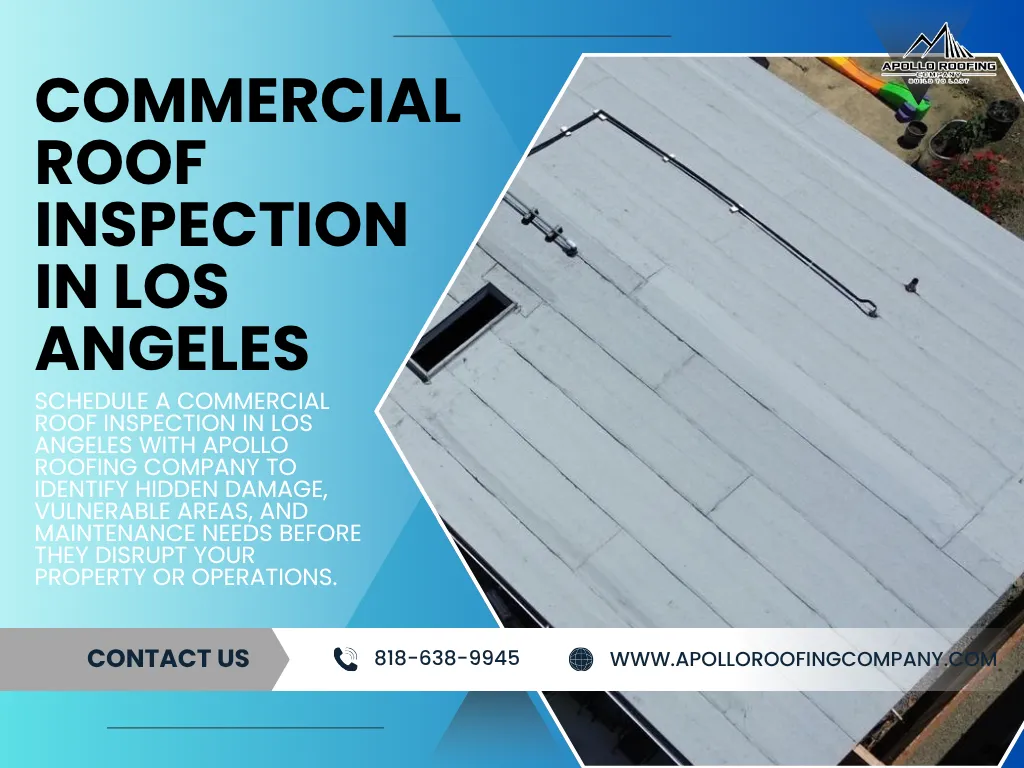
Start With the Overall Condition of the Roof Surface
The roof surface often provides the first clues about how the system is performing.
On membrane roofs, inspectors may look for punctures, open seams, blisters, cracks, wrinkles, surface deterioration, or areas where the material has pulled away. On built-up or modified bitumen systems, worn surfacing, splitting, exposed reinforcement, and damaged transitions can indicate areas that deserve attention.
The goal is not simply to identify obvious holes. Small changes in the surface can reveal movement, aging, foot traffic damage, or stress around other roof components.
Property managers should also pay attention to sections that seem to deteriorate faster than the rest of the roof. Repeated repairs in the same area may indicate that the underlying cause has not been fully addressed.
Check Drains, Gutters, and Water Flow
Water management is one of the most important parts of commercial roof performance.
Drains, scuppers, gutters, and downspouts should remain clear enough to move water away from the building efficiently. Leaves, dirt, roofing debris, and other materials can slow drainage and allow water to remain on the roof longer than intended.
Standing water deserves attention because it can add weight to the roof and place additional stress on seams, flashing, and other vulnerable details. Water that repeatedly collects in the same location may also point to drainage design concerns or changes in the roof surface.
A good inspection should examine not only whether drains are open, but also whether water appears to be reaching them as intended.
Examine Flashing and Roof Transitions Carefully
Many roof problems develop where one material, surface, or building component meets another.
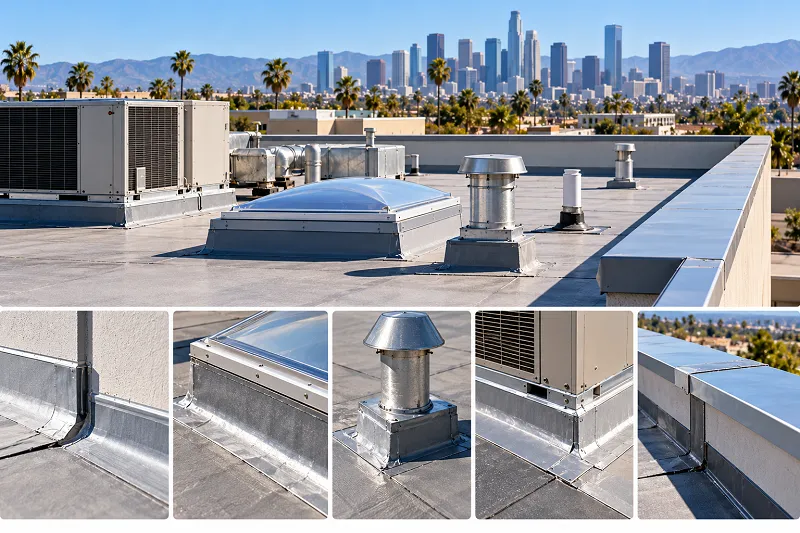
Flashing is commonly installed around walls, curbs, edges, parapets, skylights, penetrations, and mechanical equipment. These areas can experience movement and may be exposed to repeated weathering, making them important parts of any inspection.
Loose, cracked, separated, or deteriorated flashing can create opportunities for water intrusion even when the main roof surface appears to be in good condition.
Roof edges should also be reviewed. Wind and weather can place stress on perimeter details, and damage near an edge may not always be easy to see from ground level.
Review Rooftop Equipment and Penetrations
Commercial roofs often support HVAC units, plumbing vents, exhaust systems, conduits, pipes, satellite equipment, skylights, and other building systems.
Every penetration through the roofing system requires careful waterproofing. Over time, sealants may deteriorate, flashing may loosen, or equipment servicing may disturb nearby roofing materials.
A commercial roofing inspection for property managers in Los Angeles should pay close attention to these areas because they often experience more activity than the rest of the roof.
Service technicians may walk around equipment throughout the year, sometimes dragging tools or opening access panels. That regular activity can create punctures or damage if designated walkways are not provided or maintained.
Look for Evidence of Previous Repairs
Previous repair areas can provide useful information about the roof’s history.
Some patches continue performing well for years, while others may begin separating or deteriorating sooner than the surrounding material. Inspectors should review repaired sections for cracking, lifting, loose edges, exposed materials, or renewed moisture problems.
A concentration of repairs in one location can also suggest that the issue is more complex than a single damaged spot. Drainage problems, movement, failing flashing, or underlying deck conditions may be contributing to repeated failures.
Property managers benefit from keeping records of past work so new inspection findings can be compared with earlier repairs.
Pay Attention to Interior Warning Signs
Not every roofing concern is easiest to identify from above.
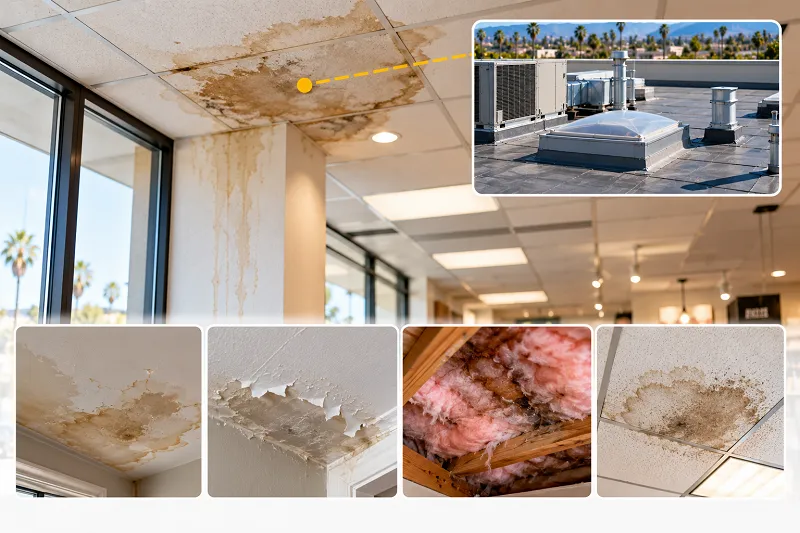
Ceiling stains, peeling paint, damp insulation, musty odors, damaged ceiling tiles, or recurring moisture around exterior walls can all suggest that water is entering somewhere in the building envelope.
The visible stain may not be directly below the original roof opening. Water can travel along decking, structural members, insulation, or other components before appearing indoors.
For that reason, interior observations should be compared with roof conditions instead of assuming the leak begins directly above the visible damage.
Watch for Damage Caused by Foot Traffic
Commercial roofs often receive more foot traffic than property managers realize.
HVAC technicians, electricians, communications contractors, inspectors, and maintenance teams may all need regular roof access. Over time, repeated traffic can wear down certain areas or damage materials not designed for constant walking.
Walk pads and designated access routes can help reduce unnecessary wear, but those protective surfaces should also be inspected. Loose pads, worn materials, or poorly placed pathways may no longer provide the intended protection.
If certain equipment is serviced frequently, the route between the roof access point and that equipment deserves particular attention.
Keep Inspection Findings Organized
An inspection is more useful when the findings can be compared over time.
Photos, written observations, repair records, warranty information, and maintenance dates give property managers a clearer history of the roofing system. This documentation can help identify whether a condition is new, stable, or becoming progressively worse.
Using a consistent commercial roof inspection checklist in Los Angeles also makes it easier to communicate with ownership groups, facility teams, tenants, and roofing professionals.
Instead of relying on memory, managers can track problem areas and make better-informed decisions about maintenance priorities and future capital planning.
Know When an Inspection Should Be Scheduled
There is no single schedule that works for every commercial roof.
Roof age, roofing material, warranty requirements, building use, rooftop activity, previous leaks, and surrounding conditions can all influence how often inspections make sense.
Additional evaluations may also be appropriate after significant weather events, major rooftop equipment work, construction near the roof, or reports of interior water intrusion.
A commercial roofing inspection for property managers in Los Angeles is most useful when it is treated as part of ongoing building maintenance rather than something requested only after a leak appears.
FAQs About Commercial Roof Inspections
What does a commercial roof inspection typically include?
A commercial roof inspection generally reviews the roof surface, seams, flashing, drainage components, penetrations, edges, rooftop equipment, previous repairs, and visible signs of deterioration. Inspectors may also look for interior moisture indicators and document areas that should be monitored, repaired, or evaluated further.
How often should a commercial roof be inspected?
Inspection frequency depends on factors such as roof age, material, warranty requirements, past problems, building use, and the amount of rooftop traffic. Many property managers include roof evaluations as part of a regular maintenance program and also request additional inspections after severe weather or significant rooftop work.
Can a roof look fine and still have problems?
Yes. Some roofing problems are subtle in their early stages. Small seam separations, deteriorating sealant, hidden moisture, drainage issues, or damage around equipment may not be visible from the ground. Routine inspections can help identify these conditions before they become more obvious or begin affecting occupied areas.
Why is documentation important after a commercial roof inspection?
Inspection records create a history of the roof’s condition and make it easier to track changes over time. Photos, notes, repair dates, and contractor recommendations can help property managers distinguish between new concerns and previously documented conditions, improving maintenance planning and budgeting decisions.
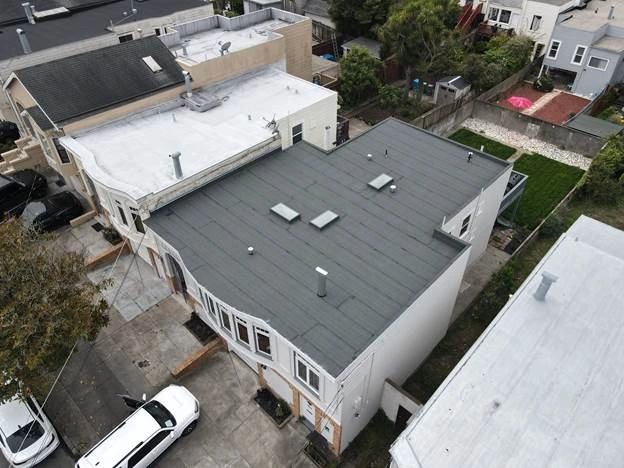
Stay Ahead of Roof Problems With a Commercial Roof Inspection in Los Angeles From Apollo Roofing Company
Commercial roof problems are easier to manage when property managers have clear information before damage begins affecting the building below. Apollo Roofing Company helps evaluate roofing conditions, drainage, flashing, penetrations, previous repairs, and other details that influence long-term performance.
If you are responsible for a commercial property and want a clearer understanding of your roof’s current condition, contact Apollo Roofing Company to schedule an inspection. A proactive review can help you prioritize repairs, plan maintenance more effectively, and reduce the chance of unexpected roofing issues disrupting your property.
