

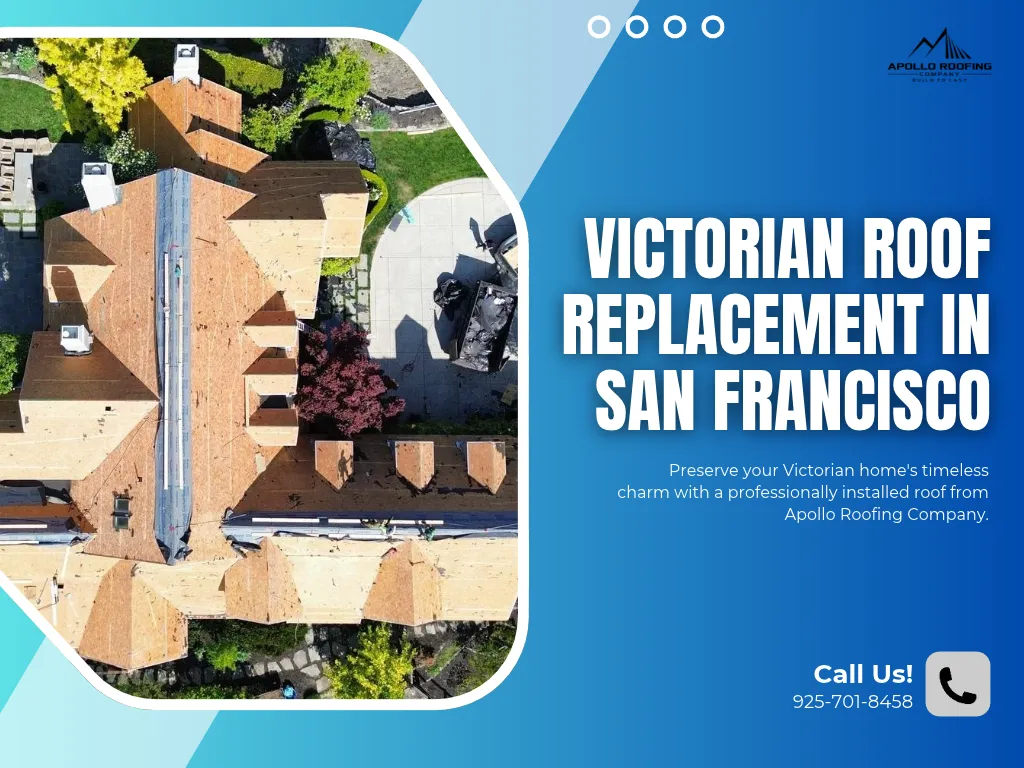
A Victorian roof replacement in San Francisco starts with the house itself. Victorians and Edwardians often have complex rooflines, with steep gables, bay roofs, dormers, towers and flatter sections tucked behind the front of the house. Each part needs its own plan. The short answer: choose a material that suits the style and the slope of each section, find out early whether the building has landmark or historic status so the right approvals are in place, and hire a crew that rebuilds flashing and trim details instead of covering them up. Do those three things and the new roof should look right from the sidewalk and keep water out for years.
What Makes Victorian and Edwardian Roofs Different
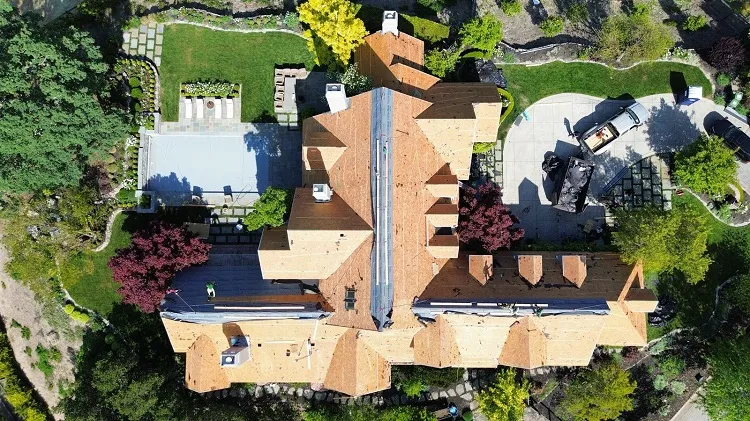
On our San Francisco roofing page, we describe many Pacific Heights homes as grand Victorians and Edwardians with complex rooflines, and much of the Richmond District as Edwardian flats. Those houses share a few traits that shape a roof replacement:
- More joints. Every valley, hip, dormer and wall intersection is a place where water can get in. Flashing work takes more time than on a simple gable.
- Mixed slopes. A steep front section may sit next to a low-slope area that drains differently and needs a different roofing system.
- Layers of history. Older roofs often carry past repairs, patched flashing and more than one layer of material. The crew needs to find these during tear-off, not guess at them.
- Visible trim. Cornices, brackets and decorative edges sit close to the roof line, so protecting them during work is part of the job.
Choosing Materials That Fit the House
The right material depends on the slope, the look you want and what the structure can carry. Here is how the main options compare on an older San Francisco home:
- Asphalt shingles. A common choice for pitched Victorian roofs. Architectural shingles add depth and come in colors that work with painted facades. Apollo Roofing Company is a GAF Master Elite contractor, an Owens Corning Platinum Preferred Contractor and a CertainTeed ShingleMaster PREMIER Credentialed Roofing Company, which opens up stronger manufacturer warranty options.
- Standing seam metal can suit towers, bay roofs and porch roofs where a clean line matters. Ask how the panels will be detailed at edges and trim.
- Tile is heavy, so the structure must be evaluated before it is chosen for an older house.
- Low-slope sections. Flatter areas need a system made for low slopes, such as modified bitumen, torch down or TPO, not shingles.
We covered how fog, wind and coastal air affect each material in our earlier post on roofing materials for San Francisco homes. This guide focuses on what changes when the house is a Victorian or Edwardian.
Permits and Historic Review
San Francisco requires a permit before roofing material is installed, repaired or removed, according to the city’s reroofing permit page. The online reroofing permit is only available when the work does not need plans and does not involve replacing structural parts such as framing or decking. If it does, an over-the-counter building permit is required.
For older homes, the bigger question is historic status. The city’s page says landmark historic buildings need a Planning Approval Letter, or confirmation from SF Planning that no letter is required, plus photos of the existing roof. Historic projects also go through staff review. Here is what that means in practice:
- Find out whether your house is a designated landmark or sits in a historic district before you pick a material.
- Photograph the roof, trim and rooflines before any work starts.
- Let your roofer know about the status up front so the schedule allows time for approvals.
Our post on roofing permits in San Francisco covers the general permit process.
Protecting Historic Details During Tear-Off
A careful replacement on an older home follows a clear order. Ask your roofer to walk you through each step:
- Document first. Photos and notes on ridge lines, trim profiles and existing flashing, so the finished roof matches what was there.
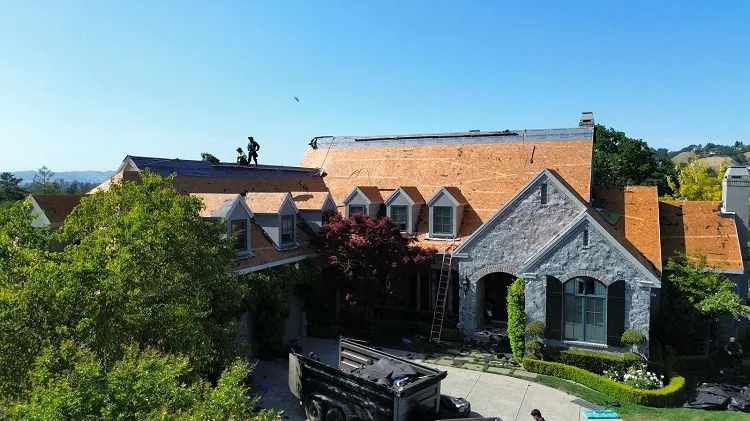
- Protect below. Cover windows, siding, decorative trim and landscaping before tear-off begins.
- Tear off in sections. Removing only what can be covered the same day keeps the house protected if weather turns.
- Inspect the deck. Older homes often have board sheathing. Damaged boards should be repaired or replaced before new underlayment goes down.
- Rebuild flashing. New flashing at chimneys, walls, valleys and bay roofs, rather than reusing old metal.
- Check ventilation. Older attics were not always vented well. Ask whether vents can be improved without changing how the roof looks from the street.
San Francisco gets fewer rainy days than most cities, but planning tear-off outside the rainy season still lowers the risk of delays.
Neighborhood Notes for Older San Francisco Homes
Where a house sits changes what the roof deals with. In the Sunset, which sees more fog than almost anywhere in the city, moisture control and ventilation deserve extra attention. Homes in the Marina face wind and salty air every day, so fasteners and flashing details matter. In Pacific Heights, steep and complex rooflines make careful flashing the main focus. We also serve Noe Valley, Bernal Heights, the Mission District, Potrero Hill and the rest of San Francisco.
Frequently Asked Questions
Can I use asphalt shingles on a Victorian house?
Yes. Asphalt shingles are a common choice for pitched Victorian roofs. Architectural shingles in a color that suits the facade can look right on an older home. If the building has historic status, confirm the material choice with SF Planning first.
Does a Victorian roof replacement in San Francisco need Planning approval?
It depends on the building. San Francisco requires a Planning Approval Letter, or confirmation that none is needed, for landmark historic buildings. Check your home’s status before choosing materials.
What happens if the roof deck is damaged under the old roof?
Damaged sheathing should be repaired or replaced before the new roof goes on. Replacing decking counts as structural work, so the project needs an over-the-counter building permit rather than the online reroofing permit.
Is an Edwardian roof replacement any different?
The steps are the same: inspect, check historic status, protect the trim and rebuild the flashing. The main difference is the roof shape. Any low-slope section on an Edwardian needs a roofing system made for low slopes, not shingles.
Give Your Older Home the Roof It Deserves With Apollo Roofing Company
An older San Francisco home deserves a roof that protects it and respects its character. If you are planning a Victorian roof replacement in San Francisco, Apollo Roofing Company can inspect your roof, talk through materials and the permit path and explain each step before work begins. Learn more about our residential roof replacement services, or contact us to schedule an inspection.
