

Look down on almost any Los Angeles neighborhood from a hillside and you’ll spot dozens of flat roofs. Spanish Revival homes, mid-century boxes, duplexes, garages, and storefronts all rely on low-slope roofs that need a tough, watertight surface to stay dry.
For decades, one of the most dependable options has been modified bitumen. It doesn’t get as much attention as newer single-ply membranes, but it has earned a loyal following among roofers who’ve seen it hold up year after year.
If you’re weighing modified bitumen roofing in Los Angeles for your home or building, here’s an honest look at what it does well, where it falls short, and where it truly shines.
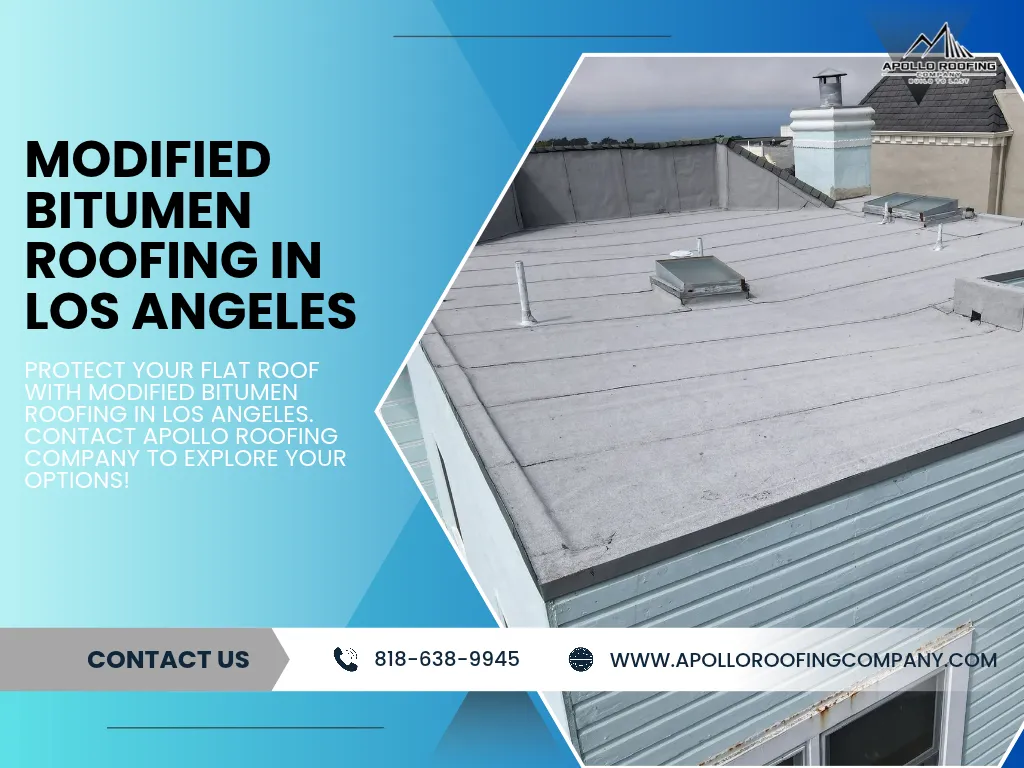
What Modified Bitumen Actually Is
Modified bitumen is essentially asphalt that has been upgraded with polymers to make it stronger and more flexible. It comes in rolls, and installers layer those rolls to create a continuous, waterproof membrane.
There are two main types. APP (atactic polypropylene) adds a plastic-like toughness and is traditionally applied with a torch. SBS (styrene-butadiene-styrene) adds a rubbery stretch, which helps the roof flex as temperatures rise and fall. SBS sheets can be installed with hot asphalt, cold adhesives, or self-adhering backing.
Most modified bitumen roofing systems for flat roofs use at least two layers: a base sheet for waterproofing and a granulated cap sheet that faces the sun. That layered build is a big part of why the material is so durable.
Why It Works So Well Here
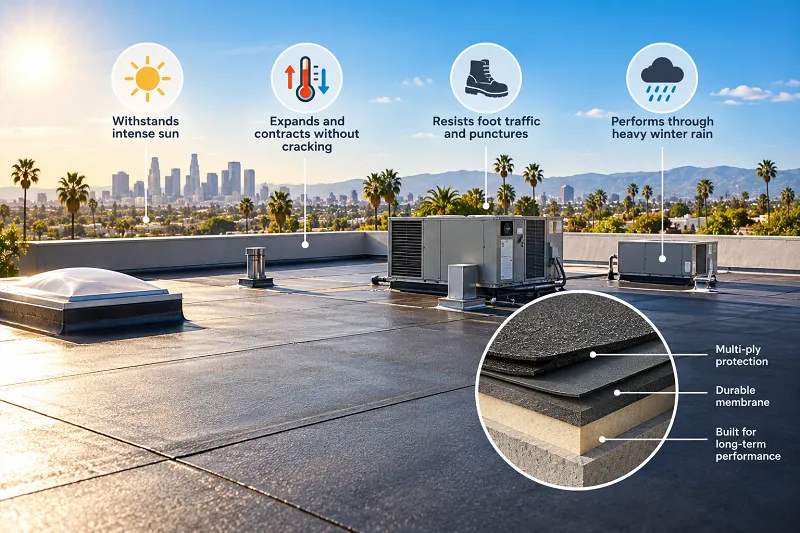
Southern California’s weather is mild, but it isn’t gentle on roofs. Months of intense sunlight, warm days followed by cool nights, and short bursts of heavy winter rain all put stress on a low-slope surface.
Modified bitumen handles that stress better than many people expect. The polymers let the membrane expand and contract without cracking, and the multi-ply design gives it backup protection if the top layer gets scuffed.
It’s also highly resistant to foot traffic and punctures, which matters if your roof hosts HVAC units, solar equipment, or the occasional maintenance visit. And when repairs are needed, patches bond well to the existing membrane, so small problems rarely turn into full replacements.
With reflective cap sheets or coatings, modified bitumen roofing in Los Angeles can also meet California’s Title 24 cool roof requirements, helping keep indoor spaces more comfortable and energy bills under control.
The Limitations Worth Knowing
No roofing material is perfect, and modified bitumen has a few trade-offs worth understanding before you commit.
Standard dark cap sheets absorb a lot of heat. Without a reflective surface or coating, the roof can get very hot and age faster under LA sun.
Seams are the weak point. The membrane itself is tough, but laps between sheets must be sealed properly. Poor workmanship here is the most common reason these roofs leak early.
Torch application carries fire risk. Many contractors now prefer cold-applied or self-adhered SBS systems, especially on wood-framed homes, to avoid open flames near combustible materials.
It’s also heavier than single-ply options like TPO, and it won’t fix a roof that holds water. If your roof has low spots where puddles linger for days, the drainage needs to be corrected during installation, or no membrane will last as long as it should.
Best Applications Around Los Angeles
Modified bitumen is a smart fit for residential flat roofs, particularly on older homes where the roof has multiple vents, skylights, and odd angles. The material is easy to detail around penetrations, which makes it forgiving on complicated roof layouts.
It’s also well suited to garages, porches, additions, and patio covers where a low-slope section meets a pitched roof. Small to mid-sized commercial buildings benefit too, especially those with rooftop equipment that needs regular servicing.
Property owners who want a roof that can take some abuse often choose modified bitumen roofing systems for flat roofs over thinner membranes, since the extra thickness adds peace of mind.
What a Quality Installation Looks Like
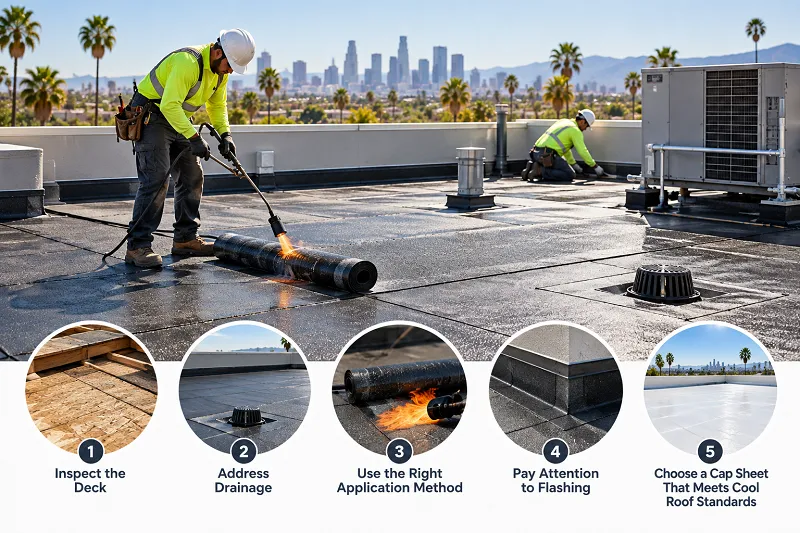
The material is only as good as the crew putting it down. A proper modified bitumen roof installation in Los Angeles starts with a full inspection of the deck, since rotted plywood or wet insulation trapped underneath will shorten the life of any new roof.
From there, the installer should address drainage, choose the right application method for your building, and pay close attention to flashing at walls, parapets, and drains. Those transition points are where water likes to sneak in.
Ask your contractor which type of sheet they recommend, how seams will be sealed, and whether the cap sheet meets cool roof standards. Clear answers to those questions usually signal a crew that knows what it’s doing.
Keeping Your Roof in Good Shape
Modified bitumen doesn’t demand much, but a little attention goes a long way. A quick inspection each fall, before the rainy season, helps catch lifted seams, blistering, or clogged drains early.
Reflective coatings can be renewed every several years to keep the surface cool and protected. After any professional modified bitumen roof installation in Los Angeles, keeping records of inspections and repairs also helps protect your warranty.
Frequently Asked Questions About Modified Bitumen Roofing in Los Angeles
How long does a modified bitumen roof last?
With proper installation and routine maintenance, most modified bitumen roofs last around 15 to 20 years. Roofs with reflective cap sheets, good drainage, and regular inspections tend to reach the upper end of that range, while neglected roofs exposed to constant sun may age faster.
Is modified bitumen a good choice for homes, or just commercial buildings?
It works well for both. Many Los Angeles homes with flat or low-slope sections use modified bitumen because it handles foot traffic, adapts easily around vents and skylights, and can be repaired without much trouble. It’s a practical, long-lasting choice for residential properties of all sizes.
Does modified bitumen meet California’s energy requirements?
It can. Title 24 often requires cool roof products on low-slope roofs during replacement. Modified bitumen cap sheets with reflective granules, or membranes finished with an approved reflective coating, can meet those standards. Your contractor should confirm the product rating before installation begins.
Can modified bitumen be installed over an existing flat roof?
Sometimes, but a full tear-off is usually the better approach. Removing the old roof lets the crew check for rot, trapped moisture, and drainage issues hidden underneath. Building over a damaged surface often leads to blistering, leaks, and a shorter lifespan for the new membrane.
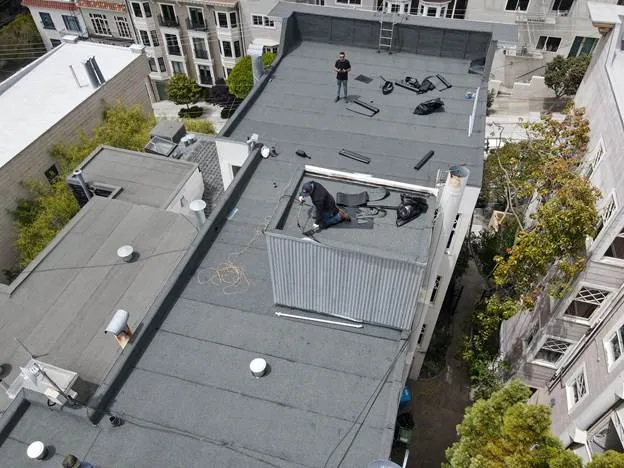
Flat Roof Problems? Discover a Reliable Solution With Apollo Roofing Company’s Modified Bitumen Roofing in Los Angeles!
Leaks, ponding water, and worn-out flat roofs don’t fix themselves, and the longer they wait, the more they cost.
Apollo Roofing Company helps Los Angeles homeowners and property owners choose the right flat roof system, then installs it with the care and attention to detail that makes it last. We’ll inspect your roof, explain your options clearly, and recommend a solution that fits your building and budget.
Call Apollo Roofing Company today to schedule your flat roof inspection and get a free, no-pressure estimate.
