

A roof is made up of more than shingles, tiles, or membrane material. Some of the most important protection happens in the smaller areas where different roof surfaces meet, where vents pass through the roof, and where the roof connects to walls, chimneys, skylights, or other structures.
That is where flashing comes into play.
Roof Flashing in San Francisco helps direct rainwater away from vulnerable seams and openings before moisture can work its way beneath the roofing system. In a city where winter rain, coastal moisture, wind, and aging architecture all affect roof performance, properly installed flashing can make a significant difference in how well a roof manages water over time.
For homeowners and property managers, understanding what flashing does can also make roof inspections, maintenance, and repair decisions easier.

What Roof Flashing Actually Does
Flashing is typically made from thin pieces of metal or another water-resistant material positioned around areas where water could otherwise enter the roof.
A roofing surface may shed water effectively across broad, uninterrupted sections. Problems are more likely to develop where that surface changes direction or connects with another building component.
Flashing creates a protective transition at those locations.
Instead of allowing water to settle against an opening or seam, properly positioned flashing helps guide it toward the roof surface, drainage system, or another designed path away from the building.
This matters because even a very small opening can allow moisture to reach underlayment, roof decking, insulation, framing, or interior finishes if water repeatedly reaches the same area.
Why Flashing Matters in San Francisco’s Climate
San Francisco roofs experience conditions that can expose weaknesses that remain unnoticed during long stretches of dry weather.
Rainfall is concentrated largely during the cooler months, which means a roof may go for an extended period without showing obvious signs of a problem. When repeated storms arrive, damaged seals, loose flashing, deteriorated fasteners, or poorly protected joints can suddenly begin allowing water inside.
Coastal air can also contribute to gradual deterioration of exposed roofing components. Wind-driven rain adds another challenge because water does not always travel straight downward. Under certain conditions, it can be pushed against walls, roof edges, penetrations, and transition points.
That makes water management around flashing especially important.
A roof may look relatively sound across its main field while still developing a leak around one small connection point.
Where Flashing Is Commonly Installed
Flashing appears in several areas of a roofing system, and each location has a specific purpose.
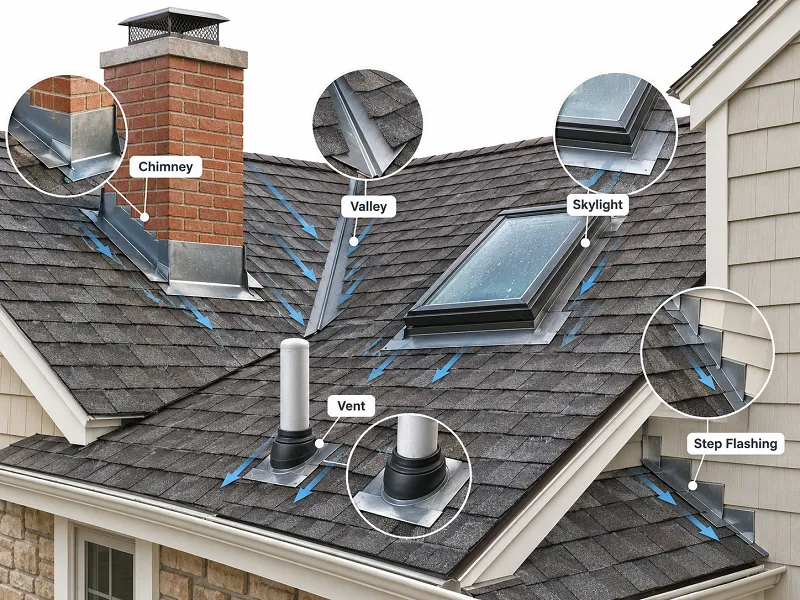
Around chimneys, flashing helps seal the intersection between the roof and the vertical masonry surface. This usually involves multiple pieces positioned so water is directed around the chimney rather than behind it.
Roof valleys may also use flashing or other specialized waterproofing details because they collect and channel substantial amounts of runoff during rain.
Skylights require careful flashing because the roof surface is interrupted by the skylight frame. Water must be directed around that opening without being allowed beneath the roofing material.
Plumbing vents and other roof penetrations also need protective components around their bases. These areas may use metal flashing, rubber boots, or integrated flashing assemblies depending on the roof system.
Where a roof meets a wall, step flashing may be used to create overlapping layers that move water down the roof instead of allowing it to enter the joint.
Every one of these areas represents a transition, and transitions are often where waterproofing details matter most.
How Flashing Problems Develop
Flashing does not necessarily fail all at once.
In many cases, deterioration develops gradually.
Sealants can dry, shrink, or separate. Fasteners may loosen. Metal can bend or corrode. Roofing materials around the flashing may shift as they age. Previous repairs may also create problems when patches are added without addressing the original source of water entry.
Movement between building materials can play a role as well. Roof assemblies expand and contract as temperatures change, while different materials may respond differently to moisture and heat.
Over time, those small movements can create gaps around flashing connections.
Poor installation can cause problems much sooner. Flashing that is cut incorrectly, positioned in the wrong sequence, or sealed without proper integration into the roofing system may allow water behind it instead of directing water away.
That is why Roof Flashing Installation in San Francisco should be treated as part of the overall waterproofing system rather than as a cosmetic finishing detail.
Why Roof Leaks May Appear Far From the Flashing Problem
One of the most confusing things about roof leaks is that the visible stain indoors may not sit directly below the actual entry point.
Water can enter around flashing and then travel along roof decking, rafters, framing, or insulation before finally dripping into the interior.
A ceiling stain several feet from a chimney, skylight, or wall connection may still originate from flashing near that feature.
This is one reason visual inspections from inside the home alone are not always enough to identify the source.
An experienced roofing contractor may need to inspect the surrounding roof materials, flashing condition, moisture patterns, drainage paths, and nearby penetrations before determining where the leak begins.
Signs That Flashing May Need Attention
Homeowners often first notice flashing problems after rain.
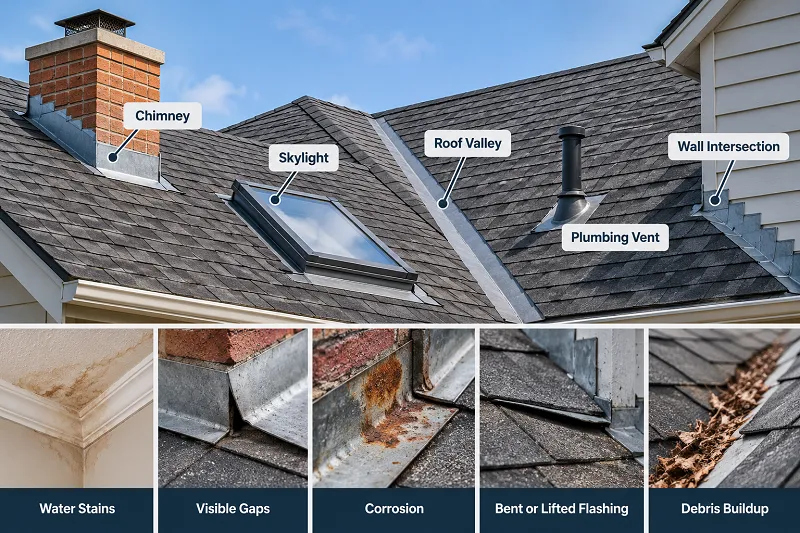
Water stains near ceilings or upper walls can be one indication. Dampness around a chimney, skylight, or attic penetration may also suggest that moisture is entering near a transition point.
Outside, visible gaps, bent metal, missing sections, lifted edges, deteriorated sealant, or corrosion may indicate that flashing should be evaluated.
The surrounding roofing materials matter too.
If shingles or tiles near the flashing have shifted or become damaged, water may reach areas that were previously protected. Debris collecting near valleys or wall connections can also slow drainage and keep moisture against flashing longer than intended.
Not every visible imperfection means water is entering the building, but these conditions are worth checking before the next period of sustained rain.
Repairing Flashing Before Water Damage Spreads
Flashing repairs vary considerably depending on what caused the problem.
Sometimes a localized repair may be appropriate. In other cases, the surrounding roofing material must be removed temporarily so damaged flashing can be replaced and properly integrated with the roof system.
Simply adding sealant over a leak is not always a lasting solution.
Sealant may help in certain applications, but it should not substitute for flashing that is missing, incorrectly installed, damaged, or no longer integrated correctly with surrounding materials.
Effective Roof Flashing Repair in San Francisco begins by identifying how water is getting into the roof assembly. Once the entry point is understood, the repair can address both the flashing itself and any nearby materials that may have been affected.
Flashing Should Be Considered During Roof Replacement
A roof replacement is also an important opportunity to evaluate existing flashing.
Some flashing may be reusable if it remains in suitable condition and is compatible with the new roofing system. Other sections may need replacement because of corrosion, damage, previous repairs, or changes to the roof assembly.
This decision should be based on condition rather than appearance alone.
Replacing the visible roofing surface while leaving deteriorated flashing in place can preserve an existing weak point within an otherwise new roof.
Careful installation around penetrations, walls, chimneys, roof edges, and valleys helps the entire roofing system work together as intended.
Maintenance Can Help Catch Flashing Issues Earlier
Roof maintenance does not need to be complicated to be valuable.
Periodic inspections can help identify loose materials, damaged flashing, aging sealants, clogged drainage areas, and other conditions before they lead to noticeable interior damage.
For San Francisco properties, checking the roof before the wetter part of the year can be especially useful.
If debris has accumulated around drainage areas or flashing has shifted during dry months, those problems may become much more noticeable once winter storms begin.
Maintenance is also useful after roofing work, solar installation, skylight replacement, or other projects involving roof penetrations. Any work that changes the roof surface should preserve the original water-shedding design.
Frequently Asked Questions About Roof Flashing in San Francisco
How long does roof flashing usually last?
The lifespan of flashing depends on the material, installation quality, surrounding roofing system, exposure conditions, and maintenance. Metal flashing can remain functional for many years, but sealants, fasteners, nearby roofing materials, or connection points may deteriorate earlier. Periodic inspections can help determine whether flashing remains properly secured and watertight.
Can damaged flashing cause a major roof leak?
Yes. A relatively small flashing defect can allow water beneath the roofing materials, especially during prolonged or wind-driven rain. Once water enters the roof assembly, it may travel along decking or framing before becoming visible indoors. Addressing the source early can help reduce the chance of damage spreading to insulation, ceilings, walls, or structural materials.
Should flashing be replaced when a roof is replaced?
Not automatically, but it should always be evaluated. Some existing flashing may remain suitable for reuse, while other sections may be damaged, corroded, improperly installed, or incompatible with the new roofing system. The contractor should inspect each flashing location and determine whether replacement is appropriate based on its condition and the planned roof installation.
Can flashing leaks be repaired without replacing the entire roof?
Often, yes. If the problem is limited to a specific penetration, wall connection, chimney, or similar area and the surrounding roof remains in good condition, a localized repair may be possible. The important step is identifying the actual path of water entry so the repair addresses the cause rather than simply covering the visible symptom.

Protect the Most Vulnerable Areas of Your Roof! Contact Apollo Roofing Company for Roof Flashing in San Francisco!
Small roof details often have a major role in keeping water outside your home. When flashing becomes loose, damaged, or improperly integrated with the surrounding roofing materials, rain can reach areas that were designed to stay dry.
Apollo Roofing Company can inspect vulnerable roof transitions, identify potential sources of water intrusion, and recommend repairs based on the condition of the roofing system. If you have noticed moisture near a chimney, skylight, wall connection, vent, or another roof penetration, schedule an evaluation before the problem has more time to spread.
