

San Francisco is known for mild temperatures, but that does not mean homes are automatically comfortable throughout the year. Foggy mornings, cool coastal air, changing afternoon temperatures, and older housing stock can all affect how a home holds and loses heat.
The roof plays a bigger role in that equation than many homeowners realize.
Roof Insulation in San Francisco helps reduce the movement of heat between the living space and the outdoors. When insulation is properly selected and installed, it can help rooms feel more consistent, reduce unwanted heat loss, and support more efficient heating and cooling.
For homeowners trying to improve comfort without constantly adjusting the thermostat, the area above the ceiling is an important place to look.

Why Roof Insulation Matters in San Francisco Homes
Insulation works by slowing heat transfer.
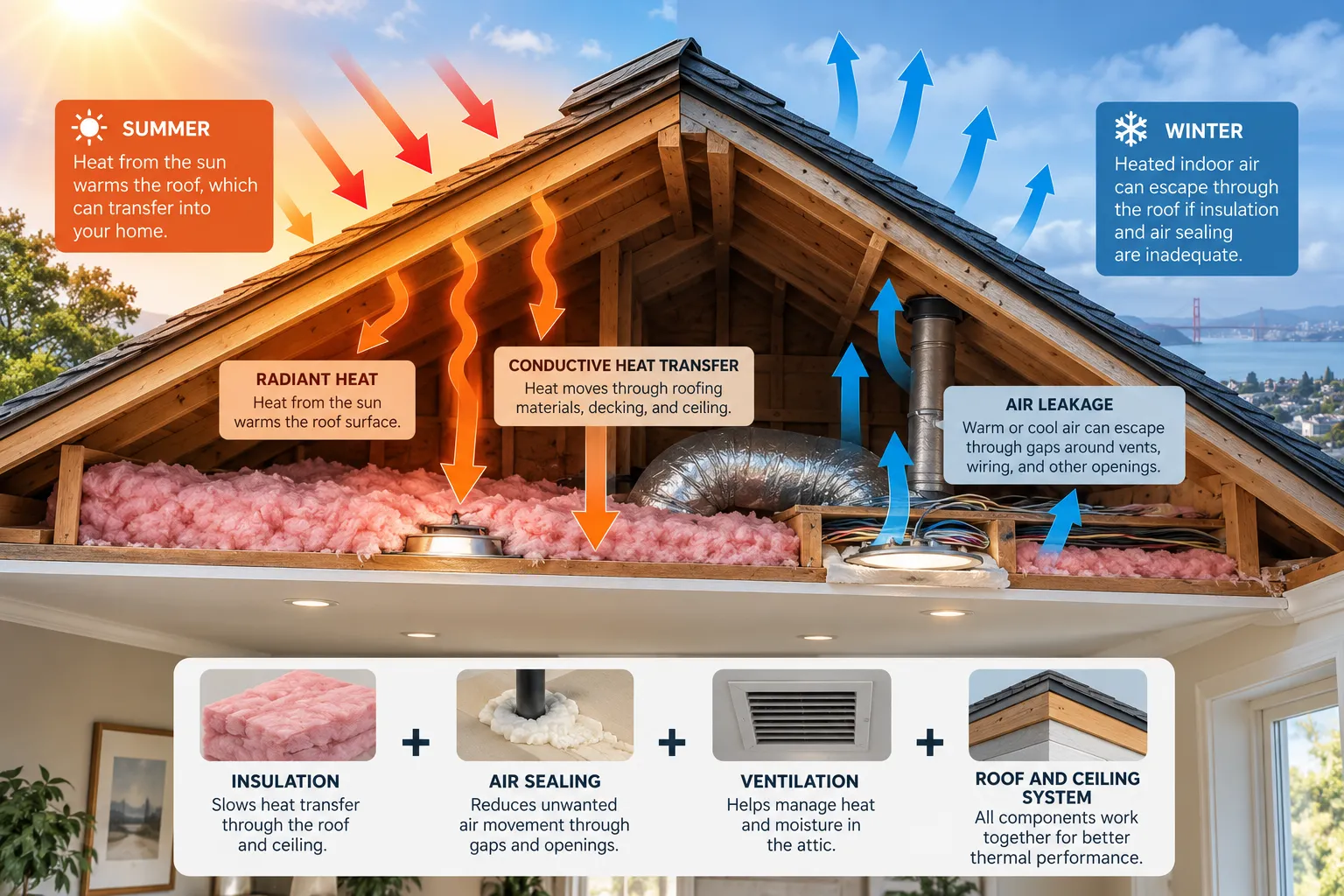
During cooler weather, heated indoor air naturally moves toward colder areas. If the roof or attic has inadequate insulation, some of that warmth can escape upward instead of remaining inside the living space.
The opposite can happen during warmer periods. Heat absorbed by the roof can move toward interior rooms, making upper floors feel warmer than the rest of the home.
Good insulation helps slow both processes.
This does not mean insulation creates heat or cooling by itself. Instead, it helps the home maintain the temperature created by heating and cooling systems for longer periods.
That can make indoor conditions feel more stable throughout the day.
San Francisco’s Climate Creates Unique Comfort Challenges
San Francisco weather is rarely extreme compared with many inland cities, but its temperature patterns can still make homes uncomfortable.
A sunny afternoon may feel noticeably warmer than a foggy morning. Coastal winds can cool exterior surfaces quickly. Neighborhood elevation and exposure can also influence how much sunlight, fog, and wind a property receives.
Older homes introduce another variable.
Many San Francisco properties were built long before current energy-efficiency expectations became common. Some homes may have limited insulation, compressed material, uneven coverage, or previous renovations that left gaps between insulated and uninsulated areas.
These conditions can create rooms that feel colder, warmer, or draftier than the rest of the house.
Improving insulation can help address some of those differences by creating a more consistent thermal boundary between the interior and exterior.
How Heat Moves Through the Roof
Heat naturally moves from warmer areas toward cooler ones.
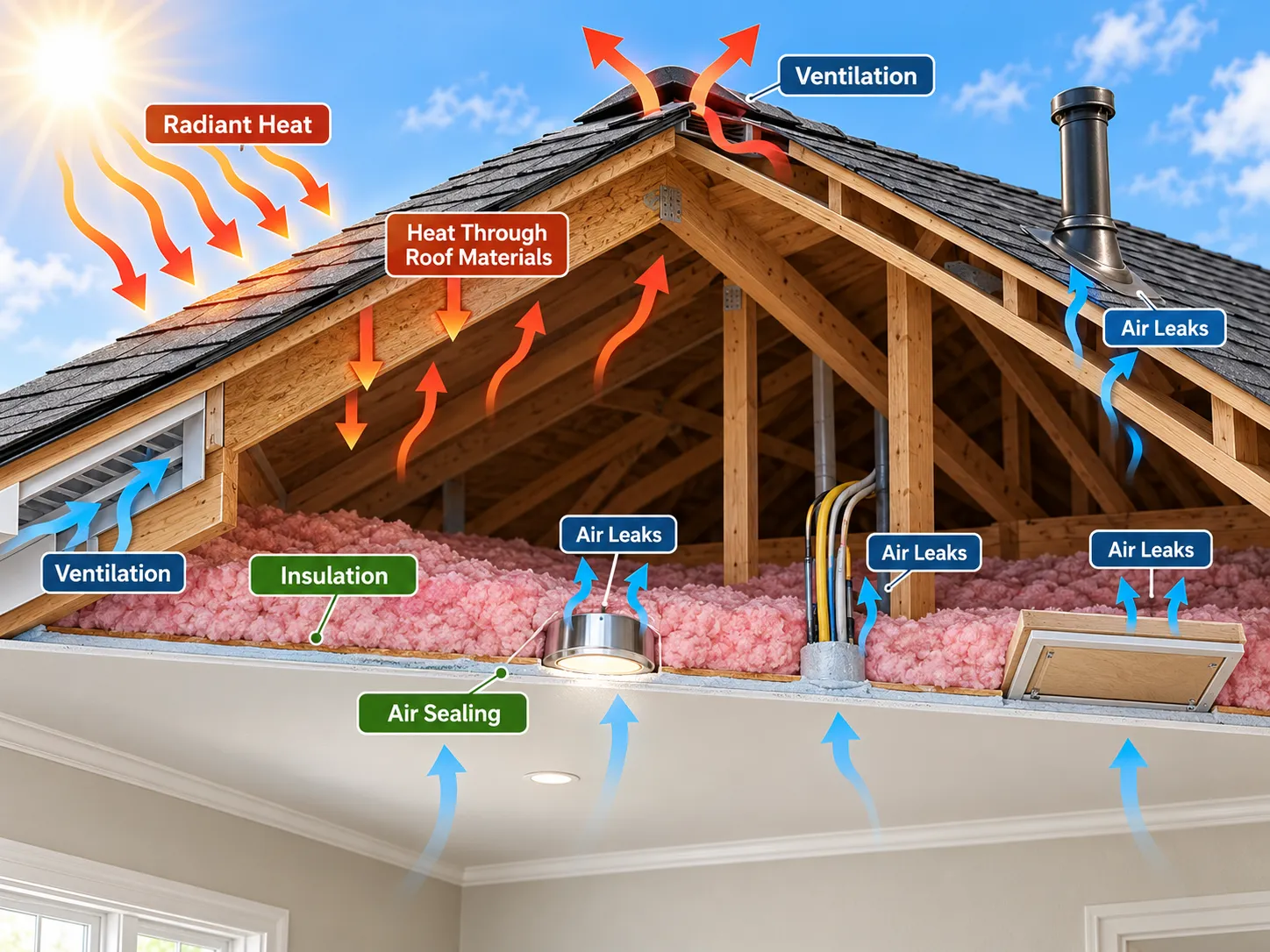
In a home, heat transfer can happen through building materials, through moving air, and through radiant energy.
Insulation is designed primarily to slow conductive heat transfer through materials such as ceilings and roof assemblies.
Air sealing also matters because warm or cool air can escape through gaps around penetrations, wiring, plumbing, recessed fixtures, access hatches, and other openings.
This is why insulation should not always be considered in isolation.
A well-insulated attic with significant air leakage may still lose conditioned air. Likewise, sealing gaps without enough insulation may not provide the desired thermal performance.
The roof, attic, ceiling, ventilation system, and air barrier should all work together.
The Role of Attic Insulation
In many homes, the attic is one of the most important areas for thermal control.
Attic Insulation in San Francisco can help create a buffer between the conditioned rooms below and the roof deck above. Depending on the home’s construction, insulation may be installed along the attic floor, within roof assemblies, or in other approved locations.
The appropriate approach depends on the structure.
Ventilation, moisture management, electrical systems, roof design, and access conditions all need to be considered before insulation is added or replaced.
More insulation is not automatically better if it is installed incorrectly.
Blocked vents, compressed insulation, uncovered gaps, or poorly planned material placement can reduce performance and potentially create other building concerns.
That is why the entire attic environment should be evaluated before making changes.
Signs Your Home May Need Better Insulation
Poor insulation does not always produce an obvious warning sign.
Sometimes the first indication is simply that certain rooms never feel quite comfortable.
Upper floors may feel colder on chilly mornings or noticeably warmer after direct sun exposure. Heating systems may run frequently even when outdoor temperatures are moderate. Homeowners may also notice that indoor temperatures change quickly after the heating or cooling system shuts off.
High energy use can be another clue, although many factors influence utility costs.
Visible insulation can also provide useful information. Material that appears thin, uneven, compressed, wet, displaced, or missing in certain sections may not perform as intended.
Insulation that has been disturbed by previous electrical, plumbing, roofing, or remodeling work may also develop gaps.
A professional evaluation can help determine whether insulation is contributing to the problem or whether another part of the building envelope should be addressed.
Insulation and Indoor Comfort Go Hand in Hand
Energy efficiency often gets most of the attention when insulation is discussed, but comfort can be just as important.
A home that loses heat rapidly may feel chilly even when the thermostat shows a reasonable temperature.
That is because comfort depends on more than air temperature alone. The temperature of surrounding walls, ceilings, floors, and other surfaces can influence how a room feels.
Insulation helps reduce temperature differences between interior surfaces and the conditioned air.
The result can be a home that feels less drafty and more consistent from room to room.
This can be especially noticeable in bedrooms or living areas directly beneath the roof.
Can Better Insulation Reduce Energy Use?
Improved insulation may help reduce the amount of energy required to maintain comfortable indoor temperatures.
When heat moves through the roof more slowly, heating and cooling systems may not need to compensate as frequently for temperature changes.
The actual energy savings will vary from one property to another.
Home size, roof design, existing insulation, HVAC efficiency, air leakage, window performance, thermostat habits, and local exposure conditions all influence energy use.
For that reason, homeowners should be cautious of promises that insulation alone will produce a specific percentage of savings.
Its value is best understood as part of a broader approach to improving the home’s thermal performance.
Why Installation Quality Matters
Insulation works best when it is installed continuously and at the correct thickness for the material being used.
Gaps can create weak spots where heat transfer occurs more easily. Compression can reduce the effectiveness of certain insulation types. Poor placement around vents or moisture-sensitive areas can also create problems.
Professional Roof Insulation Installation in San Francisco should take the existing roof and attic conditions into account before work begins.
The installer should understand where the thermal boundary is intended to be, how ventilation is designed to function, and whether air sealing or moisture concerns should be addressed first.
Insulation should complement the roof system rather than interfere with it.
Moisture and Ventilation Still Matter
Insulation should help manage heat, but it should not trap unwanted moisture.
Warm indoor air can carry moisture into attic spaces through air leaks. If that moisture reaches cooler surfaces, condensation may occur under certain conditions.
Roof leaks can create a separate moisture problem.
Wet insulation can lose effectiveness and may signal a roofing issue that needs attention before insulation work proceeds.
Ventilation may also play an important role depending on the roof assembly.
A contractor should evaluate the attic and roof together rather than treating each component as unrelated.
When to Consider an Insulation Evaluation
There is no single perfect time to evaluate insulation, but certain situations make it especially worthwhile.
A roof replacement can provide an opportunity to review insulation and ventilation conditions while other roofing work is already being planned.
Home renovations may also expose areas that were previously difficult to inspect.
If a home has persistent comfort problems, unusually hot or cold upper rooms, visible insulation gaps, or signs of moisture in the attic, an evaluation may help identify the cause.
It can also be useful before making major upgrades to heating or cooling equipment.
Improving the building envelope first may help homeowners better understand what the home actually needs from its mechanical systems.
Frequently Asked Questions About Roof Insulation in San Francisco
How do I know if my roof insulation is inadequate?
Common signs include rooms that are consistently hotter or colder than others, frequent heating or cooling cycles, rapid indoor temperature changes, and visible insulation that appears thin, compressed, damaged, or uneven. An inspection can help determine whether insulation, air leakage, ventilation, roofing conditions, or a combination of factors is affecting comfort.
Can roof insulation help lower my energy bills?
Insulation can help reduce heat transfer through the roof and ceiling, which may decrease the amount of work required from heating and cooling equipment. Actual savings depend on the home’s construction, existing insulation, air sealing, HVAC efficiency, weather exposure, thermostat settings, and many other factors. Insulation should be viewed as one part of overall energy performance.
Should insulation be replaced when I replace my roof?
Not always. Roof replacement and insulation replacement are separate decisions, but a roofing project can be a useful time to evaluate insulation conditions. If existing material is wet, damaged, insufficient, poorly installed, or no longer performing effectively, replacement or improvement may be worth considering as part of the broader project.
Can old insulation still work effectively?
Yes, older insulation can sometimes continue performing adequately if it remains dry, properly positioned, and in good condition. Age alone does not necessarily mean replacement is required. However, settling, compression, moisture exposure, pest activity, remodeling work, or gaps may reduce performance, so condition is more important than age by itself.
How does attic ventilation affect insulation performance?
Ventilation and insulation serve different purposes, but they need to work together. Insulation slows heat transfer, while ventilation can help manage heat and moisture in certain roof assemblies. Blocking intake or exhaust vents with insulation may interfere with airflow, so the roof and attic should be evaluated as a complete system before changes are made.
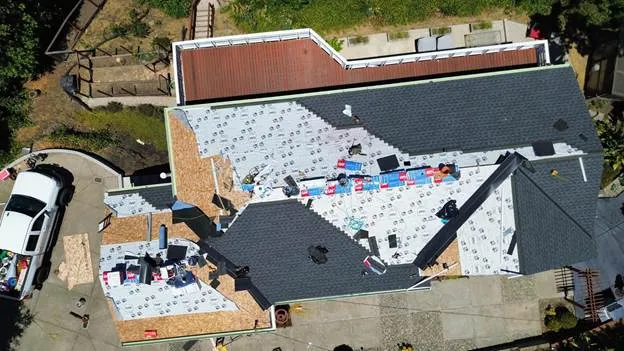
Comfort Starts Above Your Ceiling! Contact Apollo Roofing Company for Roof Insulation in San Francisco!
A comfortable home depends on more than the thermostat. The condition of the roof, attic, insulation, ventilation, and surrounding building materials all influence how effectively your home manages temperature throughout the year.
Apollo Roofing Company can evaluate your roofing system and help identify conditions that may be affecting comfort or efficiency. If you are planning a roof project, noticing uneven indoor temperatures, or concerned about the condition of your Roof Insulation in San Francisco, contact Apollo Roofing Company to discuss the next steps for your property.
