

Replacing the roof on a retail property creates a challenge that goes beyond the roofing work itself. Stores may need to remain open, customers still need safe access, employees have schedules to maintain, and deliveries cannot simply stop because contractors are working overhead.
For property owners and managers, the goal is therefore not only to install a new roofing system. The project should also be planned around the daily operation of the building. A well-organized roofing project can reduce interruptions, control access to work areas, limit noise during critical business hours, and help tenants understand what to expect before construction begins.
That level of coordination becomes especially important in Los Angeles, where retail properties range from single storefronts and neighborhood centers to large multi-tenant shopping environments.
Start With a Clear Understanding of the Property
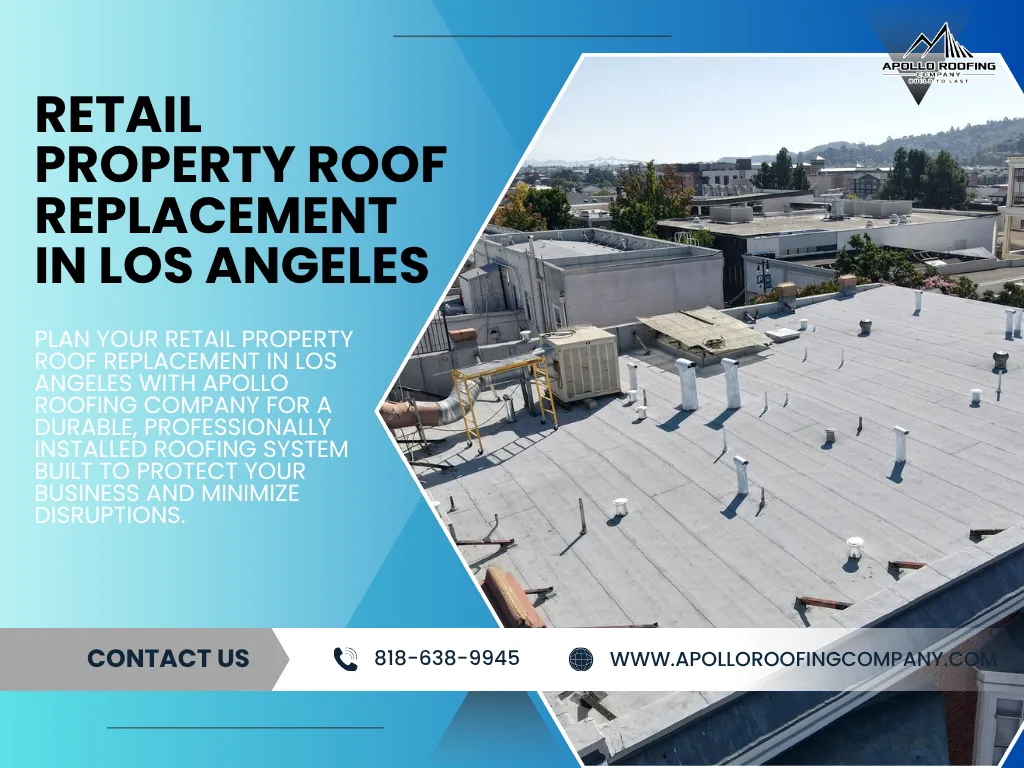
Every retail building presents different roofing conditions. Before scheduling work, the existing roof should be evaluated for its age, material, drainage, penetrations, structural concerns, previous repairs, and overall condition.
The way the property operates matters just as much. A restaurant may have rooftop exhaust equipment that must remain functional. A grocery store may depend on refrigeration systems connected to rooftop equipment. A shopping center may have several tenants with different operating hours and customer traffic patterns.
Planning a commercial roof replacement in Los Angeles should account for these details before crews arrive. Understanding how people, equipment, deliveries, and customers move around the property allows the roofing schedule to be built around real operational needs instead of treating every retail building the same way.
Scheduling Can Make a Major Difference
Retail businesses often have predictable busy periods. Weekends, lunch hours, evenings, holiday shopping periods, and seasonal sales can create significantly more activity around a property.
Roofing work can sometimes be organized so the most disruptive stages occur during quieter hours or on days when customer traffic is lower. This does not always mean working entirely outside normal business hours. Instead, it may involve carefully sequencing louder or more access-intensive work so it causes less interference.
Weather must also be considered. Roofing schedules should allow enough flexibility to protect the building if conditions change. Removing more roofing than can be safely dried in before the end of the work period can create unnecessary exposure.
Thoughtful scheduling helps keep the project moving without forcing businesses to choose between protecting the building and serving their customers.
Protect Customer and Employee Access
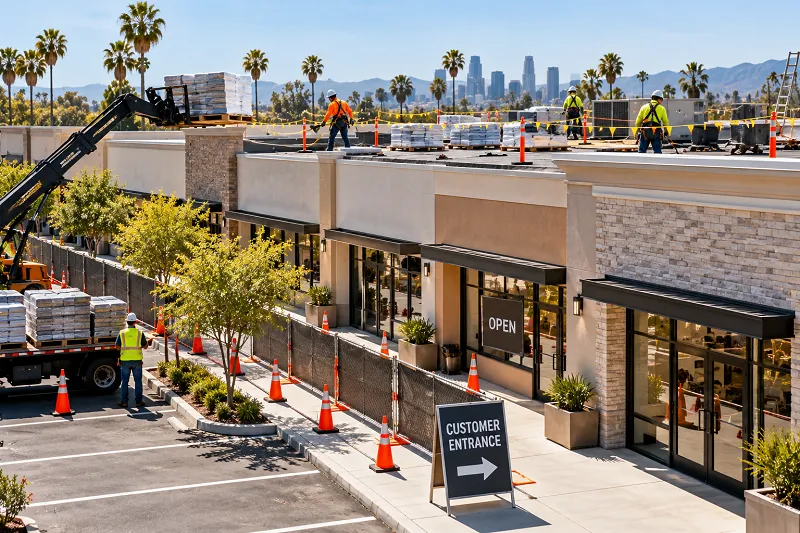
A retail roofing project changes how people move around the building. Crews may need staging areas, material delivery zones, equipment access, dumpsters, lifts, or temporary barriers.
These areas should be planned so entrances remain easy to identify and customers are not unexpectedly directed through active construction zones. Emergency exits must remain accessible, and walkways should be kept clear of roofing debris and equipment.
Professional retail roofing contractors in Los Angeles should coordinate site logistics before work starts rather than making access decisions as the project unfolds. This planning is particularly valuable on multi-tenant properties where several storefronts may rely on the same parking areas, loading zones, and pedestrian paths.
Clear separation between work areas and public areas supports both safety and a better customer experience.
Communication Helps Prevent Avoidable Disruption
A technically sound roof replacement can still create frustration if tenants do not know what is happening.
Property managers should know which areas will be worked on, when crews are expected to arrive, where equipment will be located, and whether certain entrances or parking areas will be temporarily affected. Tenants should also receive reasonable notice about particularly noisy phases of work.
Advance communication is useful when rooftop HVAC equipment, satellite systems, signs, or other tenant-related installations need attention during the project.
When everyone understands the schedule, businesses have more time to adapt. A retailer may choose to move a delivery, schedule employee training differently, or notify customers of temporary parking changes. Small adjustments made in advance can prevent larger operational problems later.
Control Noise, Debris, and Dust Around the Property
Roof replacement involves material removal, fastening, cutting, loading, and other activities that naturally create some level of noise and debris. On a retail property, controlling those effects is part of responsible project management.
Debris should be directed toward designated collection areas rather than allowed to spread around customer spaces. Ground-level cleanup should happen consistently throughout the project, not only after the final day of work.
Noise deserves similar planning. Certain phases may be louder than others, and businesses with appointments, meetings, dining areas, or customer service operations may be more sensitive to disruption.
A contractor who understands retail environments can often sequence tasks to reduce the impact on the people inside the building while still maintaining an efficient workflow.
Plan Around Rooftop Equipment and Building Systems
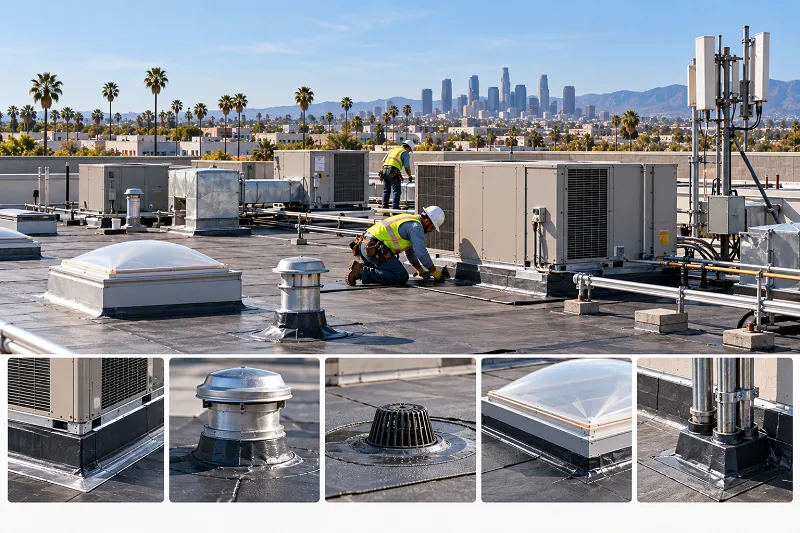
Commercial roofs often contain HVAC units, vents, electrical penetrations, drains, skylights, plumbing components, signage supports, and communication equipment. These features can make replacement more complex.
Roofing work around penetrations requires careful detailing because these areas can become vulnerable to water intrusion if flashing and transitions are poorly handled.
Mechanical contractors may also need to coordinate with the roofing team if equipment has to be temporarily raised, disconnected, repositioned, or replaced.
During a commercial roof replacement in Los Angeles, this coordination should happen before the affected roof section is opened. Waiting until crews reach a mechanical unit to determine what needs to happen can create delays and increase disruption for tenants below.
Choose a Roofing System With the Building’s Future in Mind
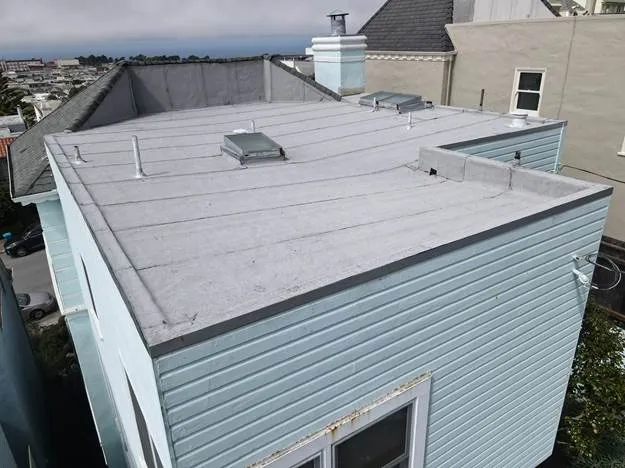
A replacement project is also an opportunity to think beyond the immediate construction period. Roofing materials should be evaluated according to the building’s slope, drainage, rooftop traffic, equipment configuration, maintenance needs, climate exposure, and long-term ownership plans.
The least disruptive installation is not automatically the best option if the resulting roof requires excessive maintenance or does not fit the building well.
Owners should also discuss access for future inspections and repairs. A retail building with frequent HVAC servicing may experience more rooftop traffic than another commercial property. The roofing system and access pathways should account for that reality.
Experienced retail roofing contractors in Los Angeles can explain how different systems fit the building instead of recommending a material based only on initial price.
FAQs About Replacing a Retail Property Roof
Can a retail business stay open while its roof is being replaced?
In many situations, a retail property can continue operating during roof replacement, but this depends on the condition of the building, the scope of work, customer access, safety requirements, and the roofing system involved. Careful scheduling and clearly separated work zones can help reduce interruptions while allowing normal operations to continue safely.
How can property owners reduce disruption during a retail roof project?
Early planning makes a significant difference. Owners and managers should discuss tenant schedules, deliveries, parking, entrances, rooftop equipment, noise-sensitive periods, material staging, and cleanup procedures before construction starts. A detailed project plan gives both the roofing crew and the businesses inside the property clearer expectations throughout the job.
What should be discussed with tenants before roof replacement begins?
Tenants should understand the expected schedule, potential noise, temporary access changes, parking restrictions, equipment activity, and any work that could affect their individual spaces. Providing updates before major phases begin helps businesses adjust staffing, customer appointments, deliveries, or other activities without being surprised by construction conditions.
How long does a retail roof replacement take?
The timeline depends on roof size, roofing material, existing conditions, weather, access, deck repairs, rooftop equipment, permitting, and the complexity of the building. Rather than relying on a generic timeframe, property owners should request a project-specific schedule that explains major phases and how potential delays will be handled.
Minimize Downtime With Retail Property Roof Replacement in Los Angeles From Apollo Roofing Company
A retail roofing project should protect the building without creating unnecessary obstacles for the businesses operating underneath it. Apollo Roofing Company approaches each project with attention to roof conditions, tenant activity, site access, scheduling, rooftop systems, and long-term performance.
If your retail property is approaching roof replacement, careful planning can make the construction process easier for property managers, tenants, employees, and customers. Contact Apollo Roofing Company to discuss your building, review the condition of your existing roof, and develop a replacement strategy focused on protecting the property while keeping business moving.
