

Choosing a commercial roofing system is rarely as simple as picking the material with the longest list of benefits. A roof has to work with the building beneath it, the conditions around it, and the way the property is used every day. Slope, drainage, rooftop equipment, foot traffic, existing materials, and budget can all influence which system makes sense.
That is why the TPO roofing vs modified bitumen discussion deserves more than a quick side-by-side comparison. Both systems are commonly associated with low-slope commercial roofs, but they differ in construction, installation methods, surface characteristics, and how they respond to certain building conditions.
For commercial property owners, understanding those differences can make conversations with a roofing contractor much more productive.
What Is TPO Roofing?
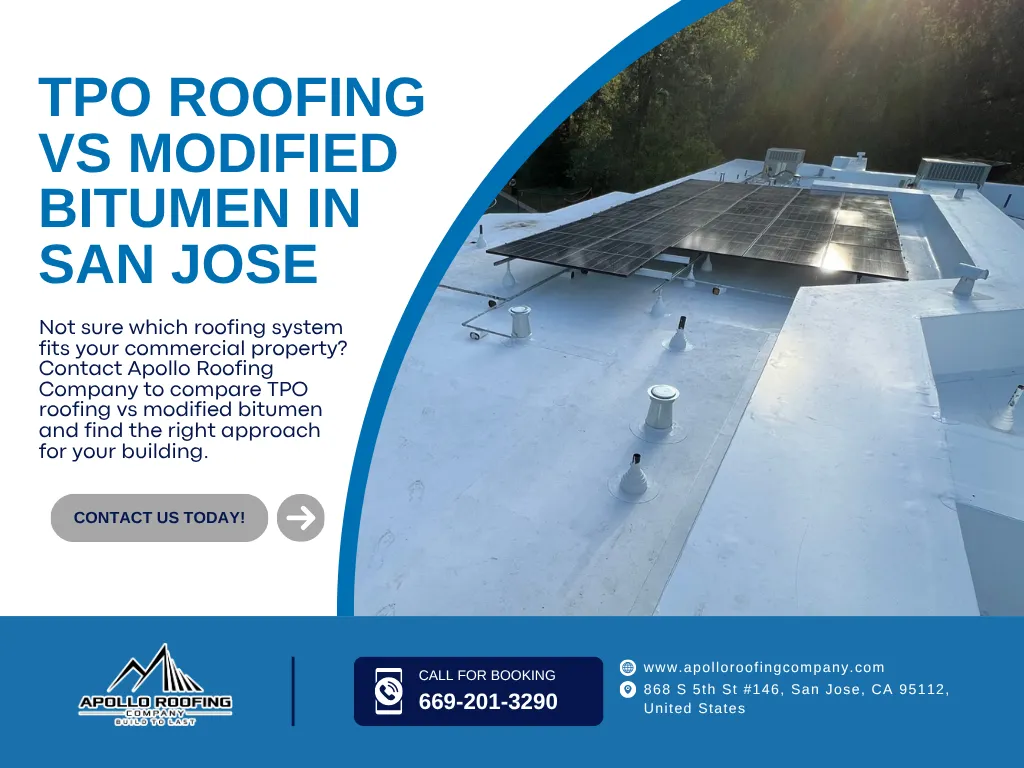
Thermoplastic polyolefin, commonly called TPO, is a single-ply roofing membrane used on many low-slope commercial buildings. The membrane is manufactured in sheets that are installed across the roof and joined at seams, typically through heat welding.
One of TPO’s recognizable characteristics is its smooth surface. White TPO membranes are also widely used because they can reflect a portion of incoming solar radiation rather than absorbing as much heat as darker roofing surfaces. Actual building energy performance, however, depends on much more than membrane color. Insulation, climate, HVAC efficiency, building design, roof condition, and operating patterns all play a role.
TPO systems can be installed using different attachment methods depending on the roof assembly and project requirements. Because seam quality is important to the finished system, proper installation and attention to penetrations, transitions, edges, and drainage areas are essential.
What Is Modified Bitumen Roofing?
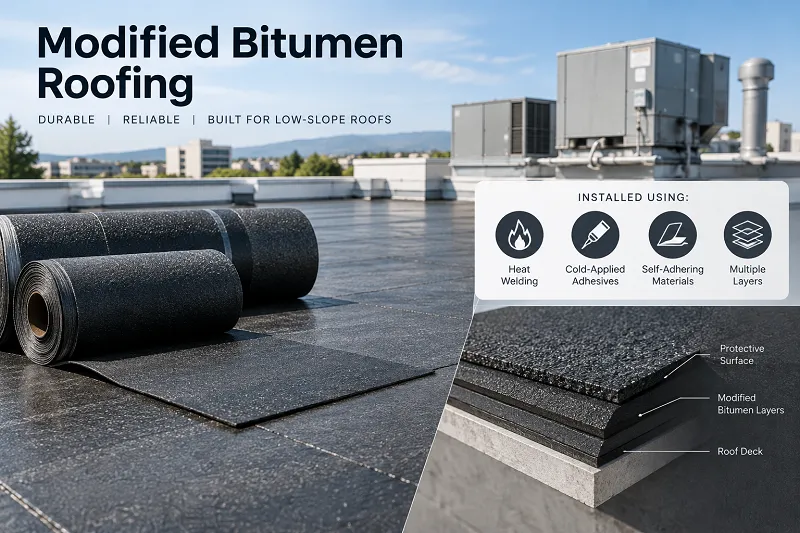
Modified bitumen roofing is an asphalt-based roofing material that incorporates polymer modifiers to improve performance characteristics. It is commonly supplied in rolls and installed in one or more layers as part of a low-slope roofing assembly.
Depending on the specific product and project, modified bitumen may be installed using methods such as heat welding, cold-applied adhesives, self-adhering materials, or other manufacturer-approved techniques. Not every installation method is appropriate for every building, which is one reason product specifications and site conditions matter.
Modified bitumen systems are often selected for roofs where durability and resistance to routine rooftop activity are important considerations. Their layered construction can be useful on commercial properties where maintenance crews need periodic access to mechanical equipment, although designated walkways and appropriate precautions are still important.
How TPO and Modified Bitumen Differ
The biggest difference begins with how the systems are constructed. TPO is a single-ply thermoplastic membrane. Modified bitumen is asphalt-based and may form part of a multi-layer roof assembly.
That difference affects how each roof is installed and detailed. TPO relies heavily on properly welded seams and careful detailing around penetrations and transitions. Modified bitumen uses overlapping sheets and installation techniques suited to the particular product being used.
Surface characteristics differ as well. TPO is commonly available in reflective colors, while modified bitumen can have different surfacing options depending on the product. Neither characteristics should be considered in isolation. The complete roof assembly and the building’s needs are more important than choosing a system based on one feature.
When evaluating TPO vs modified bitumen commercial roofing, the useful question is not which material sounds more advanced. It is how the complete system will perform on a particular building.
Durability and Rooftop Traffic
Commercial roofs are not always quiet, untouched spaces. HVAC technicians, electricians, maintenance teams, and other contractors may need roof access throughout the year.
Modified bitumen’s layered construction can provide strong resistance to certain types of physical wear. TPO can also perform well on commercial properties, but concentrated traffic should be managed carefully. Walkway pads or designated access routes may be appropriate around frequently serviced equipment.
No roofing membrane should be treated like a regular walking surface. Dropped tools, sharp objects, dragged equipment, and careless maintenance work can damage roofing materials. If a building experiences frequent rooftop activity, that should be discussed before a roofing system is selected.
Weather and Temperature Considerations
Commercial roofs must handle more than rain. Sun exposure, temperature changes, wind, standing water, debris, and the condition of drainage components can all affect long-term performance.
TPO’s reflective surface options can be attractive for buildings exposed to significant sunshine. Modified bitumen systems may offer different surfacing choices depending on the desired assembly.
Drainage remains critical for either system. A membrane cannot compensate for poorly functioning drains, clogged scuppers, inadequate slope, or other conditions that allow water to remain where it should not.
The roof should therefore be evaluated as a complete system rather than simply as a surface covering.
Installation Requirements Matter
A quality roofing material can still underperform when installation is poor. Seam preparation, flashing, penetrations, edge details, drainage areas, substrate conditions, and manufacturer requirements all influence the finished roof.
TPO installation requires contractors to create properly welded seams using specialized equipment and appropriate techniques. Weather conditions, membrane preparation, equipment settings, and installer experience can affect this work.
Modified bitumen installation varies according to the selected product. Some systems involve heat, while others use adhesives or self-adhering sheets. Building occupancy, fire-safety considerations, ventilation, and site restrictions can influence which installation approach is appropriate.
Property owners should therefore look beyond the material name and ask how the proposed assembly will actually be installed on their building.
Maintenance and Repair Considerations
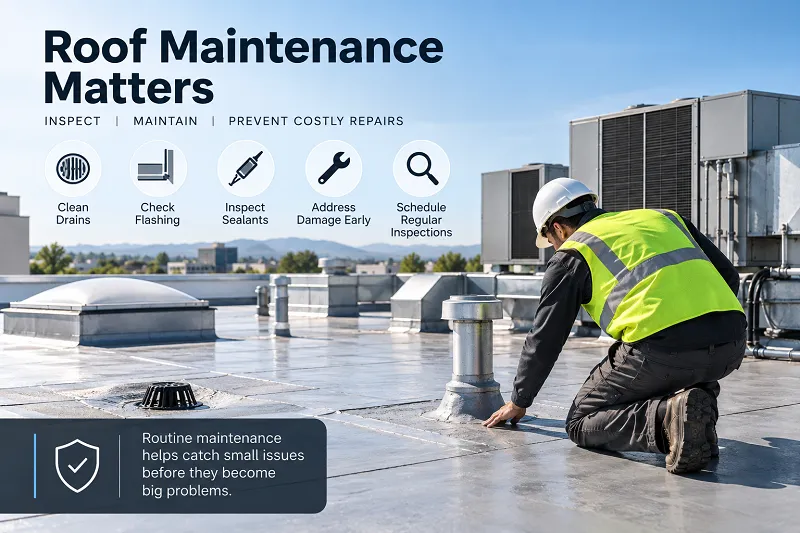
Every commercial roof benefit from routine inspection and maintenance. Drains can clog, flashing can deteriorate, sealants can age, and rooftop work can accidentally damage a membrane.
TPO repairs generally involve compatible membrane materials and heat-welded techniques when appropriate. Modified bitumen repairs depend on the existing system and its condition.
Accessibility is another consideration. A roof crowded with HVAC units, vents, pipes, skylights, solar equipment, or other penetrations creates more detailing areas that require attention. The number and arrangement of those features can influence both installation and future maintenance.
Regular inspections can help identify small concerns before they develop into more extensive moisture problems.
Cost Should Be Considered Over the Life of the Roof
Initial installation price matters, but it should not be the only factor in a commercial roofing decision. Two proposals with different prices may also include different insulation levels, attachment methods, flashing details, warranties, tear-off requirements, drainage work, or substrate repairs.
Maintenance requirements and expected rooftop activity should also be considered. A less expensive proposal is not necessarily the better value if important building conditions have not been addressed.
Instead of comparing only the bottom line, property owners should review what each proposal includes and why a particular system has been recommended.
TPO or Modified Bitumen for Commercial Buildings
The answer depends on the property.
A building with significant solar exposure, limited rooftop traffic, and a design suited to a single-ply membrane may be a good candidate for TPO. Another property with frequent maintenance access, specific existing roof conditions, or different durability priorities may lead a roofing professional to recommend modified bitumen.
When deciding between TPO or modified bitumen for commercial buildings, factors such as roof slope, drainage, existing materials, penetrations, insulation, structural conditions, building use, and maintenance needs should all be reviewed.
A professional roof evaluation provides information that a generic material comparison cannot.
Frequently Asked Questions About TPO Roofing vs Modified Bitumen
Which roofing system lasts longer?
There is no universal lifespan that applies to every TPO or modified bitumen roof. Service life can be influenced by product quality, roof design, installation workmanship, climate, drainage, maintenance, rooftop traffic, and how quickly damage is repaired. A properly designed and maintained system generally has a better opportunity to perform well over time than one selected solely because of a published lifespan estimate.
Which system is better for a roof with frequent foot traffic?
Modified bitumen may be considered where rooftop activity is a significant concern because its construction can provide resistance to certain forms of physical wear. That does not mean it is automatically the correct choice for every high-traffic roof. TPO systems can incorporate walkway pads and planned access routes. The frequency, location, and purpose of rooftop traffic should be evaluated before selecting the assembly.
Is TPO always better for buildings in sunny climates?
Not necessarily. White TPO membranes can provide high solar reflectance, which may be useful for some commercial buildings, but membrane color alone does not determine energy performance or overall roofing suitability. Insulation, HVAC efficiency, building design, local climate, roof exposure, and operating conditions also matter. A roofing system should be selected based on the entire building rather than one surface characteristic.
What should property owners consider when comparing TPO roofing vs modified bitumen?
Property owners should consider the existing roof assembly, drainage, slope, insulation, penetrations, rooftop equipment, expected foot traffic, installation requirements, maintenance needs, and project budget. The condition of the roof deck and underlying materials can also affect the recommendation. A site-specific inspection is important because two seemingly similar commercial buildings can require very different roofing solutions.
Choosing Between TPO Roofing vs Modified Bitumen? Talk to Apollo Roofing Company
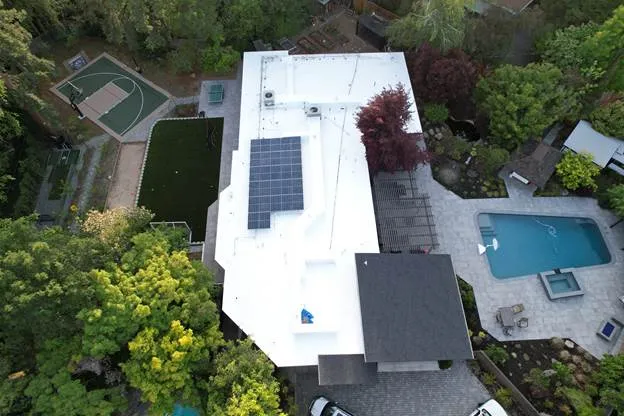
Commercial roofing decisions should begin with the building, not predetermined material. Apollo Roofing Company can evaluate your existing roof, discuss how the property is used, and explain which roofing options may be appropriate for its conditions.
Whether you are planning a full commercial roof replacement or trying to understand the best approach for an aging low-slope roof, getting a professional assessment can help you make a more informed decision. Contact Apollo Roofing Company to schedule a commercial roof evaluation and discuss the next steps for your property.
