

A commercial roof does far more than keep rain out of a building. It helps protect inventory, equipment, tenants, employees, interior finishes, and day-to-day operations. When that roofing system begins to fail, even a relatively small leak can create problems that extend well beyond the roof itself.
Rain is one of the most common forces a commercial roof must manage. Although commercial roofing systems are designed to direct water away from the building, repeated exposure to rain can reveal weak points, accelerate material deterioration, overwhelm drainage systems, and contribute to leaks if maintenance has been delayed.
That is why property owners and facility managers should view rainy-season preparation as part of regular roof management, not simply as an emergency response after water enters the building.
How Does Rain Impact Commercial Roofs?
Commercial roofing systems are built to withstand exposure to the elements, but that does not mean they are unaffected by weather.
Rain places repeated stress on roofing materials, seams, flashing, drains, penetrations, and other vulnerable components. A roof in good condition should manage this water effectively. However, small problems that may go unnoticed during dry weather can become much more obvious once prolonged or heavy rain begins.
This is especially important for low-slope commercial roofs. Unlike steep residential roofs that allow water to move downward quickly, many commercial roofs rely heavily on carefully designed slopes, drains, scuppers, gutters, and internal drainage systems to move water away from the structure.
When one part of that system is compromised, water may remain on the roof longer than intended.
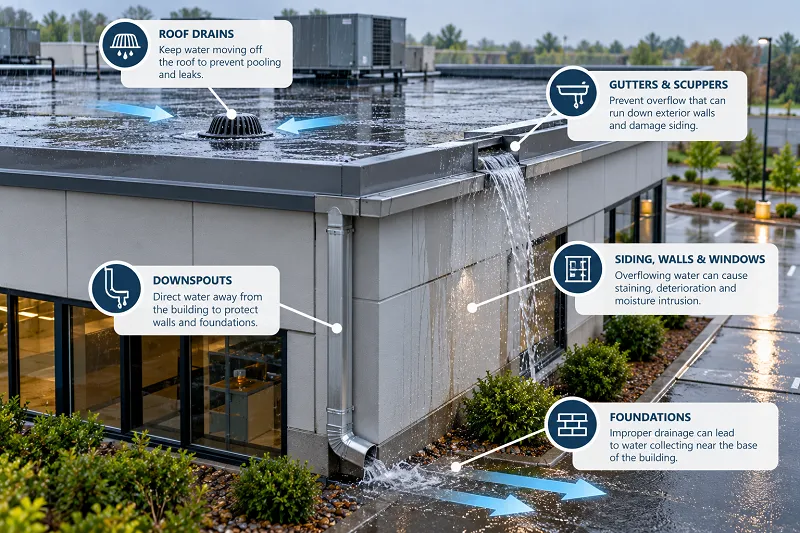
Rain Can Expose Clogged Gutters and Drainage Systems
Debris accumulation is one of the most preventable causes of commercial roof drainage problems.
Leaves, dirt, branches, packaging materials, and other debris can collect on the roof during dry periods. When the first significant rain arrives, that material may be carried directly toward gutters, drains, and downspouts.
Once a drain becomes partially or completely blocked, water cannot leave the roof as efficiently.
On a low-slope roof, even a minor obstruction can cause water to collect around drainage points. As rainfall continues, ponding areas may expand and expose roof seams, penetrations, flashing, and membranes to water for longer periods.
Regular roof cleaning and drainage inspections can help prevent these problems. Before the rainy season, drains should be checked for obstructions, and water pathways should be clear enough to allow runoff to move away from the building as designed.
Poor Drainage Can Affect Siding, Walls, and Foundations
Rainwater that does not drain correctly can create problems below the roofline as well.
When gutters overflow or downspouts fail to direct water away from the property, runoff may travel along exterior walls, fascia, siding, windows, or other building components.
Over time, repeated exposure to uncontrolled water can contribute to staining, deterioration, and moisture intrusion. Water collecting near the foundation may also create drainage concerns around the building.
This is why commercial roof maintenance should not stop at the roof membrane itself.
The complete water-management system matters. Gutters, downspouts, drains, scuppers, flashing, and discharge areas all work together to move water safely away from the structure.
A problem in one area can place unnecessary stress on several others.
Heavy Rain Can Reveal Problems Around Flashing
Flashing protects some of the roof’s most vulnerable transition points.
Commercial roofs often contain vents, HVAC equipment, walls, curbs, pipes, drains, skylights, and other penetrations. Wherever roofing materials meet another surface, water needs to be carefully redirected so it does not enter the system.
That is where flashing becomes important.
Over time, flashing can loosen, shift, corrode, separate, or become damaged. Sealants around these areas can also deteriorate with age and exposure.
Heavy rain may not necessarily create these weaknesses, but it can quickly expose them.
Water follows openings and low points. A small gap near a penetration may allow water to move beneath the roofing system before appearing inside the building somewhere far from the original entry point. This can make commercial roof leaks difficult to diagnose without a thorough inspection.
Checking flashing before periods of frequent rain can help identify problems before they become active leaks.
Repeated Rain Contributes to Roofing Material Wear
Commercial roofing materials are built for durability, but every roofing system ages.
Sunlight, temperature changes, wind, foot traffic, maintenance work, debris, and moisture all contribute to long-term wear. Rain becomes part of that process because water repeatedly tests the roof’s ability to remain sealed and properly drained.
As a roofing system gets older, small vulnerabilities may become more significant.
Membranes can develop cracks or punctures. Seams may weaken. Coatings can wear down. Fasteners and penetrations may become more vulnerable. Previous repairs may also begin to deteriorate.
The concern is rarely one rainstorm by itself. The larger issue is cumulative exposure.
A roof that has gone several years without inspection or maintenance may have minor deficiencies that remain unnoticed until sustained rain finally allows water to enter the system.
Routine inspections give building owners an opportunity to identify these issues earlier, when repairs may be more manageable.
Ponding Water Can Place Additional Stress on the Roof
Water is heavy.
One cubic foot of water weighs approximately 62 pounds, which means standing water can add a significant load when it accumulates over a large area.
Commercial roofs are designed according to structural requirements, but persistent ponding water should still be taken seriously.
Standing water can increase stress on roofing materials and keep vulnerable areas continuously exposed to moisture. It may also contribute to faster membrane deterioration, encourage debris buildup, and make existing drainage problems worse.
Ponding water may be caused by clogged drains, inadequate slope, structural movement, compressed insulation, or other roof conditions.
After a rainstorm, some water may temporarily remain on certain roofs. However, areas that repeatedly hold water long after surrounding sections have dried deserve professional evaluation.
The goal is not simply to remove the water. It is to understand why it is collecting there in the first place.
Why Commercial Roof Inspections Matter Before the Rainy Season
Commercial roof leaks often become noticeable only after rain begins.
Unfortunately, that is also when many other property owners discover roofing problems at the same time.
Scheduling an inspection before prolonged rainy weather gives building owners more control over the process. Instead of reacting to active water intrusion, they can identify vulnerable areas, prioritize repairs, and develop a maintenance plan before interior damage occurs.
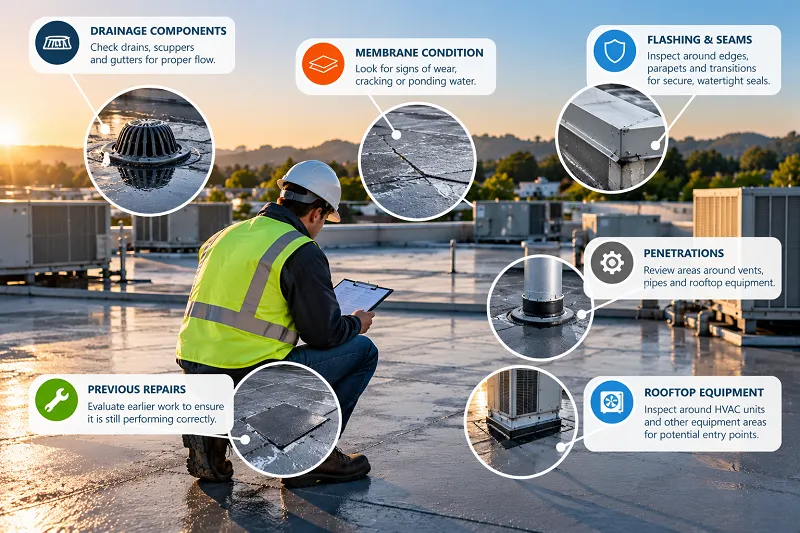
A professional inspection may include reviewing drainage components, membrane condition, flashing, seams, penetrations, previous repairs, rooftop equipment areas, and other potential entry points.
The exact inspection process depends on the roofing system and building configuration.
The important point is that preventative inspections can turn unexpected emergencies into planned maintenance.
Commercial Roofing Companies Often Get Busier After Heavy Rain
Roofing contractors commonly receive more service calls once storms expose leaks.
For commercial property owners, waiting until water begins entering the building can make scheduling more challenging. Emergency conditions can also limit the amount of time available to compare contractors, evaluate recommendations, or plan work around business operations.
Addressing potential issues earlier provides more flexibility.
It allows building owners to schedule inspections at a practical time, review findings carefully, and determine which repairs should be completed before weather conditions worsen.
Preventative planning can be especially valuable for properties with sensitive equipment, occupied tenant spaces, valuable inventory, or operations that cannot easily be interrupted.
Early Planning Gives You More Time to Choose a Qualified Roofer
A commercial roof is a significant investment, and the contractor responsible for maintaining or repairing it should understand the roofing system involved.
When a leak becomes an emergency, building owners may feel pressured to choose whoever can arrive first.
Planning ahead creates time to evaluate roofing contractors based on commercial experience, licensing, insurance, communication, proposed scope of work, and familiarity with the type of roof installed on the property.
A qualified roofer should also be able to explain what was found during the inspection and why a particular repair or maintenance recommendation is appropriate.
Commercial roofing decisions should be based on the condition of the system, not simply on the urgency of the weather forecast.
Roof Maintenance Helps Protect Assets and Business Operations
The financial impact of a commercial roof leak can extend far beyond the cost of repairing the roofing material.
Water intrusion may damage ceiling systems, insulation, drywall, electrical components, merchandise, furniture, machinery, or stored materials. Depending on the location of the leak, sections of the building may also need to be temporarily closed.
Moisture that remains hidden inside the building can create additional concerns if it is not properly addressed.
Preventative roof maintenance helps reduce these risks by identifying conditions that could allow water to enter the property.
For businesses, this is ultimately an operational issue as much as a roofing issue.
A functioning roof helps protect the environment required to keep employees working, customers entering the building, equipment operating, and inventory secure.
Work With Apollo Roofing Company for Commercial Roofing Services
Rain is unavoidable, but unexpected roof problems do not always have to be.
A well-maintained commercial roofing system is better prepared to manage seasonal rainfall, drain water properly, and protect the building beneath it. Regular inspections can help identify clogged drainage systems, deteriorated flashing, aging roofing materials, ponding water, and other conditions before they develop into more disruptive problems.
Apollo Roofing Company serves San Rafael and surrounding communities with commercial roofing services that include roof inspections, maintenance, repairs, and roof replacement.
Whether you are preparing your property for the rainy season, investigating a potential leak, or evaluating the overall condition of an aging commercial roof, a professional assessment can provide clearer information about what the system needs.
For more information about commercial roofing services or to discuss your property’s roofing needs with Apollo Roofing Company, call us today!
