

A flat roof can serve a property well for years, but no roofing system lasts forever. Sun exposure, changing temperatures, standing water, aging materials, and years of normal wear can eventually affect how reliably a roof protects the building beneath it.
When repairs become more frequent or the roofing system approaches the end of its useful life, replacement may be the more practical option. Property owners considering flat roof replacement Milpitas services should understand more than the final price. Materials, roof condition, drainage, accessibility, installation requirements, and the size of the building can all influence the project.
Knowing what to expect before work begins can make planning much easier. This guide explains the major factors that affect replacement costs, common flat roofing materials, expected timelines, and signs that it may be time to replace an existing roof.
When Does a Flat Roof Need to Be Replaced?
A roof problem does not automatically mean the entire system needs replacement. Isolated damage can sometimes be repaired effectively, especially when the surrounding roofing material remains in good condition.
The situation changes when problems become widespread or keep returning. Frequent leaks, deteriorating seams, extensive membrane damage, persistent ponding water, and moisture beneath the roofing system can indicate that repairs are providing only temporary relief.
Age is another important consideration. Different roofing materials have different expected service lives, and installation quality, maintenance, drainage, and exposure all influence how long they perform.
A professional inspection can help determine whether repair or replacement makes better financial and practical sense. Rather than focusing on a single damaged area, a roofer can evaluate the overall condition of the membrane, flashing, drainage components, penetrations, and underlying roof structure.
What Affects Flat Roof Replacement Costs?
There is no universal price for replacing a flat roof. Every building presents different conditions, which is why an inspection is usually necessary before an accurate estimate can be prepared.
The flat roof replacement cost Milpitas property owners encounter is influenced first by roof size. Larger roofs require more material and labor, but square footage is only one part of the calculation.
The existing roofing system also matters. Removing old material may uncover damaged insulation, deteriorated decking, trapped moisture, or other conditions that need attention before the new system can be installed.
Accessibility can affect labor requirements as well. A roof that is easy for crews and equipment to reach may involve different logistics than a roof surrounded by tight spaces, neighboring structures, or other obstacles.
Roof penetrations add another layer of detail. HVAC equipment, vents, skylights, pipes, drains, and other rooftop features must be properly integrated into the new roofing system. Careful flashing around these areas is essential because penetrations are common places for water intrusion to develop.
Material selection, insulation needs, drainage improvements, disposal requirements, and permitting considerations may also influence the final estimate.
Choosing the Right Material for a Flat Roof
Flat roofing systems need materials designed to handle low-slope conditions. Unlike steep roofing, where gravity moves water away quickly, flat and low-slope roofs depend heavily on proper drainage and carefully installed waterproof roofing systems.
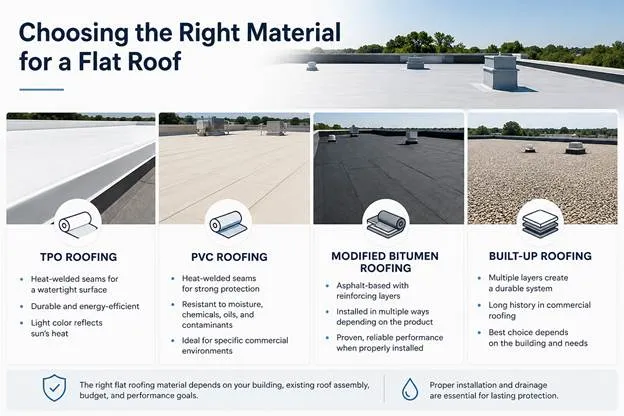
Several materials may be appropriate depending on the building, existing roof assembly, budget, and performance goals.
TPO Roofing
Thermoplastic polyolefin, commonly called TPO, is a single-ply roofing membrane widely used on commercial and low-slope buildings. Its seams are typically heat-welded, creating a continuous surface designed to resist water intrusion.
TPO is often selected because it provides a balance between performance, durability, and energy-related considerations. Light-colored membranes can also reflect a portion of the sun’s heat, which can be useful for buildings exposed to significant sunlight.
PVC Roofing
PVC is another single-ply membrane option. Like TPO, sections are typically joined using heat-welded seams.
PVC roofing is known for its resistance to moisture and certain chemicals, oils, and contaminants. Those characteristics can make it worth considering for particular commercial properties. Whether PVC is appropriate depends on how the building is used and the requirements of the roof itself.
Modified Bitumen Roofing
Modified bitumen combines asphalt with reinforcing materials to create a roofing system suited to low-slope applications. It has been used for decades and can be installed using several methods depending on the specific product.
Its layered construction can provide dependable protection when properly installed. Existing roof conditions and building requirements should be evaluated before deciding whether modified bitumen is the right solution.
Built-Up Roofing
Built-up roofing, sometimes called BUR, uses multiple layers of roofing material to create a protective surface. It has a long history in commercial roofing and remains an option for certain buildings.
Because each roofing system has different installation and maintenance characteristics, material selection should be based on the property rather than popularity alone.
Commercial Flat Roof Replacement Requires Careful Planning
Replacing the roof on a commercial property often involves considerations beyond roofing materials. Businesses may need to remain operational while work is underway, making scheduling and site organization especially important.
A commercial flat roof replacement Milpitas project may involve rooftop HVAC systems, vents, drainage equipment, electrical components, solar equipment, or other building systems. Roofing crews need to understand how these elements interact with the roof before installation begins.
Access is another concern. Contractors may need designated areas for materials, equipment, debris removal, and crew movement. Planning these details beforehand can help reduce unnecessary disruptions around the property.
Commercial owners should also consider what is happening beneath the roof. Offices, retail spaces, warehouses, and other occupied areas may have different scheduling needs. Clear communication between the roofing contractor and property owner helps everyone understand when work will occur and what to expect.
How Long Does Flat Roof Replacement Take?
The timeline for a flat roof replacement varies considerably. A straightforward project on a smaller, easily accessible building may move relatively quickly. A large commercial property with extensive rooftop equipment or underlying damage may require considerably more time.
Preparation is part of the timeline. Before installation starts, the contractor needs to inspect the roof, determine the appropriate system, calculate materials, coordinate logistics, and address applicable permit requirements.
Once work begins, the existing roofing materials may need to be removed. The exposed roof deck can then be inspected for damage that was not visible during the initial evaluation.
Any necessary repairs should be addressed before the new roofing system covers the area. Skipping this step could leave hidden problems underneath an otherwise new roof.
Weather can also influence scheduling. Roofing work requires suitable conditions for safe installation and proper material performance. Unexpected weather can occasionally extend a project even when everything else has been carefully planned.
Why Drainage Matters on a Flat Roof
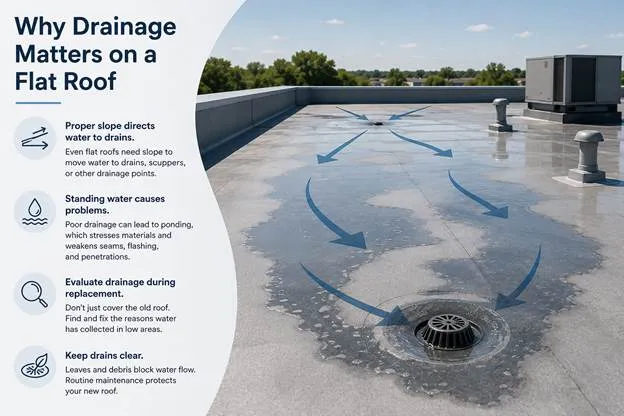
The term “flat roof” can be misleading. A properly designed system generally includes enough slope to direct water toward drains, scuppers, or other drainage points.
When water cannot leave the roof effectively, it can collect in low areas. Repeated ponding may place additional stress on roofing materials and can expose weaknesses in seams, flashing, and penetrations.
During replacement, drainage conditions should be evaluated rather than simply covering the existing surface with new material. If water has repeatedly accumulated in the same locations, the cause deserves attention.
Drains should also remain clear after installation. Leaves, debris, and other materials can restrict water flow, so routine roof maintenance continues to matter even after a new system has been installed.
What Happens During a Flat Roof Replacement?
The process usually starts with a detailed roof evaluation. Contractors examine the existing material, drainage, flashing, penetrations, visible damage, and other conditions that could affect installation.
Once the scope is established, materials can be selected and project logistics organized. The existing roof may then be removed according to the requirements of the project.
With the old material removed, crews can evaluate the substrate more closely. Damaged areas may need repair before insulation, cover boards, membranes, flashing, or other components are installed.
The exact installation sequence depends on the selected roofing system. Regardless of material, careful treatment around edges, penetrations, drains, and transitions is important. These details play a significant role in long-term roof performance.
After installation, the completed roof should be inspected so that seams, flashing, drainage points, and other important areas can be reviewed.
Planning Ahead Can Make Replacement Easier
Waiting for a major leak to force a roofing decision can create unnecessary pressure. When a roof is showing consistent signs of deterioration, early evaluation gives property owners more time to understand their options.
Planning ahead allows time to compare appropriate materials, discuss scheduling, understand building access requirements, and prepare for the work. It also gives a roofing professional an opportunity to identify concerns before they become more disruptive.
For property owners researching flat roof replacement cost Milpitas, an on-site evaluation provides far more useful information than a broad price estimate. Roof size may be easy to calculate, but hidden moisture, insulation, drainage, penetrations, accessibility, and substrate conditions require a closer look.
The same principle applies to commercial flat roof replacement Milpitas projects. A detailed plan can help protect the building while minimizing disruption to employees, tenants, customers, and normal operations.
Frequently Asked Questions About Flat Roof Replacement Milpitas
How do I know whether my flat roof needs replacement instead of another repair?
The answer depends on the roof’s age, overall condition, history of leaks, membrane deterioration, drainage, and the extent of existing damage. A repair may make sense for an isolated problem, while repeated leaks or widespread deterioration can make replacement a more practical long-term solution. A professional inspection can help determine which approach fits the roof’s actual condition.
What is the best material for a flat roof in Milpitas?
There is no single material that is best for every property. TPO, PVC, modified bitumen, and built-up systems each have different characteristics. The right choice depends on the existing roof assembly, building use, drainage, rooftop equipment, maintenance expectations, and project goals. A roofing contractor can compare these factors before recommending a system.
Can a business remain open while its flat roof is being replaced?
Many businesses can continue operating during roof replacement, although the answer depends on the property and scope of work. Noise, equipment placement, building access, debris removal, and rooftop systems should be discussed before installation. Careful scheduling and communication can help reduce disruption while allowing roofing work to progress safely.
How should I prepare for flat roof replacement Milpitas services?
Start by having the roof professionally evaluated and discussing access, rooftop equipment, drainage, materials, scheduling, and possible underlying damage. Property owners should also ask what areas around the building need to remain clear during construction. Understanding these details beforehand can make the replacement process more organized and predictable.
Plan Your Flat Roof Replacement in Milpitas With Apollo Roofing Company
A flat roof replacement is an opportunity to address more than worn roofing material. It is also a chance to evaluate drainage, flashing, penetrations, underlying conditions, and the overall performance of the roofing system.
Apollo Roofing Company can inspect your property, explain the available roofing options, and help you understand what the replacement process may involve. With a clearer picture of your roof’s condition, you can make decisions based on the needs of the building rather than guesswork.
If your flat roof is aging, leaking, or requiring increasingly frequent repairs, contact Apollo Roofing Company to schedule an evaluation and discuss the next steps for your property.
