

Replacing a roof is one of the most important investments a Los Angeles property owner can make. Your roof protects your home or commercial building from intense sun, coastal moisture, seasonal rain, wind, and long-term structural wear. It also plays a major role in energy efficiency, property value, insurance confidence, and curb appeal. Still, one of the first questions most property owners ask is simple: how much should I expect to pay?
The honest answer is that roofing prices vary widely. The roof replacement cost in Los Angeles depends on the size of the roof, the roofing material, the condition of the existing system, the slope, accessibility, permits, labor, and whether repairs are needed beneath the surface. Recent Los Angeles-focused roofing cost guides estimate average local replacement pricing around $8.60 per square foot, while broader California cost guides show costs rising significantly for premium materials and complex projects.
At Apollo Roofing Company, we know that homeowners and business owners want more than a vague price range. They want to understand what affects the estimate, what is included, and how to plan with confidence. This guide breaks down the major factors behind roofing costs in Los Angeles so you can make an informed decision before starting your project.
Why Roof Replacement Pricing Varies So Much
Two homes on the same street can have very different roofing estimates. One may have a simple asphalt shingle roof with easy access, while the other may have clay tile, multiple roof levels, damaged decking, or a steep slope that requires extra labor and safety preparation. Because every roof has its own structure and condition, pricing should always be based on a detailed inspection rather than a one-size-fits-all quote.
Los Angeles adds another layer of complexity. The area includes older homes, hillside properties, flat-roof commercial buildings, coastal homes, Spanish-style tile roofs, and modern energy-efficient roofing systems. Local building requirements, cool roof standards, permit needs, and neighborhood conditions can also influence the final cost.
A reliable estimate should explain the full scope of work. It should account for tear-off, disposal, underlayment, flashing, ventilation, decking repairs, materials, labor, permits, and final cleanup. If an estimate looks unusually low, it may not include everything needed for a durable and code-conscious roof.
Roof Size and Square Footage Matter
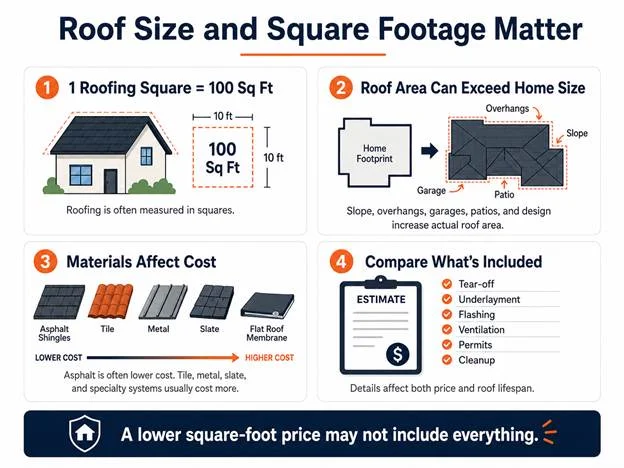
Roof size is one of the biggest cost drivers. Roofing is often measured in squares, with one roofing square equaling 100 square feet. A larger roof requires more materials, more labor, more tear-off time, and more disposal. However, the size of your home is not always the same as the size of your roof. Roof slope, overhangs, attached garages, covered patios, and architectural design can increase the actual roof area.
The roofing cost per square foot in Los Angeles can vary depending on material, complexity, and project conditions. Asphalt shingles may sit on the lower end of the pricing spectrum, while tile, metal, slate, and specialty systems usually cost more. Flat roofs also have different pricing structures because they require specific waterproofing systems, drainage details, and installation methods.
When comparing estimates, property owners should look at what each square-foot price includes. A lower price may only cover basic materials and installation, while a more complete estimate may include removal, underlayment, flashing replacement, ventilation improvements, permit coordination, and cleanup. The details matter because they affect both the upfront investment and the life of the roof.
Material Choice Has a Major Impact
Roofing materials can dramatically change the total cost of a replacement. Asphalt shingles are often one of the more budget-friendly options and remain popular because they are versatile, efficient to install, and available in many styles. Architectural shingles typically cost more than basic three-tab shingles, but they can offer stronger durability and a more dimensional appearance.
Tile roofing is common throughout Los Angeles, especially on Mediterranean, Spanish, and traditional Southern California homes. Clay and concrete tiles can provide long-term performance and strong curb appeal, but they are heavier and more labor-intensive to install. The roof structure must also be able to support the weight, which may require additional evaluation.
Metal roofing is another option for homeowners who want durability, energy efficiency, and a modern look. It can cost more upfront but may offer strong long-term value when installed correctly. Flat and low-slope roofs often require materials such as modified bitumen, TPO, PVC, or other membrane systems. These roofs need careful attention to seams, flashing, drainage, and waterproofing performance.
The new roof cost in Los Angeles is closely tied to the material you choose, but the best choice is not always the cheapest or the most expensive. The right material should fit the roof structure, climate, property style, maintenance expectations, and long-term goals.
Roof Pitch, Shape, and Accessibility
A roof that is easy to access and simple in shape usually costs less to replace than one with steep pitches, multiple levels, valleys, dormers, skylights, chimneys, or complicated transitions. Complex roofs require more cutting, more flashing work, more labor hours, and more safety preparation.
Steep roofs can also increase labor costs because crews need additional equipment and precautions. If a home is built on a hillside or has limited driveway access, material delivery and debris removal may take more time. In dense Los Angeles neighborhoods, parking, staging, and access can also affect the workflow.
These details may not be obvious from the ground. That is why an in-person inspection is so important. A professional roofing contractor can evaluate the roof’s shape, slope, access points, existing layers, and potential challenges before preparing an estimate.
Tear-Off, Disposal, and Hidden Damage
Many roof replacements begin with removing the existing roofing materials. Tear-off allows the contractor to inspect the roof deck and determine whether the surface underneath is strong enough for the new system. This step is important because installing new roofing over damaged decking can lead to future leaks, sagging, and premature failure.
Disposal also affects cost. Old shingles, tile, underlayment, nails, and damaged materials must be removed from the property and properly handled. Heavier materials, such as tile, can increase disposal time and weight-related costs.
Hidden damage is another factor. Once the old roof is removed, the contractor may find rotted decking, damaged fascia, compromised flashing, or ventilation problems. These issues should be repaired before the new roof is installed. While this can add to the total cost, it protects the long-term performance of the roof and helps prevent future repairs.
Permits and Local Requirements
Los Angeles roofing projects may require permits depending on the type and scope of work. Permit requirements help ensure that roofing work is completed according to applicable building codes and safety standards. They also create a record of the project, which can be valuable for insurance, resale, and future property improvements.
Permit costs vary based on the project and jurisdiction. Some reroofing projects may qualify for a more straightforward permitting process, while complex work involving structural changes, commercial properties, or special conditions may require additional review.
Apollo Roofing Company helps property owners understand what may be required before work begins. This helps reduce confusion, avoid unnecessary delays, and keep the project moving in the right direction.
Labor, Experience, and Workmanship
Labor is a major part of any roofing estimate. In Los Angeles, skilled roofing labor is especially important because roofs must be installed to handle heat, sun exposure, seasonal rain, and local code expectations. A lower-cost installation may seem appealing at first, but poor workmanship can lead to leaks, ventilation problems, premature material failure, and costly repairs.
Experienced roofing crews know how to handle flashing details, roof penetrations, underlayment, valleys, drainage points, and material-specific installation requirements. They also understand how to protect the property during the project, manage debris, and communicate clearly with the property owner.
When comparing estimates, it is important to look beyond the price. A strong roofing contractor should provide a clear scope, explain material options, discuss possible repair needs, and stand behind the quality of the installation.
Residential Roof Replacement Costs
For homeowners, the cost of a replacement often depends on the age of the current roof, material type, home design, and whether any underlying damage exists. A smaller asphalt shingle roof with easy access will usually be more affordable than a large tile roof with multiple slopes and extensive deck repair needs.
The new roof cost in Los Angeles may also be influenced by energy-efficiency upgrades, cool roof materials, ventilation improvements, and future plans such as solar panel installation. If you plan to install solar in the future, it is often smart to address roofing needs first so the new panels are not installed over an aging roof.
A roof replacement can also strengthen buyer confidence if you plan to sell your home. A properly installed roof with clear documentation can be a major advantage during inspection and negotiation.
Commercial Roof Replacement Costs
Commercial roof replacement is often more complex than residential roofing. Commercial buildings may have large flat or low-slope roofs, rooftop HVAC units, drainage systems, parapet walls, access limitations, tenant schedules, and stricter operational concerns. These factors can affect both the timeline and the total cost.
Business owners and property managers must also consider downtime, safety, tenant communication, and long-term maintenance. A well-installed commercial roof protects inventory, equipment, employees, and customers. It also helps prevent water intrusion that could disrupt business operations.
Commercial roofing should be approached with careful planning. Apollo Roofing Company can evaluate the existing roof system, identify concerns, and recommend a replacement solution that balances performance, durability, and budget.
How to Compare Roofing Estimates
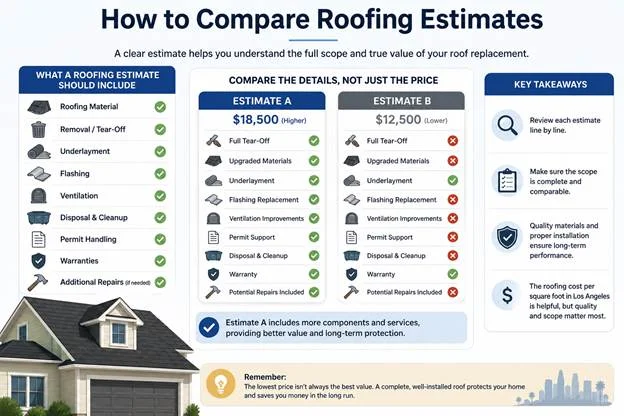
A roofing estimate should be clear enough for you to understand what you are paying for. It should explain the roofing material, removal process, underlayment, flashing, ventilation, disposal, permit handling, warranties, and any potential additional repairs.
If two estimates are very different, compare the details before choosing. One contractor may include full tear-off and upgraded materials, while another may leave out key components. One may include permit support and cleanup, while another may treat those as separate roof replacement cost in Los Angeles.
The roofing cost per square foot in Los Angeles is useful for comparison, but it should not be the only deciding factor. The quality of the materials, installation method, contractor experience, and completeness of the scope can make a major difference in long-term value.
Why the Cheapest Roof Is Not Always the Best Value
A roof is not a short-term purchase. It is a system that must protect the property year after year. Choosing the cheapest estimate may save money upfront, but it can cost more later if the work is incomplete, improperly installed, or not suited to the property.
Poor installation can lead to leaks, damaged insulation, mold concerns, premature material failure, and repeated service calls. In some cases, a roof may need major repairs or early replacement because corners were cut during the original installation.
A better approach is to look for value. That means fair pricing, quality materials, skilled workmanship, clear communication, and a contractor who understands local roofing conditions. Apollo Roofing Company focuses on dependable roofing solutions designed for Southern California properties.
Get Clear Answers on Roof Replacement Cost in Los Angeles With Apollo Roofing Company
A roof replacement is a major decision, but it does not have to feel overwhelming. With the right contractor, you can understand your options, compare materials, plan your budget, and move forward with confidence.
Apollo Roofing Company provides clear guidance, professional inspections, and dependable roofing solutions for Los Angeles homeowners and business owners. Our team takes the time to explain what affects your estimate and what your roof truly needs for long-term performance.
Contact Apollo Roofing Company today to schedule your roof replacement consultation and get honest answers from a trusted local roofing team.
FAQs About Roof Replacement Costs in Los Angeles
How much should I budget for a roof replacement in Los Angeles?
Your budget depends on roof size, material, slope, accessibility, existing damage, permit needs, and labor. Asphalt shingle roofs are often more affordable, while tile, metal, and flat roofing systems can cost more. The best way to budget accurately is to schedule a professional inspection so the estimate reflects your actual roof condition and project scope.
What factors can increase the cost of replacing a roof?
Several factors can raise the final price, including steep roof pitch, multiple roof levels, damaged decking, old material removal, heavy tile, limited access, skylights, chimneys, ventilation upgrades, and permit requirements. Hidden damage discovered after tear-off can also increase the scope. A detailed inspection helps identify many of these concerns before work begins.
Is it worth investing in higher-quality roofing materials?
Higher-quality materials can be worth the investment when they fit your property, climate, and long-term goals. Better materials may offer improved durability, stronger weather resistance, better energy performance, and enhanced curb appeal. The right choice depends on your roof structure, budget, maintenance expectations, and how long you plan to own the property.
Can a new roof help improve home value?
Yes, a properly installed roof can improve buyer confidence, curb appeal, energy performance, and overall property protection. Buyers often pay close attention to roof age and condition during inspections. A new roof may also reduce concerns about leaks, repairs, and future maintenance, making the property more appealing in a competitive Los Angeles market.
Why should I get a professional roof estimate instead of using an online calculator?
Online calculators can provide a general starting point, but they cannot inspect your roof, identify hidden damage, evaluate slope, check ventilation, review access, or account for local project details. A professional estimate gives you a clearer picture of the actual work needed and helps prevent surprises once the project begins.
