

Choosing the right roofing system is a major decision for commercial property owners in San Francisco. Flat and low-slope roofs dominate the city’s commercial landscape, from retail buildings and warehouses to office spaces and multi-unit properties. Among modern roofing options, TPO roofing membranes San Francisco has emerged as a reliable and energy-efficient solution. Understanding how this system performs in San Francisco’s unique environment can help property owners make informed, long-term decisions that protect their investment.
Understanding TPO Roofing Membranes for Commercial Buildings
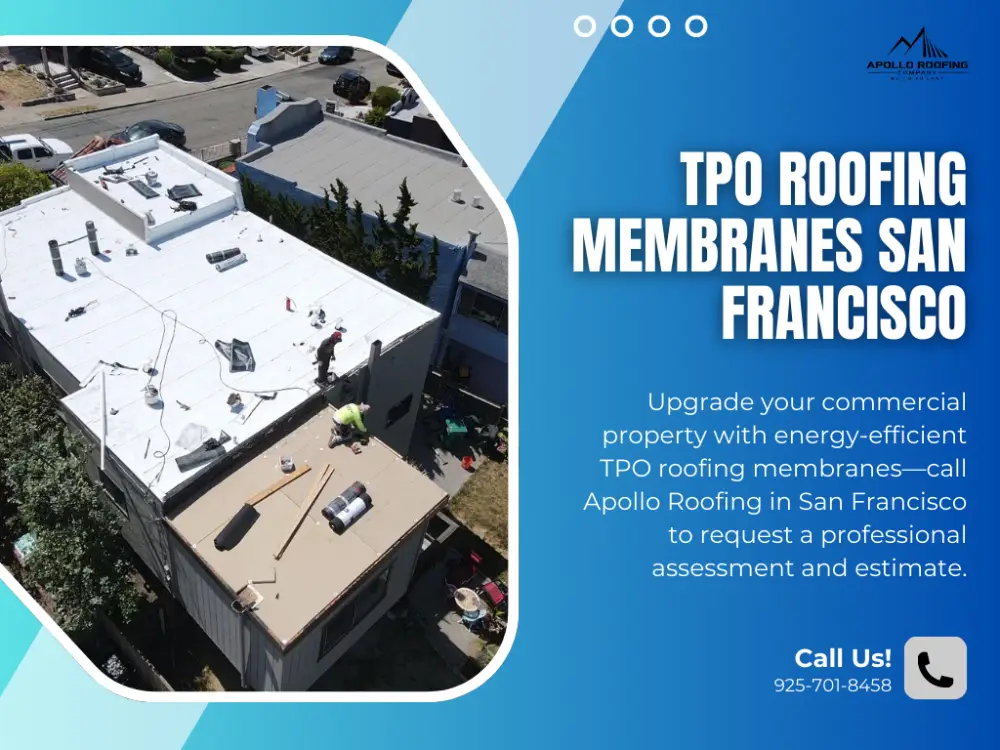
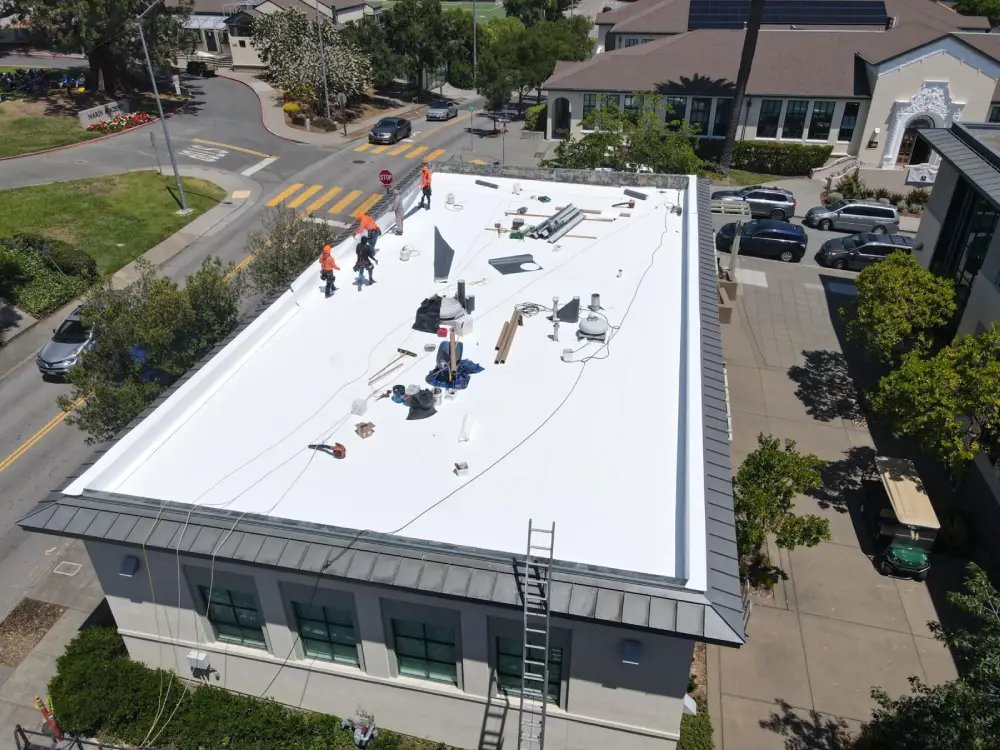
TPO roofing membranes, short for thermoplastic polyolefin, are single-ply roofing systems designed for flat and low-slope commercial roofs. These membranes are manufactured in large sheets and installed over insulation and a roof deck. The seams are heat-welded, creating a continuous, watertight surface that resists leaks and moisture intrusion.
Commercial buildings in San Francisco commonly use TPO because it offers a balance of durability, flexibility, and efficiency. The lightweight nature of the membrane makes it suitable for older structures that may not support heavier roofing systems. Its adaptability also allows it to accommodate the wide range of commercial roof layouts found throughout the city.
Why TPO Roofing Performs Well in San Francisco’s Coastal Climate
San Francisco’s climate presents challenges that many roofing systems struggle to handle. Coastal fog, consistent moisture, high winds in certain neighborhoods, and temperature variations all place stress on commercial roofs. TPO roofing membranes are engineered to perform well under these conditions.
The material resists moisture absorption, which is critical in fog-heavy areas near the coast. Its reflective surface helps reduce heat absorption during sunny periods, while still handling cooler temperatures without becoming brittle. Wind resistance is another advantage, especially when the membrane is properly fastened and installed by experienced professionals familiar with local weather patterns.
How San Francisco Building Codes and Title 24 Impact TPO Roofing Choices
Local building regulations play a significant role in roofing decisions. San Francisco enforces California Title 24 energy standards, which require commercial roofs to meet specific reflectivity and energy efficiency benchmarks. TPO roofing membranes are often selected because they naturally align with cool roof requirements.
These membranes reflect sunlight, helping reduce interior heat gain and lowering cooling demands. Compliance with Title 24 not only supports energy savings but also ensures that property owners avoid delays or penalties during inspections. Working with a contractor who understands San Francisco’s permitting process and code requirements is essential for a smooth installation.
TPO Roofing vs Other Flat Roofing Systems Used in San Francisco
Commercial property owners often compare TPO roofing membranes to other flat roofing options such as modified bitumen, torch down roofing, PVC, and built-up roofing. Each system has advantages, but TPO stands out for its balance of performance and cost.
Modified bitumen and torch down systems are durable but tend to absorb more heat and require longer installation times. PVC offers similar reflectivity to TPO but often comes at a higher cost. Built-up roofing provides a traditional approach but adds significant weight and requires more maintenance. TPO offers a modern alternative that combines energy efficiency, ease of installation, and long-term reliability.
Key Benefits of TPO Roofing Membranes for San Francisco Commercial Properties
TPO roofing membranes provide measurable benefits for commercial buildings in San Francisco. Energy efficiency is one of the most significant advantages, as reflective surfaces help reduce cooling costs during warmer months. Durability also plays a major role, with membranes designed to resist punctures, UV exposure, and chemical contaminants often found in urban environments.
Installation efficiency is another benefit. Because TPO membranes are lightweight and installed in large sheets, projects often move faster than traditional roofing systems. This reduces downtime for businesses and minimizes disruption for tenants. Over time, the combination of reduced energy costs and lower maintenance needs contributes to long-term cost efficiency.
Common Installation Challenges on San Francisco Commercial Roofs
San Francisco buildings often present unique installation challenges. Drainage issues are common on older flat roofs that were not originally designed to handle modern rainfall patterns. Rooftop equipment such as HVAC units, solar panels, and vents requires precise detailing to maintain a watertight seal.
Wind uplift can also be a concern in exposed areas, making proper fastening techniques critical. Older building structures may require additional assessment to ensure compatibility with modern roofing systems. These challenges highlight the importance of working with professionals who understand local conditions and building types.
How Long TPO Roofing Membranes Last in San Francisco Conditions
When properly installed and maintained, TPO roofing membranes can last between 20 and 30 years in San Francisco. Coastal conditions do influence lifespan, but quality materials and expert installation significantly extend performance.
Warranties vary by manufacturer and installation method, often ranging from 15 to 30 years. Property owners should review warranty terms carefully and ensure that installation meets manufacturer specifications. Regular inspections and prompt repairs further support long-term durability.
Maintenance and Inspection Needs for TPO Roofing in San Francisco
Routine maintenance is essential for maximizing the lifespan of TPO roofing membranes. Commercial roofs in San Francisco should be inspected at least twice a year, typically in spring and fall, as well as after major storms.
Inspections focus on seam integrity, drainage performance, and signs of punctures or membrane wear. Keeping the roof surface clean helps maintain reflectivity and prevents debris from blocking drains. Early detection of minor issues allows for simple repairs before costly damage occurs.
Cost Considerations for TPO Roofing Membranes in San Francisco
The cost of installing TPO roofing membranes in San Francisco depends on several factors. Roof size, insulation requirements, labor complexity, and access limitations all influence pricing. Buildings that require code upgrades or structural adjustments may see higher costs.
While upfront pricing varies, many property owners find that energy savings and reduced maintenance expenses offset initial investment over time. Evaluating long-term value rather than focusing solely on installation cost leads to better financial outcomes.
Why Professional Installation Matters for TPO Roofing Systems
TPO roofing systems perform best when installed by certified professionals with local experience. Manufacturer certifications ensure that installers follow approved methods, which protects warranties and overall roof performance.
Local knowledge is equally important. Contractors familiar with San Francisco building codes, weather patterns, and architectural styles can anticipate challenges and avoid costly mistakes. Property owners searching for “TPO roofing contractors near me” should prioritize experience, credentials, and a proven track record in the Bay Area.
Frequently Asked Questions About TPO Roofing in San Francisco
Is TPO roofing approved for commercial buildings in San Francisco?
Yes, TPO roofing is widely approved for commercial use in San Francisco when installed according to local building codes and manufacturer guidelines.
Are TPO roofing membranes considered a “cool roof” under California Title 24?
Most TPO roofing membranes meet or exceed cool roof reflectivity requirements under Title 24, making them a compliant option for energy efficiency standards.
Can TPO roofing be installed over an existing commercial roof?
In some cases, TPO roofing can be installed over an existing roof after inspection. This depends on structural condition, moisture levels, and code compliance.
How does fog and coastal moisture affect TPO roofing membranes?
TPO membranes resist moisture absorption and perform well in foggy environments when properly installed and maintained.
Is TPO roofing a good option for multi-tenant and HOA-managed properties?
Yes, TPO roofing is often selected for multi-tenant and HOA-managed buildings due to its durability, energy efficiency, and faster installation process.
How often should a TPO roof be inspected in San Francisco?
Inspections are recommended twice a year and after severe weather events to maintain performance and warranty coverage.
Looking for TPO Roofing Membranes San Francisco Property Owners Trust? Call Apollo Roofing Company Today
Apollo Roofing Company brings local expertise, professional craftsmanship, and full-service commercial roofing solutions to San Francisco property owners. From inspections and repairs to complete TPO installations, the team understands how to deliver code-compliant, long-lasting results in coastal conditions. If you are researching TPO roofing membranes San Francisco businesses rely on or searching for experienced TPO roofing contractors near me, Apollo Roofing Company is ready to help. Schedule an inspection or consultation today to protect your commercial property with confidence.