

Flat roofs are common throughout San Jose, especially on modern homes, garages, additions, apartment buildings, and commercial properties. They offer a clean look, make efficient use of space, and can work well for buildings where a steep roof is not practical. However, flat roofs also require a different level of care than traditional pitched roofs.
Because flat roofs do not shed water as quickly, small issues can grow quickly if they are ignored. Ponding water, worn seams, damaged membranes, clogged drains, and loose flashing can all lead to leaks, insulation damage, mold concerns, and structural problems. For homeowners and property owners, understanding how flat roof systems work can help prevent costly repairs and protect the building long term.
This guide explains what you need to know about flat roof repair, including warning signs, common causes of damage, repair vs. replacement decisions, how to compare contractors, and why professional service matters. Whether you are dealing with an active leak or planning preventative maintenance, this resource will help you make more confident decisions about flat roof repair San Jose services.
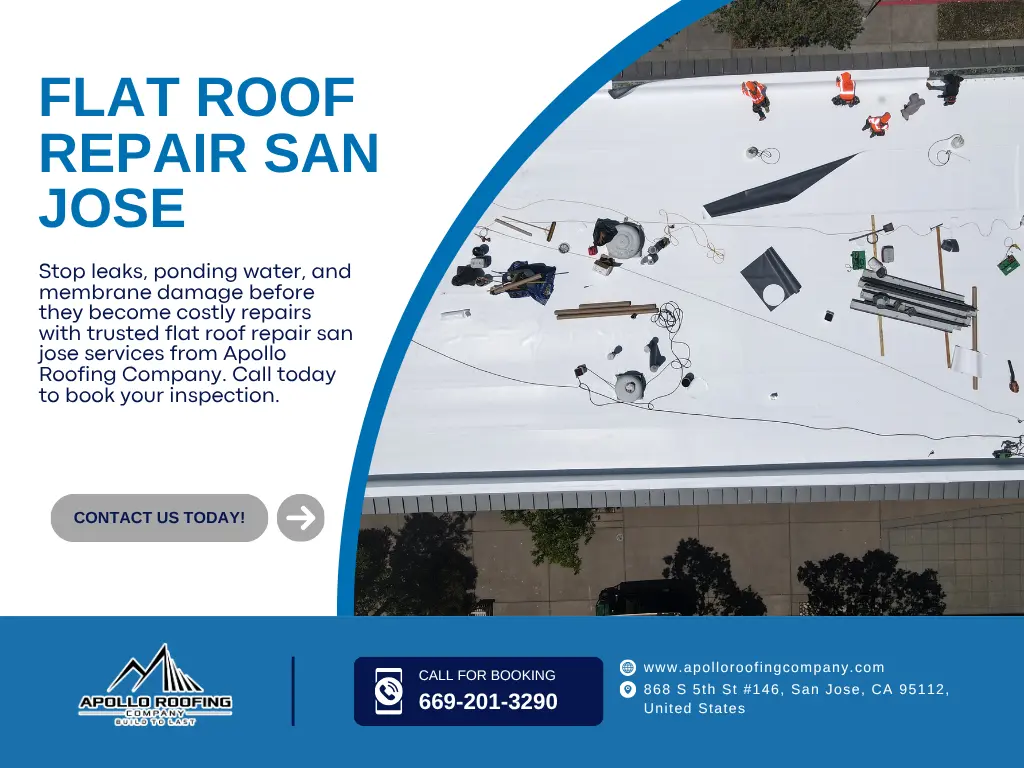
Understanding Flat Roof Repair
Flat roof repair is different from repairing a traditional shingle roof. A flat roof is usually built with materials designed to create a continuous waterproof surface. Common systems include built-up roofing, modified bitumen, TPO, PVC, EPDM, and other single-ply membranes. Each system has its own repair requirements, material compatibility, and expected lifespan.
A built-up roof uses multiple layers of roofing material and surfacing. Modified bitumen often comes in rolls and may be heat-applied, cold-applied, or self-adhered. Single-ply membranes such as TPO, PVC, and EPDM are flexible systems that rely on properly sealed seams and careful detailing around roof penetrations.
Because these materials function differently, the repair method must match the roof type. A patching product that works on one system may fail on another. The wrong repair can cause poor adhesion, premature leaks, or additional membrane damage.
Drainage is also a key part of flat roof performance. A roof may be called “flat,” but it should still have enough slope to direct water toward drains, scuppers, gutters, or other drainage points. When water sits too long, it can weaken materials, stress seams, and increase the chance of leaks.
Why Flat Roof Problems Should Not Be Ignored
Flat roof damage is not always obvious from the ground. Many property owners do not notice a problem until water stains appear inside, paint starts bubbling, or a damp smell develops. By then, water may already have reached insulation, drywall, decking, or framing.
Leaks on flat roofs can also be tricky. Water does not always drip directly below the damaged area. It may travel across the roof deck or beneath the membrane before showing up indoors. That is why guessing at the source of a leak can lead to repeated repairs that never fully solve the problem.
Ignoring flat roof issues can shorten the life of the entire roof system. A small seam separation may be easy to repair early. Left untreated, it can widen during rain, heat, and normal roof movement. Over time, a minor repair may turn into a larger restoration or premature replacement.
Timely repairs help protect more than the roof. They help protect stored belongings, interior finishes, electrical systems, equipment, inventory, and overall property value. For businesses, roof leaks can also interrupt operations and create safety concerns for employees or customers.
Common Signs That Your Flat Roof Needs Repair
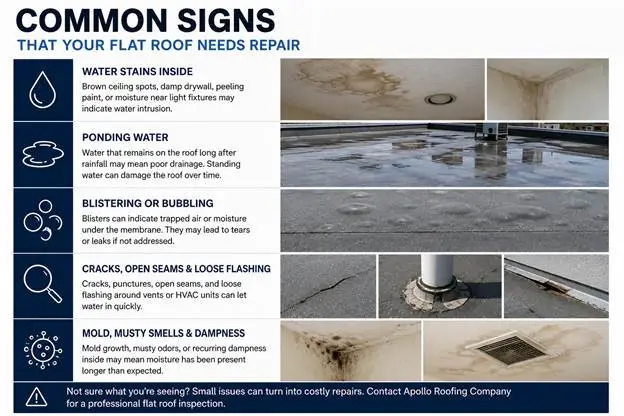
One of the most common signs of flat roof trouble is water staining inside the building. Brown ceiling spots, damp drywall, peeling paint, or moisture near light fixtures may indicate water intrusion.
Ponding water is another warning sign. If water remains on the roof long after rainfall, the drainage system may not be working properly. Standing water can speed up membrane deterioration, attract debris, and add unnecessary stress to the roof structure.
Blistering or bubbling on the roof surface may also point to trapped air or moisture beneath the material. Not every blister causes an immediate leak, but it can weaken the roof and make it more vulnerable to damage.
Cracks, punctures, open seams, loose flashing, and worn areas around vents or HVAC units should also be inspected. Roof penetrations are common leak sources because they interrupt the flat roof surface. If seals fail around these areas, water can enter quickly.
Mold growth, musty smells, or recurring interior dampness should never be ignored. These issues often suggest that moisture has been present for longer than expected.
Common Causes of Flat Roof Damage in San Jose
Flat roofs in San Jose face several environmental and structural challenges. Sun exposure is one of the biggest. Over time, UV rays can dry out materials, weaken seams, and reduce flexibility. Once roofing materials become brittle, they are more likely to crack or split.
Temperature changes also affect flat roofs. Roofing materials expand and contract as temperatures rise and fall. This movement can stress seams, flashing, and attachment points, especially on older roofs or poorly installed systems.
Debris buildup is another common issue. Leaves, dirt, branches, and other debris can block drains or scuppers. When drainage paths are blocked, water may collect in low areas and create ponding problems.
Foot traffic can damage flat roofs as well. HVAC technicians, maintenance workers, or property owners may walk across the roof to access equipment. Without care or proper walk pads, foot traffic can puncture membranes, loosen seams, or compress insulation.
Poor installation can also lead to premature repairs. If seams were not sealed correctly, flashing was installed poorly, or the roof was not designed with enough slope, leaks may appear sooner than they should.
Repair or Replacement: How to Know the Difference
Not every flat roof issue requires replacement. In many cases, a professional repair can solve the problem and extend the life of the roof. A small puncture, isolated seam issue, or damaged flashing section may be repairable if the rest of the roof is still in good condition.
Replacement may be the better option when damage is widespread. If the roof has repeated leaks, significant ponding, deteriorated insulation, major membrane failure, or extensive aging, repairs may only provide temporary relief.
Age also matters. A newer flat roof with one leak may need a targeted repair. An older roof near the end of its lifespan may need a more complete solution. A professional roofer can inspect the surface, seams, drainage areas, flashing, and underlying structure to determine the most practical option.
A good roofing contractor should not recommend replacement automatically. They should explain the condition of the roof, identify the source of the problem, and help you compare repair value against long-term replacement needs.
Finding the Best Flat Roof Repair Companies in San Jose
Choosing the right roofing company is one of the most important decisions you will make. Flat roof systems require specialized knowledge, so it is important to work with a contractor who understands low-slope roofing materials and repair methods.
Start by looking for a licensed and insured roofing contractor. Licensing shows that the company is qualified to perform roofing work, while insurance helps protect you during the project. Local experience also matters because San Jose properties vary widely in age, roof design, access, and drainage conditions.
Reviews and referrals can be helpful, but communication is just as important. A reliable contractor should inspect the roof, explain the problem clearly, and recommend a solution based on the roof’s actual condition. They should be able to discuss your roof type, the likely cause of damage, the repair materials being used, and what to expect after the work is complete.
Apollo Roofing Company provides professional flat roof repair san jose solutions for homeowners and property owners who want careful inspections, clear communication, and dependable workmanship.
Comparing Quotes and Services
When comparing estimates, remember that the lowest price is not always the best value. Flat roof repair depends on proper diagnosis, compatible materials, and skilled application. A low-cost patch may fail quickly if it does not address the real source of the leak.
A strong quote should clearly explain the scope of work. It should identify the areas being repaired, the materials being used, whether flashing or seams are included, and what cleanup is provided. If an estimate feels vague, ask questions before approving the work.
It is also important to know whether the contractor inspected the roof in person. Flat roof leaks can be difficult to diagnose from photos alone. A proper inspection allows the roofer to evaluate ponding areas, roof penetrations, membrane condition, drainage points, and hidden damage risks.
Good communication should also factor into your decision. A contractor who is responsive and willing to educate you will usually be easier to work with if unexpected findings come up during the project.
The Flat Roof Repair Process
The repair process usually begins with a detailed inspection. The roofing team checks visible damage, seams, flashing, drainage points, roof penetrations, and signs of moisture intrusion. In some cases, they may also inspect interior areas to better understand where leaks are appearing.
After the inspection, the contractor should explain the likely cause of the issue and recommend a repair plan. This may include cleaning the roof surface, removing damaged material, sealing open seams, repairing punctures, replacing flashing, or correcting drainage-related concerns.
Surface preparation is critical. Repair materials often need a clean, dry, properly prepared surface to bond correctly. If a patch is installed over dirt, moisture, or deteriorated roofing, it may not last.
The contractor should use materials that are compatible with your specific roof system. TPO, EPDM, PVC, modified bitumen, and built-up roofing may all require different products and techniques.
After the repair is finished, the roofing team should inspect the work, clean the area, and explain what was completed. They may also recommend maintenance steps to help prevent future issues.
Benefits of Professional Flat Roof Repair
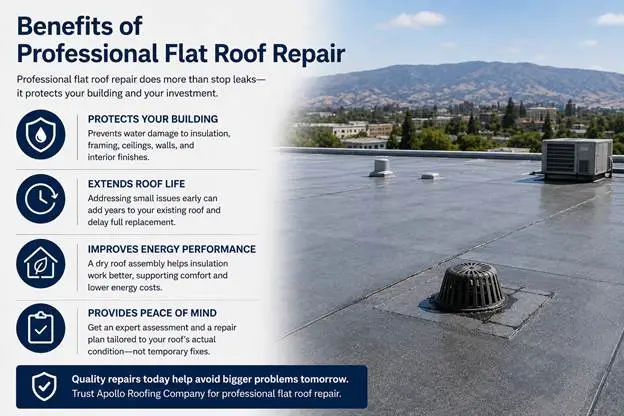
Professional flat roof repair offers benefits beyond stopping a leak. First, it helps protect the building from water damage. A proper repair can prevent moisture from spreading into insulation, framing, ceilings, walls, and interior finishes.
Professional repair can also extend the life of the roof. When small problems are handled early, the existing roof system may continue performing for years. This can help delay the cost of full replacement.
Energy performance may improve as well. Roof leaks can wet insulation, and wet insulation does not perform as effectively. Keeping the roof assembly dry can support better indoor comfort and reduce unnecessary strain on heating and cooling systems.
Professional service also provides peace of mind. Instead of guessing where a leak started or relying on temporary fixes, you receive an expert assessment and a repair plan based on the roof’s actual condition.
How to Maintain a Flat Roof After Repairs
Maintenance is key after repairs are complete. Schedule regular inspections, especially before and after the rainy season. These inspections can help catch small problems before they become expensive.
Keep the roof clean and make sure drains, scuppers, and gutters remain clear. Even small blockages can cause water to collect in low areas.
Limit unnecessary foot traffic whenever possible. If technicians need roof access for HVAC or other equipment, make sure they avoid sensitive areas of the membrane. Walk pads may help protect areas that require frequent access.
Keep records of repairs, inspections, photos, and maintenance recommendations. These documents can be useful for future service, warranty questions, insurance needs, and property resale.
Frequently Asked Questions About Flat Roof Repair Companies in San Jose
How do I know if my flat roof needs repair?
Your flat roof may need repair if you notice ceiling stains, active leaks, ponding water, bubbling roof material, cracks, open seams, or damaged flashing. You may also notice musty odors or damp areas after rain. A professional inspection can confirm the cause and determine whether repair or replacement is the better option.
What should I look for when choosing a flat roof repair company?
Look for a licensed and insured roofing contractor with experience repairing flat and low-slope roofing systems. The company should inspect the roof, explain the issue clearly, provide a detailed estimate, and use materials compatible with your roof type. Strong communication and local experience are also important.
Is professional flat roof repair worth the investment?
Yes. Professional repair helps address the source of the problem rather than simply covering visible damage. A proper repair can help prevent water intrusion, protect insulation and structural materials, improve roof performance, and extend the life of the roof. It can also help you avoid larger repair costs later.
Can I repair a flat roof leak myself?
Temporary DIY fixes may seem convenient, but flat roof leaks can be difficult to diagnose. Water may enter in one area and appear somewhere else indoors. DIY products may also be incompatible with the existing roof system. For lasting results, professional inspection and repair are usually the safer choice.
How often should a flat roof be inspected?
Flat roofs should generally be inspected at least once or twice a year, especially before and after the rainy season. You should also schedule an inspection after major storms, visible damage, or any sign of interior moisture. Regular inspections help protect drainage, seams, flashing, and overall roof performance.
Safeguard Your Home With Top-Notch Flat Roof Repairs: Contact Apollo Roofing Company Today
A flat roof is a valuable part of your property, but it needs the right care to perform well. Small issues like ponding water, cracked seams, damaged flashing, or membrane punctures can become larger concerns if ignored. With the right repair approach, you can protect your building, extend the life of your roof, and feel more confident during San Jose’s rainy season.
Apollo Roofing Company helps homeowners and property owners make smart roofing decisions with clear inspections, professional recommendations, and dependable workmanship. If you are concerned about a flat roof leak or want expert guidance before damage gets worse, contact Apollo Roofing Company today to schedule your flat roof inspection and repair service.
