

For commercial property owners and facility managers, the roof is one of the most valuable and most overlooked assets on the building. Preventative maintenance plays a critical role in protecting that investment. Without a consistent plan in place, small issues can quietly develop into costly structural problems. Understanding how often to schedule Commercial roof maintenance in San Jose helps ensure long term performance, predictable budgeting, and fewer operational disruptions.
Frequency matters because roofing systems are constantly exposed to environmental stress. In San Jose, buildings face steady UV exposure throughout the year, long dry summers, and concentrated winter rain. Each of these factors affects how roofing materials expand, contract, and age. The right maintenance schedule depends on roof type, age, and how the building is used, but proactive planning always delivers measurable benefits.
Why Commercial Roof Maintenance Is Essential in San Jose
Commercial roofing systems are designed to perform for decades, yet they require attention to reach their full lifespan. Commercial roof maintenance in San Jose is essential for protecting capital investments and reducing the likelihood of unexpected failures. A neglected roof can quickly lead to interior water damage, insulation deterioration, and business interruption.
Routine maintenance also helps prevent emergency repairs, which are often more expensive and disruptive. Addressing minor seam issues, flashing concerns, or drainage problems early keeps repair costs manageable. In addition, many manufacturers require documented maintenance to keep warranties valid. Without proof of proper care, warranty protection may be compromised.
From an asset management perspective, commercial roof maintenance services in San Jose support long term planning. Detailed inspection reports provide insight into the roof’s condition, allowing property owners to forecast future repairs, restoration, or replacement with greater accuracy.
General Recommendation: How Often Should Maintenance Be Scheduled?
Industry standards typically recommend biannual inspections for commercial roofing systems. In most cases, scheduling maintenance twice per year provides an effective balance between cost and protection. For Commercial roof maintenance in San Jose, two visits annually often align well with the region’s seasonal patterns.
One inspection is ideally scheduled before the rainy season to ensure drains are clear and seams are secure. The second inspection is performed after winter storms to assess any water related stress. Additional inspections may be necessary after significant weather events, especially heavy rainfall or high winds.
While biannual maintenance is a strong baseline, adjustments may be required based on the roof’s age, system type, and building usage. Newer roofs in excellent condition may perform well with standard scheduling, while aging systems may benefit from more frequent monitoring.
How San Jose’s Climate Influences Maintenance Frequency
Year-Round UV Exposure
San Jose experiences consistent sunlight throughout the year. Continuous UV exposure gradually breaks down roofing membranes, leading to surface oxidation and reduced flexibility. Over time, seams may experience stress, and minor cracking can develop.
Catching small cracks early prevents them from expanding into larger leaks. Regular inspections allow roofing professionals to address early signs of membrane wear before structural damage occurs. This is why Commercial roof maintenance in San Jose must account for long periods of sun exposure.
Winter Rainy Season
Although summers are dry, winter brings periods of steady rain. Flat and low slope commercial roofs must drain efficiently to prevent ponding water. Clogged drains and debris buildup increase the risk of standing water, which accelerates membrane deterioration.
Maintenance visits during and after the rainy season focus heavily on drainage system checks. Ensuring that water flows properly off the roof protects both the membrane and the underlying structure. Leak prevention strategies implemented at the right time can save thousands in repair costs.
Dry Summers and Heat Expansion
Dry summer months introduce another challenge in the form of thermal movement. Roofing materials expand in the heat and contract as temperatures cool. This movement creates stress on seams, flashing, and penetrations.
Routine inspections help identify early seam separation and flashing weaknesses. Preventing thermal stress damage is an important component of effective commercial roof maintenance services in San Jose.
Factors That May Require More Frequent Commercial Roof Maintenance
Roof Age
As roofing systems age, materials naturally lose some flexibility and resilience. Older roofs require closer monitoring to prevent sudden failures. Systems approaching the end of their expected lifespan may benefit from quarterly reviews to track condition changes more closely.
Roof Type
Different roofing materials require different inspection approaches. TPO membranes may require seam evaluations, modified bitumen systems demand attention to surface wear, and metal roofs need fastener checks. Coated systems require monitoring of coating thickness and reflectivity. Tailoring maintenance to the specific system ensures optimal performance.
Roof Traffic and Equipment
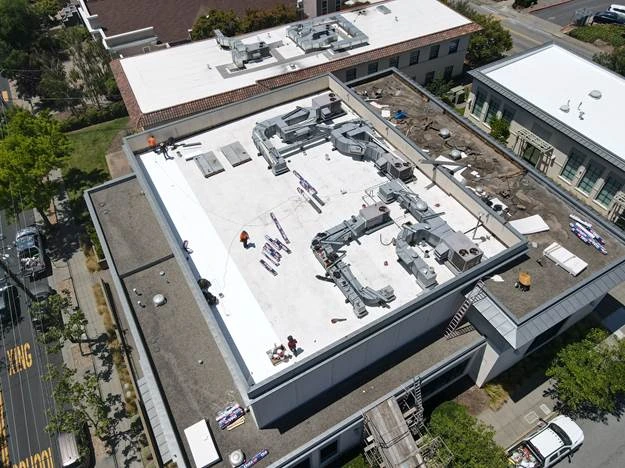
Commercial roofs often support HVAC units and other mechanical equipment. Service technicians walking across the roof can create concentrated wear in certain areas. Walkway pads may deteriorate over time, and foot traffic can cause punctures if not properly managed.
Buildings with high rooftop activity often require more frequent inspections to ensure damage is addressed promptly.
Building Usage
Manufacturing facilities, multi-tenant commercial buildings, and technology campuses each present unique roofing demands. Increased activity, equipment loads, and operational complexity can accelerate wear. Maintenance schedules should reflect how the property is used.
What Happens During a Commercial Roof Maintenance Visit?
During a professional maintenance visit, technicians conduct a thorough surface inspection to identify visible damage or wear. Seams and flashing are evaluated for signs of separation or deterioration. Drains and gutters are cleared of debris to maintain proper water flow.
Minor repairs are completed on site when possible to prevent escalation. Detailed documentation is provided, outlining the roof’s condition and noting any areas that require attention. This reporting supports budgeting decisions and long-term planning. Commercial roof maintenance services in San Jose are not simply reactive repairs but strategic assessments that guide future investment decisions.
Risks of Skipping Regular Maintenance
When maintenance is postponed or ignored, roofing systems can deteriorate more quickly than expected. Membranes may age prematurely due to unchecked UV exposure. Hidden moisture infiltration can damage insulation layers before visible leaks appear inside the building.
Skipping routine inspections may also void manufacturer warranties, leaving property owners fully responsible for repair costs. Ultimately, neglect often results in accelerated replacement timelines and higher long-term expenses.
Creating a Long-Term Maintenance Plan for Your San Jose Commercial Property
Developing a structured plan for Commercial roof maintenance in San Jose ensures consistent protection. Aligning inspections with the rainy season provides timely protection against water intrusion. Tracking roof condition year over year helps identify trends and forecast future needs.
Budget forecasting becomes more accurate when maintenance reports provide clear data. Planning ahead for restoration or eventual replacement reduces financial surprises and allows property owners to manage capital expenditures strategically.
Get Proactive With Commercial Roof Maintenance in San Jose From Apollo Roofing Company
Apollo Roofing Company brings extensive expertise in commercial roofing systems across the region. Our team understands how local climate conditions impact roof performance and designs maintenance programs that protect your building year-round.
Through proactive inspections, detailed reporting, and preventative planning, we help property owners reduce risk and control long term costs. Commercial roof maintenance services in San Jose should be strategic, consistent, and aligned with your building’s unique demands.
If you want to safeguard your investment and avoid unexpected disruptions, now is the time to act. Schedule a professional commercial roof evaluation with Apollo Roofing Company today and take the first step toward smarter roof management.
FAQs About Commercial Roof Maintenance in San Jose
How often should commercial roof maintenance be scheduled in San Jose?
Most commercial roofs should be inspected and maintained twice per year, typically before and after the rainy season.
Should I schedule maintenance after heavy rain?
Yes. Post storm inspections help identify drainage issues, punctures, or seam damage early.
Does roof age affect maintenance frequency?
Older roofs often benefit from more frequent inspections to prevent unexpected failures.
What types of commercial roofs need the most maintenance?
Low slope and flat roofing systems generally require consistent inspection due to drainage demands.
Can regular maintenance extend roof lifespan?
Yes. Proactive maintenance can significantly extend roof service life and delay replacement costs.
Is commercial roof maintenance required to keep warranties valid?
Many manufacturers require documented maintenance to uphold warranty coverage.
