

Replacing or repairing a roof is a significant decision for any property owner. Whether the work involves addressing damage, replacing an aging system, or planning a larger roofing project, the proposal you receive deserves careful attention.
At first glance, comparing roofing estimates may seem straightforward. Look at the total price, review the proposed materials, and choose the contractor who appears to offer the best value. In practice, roofing proposals can differ considerably in scope, materials, labor expectations, warranties, and assumptions about the existing roof.
A lower total does not necessarily represent a better deal. A higher total does not automatically mean better workmanship, either. The goal is to understand what each contractor plans to do and whether the proposal accounts for the work your property actually needs.
For property owners, learning how to evaluate those details can reduce surprises and make the hiring decision much easier.

Start With the Scope of Work, Not the Bottom-Line Price
Price naturally attracts attention, but it should not be the first point of comparison. Start with the scope of work.
A detailed proposal should explain what the contractor intends to remove, replace, install, repair, or protect. It should also provide enough information for you to understand where the project begins and ends.
For a replacement project, for example, determine whether removal of the existing roofing material is included. Look for information about underlayment, flashing, ventilation, penetrations, disposal, cleanup, and other components relevant to the specific roof.
This is especially important when you compare roofing estimates because two totals that look dramatically different may represent two different scopes of work.
One contractor might include work another has excluded. Another proposal may leave certain conditions open until the existing roofing system is removed. Identifying those differences gives you a much more useful comparison than price alone.
Look Closely at the Roofing Materials Being Proposed
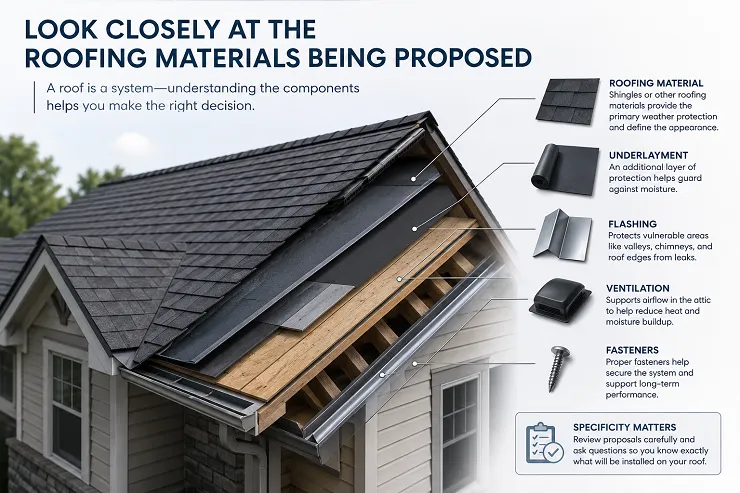
The word “roof” covers an entire system of components. The visible roofing material is only one part of that system.
Review the proposal for specific information about the materials being recommended. Depending on the project, that can include shingles or other roofing materials, underlayment, flashing, ventilation products, fasteners, and related components.
Specificity matters.
If one proposal identifies particular products while another relies heavily on broad descriptions, ask for clarification. Knowing what will actually be installed allows you to evaluate the proposed system more accurately.
Material choices can also affect durability, appearance, maintenance expectations, and manufacturer requirements. Property owners should understand why a particular material has been recommended rather than assuming every contractor is proposing an equivalent roofing system.
A knowledgeable contractor should be able to explain the reasoning behind those recommendations in practical terms.
Pay Attention to What the Proposal Does Not Include
Sometimes the most important part of a proposal is what is missing.
Roofing projects can reveal conditions that were difficult or impossible to confirm during an initial inspection. Once existing materials are removed, damaged decking or other concealed issues may become visible.
Before signing an agreement, ask how unexpected conditions will be handled. The proposal should make clear whether certain repairs are included, excluded, or subject to additional approval.
You should also look for possible exclusions involving permits, disposal, structural repairs, gutters, ventilation modifications, or other project-specific work.
Exclusions are not automatically a warning sign. Some items genuinely cannot be determined until work begins. What matters is transparency. You should understand what is excluded and what could cause the final project total or scope to change.
Understand How Additional Work Is Handled
No property owner wants to approve one amount and discover a very different bill at the end of the project.
That is why the process for changes deserves attention before work begins.
Ask what happens if the crew discovers deteriorated decking or another condition requiring additional work. Find out how you will be informed, how pricing will be communicated, and whether approval is required before that work proceeds.
Clear procedures protect both the property owner and contractor. They create a documented process for handling legitimate changes instead of relying on assumptions made during construction.
When reviewing roofing contractor quotes, pay attention to how clearly each company discusses these possibilities. A proposal should help you understand not only the expected project but also the process if the unexpected occurs.
Review Labor, Workmanship, and Installation Details
Quality roofing materials still depend on proper installation.
A proposal should provide enough information to understand who is responsible for the project and what workmanship protections are offered. Ask about the contractor’s installation process, supervision, property protection, cleanup procedures, and final inspection.
This is also a good time to discuss scheduling. Roofing work can be affected by weather, material availability, permitting, and project complexity. Instead of focusing only on a promised start date, ask how the company communicates schedule changes and keeps property owners informed.
Communication is part of the service you are purchasing.
A contractor who explains the process clearly before the agreement is signed gives you a better picture of what communication may look like once the project begins.
Read Warranty Information Carefully
“Warranty included” is not enough information to make an informed decision.
Roofing warranties can involve separate protections for materials and workmanship. Those protections may have different terms, requirements, limitations, and responsible parties.
Ask which warranties apply to your project and request written information when available. Determine what is covered, how long coverage lasts, and what property owners must do if they believe there is a problem.
Manufacturer coverage should not automatically be treated as identical to contractor workmanship coverage.
Taking time to understand these distinctions can prevent confusion years after installation. A strong proposal should make warranty information easier to understand, not bury important details behind broad promises.
Verify the Contractor, Not Just the Proposal
A detailed proposal matters, but the company behind it matters just as much.
Property owners should conduct reasonable due diligence before hiring a roofing contractor. Review applicable licensing information, insurance, business history, customer feedback, and experience with the type of roofing project you are planning.
You can also ask contractors how they handle permits, inspections, jobsite safety, property protection, and communication.
These questions provide context that a price sheet cannot.
If one contractor offers a dramatically lower price, consider what might explain the difference. It could involve materials, scope, labor, overhead, exclusions, or another legitimate factor. Instead of assuming the cheapest contractor is cutting corners, or that the most expensive contractor is automatically superior, ask questions until the difference makes sense.
Make Sure You Are Comparing the Same Project
One of the easiest ways to make a poor comparison is to assume every contractor has interpreted the project the same way.
Before making a decision, place the proposals side by side and look for differences in scope, material specifications, quantities, warranties, disposal, ventilation, flashing, repairs, and other relevant details.
This is where roofing contractor quotes become more useful as planning documents rather than simple price sheets.
If one contractor has included an item that another has not mentioned, ask about it. The answer may reveal a meaningful difference in approach or simply clarify that the item appears elsewhere in the proposal.
The objective is not to make every proposal identical. It is to understand why they are different.
Consider Long-Term Value Alongside Initial Cost
Roofing decisions affect a property long after the crew leaves.
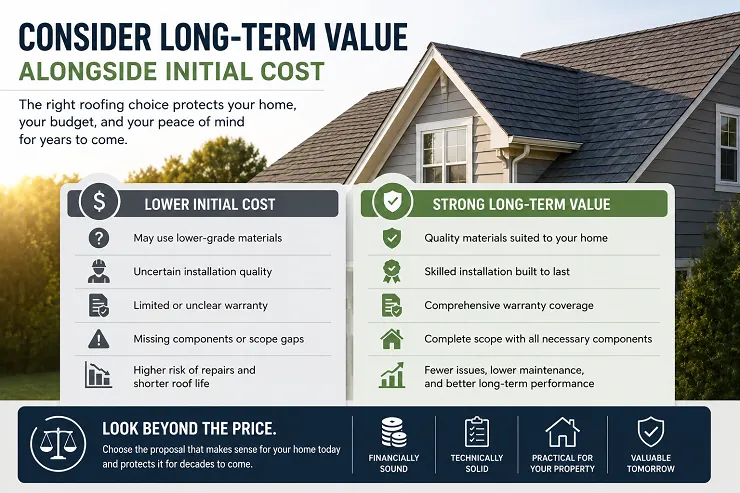
A lower initial cost can be attractive, particularly when roof work was unexpected. However, initial price should be weighed alongside material suitability, installation quality, warranty terms, contractor experience, and the completeness of the proposed work.
Think about what you are receiving for the total investment.
A proposal that addresses necessary components clearly may provide stronger long-term value than one that leaves major questions unanswered. At the same time, avoid paying more simply because a proposal is more expensive. Higher cost should be supported by a clear reason.
The strongest choice is usually the contractor whose proposal makes sense technically, financially, and practically for your property.
Ask Questions Before You Sign
A roofing proposal should create clarity. If reading it creates more questions than answers, address those questions before signing.
Ask about unfamiliar terminology. Request clarification about vague material descriptions. Confirm who handles permits when they are required. Discuss cleanup, property access, scheduling, payment terms, warranties, and the process for approving additional work.
A professional contractor should expect these conversations.
You are not being difficult by asking for details about a major property investment. You are gathering the information needed to make an informed decision.
Taking an extra day to understand a proposal is far better than discovering a misunderstanding after materials have arrived or work has started.
Frequently Asked Questions About Roofing Estimates
What should roofing estimates include?
A useful proposal should clearly describe the expected scope of work, proposed roofing materials, labor, removal or disposal when applicable, warranty information, payment terms, and important exclusions. It should also explain how unforeseen conditions or additional work will be addressed if they are discovered after the project begins.
Why can proposals from roofing contractors vary so much?
Differences can result from the proposed materials, project scope, labor requirements, roof complexity, existing conditions, warranty coverage, disposal needs, and items included or excluded by each contractor. Instead of treating the difference as purely a pricing issue, property owners should identify exactly what each company is proposing to provide.
Should I automatically choose the lowest proposal?
Not necessarily. A lower total can be appropriate, but it should be evaluated in context. Check whether the proposed materials and scope are comparable and whether important work has been excluded. The goal is to select a contractor based on the complete value and suitability of the proposal, rather than one number alone.
What questions should I ask before accepting a proposal?
Ask about materials, installation methods, project supervision, warranties, scheduling, cleanup, permits, property protection, payment terms, and possible additional work. You should also ask how concealed damage will be documented and approved. Clear answers before signing can reduce misunderstandings once construction is underway.
Do You Have Questions About Roofing Estimates? Apollo Roofing Company Can Help
Choosing a roofing contractor should involve more than scanning several totals and selecting a number. The proposal should give you confidence that you understand the work, the materials, the responsibilities involved, and how unexpected conditions will be handled.
Apollo Roofing Company helps property owners understand their roofing needs and the work being recommended. If you have questions about a proposal or are planning an upcoming roofing project, contact Apollo Roofing Company to discuss your property and learn more about your options.
