

Your roof works quietly every day, protecting your home from moisture, wind, sunlight, falling debris, and changing temperatures. Because it is not something most homeowners see up close, it is also one of the easiest parts of a home to overlook. In San Francisco, that can become a costly mistake.
San Francisco roofs face a unique mix of coastal moisture, fog, salt air, wind-driven rain, and aging building conditions. A roof that looks fine from the sidewalk may be hiding lifted flashing, clogged drainage, cracked sealant, worn shingles, or small moisture issues that have not yet shown up inside the home. By the time water stains appear on the ceiling, the problem may already involve insulation, decking, framing, or interior finishes.
That is why understanding the right roof inspection frequency San Francisco homeowners should follow is so important. Routine inspections help catch small issues early, prevent unexpected leaks, and extend the life of your roofing system. They also give homeowners better information when planning maintenance, repairs, insurance documentation, or eventual roof replacement.
A roof inspection is not just about finding damage. It is about understanding how your roof is aging, how well it is performing, and what steps can help protect your home before the next rainy season arrives.

Why Roof Inspections Are Especially Important in San Francisco
Roof inspections matter everywhere, but they are especially important in San Francisco because of the local climate and building environment. The city’s coastal conditions can gradually wear down roofing materials in ways that are easy to miss.
Fog is one of the biggest factors. In many parts of San Francisco, moisture can linger on roofing surfaces for hours. That repeated dampness can contribute to moss growth, algae buildup, softening around vulnerable areas, and faster deterioration of certain materials. While a single foggy morning is not a problem, years of repeated exposure can take a toll.
Salt air can also affect roofing components. Metal flashing, fasteners, vents, and other exposed details may corrode over time, especially on homes closer to the coast. Once these components weaken, water can find openings around chimneys, skylights, roof edges, and wall transitions.
Wind-driven rain adds another concern. During storm season, rain does not always fall straight down. Strong gusts can push water beneath shingles, behind flashing, or into small gaps around roof penetrations. A roof may not leak during a light rain but may show problems during a windy storm.
San Francisco’s older housing stock also makes inspections more valuable. Many homes have been repaired, remodeled, or reroofed multiple times over the years. Older structures may have ventilation challenges, outdated materials, layered roofing systems, or drainage details that no longer perform as well as they should. Regular roof maintenance in San Francisco helps homeowners stay ahead of these issues before they become expensive repairs.
How Often Should You Inspect Your Roof in San Francisco?
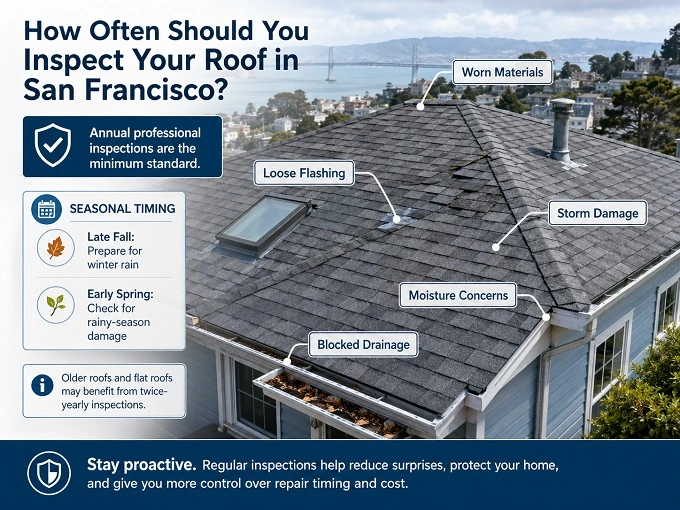
The right inspection schedule depends on your roof’s age, material, slope, condition, and exposure. However, most San Francisco homeowners should treat annual professional inspections as the minimum standard.
A yearly inspection gives a roofing professional the chance to identify worn materials, loose flashing, blocked drainage, early moisture concerns, and signs of storm damage. It also creates a maintenance record that can be helpful for warranties, insurance claims, and future real estate transactions.
For many homes, the best times to schedule an inspection are late fall or early spring. A late fall inspection helps prepare the roof before heavier winter rain. An early spring inspection helps identify damage that may have occurred during the rainy season. Both timing options are practical, but homeowners with older roofs or flat roofing systems may benefit from doing both.
The key is consistency. Waiting until a leak appears usually means the roof has already allowed water into the system. Staying proactive helps reduce surprises and gives homeowners more control over repair timing and cost.
Annual Roof Inspections: The General Rule
For most homes, a professional roof inspection once per year is a smart baseline. Annual inspections are especially useful because many roofing issues begin as small, repairable problems.
A small crack in sealant around a vent may not seem urgent, but it can allow moisture to enter during heavy rain. A few loose shingles may not look serious from the ground, but they can expose the underlayment and create a path for water intrusion. A clogged gutter may look like a simple maintenance issue, but it can cause water to back up against the roof edge or fascia.
Annual inspections help homeowners avoid letting these small concerns build over time. They also help roofing professionals track how the roof is aging from year to year. This makes it easier to recommend maintenance before the roof reaches a critical point.
For newer roofs, annual inspections help confirm the system is performing as expected. For older roofs, they help determine whether repairs are still practical or whether replacement planning should begin.
After Major Storms or High Winds
San Francisco homeowners should also schedule an inspection after major storms, especially when heavy rain is paired with strong winds. Storm-related damage is not always obvious. A roof can look intact from the street while still having lifted shingles, shifted tiles, loosened flashing, or debris damage.
High winds can create small openings that may not leak right away. The next rainstorm may then push water into those weakened areas. This is why post-storm inspections are helpful even when there is no immediate interior damage.
You should consider calling a roofing professional if you notice shingles or roofing debris on the ground, sudden gutter overflow, branches on the roof, new ceiling stains, water dripping near windows, or unusual moisture in the attic. These signs may indicate that the roof needs prompt attention.
A timely inspection after a storm can help document damage, prevent worsening leaks, and give homeowners a clear plan for repair.
For Older Roofs 15 Years and Up
Roof age plays a major role in inspection frequency. Once a roof reaches 15 years or older, homeowners should pay closer attention to its condition. Even if the roof has performed well, materials naturally weaken over time.
Asphalt shingles may begin losing granules, curling at the edges, or becoming brittle. Tile roofs may develop cracked tiles or shifting underlayment. Flat roof membranes may show seam separation, blistering, punctures, or drainage wear. Flashing can loosen or corrode, especially in moisture-heavy environments.
For older roofs, inspections twice per year may be a better choice. This is especially true if the home has experienced past leaks, heavy tree coverage, limited ventilation, or frequent exposure to coastal conditions.
More frequent inspections do not mean the roof is failing. They simply provide better oversight as the system ages. With the right maintenance, some roofs can last longer than expected. Without inspections, minor aging issues may turn into major structural concerns.
For Flat Roofs and Low Slope Roofs
Flat and low slope roofs are common throughout San Francisco, particularly on row homes, multi-unit buildings, and commercial properties. These roofing systems require special attention because they do not shed water the same way steep roofs do.
Drainage is one of the most important concerns. If water remains on the roof for too long, it can weaken membrane materials, stress seams, and increase the risk of leaks. Leaves, dirt, and debris can block drains or scuppers, causing water to collect in low areas.
Flat roofs should often be inspected twice per year, ideally before and after the rainy season. These inspections should focus on drainage, membrane condition, seams, flashing, roof penetrations, and signs of ponding water.
Homeowners should also be aware that flat roof leaks can be difficult to trace. Water may enter in one area and travel beneath the surface before showing up somewhere else inside the home. Professional inspections help identify vulnerable areas before they cause widespread damage.
Signs Your San Francisco Roof Needs Immediate Inspection
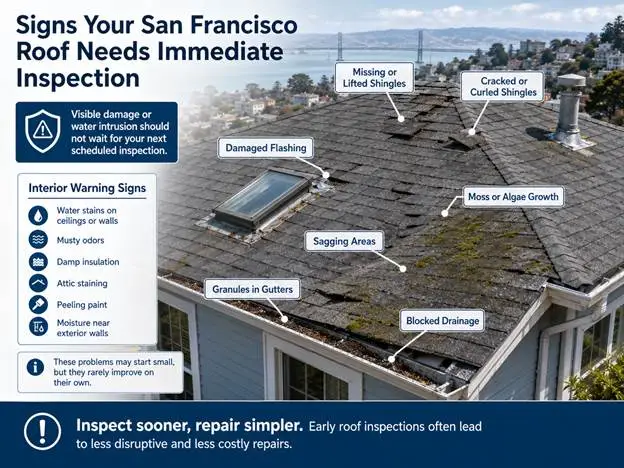
Some warning signs should not wait for your next scheduled inspection. If you notice visible damage or signs of water intrusion, it is best to contact a roofing professional quickly.
Missing, curled, cracked, or lifted shingles may expose the roof to moisture. Water stains on ceilings or walls may indicate an active leak. Moss or algae growth can trap moisture against the roof surface. Sagging areas may point to structural issues beneath the roofing materials.
Granules collecting in gutters can mean asphalt shingles are deteriorating. Damaged flashing around chimneys, skylights, vents, and roof edges can create common leak points. Sudden gutter overflow may suggest a blockage that is affecting roof drainage.
Interior warning signs matter too. Musty odors, damp insulation, attic staining, peeling paint, or unexplained moisture near exterior walls can all point to roofing concerns. These issues may start small, but they rarely improve on their own.
The sooner a roof is inspected, the more options homeowners usually have. Early repairs are often simpler and less disruptive than emergency leak restoration.
What Happens During a Professional Roof Inspection?
A professional roof inspection is much more detailed than a quick visual check. Roofing specialists evaluate the full system to determine how well the roof is protecting the home.
The inspection usually begins with an exterior assessment. The roofing professional looks at shingles, tiles, membrane surfaces, roof edges, valleys, ridges, vents, chimneys, skylights, and other penetrations. They check for cracking, lifting, punctures, soft spots, corrosion, missing materials, and signs of improper installation.
Flashing is one of the most important areas reviewed. Many roof leaks begin where the roof meets another surface, such as a chimney, wall, vent pipe, or skylight. If flashing is loose, rusted, poorly sealed, or pulling away, water may enter the home during storms.
Drainage is also evaluated. Gutters, downspouts, scuppers, and drains must move water away from the roof efficiently. Poor drainage can shorten roof lifespan and create moisture problems around fascia, siding, foundations, and interior walls.
A complete inspection may also include attic evaluation when accessible. The attic can reveal hidden moisture, ventilation problems, insulation issues, staining, or signs of heat buildup. This matters because roof performance is connected to the entire home system, not just the outer materials.
After the inspection, homeowners should receive clear findings and practical recommendations. A strong roofing professional will explain what is urgent, what can be monitored, and what maintenance may help extend the roof’s life.
The Risks of Skipping Regular Roof Inspections
Skipping roof inspections may seem harmless when there are no obvious leaks, but roof damage often develops slowly. Small issues can remain hidden until they become expensive.
A minor leak can damage roof decking over time. Moisture can spread into insulation, reducing energy efficiency and creating conditions for mold growth. Water can also affect drywall, paint, flooring, electrical components, and structural framing.
Neglected drainage issues can cause ponding water, fascia damage, gutter failure, and premature material breakdown. Loose flashing can worsen during storms. Small punctures in flat roof membranes can expand as water and temperature changes stress the material.
There is also a financial risk. Many manufacturer warranties require proper maintenance. Insurance claims may also be easier to support when homeowners have inspection records and documentation. Without records, it may be harder to show that the roof was maintained responsibly.
Regular inspections are not just about avoiding repairs. They help homeowners protect their investment, plan ahead, and reduce the chance of unexpected roofing emergencies.
DIY vs. Professional Roof Inspections
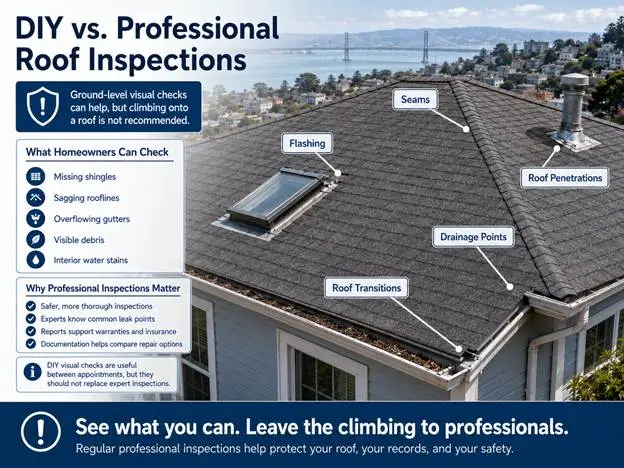
Homeowners can perform simple visual checks from the ground, but DIY inspections have limits. It is reasonable to look for obvious warning signs such as missing shingles, sagging rooflines, overflowing gutters, visible debris, or water stains inside the home.
However, climbing onto a roof is not recommended. Roof surfaces can be slippery, unstable, or steeper than they appear. Falls can cause serious injuries, and walking on certain roofing materials can create damage if done incorrectly.
Professional roofers know how to inspect safely and thoroughly. They also know where problems commonly develop, especially around flashing, seams, penetrations, drainage points, and roof transitions. Homeowners may see the roof surface, but professionals understand how the full system should perform.
Professional documentation is another advantage. Inspection reports can help homeowners make informed decisions, compare repair options, maintain warranty coverage, and provide records for insurance needs.
DIY visual checks are helpful between professional appointments, but they should not replace expert inspections.
Recommended Roof Inspection Frequency San Francisco Homeowners Should Follow
For most homes, an annual professional inspection is the best starting point. Homeowners should also schedule additional inspections after major storms, high winds, or falling debris.
Older roofs, especially those 15 years or older, may need inspections twice per year. Flat and low slope roofs should also be checked more frequently because drainage problems can develop quickly and create hidden leaks.
A practical schedule may include one inspection in late fall before heavy rain and another in early spring after storm season. Homeowners should also call for service anytime they notice warning signs such as ceiling stains, missing materials, gutter overflow, visible sagging, or flashing damage.
Consistent inspections are a key part of roof maintenance in San Francisco because they help identify problems before they affect the structure of the home. Rather than waiting for a leak, homeowners can stay ahead of repairs and make better long-term decisions.
FAQs About Roof Inspection in San Francisco
How often should I inspect my roof in San Francisco?
Most San Francisco homes should have a professional roof inspection at least once per year. Additional inspections are recommended after major storms, high winds, or visible damage. Older roofs and flat roof systems may need inspections twice per year to monitor wear, drainage, flashing, and moisture concerns.
Is roof inspection frequency different for flat roofs in San Francisco?
Yes. Flat and low slope roofs usually need more frequent inspections because they are more vulnerable to drainage problems and ponding water. Since water does not run off as quickly, blocked drains, worn seams, or membrane damage can lead to hidden leaks. Many flat roofs benefit from inspections twice per year.
Can I inspect my own roof?
You can do a basic visual inspection from the ground by looking for missing shingles, visible sagging, clogged gutters, or debris. However, climbing onto the roof is not recommended because of safety risks and the possibility of damaging materials. A professional inspection provides a more complete and accurate evaluation.
What time of year is best for a roof inspection in San Francisco?
Late fall and early spring are both good times for roof inspections. A fall inspection helps prepare your roof before heavier rain arrives, while a spring inspection helps identify damage from winter storms. Homes with older roofs, flat roofs, or past leak issues may benefit from both seasonal inspections.
How much does a roof inspection cost in San Francisco?
Roof inspection costs vary based on roof size, height, slope, access, material type, and complexity. A simple inspection may cost less than an inspection for a large, multi-story, or flat roof property. While prices vary, inspections are typically much less expensive than repairing structural damage caused by an undetected leak.
Does regular inspection extend the life of my roof?
Yes. Regular inspections can help extend roof life by catching minor problems before they become major failures. Addressing loose flashing, clogged drainage, damaged shingles, worn sealant, or early moisture issues can reduce stress on the roofing system and help homeowners avoid premature replacement.
Not Sure About Roof Inspection Frequency San Francisco? Let Apollo Roofing Company Help
Your roof is too important to ignore until something goes wrong. In San Francisco, coastal moisture, fog, wind, older homes, and seasonal rain all make routine inspections a smart part of homeownership. A consistent inspection schedule can help prevent leaks, reduce repair costs, protect your home’s structure, and give you confidence before the next storm arrives.
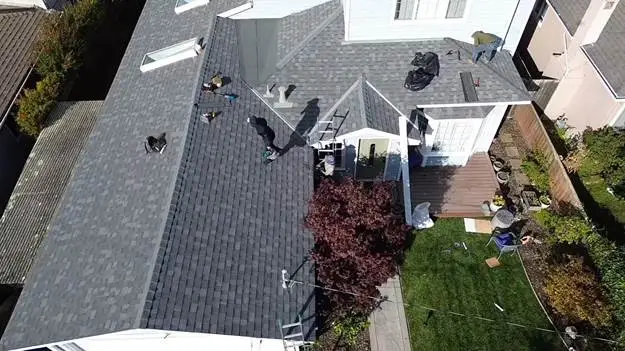
Apollo Roofing Company provides thorough roof inspections designed for Bay Area conditions. Whether your roof is new, aging, flat, steep, recently storm-damaged, or showing signs of wear, our team can help you understand its condition and plan the right next steps.
Schedule your roof inspection today and get clear, honest recommendations from local roofing experts who understand San Francisco homes.
