

Replacing a flat roof is one of the most significant investments property owners can make for their home or commercial building. In San Rafael, where buildings are exposed to coastal moisture, changing temperatures, winter rain, and extended sun exposure throughout the year, roofing systems face constant environmental stress. Over time, even a well-installed flat roof will eventually require repairs or full replacement to maintain structural protection and energy efficiency.
For many homeowners and business owners, understanding the true flat roof replacement cost in San Rafael can feel overwhelming. Roofing estimates often vary widely, and many people are unsure why one project may cost significantly more than another. The reality is that flat roof replacement involves far more than simply installing new materials. Roof condition, insulation, drainage, labor requirements, local regulations, and material selection all play major roles in determining the total investment.
At Apollo Roofing Company, we believe property owners deserve clear information before making major roofing decisions. This guide explains what influences flat roof replacement pricing in San Rafael, how different materials compare, what hidden costs to expect, and how to make smart long-term roofing choices that protect both your property and your budget.
Why Flat Roof Replacement Costs Vary So Much
One of the biggest misconceptions property owners have is assuming roofing prices are based only on square footage. While roof size certainly matters, many additional factors influence total replacement costs.
For example, two roofs with the exact same square footage may have very different pricing because of accessibility, roof slope, drainage complexity, structural conditions, or material selection. A simple flat roof with open access is far easier to replace than a roof with multiple HVAC systems, skylights, solar panels, or difficult staging conditions.
San Rafael’s location also contributes to regional pricing differences. Labor rates throughout Marin County and the greater Bay Area tend to be higher than national averages because of local economic conditions, permitting requirements, and construction demand.
Material quality further affects overall pricing. Premium roofing membranes with better UV resistance, insulation performance, or lifespan typically cost more upfront but may reduce long-term maintenance and repair expenses.
This is why obtaining a professional flat roof replacement estimate in San Rafael is essential. Accurate estimates require detailed inspections that evaluate both visible roofing conditions and underlying structural concerns before work begins.
Understanding Common Flat Roofing Materials
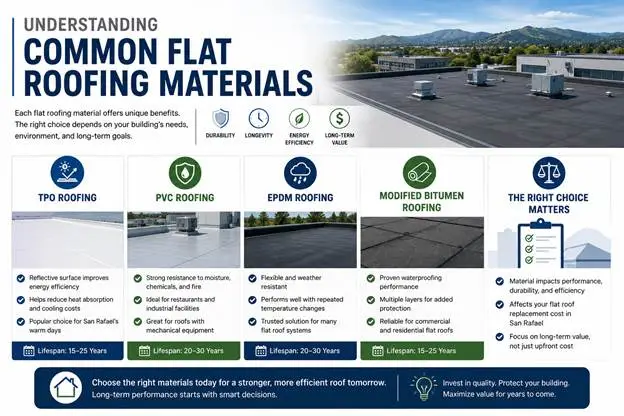
Choosing the right roofing material is one of the most important decisions during a replacement project. Each flat roofing system offers different advantages, lifespans, and performance characteristics depending on the property’s needs and environmental conditions.
TPO roofing continues to grow in popularity because of its reflective surface and energy-efficient performance. In San Rafael’s climate, reflective roofing systems help reduce heat absorption during warmer months, potentially lowering cooling demands inside the building.
PVC roofing is another durable option commonly used for commercial properties. It offers strong resistance to moisture, chemicals, and fire exposure, making it especially valuable for restaurants or industrial facilities with rooftop equipment.
EPDM roofing remains a trusted solution for many flat roof systems because of its flexibility and weather resistance. It performs particularly well in environments where roofs experience repeated temperature fluctuations.
Modified bitumen roofing continues to be used for many commercial and residential flat roof applications because of its proven waterproofing performance and layered protection system.
The material you choose will directly impact the overall flat roof replacement cost in San Rafael, but it is important to consider long-term value rather than focusing only on initial installation pricing.
Why Roof Condition Plays a Major Role in Pricing
One of the biggest variables in flat roof replacement is the condition of the existing roofing system. Many roofing problems remain hidden until the old materials are removed.
Water intrusion is one of the most common issues discovered during roof replacement projects. Moisture trapped beneath roofing membranes can damage insulation, decking, and structural supports over time.
If contractors discover rotting wood, deteriorated insulation, mold growth, or structural weaknesses, these problems must be addressed before new roofing materials can be installed safely.
Older roofs may also contain multiple layers of roofing materials from previous installations. Removing these layers increases labor time, disposal costs, and project complexity.
Because hidden issues can significantly affect pricing, experienced contractors often recommend setting aside a contingency budget for unexpected repairs discovered during the project process.
The Importance of Proper Drainage
Drainage performance is critical for flat roofing systems. Unlike steep-slope roofs that naturally shed water quickly, flat roofs are more vulnerable to standing water if drainage systems are not functioning properly.
Ponding water places additional stress on roofing materials and can gradually weaken seams, flashing, and membranes over time. Persistent standing water also increases the risk of leaks and structural deterioration.
During replacement projects, contractors evaluate existing drainage systems carefully to determine whether improvements are necessary. This may include adjusting roof slopes, upgrading drains, improving scuppers, or redesigning water flow patterns.
Although drainage improvements may increase upfront costs, they often help prevent expensive future repairs while extending overall roof lifespan.
How San Rafael’s Climate Affects Flat Roof Performance
San Rafael’s Mediterranean climate creates unique roofing challenges throughout the year. Long periods of sun exposure during summer months place constant UV stress on roofing materials, while seasonal rain increases the importance of waterproofing performance.
Roofs near coastal areas may also experience higher moisture exposure and salt air conditions that affect certain roofing materials differently over time.
Reflective roofing systems perform particularly well in this environment because they help reduce rooftop heat buildup. Lower rooftop temperatures can improve building efficiency while reducing thermal stress on roofing materials.
At the same time, roofing systems must remain flexible enough to handle expansion and contraction caused by temperature fluctuations between warm days and cooler evenings.
Property owners obtaining a flat roof replacement estimate in San Rafael should work with contractors familiar with these local environmental conditions because material recommendations should always reflect the region’s climate demands.
Hidden Costs Many Property Owners Overlook
Roof replacement projects often involve additional costs beyond basic materials and labor. Understanding these factors early helps property owners avoid surprises during the project.
Permits and inspections are required for most replacement projects in San Rafael. Local building departments enforce regulations designed to ensure structural safety and code compliance.
Disposal costs are another important consideration. California regulations regarding construction waste disposal can increase landfill fees and labor requirements for roofing tear-offs.
Upgrading insulation systems may also become necessary during replacement. While this increases project costs initially, improved insulation can support better energy efficiency and lower utility expenses over time.
Roof accessibility sometimes creates additional equipment costs as well. Multi-story buildings, limited staging areas, or difficult property access may require cranes, lifts, or specialized safety equipment.
Understanding these factors helps property owners prepare more accurately for the full scope of their roofing investment.
Why Preventative Maintenance Matters
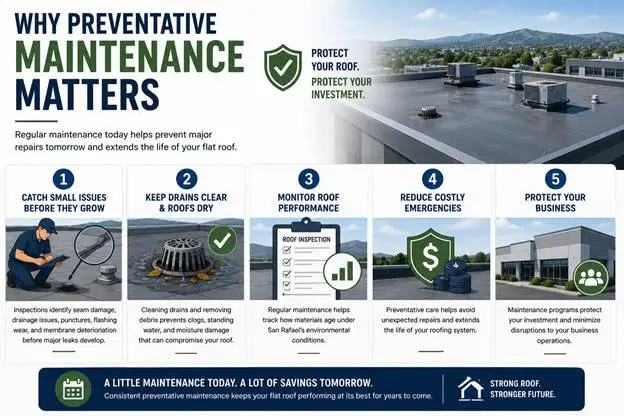
One of the best ways to delay costly roof replacement is through consistent preventative maintenance. Many flat roof problems begin as small issues that gradually worsen over time if left unaddressed.
Routine inspections allow contractors to identify seam damage, drainage issues, punctures, flashing wear, and membrane deterioration before major leaks develop.
Cleaning rooftop drains and removing debris is especially important for flat roofing systems because clogged drainage can quickly lead to standing water and moisture damage.
Regular maintenance also allows contractors to monitor how roofing materials are aging under San Rafael’s environmental conditions.
For commercial property owners, preventative maintenance programs help protect long-term investments while reducing the likelihood of emergency roofing situations that disrupt business operations.
Choosing the Right Roofing Contractor
The quality of installation directly affects the lifespan and performance of any roofing system. Even premium materials can fail prematurely if installation methods are not handled correctly.
Experienced roofing contractors provide detailed inspections, realistic project timelines, and transparent pricing explanations before work begins.
They also understand local building requirements, climate considerations, and material compatibility issues that influence long-term roofing performance.
When comparing estimates, property owners should avoid selecting contractors based solely on the lowest bid. Lower pricing sometimes reflects shortcuts in material quality, labor practices, or installation standards that can lead to expensive future problems.
Working with a trusted contractor helps ensure roofing systems are installed properly while maximizing long-term durability and value.
Long-Term Value Matters More Than Initial Cost
While many property owners focus heavily on upfront pricing, long-term value is often more important than initial installation costs alone.
Higher-quality materials may involve greater investment initially but can reduce maintenance requirements and extend roof lifespan significantly. Improved insulation and reflective roofing systems may also lower energy expenses over time.
A professionally installed roofing system protects not only the building itself but also the interior structure, equipment, inventory, and occupants beneath it.
When evaluating roofing options, homeowners and business owners should consider durability, maintenance needs, warranty protection, energy efficiency, and overall lifecycle costs rather than focusing exclusively on the lowest estimate.
Apollo Roofing Company Breaks Down Your Flat Roof Replacement Cost in San Rafael — Let’s Talk!
Replacing a flat roof is a major investment, but understanding the factors that influence pricing helps property owners make more confident decisions. Roof size, material selection, structural conditions, insulation upgrades, drainage performance, and installation expertise all contribute to the true value of a roofing system.
At Apollo Roofing Company, we provide detailed inspections, transparent recommendations, and reliable roofing solutions tailored to the needs of San Rafael property owners. Whether you are researching flat roof replacement cost in San Rafael or looking for a professional flat roof replacement estimate in San Rafael, our team is here to guide you through every step of the process with honesty and expertise.
Contact Apollo Roofing Company today to schedule your roof assessment and learn more about durable flat roofing solutions designed for long-term performance and protection.
