

Asphalt shingles remain a familiar roofing choice for homeowners because they offer a practical balance of performance, appearance, and cost. Still, choosing shingles is only the beginning of the decision. The condition of the existing roof, material grade, ventilation, flashing, installation details, and complexity of the home can all affect how a new roof performs. Working with an experienced asphalt roofing contractor in San Rafael can help homeowners understand these variables before making a major investment.
This guide explains what goes into asphalt roofing costs, how common shingle options differ, what happens during installation, and which details deserve attention when planning a project in San Rafael.
What Determines the Cost of an Asphalt Roof?
Roofing costs are influenced by much more than the home’s square footage. Contractors typically need to evaluate the actual roof area, pitch, number of roof planes, accessibility, penetrations, existing roofing materials, and condition of the underlying deck.
A simple roof with broad, accessible sections can require less labor than a steep roof with valleys, skylights, chimneys, dormers, and other transitions. These features require additional cutting, flashing, sealing, and careful installation.
Removal can also affect the scope. Once old shingles are taken off, previously hidden deterioration may become visible. Damaged or weakened decking may need to be replaced before new materials can be installed correctly.
Material selection creates another cost difference. Basic shingles and higher-grade architectural products do not carry the same material price, design features, or manufacturer specifications. Homeowners should compare complete roofing systems rather than focusing exclusively on the price of a shingle bundle.
Understanding Asphalt Shingle Materials
Not every asphalt shingle roof looks or performs the same way. Product design, reinforcement, profile, color, and manufacturer specifications can vary considerably.
Three-tab shingles have a flatter, more uniform appearance and have historically served as an economical roofing option. Architectural or dimensional shingles use a layered design that creates more visual depth. These products are widely used on residential properties and are available in numerous colors and profiles.
Some manufacturers also offer shingles designed with enhanced performance characteristics, which may include improved wind resistance or other specialized features. Product ratings and warranties vary, so homeowners should review the documentation for the specific material being considered rather than assuming every asphalt product offers identical protection.
The right choice should reflect the house, budget, roof design, and expected performance rather than appearance alone.
Why the Roofing System Matters as Much as the Shingles
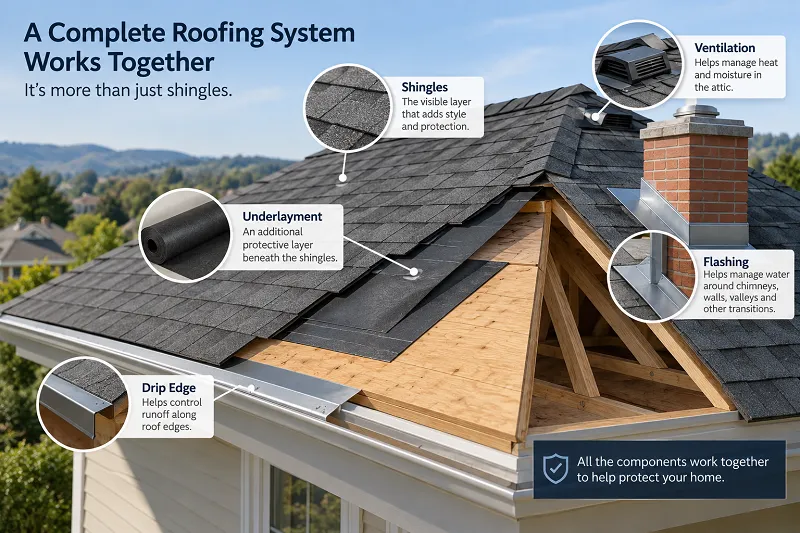
The visible shingles receive most of the attention, but they are only one part of a functioning roof.
Underlayment provides an additional protective layer beneath the shingles. Flashing helps manage water around chimneys, walls, valleys, vents, and other transitions. Drip edge helps control runoff along roof edges. Intake and exhaust ventilation can also play an important role in managing heat and moisture within applicable attic assemblies.
These components have to work together.
This is one reason comparing roofing estimates solely by total price can be misleading. Two proposals may use similar shingles while specifying different approaches to underlayment, flashing, ventilation, decking repairs, or other components.
Homeowners can ask contractors to explain what is included, which materials will be installed, and how vulnerable roof areas will be handled.
What Happens During Asphalt Shingle Roof Replacement?
A professional asphalt shingle roof replacement in San Rafael generally begins before anyone removes the first shingle. The contractor evaluates the roof, discusses material options, establishes the scope of work, and addresses applicable permitting and project requirements.
When installation begins, crews typically protect appropriate areas around the property before removing existing roofing materials. Tear-off exposes the roof deck so its condition can be inspected.
Any necessary deck repairs are addressed before the new roofing system proceeds. Underlayment and applicable edge protection are installed, followed by flashing and shingles according to the selected system and manufacturer requirements. Roof penetrations and transitions require particular attention because these are places where water must be carefully managed.
Cleanup is another meaningful part of the project. Roofing work generates old shingles, nails, packaging, and other debris, so the property should be cleaned as work progresses and after installation is completed.
How Long Does Asphalt Roof Installation Take?
There is no universal installation schedule because every property presents a different set of conditions.
Roof size and complexity are obvious factors, but weather, accessibility, material availability, decking repairs, inspection requirements, and unexpected conditions discovered during tear-off may also influence timing.
Homeowners should be cautious about treating a general online timeline as a promise for their property. A contractor who has inspected the roof can provide a much more useful project estimate.
It is also worth discussing how the contractor will communicate if conditions change. Knowing who provides updates and how unexpected repairs are approved can make the process easier to manage.
What San Rafael Homeowners Should Consider
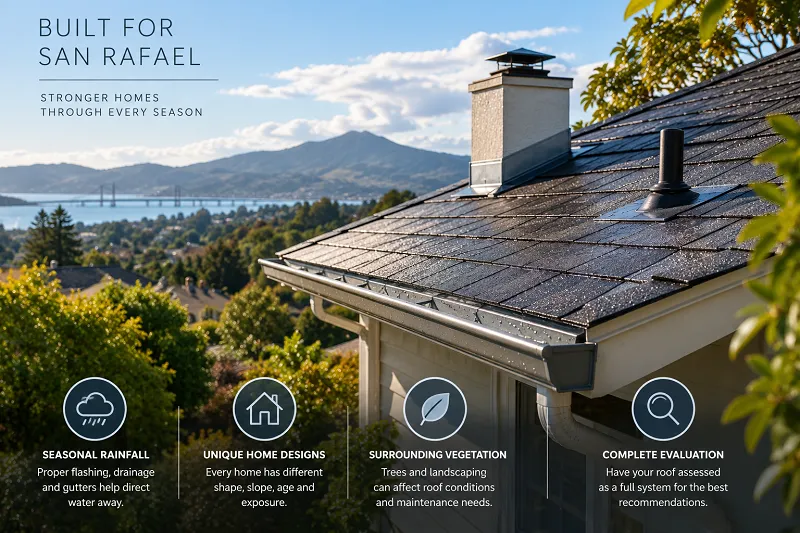
San Rafael’s climate makes water management and roofing details important considerations. Seasonal rainfall means flashing, drainage, roof penetrations, and gutters should work together to direct water away from vulnerable portions of the structure.
Homes can also vary significantly in roof shape, slope, age, surrounding vegetation, and exposure. A roofing approach that makes sense for one property may not automatically be appropriate for another a few streets away.
Before choosing materials, have the roof evaluated as a complete system. An experienced roofing contractor in San Rafael should be able to explain what is currently working, what needs attention, and which recommendations are specific to the property.
Comparing Roofing Proposals Beyond the Bottom Line
Price matters, but the lowest number on a proposal does not tell homeowners everything they need to know.
Look closely at the stated scope. The proposal should make it reasonably clear which roofing materials are planned, how removal will be handled, what happens if damaged decking is discovered, and which major components are included.
Ask about warranties as well. Manufacturer material warranties and contractor workmanship coverage are not necessarily the same thing, and terms can vary. Understanding those distinctions before work starts can prevent confusion later.
Communication deserves consideration too. A roof replacement affects access, parking, outdoor areas, and daily routines. Knowing what to expect before installation can make the experience more predictable.
Frequently Asked Questions About Asphalt Roofing Contractors in San Rafael
What should I ask an asphalt roofing contractor before hiring them?
Ask about licensing and insurance, the proposed roofing system, material specifications, flashing, ventilation where applicable, cleanup, warranties, permits, and how unexpected repairs are handled. A detailed conversation can reveal far more about the proposed project than comparing estimates by price alone.
How do I know whether my asphalt roof needs replacement or repair?
The answer depends on the roof’s condition rather than age alone. Missing or damaged shingles, recurring leaks, deteriorated flashing, widespread material wear, or problems with the roof deck can influence the recommendation. A professional inspection can help determine whether repairs remain practical or broader replacement should be considered.
What should an asphalt roofing estimate include?
A useful estimate should clearly describe the proposed scope, roofing materials, removal of existing materials when applicable, major system components, cleanup, and relevant warranty information. It should also explain how unforeseen conditions, such as damaged decking uncovered during tear-off, will be addressed and authorized.
How do I choose asphalt shingles for my San Rafael home?
Consider more than color. Compare the product’s design, manufacturer specifications, warranty terms, wind rating where relevant, and compatibility with the home’s roof structure and overall appearance. Your contractor can explain the practical differences among available products and help you evaluate options for your particular property.
Why does contractor installation matter with asphalt shingles?
Even a well-made shingle depends on correct installation and a properly prepared roofing system. Deck condition, underlayment, flashing, fastener placement, roof transitions, ventilation, and manufacturer requirements can all affect performance. Choosing an asphalt roofing contractor in San Rafael with a clear installation process helps ensure those details receive appropriate attention.
Need an Asphalt Roofing Contractor in San Rafael? Call Apollo Roofing Company Today!
A new asphalt roof is an investment in more than shingles. The materials, preparation, water-management details, and installation all influence how effectively the finished system protects your home.
Apollo Roofing Company can evaluate your existing roof, discuss suitable asphalt shingle options, and explain the installation process based on your property’s specific needs. If you are considering an asphalt shingle roof replacement in San Rafael, contact our team to schedule an assessment and get a clearer picture of the work your roof may require.
Talk with Apollo Roofing Company about your project and work with a roofing contractor in San Rafael who can help you move from questions about materials and installation to a well-defined roofing plan.
