

Tile roofing has a distinctive place in San Francisco architecture. From Mediterranean-inspired homes to Spanish Revival properties and newer residences designed around California aesthetics, tile can add character while providing a durable roofing surface. That appearance comes with an important practical question for homeowners: what does a tile roof actually cost to install or replace?
There is no single price that applies to every property. Roof size, pitch, accessibility, structural condition, tile material, labor requirements, flashing details, underlayment, and removal of an existing roof can all influence the final investment. In a dense city like San Francisco, access and staging can also affect how a roofing project is planned.
Understanding tile roof cost San Francisco homeowners may encounter requires looking beyond the price of the tile itself. A well-planned roofing project includes the entire roof assembly, the labor required to install it correctly, and the condition of the structure underneath.

What Influences the Cost of a Tile Roof?
Tile roofing is typically more labor-intensive than many lighter roofing materials. Individual tiles must be positioned carefully, roof penetrations need detailed flashing, and damaged or improperly installed components can create water-entry points even when the visible tiles appear intact.
The type of tile makes a difference as well. Clay tile is valued for its traditional appearance and long service potential, while concrete tile can provide a similar profile with different weight, finish, and pricing characteristics. Specialty profiles, custom colors, and harder-to-source tiles may increase material expenses.
Roof geometry also plays a large role. A simple roof with broad, uninterrupted surfaces generally requires less cutting and detailing than a roof with valleys, dormers, chimneys, skylights, vents, and multiple transitions.
Labor conditions matter in San Francisco too. Homes built close together, limited driveway access, steep streets, restricted equipment placement, and narrow side yards can affect material delivery and debris removal. These conditions do not automatically make a tile roof impractical, but they can influence the amount of planning involved.
Tile Roofing Installation in San Francisco Requires More Than New Tiles
A successful tile roof is a complete system rather than a decorative layer placed over a structure.
Professional tile roofing installation San Francisco property owners invest in should account for underlayment, flashing, fasteners, ventilation, drainage, roof decking, and transitions around penetrations. Each component contributes to how well the roof manages water and changing weather conditions.
This is especially important in the Bay Area, where roofs may experience long dry stretches followed by seasonal rain. Water needs a clear path off the roof without reaching the underlying structure.
Before installation begins, the roof deck and structural framing should also be evaluated. Tile is heavier than asphalt shingles, and not every building was originally designed for that weight. Older homes may require additional evaluation before a tile system is selected.
The goal is not simply to place attractive tiles on the roof. The goal is to build a roof system that works with the home.
New Tile Roof Installation Versus Roof Replacement
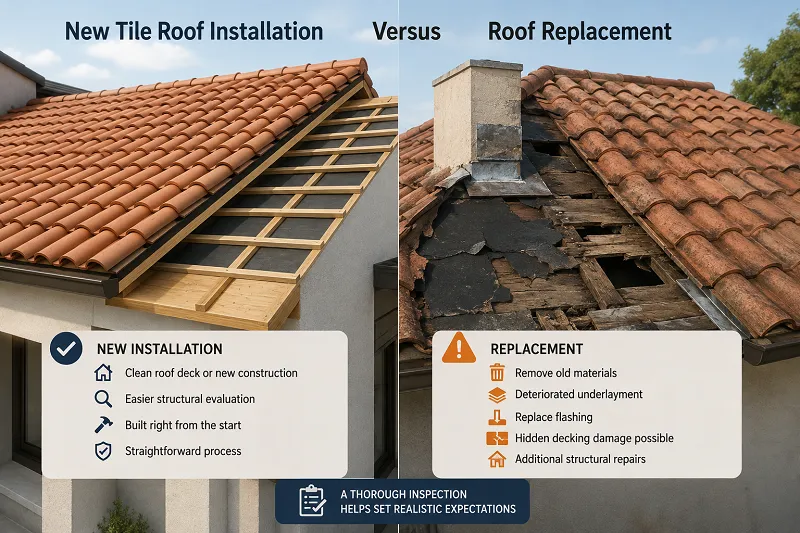
Installing tile on a new roofing surface and replacing an existing tile roof are different projects.
A new installation may begin with a clean roof deck or new construction, making it easier to evaluate the structure and build the roofing assembly from the beginning. A replacement project often requires additional steps.
Old materials may need to be removed. Underlayment may have deteriorated. Flashing around chimneys or walls may need replacement. Sections of decking can also reveal damage only after the existing roof covering is removed.
These conditions help explain why tile roof replacement cost San Francisco homeowners receive from contractors can vary significantly between properties that appear similar from the street.
One home may require straightforward removal and replacement. Another may uncover damaged sheathing, aging flashing, or structural concerns that need attention before new roofing can be installed.
A thorough roof inspection before work begins helps establish realistic expectations.
The Condition of the Existing Roof Matters
Tile itself can be durable, but the components underneath it do not always age at the same rate.
A roof may still have many intact tiles while the underlayment beneath them is nearing the end of its useful service life. Flashing can deteriorate, fasteners may loosen, and previous repairs may create weak points.
This is why evaluating a tile roof based only on the visible surface can be misleading.
When leaks begin, replacing a few cracked tiles may solve an isolated problem. If moisture is entering through widespread underlayment deterioration, however, repeated repairs may become less practical than replacing the roofing system.
Homeowners should look at the condition of the entire assembly rather than focusing only on individual tiles.
Can Existing Roof Tiles Be Reused?
In some situations, certain roof tiles may be reusable.
If the tiles remain in good condition and can be removed without excessive breakage, a roofing contractor may be able to preserve some of them while replacing the materials underneath. Whether that approach makes sense depends on the roof, tile type, availability of matching replacement pieces, and overall project scope.
Reusing tile is not automatically the least expensive option. Removing and handling tiles carefully takes labor, and older tiles can become brittle.
The decision should be based on condition and long-term performance rather than appearance alone.
What Kind of Return Can Tile Roofing Provide?
Roofing ROI is not limited to resale value.
A roof protects the structure, interior finishes, insulation, electrical systems, and belongings inside a property. Preventing leaks and moisture-related deterioration can have significant financial value over time.
Tile roofing may also appeal to buyers who appreciate its architectural character and expected durability. On homes where the material complements the design, tile can contribute to curb appeal in a way that feels intentional rather than purely functional.
That does not mean every dollar spent on a roof will translate directly into an equal increase in resale price. Roofing should first be viewed as a building-protection investment.
The strongest return often comes from selecting a system appropriate for the property and having it installed correctly.
Longevity Depends on More Than the Tile
Tile roofs are frequently associated with long service lives, but advertised lifespan figures should be viewed in context.
Installation quality plays an enormous role. So do underlayment quality, roof ventilation, drainage, flashing design, maintenance, exposure, foot traffic, and the condition of the supporting structure.
Even durable tile can perform poorly when installation details are neglected.
Regular inspections can help identify cracked tiles, displaced pieces, deteriorating sealants, flashing concerns, and drainage problems before they contribute to larger repairs.
A durable material still needs a properly designed roofing system around it.
Is Tile Roofing a Good Fit for San Francisco Homes?
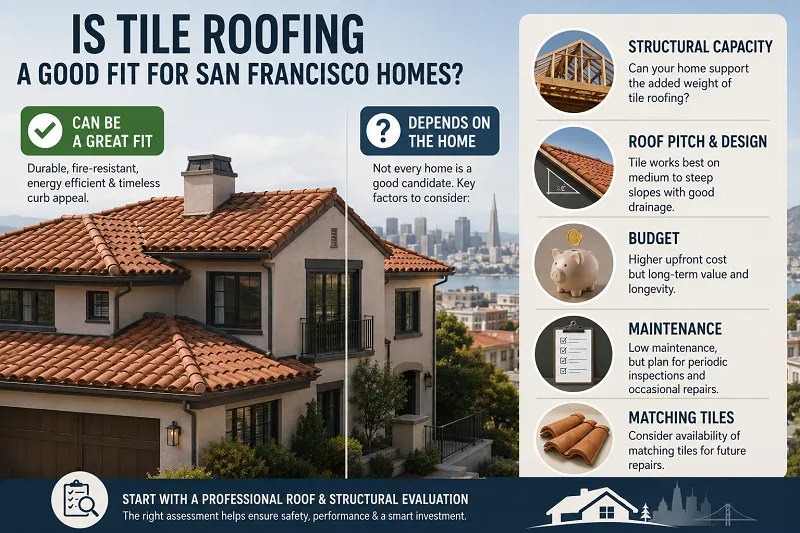
Tile can be an excellent roofing material for certain San Francisco homes, particularly when the architecture, roof structure, and owner priorities align with the material.
It may not be the right choice for every building.
Structural capacity should be considered because of the material’s weight. Roof pitch and design matter. Budget matters as well. Homeowners should also consider maintenance expectations and how easy it will be to source matching tiles if individual pieces need replacement years later.
For homeowners exploring tile roofing installation San Francisco, the most useful first step is a professional evaluation of the existing roof and building structure.
Material selection should follow that evaluation, not replace it.
Why Detailed Estimates Matter
Roof estimates are most useful when homeowners can understand what is included.
A low number without clear scope can be difficult to compare with a proposal that includes removal, disposal, underlayment, flashing, ventilation, decking allowances, permits, and installation.
Homeowners should know whether the estimate includes removal of the existing roof and how unexpected deck damage will be handled if discovered.
These details become especially important when evaluating tile roof replacement cost San Francisco properties may require.
Two estimates can appear far apart in price while actually representing very different scopes of work.
A roofing proposal should make the work understandable enough that homeowners can compare more than the final number.
FAQs About Tile Roof Costs in San Francisco
What affects tile roof cost San Francisco homeowners should budget for?
The total price depends on roof size, tile material, slope, structural requirements, accessibility, removal of existing roofing, underlayment, flashing, decking condition, and labor. San Francisco properties may also require additional planning because of narrow lots, steep streets, or limited areas for material staging.
Is a tile roof usually more expensive than asphalt shingles?
Tile roofing generally requires a higher initial investment because the materials are heavier and installation involves more detailed labor. The roof may also need structural evaluation before installation. Homeowners should compare long-term performance, maintenance needs, appearance, and expected service life instead of looking only at upfront pricing.
Can I replace only damaged tiles instead of replacing the whole roof?
Yes, isolated cracked or broken tiles can often be replaced when the surrounding roof system remains healthy. However, recurring leaks can indicate problems with underlayment, flashing, or decking beneath the tiles. An inspection can help determine whether localized repair or broader replacement is the more practical solution.
Does the weight of tile roofing affect installation cost?
It can. Tile is substantially heavier than many common roofing materials. If the existing structure needs reinforcement or additional evaluation before supporting the new roof system, those requirements can influence project scope and cost. Structural suitability should be confirmed before choosing tile based solely on appearance.
Is tile roofing worth the investment in San Francisco?
Tile can offer strong long-term value when it suits the structure and architectural style of the home. Its durability, distinctive appearance, and ability to protect the building for many years can make the higher initial investment worthwhile. Proper installation and ongoing roof maintenance are essential to realizing that value.
Understand Tile Roof Cost in San Francisco With Apollo Roofing Company – Call Us Today!
Choosing a tile roof involves more than selecting a color or comparing material prices. Your home’s structure, roof design, existing conditions, drainage, flashing, accessibility, and long-term plans should all shape the decision.
Apollo Roofing Company helps San Francisco homeowners evaluate their roofing systems and understand which solutions make sense for their properties. Our team focuses on careful inspections, clear recommendations, quality workmanship, and roofing systems built around the needs of the individual home.
If you are considering a new tile roof, replacing an aging system, or trying to understand tile roof cost San Francisco property owners should expect, contact Apollo Roofing Company today. We can evaluate your roof, discuss available options, and help you plan a roofing investment with greater confidence.
