

A roof leak does not always begin with obvious damage. Sometimes, water enters through small gaps around areas where roofing materials meet, creating problems that may go unnoticed until interior damage appears. One of the most common causes of these leaks is damaged or failing roof flashing.
Roof flashing plays an important role in protecting vulnerable areas of a roof, including valleys, chimneys, vents, skylights, and roof edges. These metal components help direct water away from seams and prevent moisture from entering the structure. When flashing becomes loose, cracked, corroded, or improperly installed, even a small opening can allow water to seep beneath the roofing system.
For homeowners dealing with persistent leaks, understanding the causes behind flashing problems can make it easier to identify issues early and protect their property. Professional roof flashing repair San Jose services from Apollo Roofing Company can help restore these critical areas and reduce the risk of more extensive roof damage.

Why Roof Flashing Is Essential For Preventing Leaks
A roof is designed as a complete system where each component works together to keep water out. While shingles, tiles, underlayment, and decking provide important protection, flashing serves as a barrier in areas where water naturally collects or where different roofing materials connect.
Without properly functioning flashing, rainwater can find pathways into small openings around roof penetrations. Over time, moisture can damage insulation, ceilings, walls, and structural materials. In many cases, the visible signs of a leak appear long after the original flashing issue begins.
Flashing is especially important in areas that experience frequent exposure to changing weather conditions. San Jose homes can face strong sun exposure, seasonal rainfall, and temperature fluctuations that can affect roofing materials over time. Regular inspections can help identify flashing problems before they develop into larger roofing concerns.
Common Causes Of Roof Flashing Problems
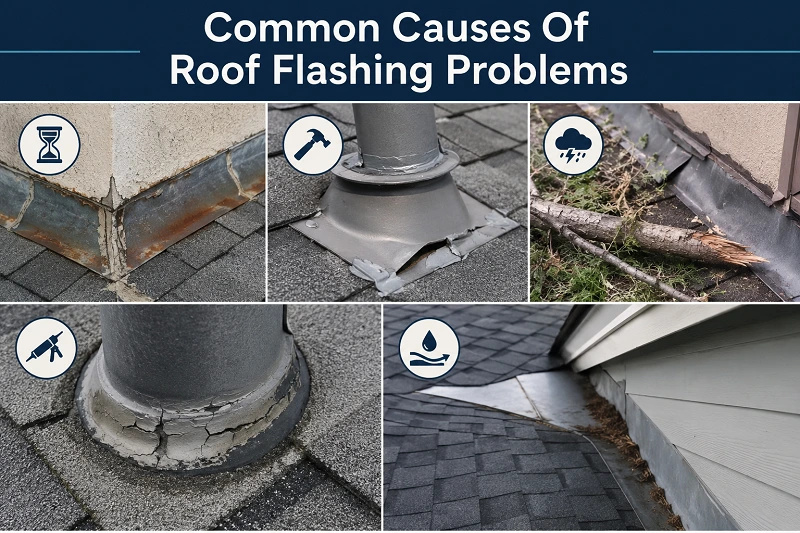
Aging And Natural Wear Over Time
Roof flashing is built to provide long-term protection, but it is not immune to aging. Years of exposure to sunlight, moisture, and temperature changes can cause flashing materials to weaken. Metal flashing may develop corrosion, while sealants around flashing areas can dry out and lose their ability to create a watertight barrier.
As flashing ages, small cracks or gaps may develop around joints and edges. These openings can allow water to enter during heavy rain. Homeowners who notice recurring leaks near roof penetrations may need professional evaluation to determine whether deteriorated flashing is the cause.
Improper Installation During Previous Roofing Work
Flashing performance depends heavily on proper installation. Even high-quality materials can fail when they are installed incorrectly. Common installation issues include improper placement, insufficient sealing, incorrect overlap, or failure to secure flashing properly.
Roof repairs or replacements completed without attention to flashing details can create problems that appear months or years later. Water may begin entering behind the flashing, causing hidden damage that becomes more expensive to repair if left unaddressed.
Storm Damage And Physical Impact
Weather events can put additional stress on roof flashing. Strong winds, falling branches, and heavy storms can loosen flashing materials or damage the seals around them. Even if the roof appears intact after a storm, flashing areas should still be inspected because they are often more vulnerable than larger roofing surfaces.
Small shifts in flashing placement can create openings where water can enter. Addressing storm-related damage quickly can help prevent minor issues from becoming major repairs.
Damaged Sealants Around Flashing Areas
Many flashing systems rely on sealants to create additional protection against moisture. Over time, these sealants can shrink, crack, or separate from surrounding surfaces. When this happens, water can move behind the flashing and into the roof structure.
Replacing damaged sealant may sometimes resolve a minor issue, but larger flashing problems may require more extensive repairs. A professional roofer can determine whether the flashing itself needs repair or if the surrounding materials also require attention.
Poor Roof Design Or Drainage Issues
Flashing problems are not always caused by damage. In some cases, roof design or drainage issues can place excessive pressure on flashing areas. When water does not flow properly away from the roof, certain areas may experience repeated moisture exposure.
Roof valleys, wall intersections, and other transition points must be designed correctly to handle water movement. If these areas were not properly planned or installed, recurring leaks may continue even after temporary repairs.
Signs Your Roof Flashing May Need Attention
Many homeowners first notice flashing problems through water stains, peeling paint, or moisture inside their homes. However, there are several warning signs that may appear before interior damage occurs.
Visible rust, loose metal flashing, cracked sealant, missing sections, or gaps around roof penetrations can indicate that flashing is no longer providing reliable protection. Homeowners may also notice leaks that only occur during certain weather conditions, such as heavy rain or strong winds.
If a leak appears near a chimney, skylight, vent, or roof edge, flashing should be one of the first areas evaluated. Professional inspections can help determine whether repairs are needed or whether the flashing system has reached the end of its useful life.
Repairing Versus Replacing Damaged Roof Flashing
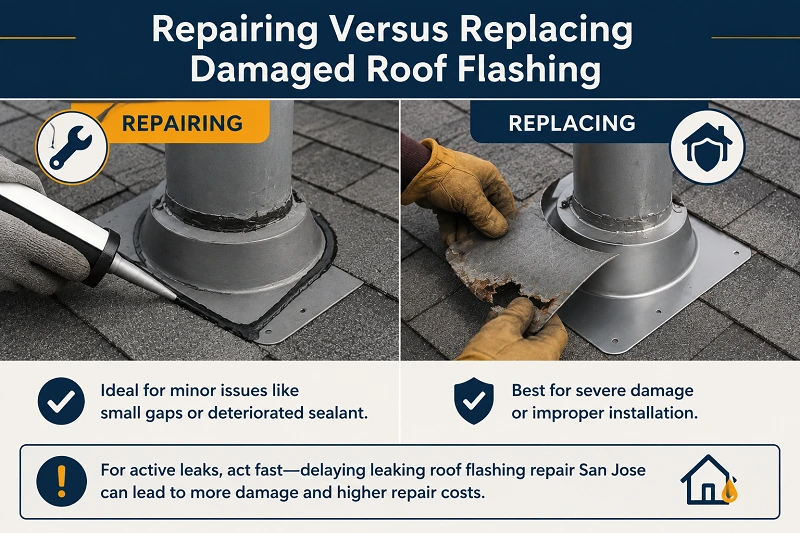
The right solution depends on the condition of the flashing and the extent of the damage. Minor issues, such as deteriorated sealant or small gaps, may be corrected through targeted repairs. However, severely damaged or improperly installed flashing may require replacement.
A professional assessment can help determine whether roof flashing replacement San Jose is necessary to provide lasting protection. Replacing damaged flashing at the right time can help prevent repeated leaks and protect other roofing components from moisture damage.
For homeowners experiencing active leaks, addressing the issue quickly is important. Delaying leaking roof flashing repair San Jose can allow water to spread beneath roofing materials and create more complicated problems inside the home.
How Apollo Roofing Company Helps Protect San Jose Homes
Apollo Roofing Company understands that reliable roofing protection depends on more than just the visible roofing surface. Every detail, including flashing, plays an important role in keeping homes safe from moisture intrusion.
The team provides professional roof inspections, repairs, and replacement solutions designed to address the source of roofing problems. By carefully evaluating flashing areas and identifying underlying causes, Apollo Roofing Company helps homeowners make informed decisions about their roofing systems.
Whether a home has aging materials, storm-related damage, or recurring leaks, experienced roofing professionals can provide the guidance needed to restore proper protection.
Frequently Asked Questions About Roof Flashing Repair San Jose
What are the most common reasons homeowners need roof flashing repair San Jose?
Homeowners typically need roof flashing repair San Jose because of aging materials, storm damage, failed sealants, installation issues, or flashing that has become loose over time. Since flashing protects areas where water can easily enter, even minor damage can lead to leaks if it is not addressed properly.
How can I tell if my roof flashing is causing a leak?
Signs that flashing may be causing a leak include water stains near chimneys, vents, skylights, or roof edges, as well as visible cracks, rust, gaps, or loose flashing materials. A professional inspection can help confirm whether flashing is the source of the moisture problem.
Is roof flashing replacement necessary if my roof is still in good condition?
Roof flashing replacement San Jose may be necessary even when the rest of the roof appears healthy. Flashing can fail independently due to weather exposure, corrosion, or installation problems. Replacing damaged flashing can help maintain the overall performance of the roofing system.
Can damaged flashing cause long-term damage to my home?
Yes, damaged flashing can allow water to enter areas beneath the roof surface. Over time, moisture intrusion can affect insulation, ceilings, walls, and structural materials. Addressing flashing issues early can help reduce the chance of more extensive and expensive repairs.
How quickly should I schedule repairs for leaking roof flashing?
Homeowners should schedule leaking roof flashing repair San Jose as soon as possible after noticing signs of moisture intrusion. Quick attention can help prevent water from spreading and causing additional damage that may require more extensive roofing or interior repairs.
Don’t Let Damaged Flashing Lead To Bigger Problems. Call Apollo Roofing Company For Roof Flashing Repair San Jose
A small flashing issue can quickly become a larger roofing concern when water is allowed to enter your home. Apollo Roofing Company helps San Jose homeowners identify roofing problems, repair damaged areas, and restore dependable protection.
If you suspect your flashing is damaged or you are dealing with unexplained roof leaks, contact Apollo Roofing Company today for professional service and reliable solutions. Protect your home before minor roof issues turn into costly repairs.
