

A new roof is one of the most important investments a San Francisco property owner can make. It protects the structure, supports energy performance, improves curb appeal, and helps preserve long-term property value in one of California’s most demanding housing markets. Still, most homeowners begin the process with one major question: what should they expect to pay?
The answer depends on more than square footage. San Francisco roofs face coastal moisture, dense neighborhoods, permit requirements, older housing stock, steep slopes, flat roof systems, and access challenges that can affect labor and material decisions. That is why understanding the average cost of a new roof in San Francisco requires looking at the full project, not just the visible roofing material.

Why San Francisco Roofing Costs Vary So Much
Roofing prices in San Francisco can vary widely because the city has a unique mix of property types. A flat-roofed multi-unit building in the Mission will not be priced the same way as a steep-slope home near Twin Peaks or a Victorian property with detailed architecture. Roof size matters, but it is only one part of the final estimate.
Labor is another major factor. Roofing in San Francisco often involves limited parking, tight streets, multi-story access, and extra time for material staging. Crews may need additional safety setup, hauling coordination, or specialized equipment depending on the property. These details can increase the new roof cost San Francisco homeowners see compared to simpler projects in less dense areas.
The roof’s current condition also matters. If old materials need to be removed, if decking is damaged, or if moisture has reached the underlying structure, the project becomes more involved. A roof that looks worn from the street may have hidden issues that only become clear during inspection.
What Goes Into a Roofing Estimate
A professional roofing estimate should include more than a surface-level price. The contractor should evaluate the roof size, slope, existing layers, drainage, flashing, ventilation, material type, underlayment, labor needs, permit requirements, and disposal costs. These details help create a more accurate picture of the full project.
For sloped roofs, asphalt shingles are often one of the more budget-conscious options. They can work well for many homes when installed with quality underlayment, proper ventilation, and strong flashing details. Metal roofing, tile, and premium shingle products may cost more upfront, but they can offer longer lifespans or stronger performance in certain applications.
Flat and low-slope roofs require a different approach. Many San Francisco homes and commercial buildings use membrane roofing systems designed to manage drainage and weather exposure. These roofs need careful installation because water does not shed as quickly as it does on a steep slope. Small installation mistakes can lead to larger problems over time.
Material Choice Has a Major Impact
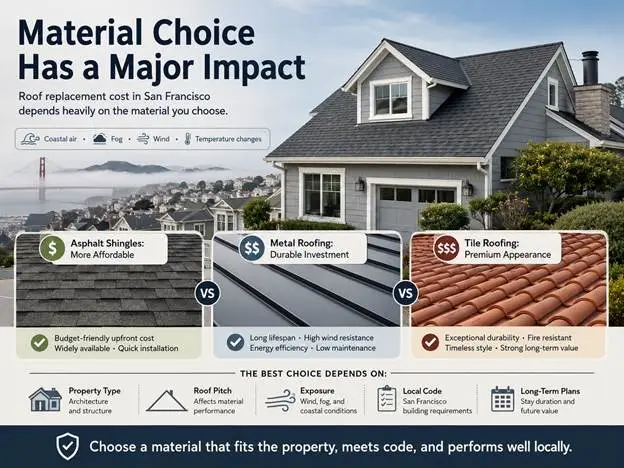
The material you choose plays one of the biggest roles in the roof replacement cost San Francisco property owners can expect. Asphalt shingles are typically more affordable than tile or metal, but the right choice depends on the building, roof pitch, neighborhood exposure, and long-term plans.
Some homeowners want a practical roof that balances cost and performance. Others are willing to invest more for durability, appearance, or a material that complements the architecture of the home. In San Francisco, the best roofing material is not always the cheapest option. It is the one that fits the property, meets code requirements, and performs well in the local environment.
Coastal air, fog, wind, and temperature changes can all affect roofing performance. A contractor familiar with Bay Area conditions can help homeowners avoid products or installation shortcuts that may not hold up well over time.
Permits, Code, and Local Requirements
San Francisco roofing projects often involve permit and code considerations. This is especially important for larger roof replacements, structural repairs, flat roof work, or buildings with special requirements. Permit costs and approval timelines can influence the final project budget and schedule.
Homeowners should also understand that code-compliant roofing is not just a formality. Proper permitting helps confirm that the work meets local standards and may protect the homeowner when selling, refinancing, or filing insurance-related documentation later. Skipping this step can create bigger problems than it solves.
A trusted local contractor should be able to explain which permits may apply, what the process looks like, and how those requirements affect the overall estimate.
The Role of Roof Size and Accessibility
Roof size is usually one of the first pricing factors homeowners think about, and for good reason. Larger roofs require more materials, more labor, and more disposal. However, accessibility can be just as important in San Francisco.
A smaller roof on a difficult-to-access building may require more planning than a larger roof with easy driveway access. Narrow lots, limited street parking, steep terrain, nearby buildings, and multi-level structures can all affect labor time. These factors are not always obvious until a contractor visits the property.
That is why online calculators can only provide a starting point. They may help homeowners understand the general range, but they cannot account for everything a local roofing team sees during an on-site inspection.
Repair or Full Replacement?
Not every roofing issue means a full replacement is necessary. Some problems can be repaired if the roof is otherwise in good condition. Missing shingles, isolated flashing issues, minor leaks, or small membrane damage may be repairable depending on the age and condition of the roof.
However, repairs may not be the most practical option if the roof is near the end of its service life, has widespread damage, has multiple failing areas, or has ongoing moisture issues. In those cases, continuing to patch the roof can become more expensive over time.
A full replacement may offer better long-term value when the existing system can no longer protect the home reliably. This is where a professional inspection becomes important. The goal is not simply to sell a new roof. The goal is to determine which solution protects the property best.
How to Budget for a 2026 Roof Replacement
When planning for 2026, homeowners should build some flexibility into their budget. Roofing materials, labor costs, disposal fees, and permit-related expenses can change. Older homes may also reveal hidden conditions once the existing roof is removed.
A smart budget should account for the visible roof work and possible repairs beneath the surface. Decking replacement, dry rot repair, flashing upgrades, drainage improvements, and ventilation adjustments can affect the final number. These items are not always included in a basic estimate unless the contractor explains them clearly.
The most useful estimate is not always the lowest one. A clear scope, quality materials, warranty information, local experience, and strong communication can make a major difference in the finished project. Homeowners comparing quotes should look closely at what is included, what is excluded, and how the contractor handles unexpected issues.
Why Local Experience Matters
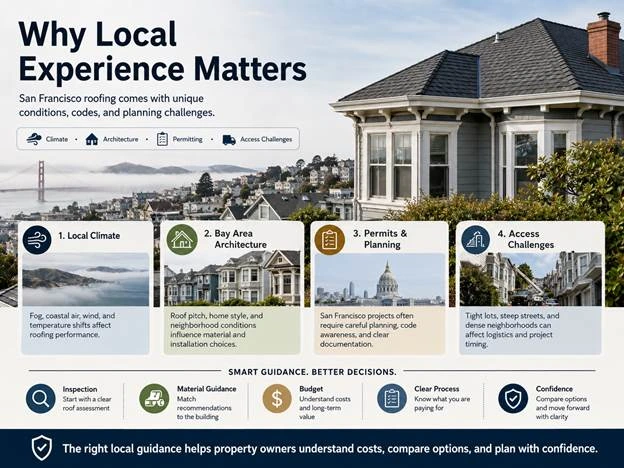
San Francisco roofing is not the same as roofing in every other city. Local experience matters because the area has its own climate conditions, architectural styles, permitting process, and access challenges. A contractor who regularly works in the Bay Area understands how these factors affect project planning.
Apollo Roofing Company helps homeowners and property owners make informed roofing decisions based on the building, budget, and long-term goals. From inspection to material recommendations, the right roofing team should explain the process clearly and help clients understand what they are paying for.
A roof replacement is a major project, but it should not feel confusing. With the right guidance, homeowners can compare options, understand costs, and move forward with confidence.
FAQs About Average Cost of a New Roof in San Francisco
What affects roofing prices the most in San Francisco?
The biggest pricing factors usually include roof size, material type, roof slope, access, existing roof condition, permit requirements, and any repairs needed beneath the old roofing system. San Francisco properties can also involve tight work areas, multi-story access, older construction, and drainage concerns, which may increase labor and planning needs.
Is a higher roofing estimate always better?
A higher estimate is not automatically better, but a very low estimate should be reviewed carefully. Homeowners should compare the scope of work, materials, underlayment, flashing details, warranty coverage, disposal, permits, and communication. A strong estimate should clearly explain what is included so there are fewer surprises once work begins.
How can homeowners prepare for a roof estimate?
Homeowners can prepare by noting known leaks, past repairs, roof age, interior water stains, drainage concerns, and any upcoming plans such as solar installation or gutter replacement. It also helps to ask about material options, timelines, permit needs, warranties, and how unexpected decking or moisture damage is handled during the project.
When is replacement better than repair?
Replacement is often the better choice when the roof has widespread wear, repeated leaks, failing materials, poor drainage, or damage beneath the surface. Repairs may work for isolated issues, but an aging roof with multiple problem areas can become more expensive to maintain. A professional inspection can help determine the most practical option.
Understand the Average Cost of a New Roof in San Francisco Before You Start – Call Apollo Roofing Company Now!
Before you commit to a roofing project, make sure you understand what goes into the estimate, what your property needs, and which options make the most sense for your home or building. Apollo Roofing Company provides local roofing guidance built around clear communication, dependable workmanship, and practical recommendations.
If you are comparing the new roof cost San Francisco homeowners can expect in 2026, schedule a professional inspection before making a decision. Apollo Roofing Company can help you evaluate your roof, understand your options, and plan the next step with confidence. Call today to get a clear estimate for your San Francisco roofing project and learn what affects the roof replacement cost San Francisco property owners should plan for.
