

A warehouse roof does far more than cover a building. It protects inventory, equipment, employees, machinery, insulation, lighting systems, and the daily operations that keep a business moving. When a roof performs well, it supports productivity, energy efficiency, safety, and long-term cost control. When it fails, the impact can be expensive and disruptive.
Choosing between the different types of warehouse roofing is not always simple. Warehouses often have large roof surfaces, low-slope designs, drainage needs, rooftop equipment, ventilation concerns, and specific performance requirements based on how the building is used. A storage facility, food distribution center, manufacturing building, and logistics warehouse may all need different roofing considerations.
That is why working with an experienced commercial roofing contractor matters. Apollo Roofing Company helps business owners understand their options, compare long-term value, and choose a system that supports the building’s structure, budget, and operational needs.
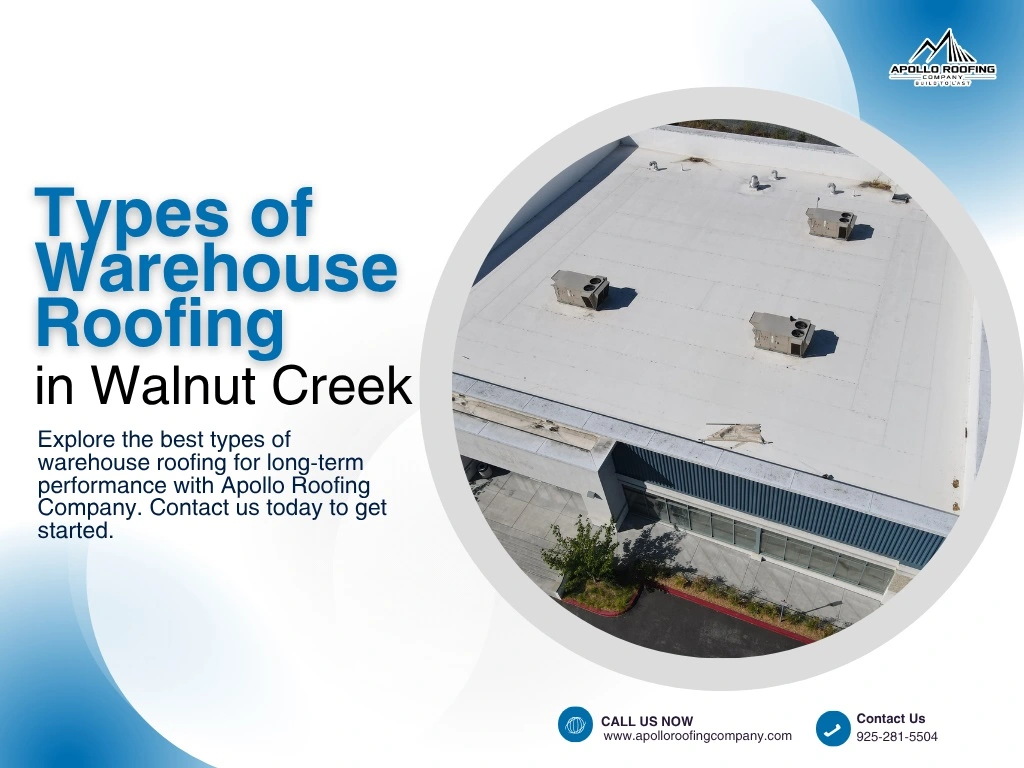
Why Warehouse Roofing Requires a Strategic Approach
Warehouse roofing is different from residential roofing because the scale, function, and risk level are much greater. A small leak in a home may damage a ceiling or room. A leak in a warehouse can damage inventory, delay shipments, create safety hazards, interrupt production, and affect revenue.
Many warehouses also have flat or low-slope roofs. These roof designs require systems that can manage water properly, resist UV exposure, handle thermal movement, and protect large surface areas without frequent failures. The right roof must also work around HVAC units, vents, skylights, drains, loading areas, and access points.
A good roofing decision should account for more than the installation cost. Business owners should consider energy performance, maintenance needs, life expectancy, warranty options, climate exposure, foot traffic, and how easy the system is to repair. The strongest choice is the one that balances durability, efficiency, and total cost over time.
Built-Up Roofing for Proven Commercial Protection
Built-up roofing, often called BUR, has been used on commercial buildings for many years. This system is made from multiple layers of bitumen and reinforcing fabrics. These layers create a thick, durable surface designed to protect low-slope roofs from water intrusion and weather exposure.
One of the main advantages of built-up roofing is its proven track record. It performs well on large commercial buildings and offers strong protection when installed correctly. The layered design adds redundancy, which means there are several protective barriers between the weather and the building interior.
Built-up roofing can be a good fit for warehouses that need a durable, time-tested system. It can handle exposure well and may offer good resistance to wear. However, it can also be heavier than some modern single-ply systems, so the building structure should be evaluated before installation.
Business owners should also consider installation conditions. BUR can take longer to install than some other systems, and the process may involve odors or materials that require careful planning around active operations. For some warehouses, it remains a dependable choice. For others, newer systems may offer faster installation or better energy efficiency.
Modified Bitumen Roofing for Flexibility and Strength
Modified bitumen roofing is another common option for commercial and industrial buildings. It is made from asphalt that has been modified with polymers to improve flexibility and performance. This system is typically installed in rolls and can be applied using different methods depending on the building and project requirements.
Modified bitumen is known for its strength and ability to handle temperature changes. This makes it helpful for buildings that experience expansion and contraction due to heat, sun exposure, and seasonal weather shifts. It can also provide good puncture resistance, which may be important on warehouses with regular rooftop maintenance activity.
For warehouse owners, modified bitumen can offer a balance between traditional asphalt-based protection and modern performance features. It is often used on low-slope roofs and can be a practical choice when durability and repairability are priorities.
The quality of installation is especially important with this system. Seams, flashing, drainage areas, and roof penetrations must be handled carefully to prevent weak points. With proper installation and maintenance, modified bitumen can provide reliable protection for many commercial facilities.
TPO Roofing for Energy Efficiency and Modern Performance
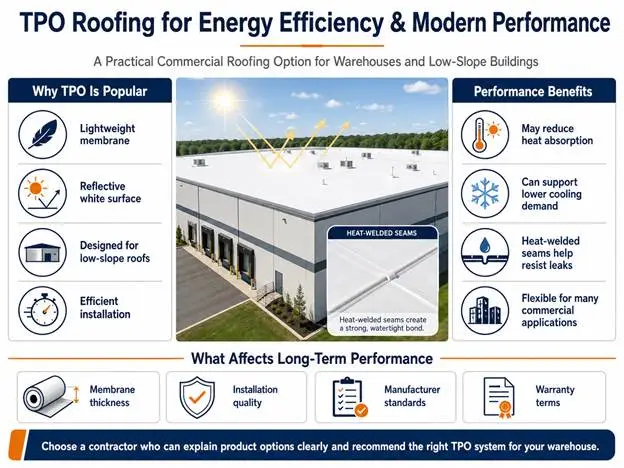
TPO roofing is a popular single-ply membrane system for commercial buildings. It is often chosen for warehouses because it is lightweight, reflective, and designed for low-slope roofing applications. The white reflective surface can help reduce heat absorption, which may improve indoor comfort and support energy efficiency.
For businesses concerned about cooling costs, TPO can be an attractive option. Warehouses often have large roof surfaces that absorb significant heat during warm months. A reflective roof membrane can help reduce rooftop temperatures and potentially lower the demand on cooling systems.
TPO is also known for its heat-welded seams. When installed properly, these seams create strong bonds that help protect against leaks. The system is flexible enough for many commercial applications and can be installed relatively efficiently compared to some multi-layer systems.
However, not all TPO products are the same. Membrane thickness, installation quality, manufacturer standards, and warranty terms can all affect performance. Business owners should work with a roofing contractor who can explain product options clearly and recommend a system that fits the warehouse’s needs.
EPDM Roofing for Reliable Rubber Membrane Protection
EPDM roofing is a synthetic rubber roofing membrane commonly used on commercial buildings. It has been used for decades and is known for flexibility, weather resistance, and straightforward maintenance. EPDM is often black, although lighter-colored options may be available depending on the manufacturer and project.
One reason EPDM is popular is its ability to handle temperature changes and building movement. The membrane remains flexible, which can be beneficial for large roof areas. It is also relatively lightweight, making it suitable for many low-slope warehouse roofs.
EPDM can be a cost-effective option for some businesses, especially when long-term repairability is important. Repairs are often manageable when performed by trained professionals, and the system has a strong history in commercial roofing.
The main consideration is heat absorption. Traditional black EPDM can absorb more heat than reflective systems, which may not be ideal for every warehouse. In cooler climates or buildings where heat gain is less of a concern, this may not be a major issue. In warmer areas or energy-focused facilities, business owners may want to compare EPDM with reflective alternatives.
PVC Roofing for Chemical Resistance and Durability
PVC roofing is another single-ply membrane system used on commercial and industrial properties. It is often valued for its chemical resistance, durability, and strong seam performance. Like TPO, PVC membranes are typically heat-welded at the seams, helping create a watertight roofing system when installed correctly.
PVC can be especially useful for warehouses or facilities that may be exposed to oils, grease, chemicals, or certain industrial byproducts. Restaurants, food processing facilities, manufacturing buildings, and some storage operations may benefit from this added resistance.
This system can also offer reflective properties, which may support energy efficiency. For warehouses with sensitive inventory, temperature control needs, or high cooling demands, that can be an important advantage.
PVC may come with a higher upfront cost than some other roofing systems, but the long-term performance benefits can make it worthwhile for the right building. A roofing contractor can help determine whether the building’s use, exposure risks, and budget support this type of system.
Metal Roofing for Long-Term Structural Value
Metal roofing can be an excellent option for some warehouse buildings, especially those with steeper slopes or structural designs suited to metal panels. Metal roofs are known for durability, long service life, and strong resistance to weather when properly installed.
For warehouses, metal roofing can offer long-term value because it can withstand many environmental challenges. It can also provide a clean, professional appearance and may be used on both new construction and replacement projects. Some metal systems include coatings that improve reflectivity and corrosion resistance.
Metal roofing is not always the best fit for every warehouse, especially if the building has a very low-slope roof that requires a membrane system. However, when the structure is appropriate, metal can be a strong investment.
Proper installation is essential. Fasteners, seams, flashing, expansion points, and transitions must be carefully detailed to prevent leaks. Maintenance is also important, especially around penetrations, panel seams, and coatings.
Spray Polyurethane Foam Roofing for Insulation and Seamless Coverage
Spray polyurethane foam, often called SPF roofing, is a system that creates a seamless layer over the roof surface. It can provide insulation and waterproofing benefits when installed and coated properly. Because it is applied as a liquid and expands into foam, it can conform to the roof surface and reduce seams.
For warehouses, SPF may be appealing because of its insulation value. A better-insulated roof can help support energy efficiency and indoor temperature control. This can be especially important for warehouses storing temperature-sensitive materials or operating in climates with high cooling or heating demands.
SPF can also be useful for roofs with unusual shapes or many penetrations because it creates a continuous surface. However, it requires skilled installation and proper protective coatings. The coating must be maintained over time to protect the foam from UV exposure and weathering.
This option may not be right for every building, but it can be highly effective when applied by experienced professionals and maintained correctly.
How to Choose the Best Roofing System for Your Warehouse
Choosing the best roofing system for warehouses depends on the building’s structure, roof slope, budget, energy goals, climate, and operational needs. A roof that works well for one facility may not be the right choice for another.
A warehouse with high cooling costs may benefit from a reflective single-ply membrane. A facility with chemical exposure may need PVC. A building with long-term durability goals may consider metal roofing if the structure allows it. A warehouse with insulation concerns may benefit from SPF. The right answer depends on the details.
The condition of the existing roof also matters. In some cases, a roof coating or recovery system may be possible. In other cases, full replacement may be required due to saturated insulation, structural concerns, repeated leaks, or aging materials.
Apollo Roofing Company helps business owners evaluate the roof as a complete system. That includes drainage, insulation, flashing, deck condition, membrane performance, penetrations, and maintenance history. This full-picture approach helps prevent short-term decisions that lead to long-term problems.
The Role of Drainage, Insulation, and Maintenance
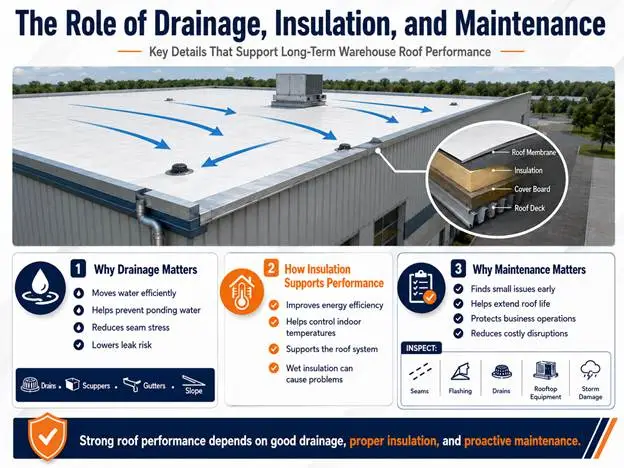
A warehouse roof is only as strong as the details that support it. Drainage is one of the most important factors. Low-slope roofs must move water efficiently because standing water can accelerate wear, stress seams, and increase the risk of leaks. Drains, scuppers, gutters, and slopes should all be evaluated during the planning process.
Insulation also plays a major role in roof performance. The right insulation can improve energy efficiency, help control interior temperatures, and support the roof system above it. Poor insulation or wet insulation can create performance issues that affect the entire building.
Maintenance should not be overlooked. Even strong commercial warehouse roofing systems need regular inspections. A proactive maintenance plan can identify small issues before they turn into costly disruptions. Checking seams, flashing, drains, rooftop equipment, and storm damage can extend the life of the roof and protect business operations.
Why Professional Installation Matters
A quality roofing system can fail early if it is not installed correctly. Commercial roofs require technical expertise, careful planning, and attention to detail. Seams, flashing, penetrations, transitions, and drainage areas are common places where problems start.
Professional installation helps protect the warranty, improve performance, and reduce the risk of leaks. It also helps ensure the system matches the building’s needs. A skilled contractor will not simply recommend a material because it is popular. They will evaluate the building and help choose a system that makes sense for the business.
Apollo Roofing Company brings commercial roofing knowledge, clear communication, and dependable workmanship to warehouse roofing projects. From inspection to recommendation to installation planning, the team focuses on helping business owners make confident decisions.
Plan Your Commercial Roof With Apollo Roofing Company’s Types of Warehouse Roofing Guide
Your warehouse roof is a major business investment. It protects your property, inventory, employees, equipment, and daily operations. Choosing the right system can reduce risk, improve efficiency, and support long-term performance.
Whether you are comparing the types of warehouse roofing, planning a replacement, or trying to identify the best roofing system for warehouses, Apollo Roofing Company is here to help with honest guidance and professional service. Our team can evaluate your building, explain your options, and recommend practical solutions that fit your goals.
If you need support with inspections, repairs, replacement planning, or commercial warehouse roofing systems, contact Apollo Roofing Company today. Let our team help you plan a roof that protects your business with confidence.
FAQs About Warehouse Roofing Systems
What is the most common roofing system for warehouses?
Many warehouses use low-slope roofing systems such as TPO, EPDM, PVC, modified bitumen, or built-up roofing. The most common choice depends on the building’s structure, climate, budget, and performance needs. A professional roof inspection can help determine which system is the right fit.
How do I know which warehouse roofing system is best for my business?
The right choice depends on roof slope, building use, energy goals, drainage, existing roof condition, and budget. A contractor should inspect the roof, review problem areas, and explain the pros and cons of each option so you can choose a system that supports long-term business protection.
How often should a warehouse roof be inspected?
A warehouse roof should generally be inspected at least once or twice a year, along with additional inspections after major storms or visible leaks. Regular inspections help identify damaged seams, clogged drains, punctures, flashing issues, and other concerns before they interrupt operations.
Can a warehouse roof be repaired instead of replaced?
Yes, some warehouse roofs can be repaired if the damage is limited and the overall system is still in good condition. However, if there are widespread leaks, saturated insulation, aging materials, or repeated failures, replacement may provide better long-term value and stronger protection.
Why are commercial warehouse roofing systems different from residential roofs?
Commercial roofs are usually larger, flatter, and designed around different structural and operational needs. They must manage drainage, rooftop equipment, energy performance, and heavy use over large areas. That is why specialized commercial roofing experience is important.
