

A large roofing project can easily become one of the biggest operational expenses a property owner faces. For commercial facilities, apartment complexes, retail centers, schools, and industrial buildings, the roof is not simply another structural component. It protects inventory, employees, equipment, tenants, and daily operations every single day. When roofing systems fail, the financial impact often extends far beyond repair costs alone.
According to industry estimates, roof-related issues account for nearly 40% of building problems in commercial properties nationwide. Water intrusion alone can lead to mold growth, insulation damage, electrical hazards, and expensive interior restoration. For large buildings in coastal California, environmental exposure only increases these risks over time.
That is why choosing the right contractor matters so much. The success of a roofing project often depends less on the material itself and more on the expertise behind the installation. A poorly managed roofing project can create delays, safety concerns, budget overruns, and years of preventable maintenance problems.
At Apollo Roofing Company as the best asphalt roofing contractor in Santa Cruz, we understand that large roofing projects require more than technical skill. They require strategy, planning, communication, and long-term thinking. This guide explores how property owners can confidently select the right contractor for major asphalt roofing projects while protecting their investment for the future.
Why Asphalt Roofing Continues to Dominate Large Roofing Projects
Even with newer roofing technologies entering the market, asphalt roofing remains one of the most widely used commercial roofing systems across the United States. Industry reports consistently show that asphalt-based roofing systems continue to cover millions of square feet of commercial and multi-family properties every year because of their balance of affordability, durability, and installation flexibility.
For large buildings in Santa Cruz, asphalt roofing offers several practical advantages. It performs well in varying temperatures, handles moisture effectively when installed properly, and adapts to many architectural designs and roof slopes. Modern asphalt systems are also engineered with improved granule technology and UV resistance compared to older roofing materials used decades ago.
Another major advantage is repair accessibility. Property managers appreciate roofing systems that can be inspected and serviced efficiently without disrupting building operations for extended periods. For facilities that operate daily, minimizing downtime is critical.
Still, roofing materials alone do not guarantee long-term performance. The difference between a roof that lasts 15 years and one that performs reliably for decades often comes down to installation quality, drainage design, ventilation planning, and contractor experience.
This is why selecting the right asphalt roofing contractor in Santa Cruz should never be treated as a quick decision based solely on pricing.
Large Roofing Projects Are More Complex Than Most Property Owners Expect
Many property owners initially assume roofing projects are straightforward. Remove the old roof, install new materials, and move on. In reality, large commercial roofing projects involve layers of planning and coordination that most people never see.
A 50,000-square-foot commercial roof, for example, may require thousands of individual material components, coordinated delivery schedules, multiple installation crews, safety supervisors, inspection timelines, and specialized equipment. Add tenants, employees, customers, or active business operations into the equation, and the project becomes even more complex.
Commercial roofs also contain far more penetrations and technical details than residential systems. HVAC units, skylights, drainage systems, vents, solar equipment, satellite systems, and rooftop access points all require precise waterproofing techniques. Industry data shows that nearly 80% of roof leaks occur around penetrations and flashing details rather than across open roof surfaces.
Poor workmanship in these areas often leads to long-term water damage that may remain hidden for months before becoming visible inside the building.
Experienced contractors understand how to manage these details while maintaining project timelines and minimizing operational disruptions. That experience becomes invaluable on large properties where mistakes can become extremely expensive.
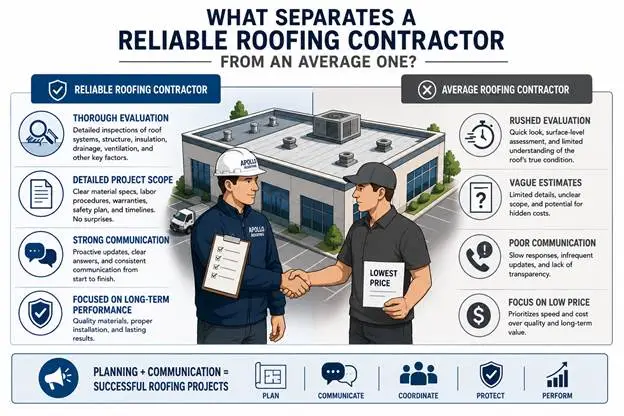
What Separates a Reliable Roofing Contractor From an Average One?
The roofing industry is highly competitive, but not all contractors operate at the same level. Some companies focus primarily on quick installations and volume. Others prioritize long-term performance, project transparency, and ongoing client relationships.
One of the first indicators of professionalism is how thoroughly the contractor evaluates the property before providing recommendations. Reliable contractors perform detailed inspections rather than rushing directly into sales presentations. They examine moisture levels, decking conditions, ventilation systems, insulation performance, drainage flow, and structural concerns before discussing roofing options.
Strong contractors also provide detailed project scopes instead of vague estimates. Property owners should clearly understand material specifications, labor procedures, warranty coverage, safety planning, and expected timelines before work begins.
Communication is another major differentiator. Research from construction management studies consistently identifies communication failures as one of the leading causes of project delays and budget overruns. Contractors who communicate proactively help reduce confusion and improve overall project efficiency.
Apollo Roofing Company places strong emphasis on planning and communication because successful commercial roofing projects depend on coordination just as much as craftsmanship.
Why Commercial Roofing Experience Matters
Large commercial roofing projects operate under entirely different conditions than smaller residential jobs. The stakes are higher, the logistics are more demanding, and the safety standards are far stricter.
An experienced commercial asphalt roofing contractor in Santa Cruz understands how to manage large crews, coordinate deliveries, comply with California safety regulations, and maintain productivity on occupied commercial sites. These projects often involve phased installation schedules designed to keep businesses operational during construction.
For example, shopping centers may require roofing work to occur during off-peak hours to reduce customer disruptions. Apartment complexes may need tenant communication plans and protected access pathways during construction. Industrial facilities may require coordination around ventilation systems and equipment shutdown schedules.
Roofing contractors without commercial experience often underestimate these operational demands, which can result in scheduling issues, safety concerns, or project delays.
Commercial roofing also requires deeper understanding of building codes and energy efficiency requirements. California continues to strengthen energy regulations for commercial buildings, particularly regarding insulation performance and reflective roofing materials. Contractors who stay informed about evolving regulations help property owners avoid costly compliance issues later.
Roofing Failures Often Start With Poor Planning
One of the biggest misconceptions in roofing is that failures happen suddenly. In reality, most roofing problems develop gradually due to overlooked details during planning and installation.
Drainage problems are a common example. Even small drainage design flaws can create standing water, which accelerates material deterioration and increases leak risk over time. Studies show that ponding water remains one of the leading causes of premature commercial roof failure nationwide.
Ventilation issues create similar long-term damage. Poor airflow can trap heat and moisture within roofing systems, weakening materials and reducing overall lifespan. In large commercial buildings, ventilation performance directly impacts both roofing durability and energy efficiency.
This is why experienced contractors prioritize comprehensive planning before installation begins. Roofing systems should function as complete protective systems rather than isolated material layers.
Weather preparation also plays an important role in Santa Cruz roofing projects. Coastal moisture, salt air exposure, and seasonal weather changes create unique conditions that contractors must anticipate carefully. Materials that perform well inland may deteriorate more quickly near the coast if improperly selected or installed.
An experienced best roofing contractor for large projects in Santa Cruz understands how local environmental conditions influence long-term roofing performance.
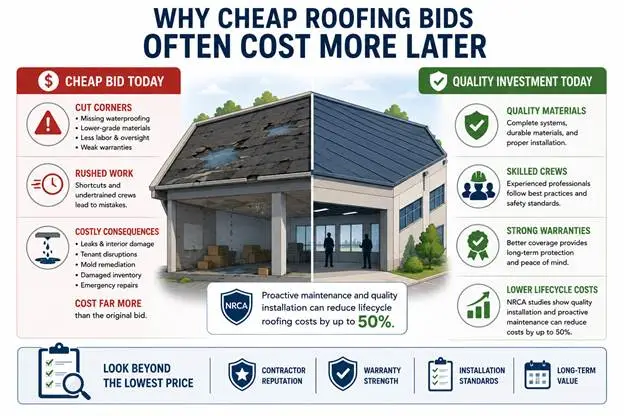
Why Cheap Roofing Bids Often Cost More Later
It is understandable that property owners compare estimates closely. Roofing projects represent significant investments, especially for large buildings. However, the cheapest proposal often carries the greatest long-term risk.
Lower bids may exclude essential waterproofing components, use lower-grade materials, reduce labor hours, or provide minimal warranty coverage. In many cases, contractors reduce pricing by rushing installation timelines or assigning undertrained crews to large projects.
The financial consequences of poor roofing work can be severe. Interior water damage, tenant disruptions, mold remediation, damaged inventory, and emergency repairs frequently cost far more than the original roofing investment itself.
Studies from the National Roofing Contractors Association suggest that proactive roofing maintenance and quality installation can reduce lifecycle roofing costs by up to 50% compared to reactive repair strategies.
Property owners should evaluate roofing proposals based on long-term value, contractor reputation, warranty strength, and installation standards rather than focusing only on upfront numbers.
Technology Is Changing Commercial Roofing
Modern roofing systems are becoming increasingly advanced. Today’s asphalt roofing materials often include enhanced UV resistance, impact resistance, reflective technology, and improved waterproofing performance compared to products available even 15 years ago.
Drone inspections are also becoming more common for large commercial properties. These inspections allow contractors to identify drainage concerns, membrane damage, and surface deterioration more accurately while improving safety during evaluations.
Infrared moisture scanning technology can detect hidden water intrusion beneath roofing systems before visible damage appears inside the building. Identifying trapped moisture early helps property owners avoid major structural deterioration and insulation replacement costs.
Digital project management tools also improve communication during large roofing projects. Property owners can now receive real-time updates, inspection photos, scheduling information, and progress reports throughout installation.
At Apollo Roofing Company, we believe combining modern technology with experienced craftsmanship provides stronger long-term roofing solutions for commercial properties.
The Long-Term Value of Choosing the Right Contractor
A quality roofing contractor does more than install materials. They help property owners protect assets, reduce long-term costs, improve energy efficiency, and maintain operational stability.
The right contractor becomes a long-term resource rather than a one-time vendor. Routine inspections, maintenance planning, and preventive repairs all contribute to extending roof lifespan and improving overall building performance.
Commercial roofs rarely fail because of one dramatic event alone. Most failures develop through years of neglected maintenance, poor drainage, minor flashing issues, or improper installation details that gradually worsen over time.
Choosing the right contractor at the beginning of the project helps prevent many of these issues before they ever occur.
An experienced asphalt roofing contractor in Santa Cruz understands that roofing projects are not only about protecting buildings. They are about protecting businesses, investments, and long-term operational reliability.
Work With Apollo Roofing Company for Your Asphalt Roofing Contractor in Santa Cruz Needs
Large roofing projects require more than installation crews and materials. They require experienced planning, skilled workmanship, detailed communication, and long-term accountability. Apollo Roofing Company works with commercial property owners throughout Santa Cruz to deliver roofing solutions focused on durability, safety, and long-term value.
Whether you manage a retail center, apartment community, office complex, industrial facility, or multi-building property, our team provides detailed inspections, strategic project planning, and dependable asphalt roofing services designed for large-scale performance.
If you are preparing for a major roofing project, Apollo Roofing Company is ready to help you move forward with confidence, clarity, and roofing solutions built to last.
FAQs About Asphalt Roofing Contractor in Santa Cruz
How long do commercial asphalt roofs usually last?
Commercial asphalt roofing systems can often last 20 to 30 years when properly installed and maintained. Roof lifespan depends on ventilation, climate exposure, material quality, drainage performance, and how consistently inspections and repairs are completed.
Why are inspections important before roof replacement?
Roof inspections help identify hidden moisture, structural damage, ventilation concerns, drainage issues, and deteriorating materials before replacement begins. Early detection reduces costly surprises, delays, and long-term repair risks during installation.
Can roofing work continue while businesses stay open?
Yes. Many commercial roofing projects are completed while businesses remain open. Experienced contractors use phased scheduling, safety barriers, and detailed planning to minimize disruptions while maintaining safe access for employees and customers.
What causes most commercial roof leaks?
Most commercial roof leaks develop around flashing, rooftop penetrations, drainage systems, skylights, vents, and poorly sealed roofing components. Improper installation and lack of maintenance often increase the risk of long-term water intrusion.
How often should commercial roofs be maintained?
Commercial roofs should typically be professionally inspected at least twice each year and after severe storms. Routine maintenance helps detect leaks, drainage problems, and material damage early before repairs become more extensive and expensive.
