

Replacing a roof is one of the biggest maintenance decisions a San Francisco homeowner can make. It protects the structure, improves energy performance, supports property value, and helps prevent expensive interior damage. Still, before moving forward, most homeowners want to understand one thing first: how much should they expect to spend?
The roof replacement cost in San Francisco can vary widely because no two properties are exactly alike. A flat roof on a multi-unit building in the Mission may require a very different approach than a steep-slope roof on a single-family home near Twin Peaks. Materials, roof size, access, existing damage, permits, and local labor conditions all influence the final price.
San Francisco also presents unique roofing challenges. Coastal moisture, fog, wind, salt air, older housing stock, and dense neighborhoods can make roof replacement more complex than in other areas. That is why a reliable estimate should look beyond square footage and consider the full condition of the roof system.
What Is the Average Roof Replacement Cost in San Francisco?
The average roof replacement cost in San Francisco typically ranges from $10 to $25 per square foot, depending on material selection, labor, roof design, and project complexity. For many residential properties, that can place the total investment between $15,000 and $50,000 or more.
This range may feel broad, but it reflects the realities of roofing in the Bay Area. A simple asphalt shingle replacement on an accessible home will usually cost less than a premium material installation on a tall, narrow property with limited access. Flat roofs, custom architectural details, steep slopes, and structural repairs can also raise the overall cost to replace roof in San Francisco homes.
The best way to understand your actual project cost is through a professional inspection. Online averages can help with early planning, but an on-site evaluation gives a clearer picture of your roof’s size, condition, material needs, and installation requirements.
Key Factors That Affect Roof Replacement Cost
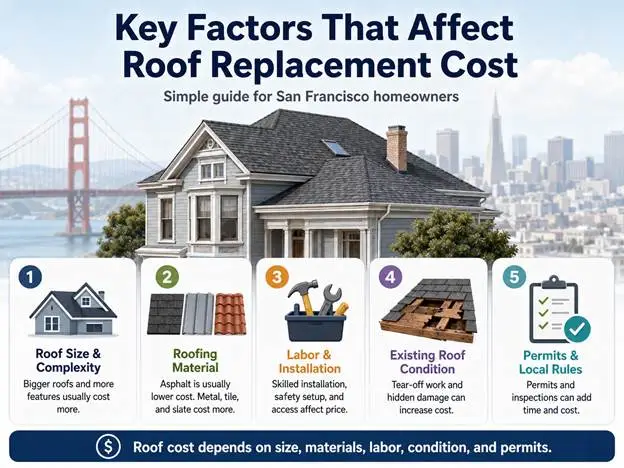
Roof Size and Complexity
Roof size is one of the most obvious cost factors. Larger roofs require more materials, more labor, and more disposal. However, size alone does not tell the full story.
Roof complexity can make a major difference. Multiple slopes, dormers, valleys, skylights, chimneys, parapet walls, and roof penetrations all add time and detail to the installation. These areas require careful flashing and waterproofing because they are common leak points. A smaller but more complex roof may cost more than a larger, simpler one.
Accessibility also matters in San Francisco. Narrow streets, limited parking, steep lots, multi-story homes, and tight neighboring properties can affect staging, safety setup, and material handling. These site conditions are part of what influences the new roof cost San Francisco, CA homeowners may see in their estimates.
Roofing Material
Material choice is one of the biggest pricing variables. Asphalt shingles are often the most affordable option and remain popular for many residential roofs. They offer a practical balance of cost, appearance, and performance.
Metal roofing generally costs more upfront but may offer strong durability, energy efficiency, and long service life. Tile roofing provides a distinctive look and strong weather resistance, but it is heavier and may require structural evaluation before installation. Slate is a premium material with exceptional longevity, but it requires specialized skill and a higher investment.
The right material depends on your budget, architecture, roof slope, long-term plans, and performance expectations. A trusted roofing contractor can explain which options make sense for your home and which may not be practical for your roof structure.
Labor and Installation
Labor is a major part of any roof replacement estimate. In San Francisco, labor costs are often higher than national averages because projects require skilled crews who understand local codes, safety requirements, weather exposure, and complex property access.
Quality installation is not an area where homeowners should cut corners. Even the best roofing material can fail early if it is installed incorrectly. Proper underlayment, flashing, ventilation, fastening, and drainage details all affect how well the roof performs over time.
A lower bid may look attractive at first, but it is important to compare what is included. Homeowners should look at scope of work, warranty coverage, material quality, permit handling, disposal, and how the contractor addresses unexpected repairs.
Existing Roof Condition
The current condition of your roof can significantly affect the final cost. If the existing roof has multiple layers, those materials may need to be removed before the new system can be installed. Tear-off and disposal add labor and hauling expenses.
Hidden damage can also affect pricing. Once old roofing materials are removed, the contractor may discover rotted decking, weakened framing, moisture damage, or inadequate ventilation. These repairs are important because a new roof needs a sound foundation. Installing new materials over damaged decking can shorten the life of the roof and lead to future leaks.
A thorough pre-project inspection helps identify visible concerns, but some issues can only be confirmed once the old roof is removed. Homeowners should plan for possible repair allowances so the budget has room for necessary corrections.
Permits and Local Regulations
Most roof replacement projects in San Francisco require permits. Permitting helps ensure the work meets local building standards and safety requirements. Depending on the project, inspections may also be required during or after installation.
Permits can affect both timeline and cost, but they are an important part of a compliant roofing project. They may also matter later if you sell the home, file an insurance claim, or need documentation for completed work. A local contractor like Apollo Roofing Company can help homeowners understand the permit process and what to expect before work begins.
Cost Breakdown by Roofing Material
Asphalt Shingles
Asphalt shingles are usually the most budget-friendly roofing material. They are widely available, versatile, and suitable for many sloped residential roofs. Homeowners often choose asphalt shingles because they provide dependable protection at a more manageable price point.
However, they typically have a shorter lifespan than metal, tile, or slate. In coastal climates, proper installation, underlayment, ventilation, and flashing details are especially important to help the roof perform well.
Metal Roofing
Metal roofing costs more upfront but offers strong durability and a clean, modern appearance. It can also reflect sunlight, which may support better energy performance. For some San Francisco homes, metal roofing may be a smart long-term investment because it holds up well when installed with the right coatings and corrosion-resistant components.
Metal roofing requires experienced installation. Details around fasteners, seams, edges, and penetrations must be handled correctly to prevent moisture problems.
Tile Roofing
Tile roofing offers long-lasting performance and a classic appearance. It resists many weather-related issues and can complement certain architectural styles. The main consideration is weight. Tile is heavier than asphalt shingles or metal, so the structure must be able to support it.
If structural reinforcement is needed, that can increase the overall project cost. Still, for the right home, tile can provide excellent longevity and curb appeal.
Slate Roofing
Slate is one of the most premium roofing materials available. It is known for natural beauty, durability, and exceptional lifespan. However, it is also heavy, expensive, and requires specialized installation.
Slate may not be the right fit for every home, but for properties designed to support it, it can offer long-term value and a distinctive appearance.
Additional Costs to Consider
Roof replacement estimates may include more than materials and labor. Homeowners should also consider tear-off, disposal, underlayment, ventilation upgrades, flashing replacement, waterproofing, decking repair, permit fees, and gutter-related work.
These details matter because the roof works as a complete system. For example, poor ventilation can shorten shingle life. Damaged flashing can cause leaks even when the main roof surface is new. Weak decking can compromise the entire installation.
A clear estimate should explain what is included, what may be extra, and how unexpected repairs are handled.
Is Roof Replacement Worth the Investment?
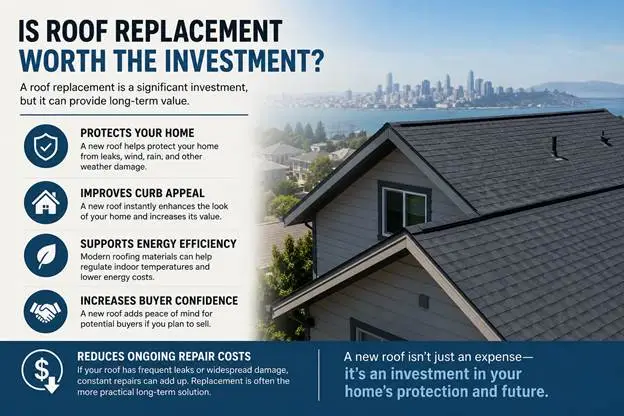
A roof replacement is a significant investment, but it can provide long-term value. A new roof helps protect the home from leaks, improves curb appeal, supports energy efficiency, and may increase buyer confidence if you plan to sell.
It can also reduce ongoing repair costs. If a roof has frequent leaks or widespread deterioration, repeated repairs may only delay the inevitable. In many cases, replacement becomes the more practical long-term choice.
How to Save on Roof Replacement in San Francisco
Homeowners can manage costs by planning ahead instead of waiting for an emergency. Scheduling replacement before major leaks occur may help avoid interior damage and structural repairs.
Choosing the right material for your goals is also important. The cheapest option is not always the best value, and the most expensive option is not always necessary. A reputable contractor can help compare materials based on lifespan, maintenance, appearance, and budget.
Getting a detailed estimate from a local roofing company also helps prevent surprises. Clear communication at the beginning leads to better decisions throughout the project.
Why Work with a Local San Francisco Roofing Company
Working with a local contractor gives homeowners an advantage. Apollo Roofing Company understands San Francisco’s climate, permitting requirements, roof styles, and access challenges. Local experience matters when choosing materials, planning installation, and solving problems specific to Bay Area homes.
A local team can also provide more responsive service before, during, and after the project. That support is valuable when you are making a major investment in your home.
FAQs: Roof Replacement Cost in San Francisco
How much does a roof replacement cost in San Francisco?
Roof replacement costs often range from $15,000 to $50,000 or more, depending on roof size, materials, labor, access, and existing roof condition. A professional inspection provides the most accurate estimate.
What is the most affordable roofing option?
Asphalt shingles are typically the most affordable option for sloped residential roofs. They offer dependable protection at a lower upfront cost, though they may not last as long as metal, tile, or slate.
How long does a roof replacement take?
Most residential roof replacements take several days to a week, depending on roof size, complexity, weather, permits, and repairs. Larger or more detailed projects may take longer.
Does homeowners insurance cover roof replacement?
Insurance may cover roof replacement if damage is caused by a covered event, such as a storm. Normal aging, wear and tear, or deferred maintenance are usually not covered.
How do I know if I need a roof replacement or repair?
Frequent leaks, sagging, missing materials, widespread wear, damaged flashing, or aging materials may indicate replacement is the better option. A roof inspection can confirm the best path forward.
Are permits required for roof replacement in San Francisco?
Yes, permits are required for most roof replacement projects. Permits help confirm the work meets local safety and building standards.
Get a Clear Breakdown of Roof Replacement Cost in San Francisco Today
Planning a roof replacement starts with understanding your options, your roof’s condition, and the factors that affect pricing. Apollo Roofing Company provides expert guidance, clear estimates, and quality installation for San Francisco homeowners.
If you are trying to understand the new roof cost San Francisco, CA homeowners should expect, our team can help you make an informed decision. Contact Apollo Roofing Company today to schedule your consultation and receive a detailed estimate for your home.
